Blog

Top 10 Capacitive Touch Membrane Switch Types

Top 10 Capacitive Touch Membrane Switch Types

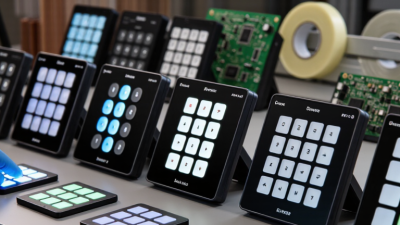
A Capacitive Touch Membrane Switch can look like a simple graphic panel, yet its performance depends on careful engineering. Behind each touch area, conductive patterns, overlays, adhesives, controllers, and protective layers must work together. A warm fingertip, a gloved hand, or a drop of moisture can change the sensing response. Small details matter. Bill Buxton, a respected human-computer interaction researcher, has expressed a useful design principle: “The technology should be invisible.” That idea fits capacitive interfaces well. Users should notice the command, not the sensing circuit beneath the printed legend. This article examines the Top 10 Capacitive Touch Membrane Switch Types, including illuminated panels, backlit keypads, flexible circuits, metal-overlay designs, and custom industrial interfaces. Each type offers different benefits for feedback, durability, cleaning, and production cost. Real-world selection is rarely perfect. A sleek surface may reduce tactile feedback. A highly sensitive design may react poorly near water or electrical noise. Engineers therefore test more than appearance. They measure touch thresholds, false activations, icon visibility, flex life, and adhesive stability. IEC-related testing, environmental trials, and repeated user checks can expose weaknesses early. Still, no switch suits every product. That is the difficult part. The right choice depends on the enclosure, operating environment, user habits, and expected service life. This guide compares those factors clearly, while recognizing that laboratory results may not fully predict field performance.
Read more »
Evelyn By:Evelyn - October 23, 2026
China Top 10 LED Backlit Membrane Switch Manufacturers?

China Top 10 LED Backlit Membrane Switch Manufacturers?

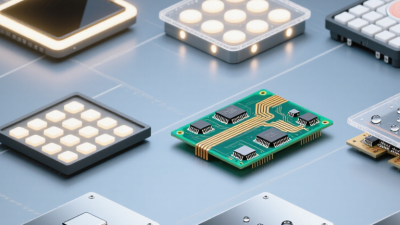
Choosing a dependable LED Backlit Membrane Switch manufacturer requires more than comparing catalog prices. Buyers must examine optical uniformity, tactile response, overlay durability, adhesive performance, and production consistency. A switch may look impressive in a sample photo, yet reveal uneven brightness around legends during night operation. That small detail can affect safety, usability, and product reputation. Dr. Donald Norman, a leading authority on human-centered interface design, once wrote, “Good design is easier to understand.” This principle applies directly to every LED Backlit Membrane Switch. Clear legends, controlled illumination, suitable key spacing, and predictable feedback help users operate equipment without hesitation. In practice, engineers should also review LED color, viewing angle, operating temperature, connector style, and environmental sealing. Ask for measurable test data. This guide evaluates China’s top ten LED Backlit Membrane Switch manufacturers through a practical purchasing lens. It considers engineering experience, customization capability, quality systems, prototype support, communication, and delivery reliability. Some suppliers excel at complex medical or industrial panels. Others perform better with high-volume consumer controls. No ranking is perfect. That matters. A manufacturer may offer excellent tooling but limited design support. Another may provide fast prototypes but inconsistent mass production. These differences deserve careful questioning. Buyers should request drawings, sample reports, inspection methods, and reference applications before making a final decision. The strongest supplier is not always the cheapest one. It is the partner that can repeatedly transform a clear specification into a durable, readable, and dependable interface.
Read more »
Amelia By:Amelia - October 23, 2026
Top 10 Tactile Metal Dome Membrane Switch Types

Top 10 Tactile Metal Dome Membrane Switch Types

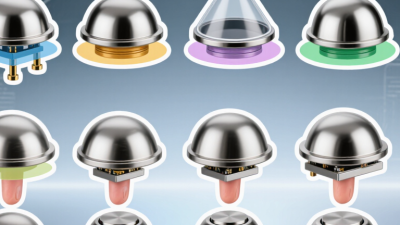
A Tactile Metal Dome Membrane Switch converts a small finger press into a clear, controlled electrical response. Its familiar snap comes from a formed stainless-steel dome beneath the graphic overlay. That tiny component influences force, travel, sound, reliability, and user confidence. Bill Hammond, founder of Snaptron and an experienced dome-switch specialist, offers a practical design reminder: “The dome is the heart of the switch.” This statement captures an important engineering reality. A beautiful overlay cannot compensate for a poorly selected dome. Force curves, contact resistance, actuation life, dome diameter, and mounting accuracy must work together. Small parts matter. This guide examines ten common Tactile Metal Dome Membrane Switch types, including four-leg, triangular, elongated, and custom-shaped designs. Each type suits different interface conditions. A four-leg dome may provide stable contact across a compact keypad. An elongated dome can support narrow control panels or sliding layouts. Custom domes may improve force distribution, but they often require higher tooling costs and stricter quality checks. The comparison focuses on practical selection factors. These include tactile feedback, electrical performance, environmental exposure, assembly method, and expected operating cycles. We also consider how the dome interacts with printed circuit layers, adhesive spacers, and tail connectors. The ranking is not absolute. Some classifications overlap. In real production, a theoretically ideal dome may fail because of contamination, uneven pressure, or an overly soft overlay. Prototype testing remains essential. Engineers should measure actuation force, rebound behavior, contact stability, and long-term wear under realistic conditions. A specification sheet helps, but hands-on validation reveals the details that datasheets sometimes miss.
Read more »
Amelia By:Amelia - October 23, 2026