Automotive and Smart Seating Occupancy Sensing Membrane Manufacturing at Ravo
Screen Printing Cleanroom for Thin Film Pressure Sensors and Seat Occupancy Membranes
Precision Automotive & Smart Seating Sensors

Seat Occupancy Sensing Membrane: The Complete Engineering, OEM Procurement & Design Guide

How do top-tier automotive safety engineers, IoT furniture developers, and medical equipment manufacturers eliminate false triggers, survive 1,000,000+ mechanical compression cycles, and achieve zero-defect seat sensing reliability? Dongguan Ravo Electronics Co., Ltd. delivers custom thin-film force sensitive resistor (FSR) matrices and membrane seat sensors engineered specifically for critical passenger presence detection and occupant classification.

AEC-Q200 Grade Ink Curing 100% Hi-Pot & Continuity Tested DFM Analysis in ≤2 Hours
2003
Year Founded in Dongguan
12,000m²
Production Plant Floor Area
300+
Workforce & Sensor Technicians
98.59%
Global Buyer Response Rate
≤2h
Average Engineering Feedback Time · 14-Year Alibaba Verified Global Gold Supplier
Technical Architecture

What Is a Seat Occupancy Sensing Membrane and How Does It Function?

Comprehensive breakdown of thin-film piezoresistive sensor physics, stack-up geometry, and real-world interface dynamics under vehicle and industrial seating conditions.

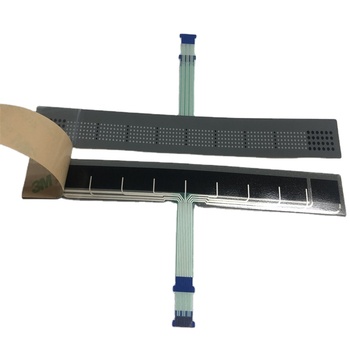
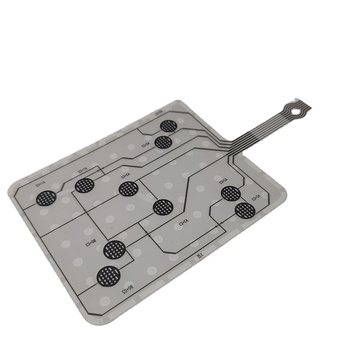
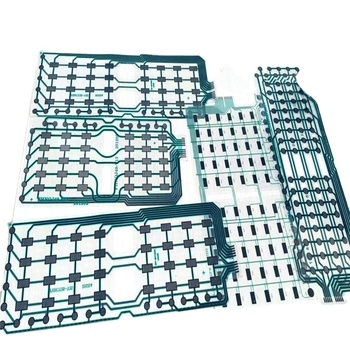
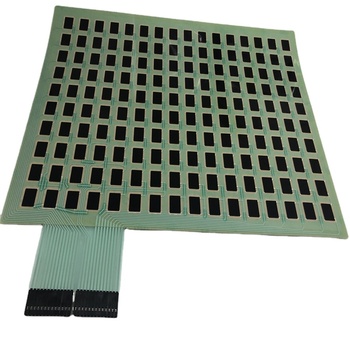
A Seat Occupancy Sensing Membrane (often referred to as an automotive seat sensor mat, passenger presence switch, or flexible FSR matrix) is an ultra-thin, multi-layer electromechanical device designed to detect, locate, and qualify the physical presence of a person or object positioned on a seating surface. Operating primarily as a normally open contact switch or a continuous Force Sensitive Resistor (FSR), it converts dynamic mechanical load into measurable electrical resistance changes.

Unlike rigid optical or ultrasonic sensors, the thin-film membrane construction—typically between 0.25 mm and 0.50 mm in total thickness—seamlessly conforms between the molded polyurethane (PU) seat cushion and the external leather or fabric upholstery. This ensures zero occupant discomfort, complete invisible packaging, and resilient shock absorption during long-term dynamic vehicular movements.

The Layer-by-Layer Physical Architecture

At Dongguan Ravo Electronics Co., Ltd., our seat occupancy membranes are manufactured utilizing precision screen-printed conductive polymer science across five distinct layers:

  • Top Flexible Substrate: Optical-grade, heat-stabilized Polyethylene Terephthalate (PET) film treated for extreme tensile memory and flex crack resistance. Underneath this layer, interdigitated electrode fingers or piezoresistive carbon paste arrays are printed.
  • Middle Dielectric Adhesive Spacer: Custom-engineered acrylic adhesive matrix (utilizing genuine 3M 467MP, 3M 9448A, or high-tack acrylics) with laser-cut or die-cut air chambers, venting channels, and pressure thresholds. The thickness of this spacer (typically 0.05 mm to 0.15 mm) determines the exact actuation trigger threshold.
  • Bottom Conducting Substrate: Secondary heat-stabilized PET layer carrying matching conductive silver circuit paths and conductive carbon ink landing pads that interface with the top electrode layout.
  • Internal Anti-Stick & Deaeration Mesh: Precision micro-vented channels prevent internal pneumatic lock-up. When high ambient cabin temperatures cause air expansion, the pressure within the membrane vents into equalization channels, eliminating false positive triggering.
  • Rear Mounting Layer & Tail Exit: High-shear transfer tape for anchoring directly to foam cores, terminating in a silver-printed tail or a copper Flexible Printed Circuit (FPC) tail reinforced with thick polyimide (PI) stiffeners.

Eliminating Silver Migration Failure

Automotive seat heaters and human perspiration create high-humidity, high-temperature microclimates. Low-tier sensors suffer silver dendritic dendrite migration, causing catastrophic electrical shorts. Ravo prints proprietary protective carbon barrier overcoats over all silver conductors to permanently isolate silver from environmental ionic transfer.

Multi-Point Occupancy Classification (OCS)

Modern smart restraint systems require differentiation between a lightweight bag, an infant car seat, and an adult occupant. Our multi-zone FSR pressure matrices provide variable resistive feedback proportional to weight, delivering real-time positional data to vehicle Body Control Modules (BCM).

Mechanical Fatigue & Shear Resistance

Ingress and egress from bucket seats exert extreme horizontal shear stresses. We utilize high-flexibility silver resin systems combined with stress-relief cutout geometry, successfully enduring rigorous "knee-drop" and ingress/egress jounce tests exceeding 500,000 cycles.

Product Recommendations

Recommended Seat Occupancy Membranes & Thin-Film Pressure Solutions

Field-proven thin-film sensor assemblies manufactured in our Dongguan facility, ready for rapid prototyping and high-volume OEM integration.

Engineering Specifications

Seat Occupancy Sensing Membrane vs. Alternative Technologies

An objective, engineering-grounded comparison matrix evaluating packaging, reliability, electrical overhead, and unit economics.

Comprehensive Occupancy Sensing Technology Evaluation
Evaluation Metric Ravo Printed Membrane Sensor Capacitive Seat Sensor Cabin Vision / IR Camera Under-Seat Strain Gauge
Form Factor & Profile Ultra-thin (0.25 – 0.50 mm); perfectly conformable to 3D seat contour Thin foil electrode (0.3 – 0.8 mm); requires grounding shield Bulky overhead / dash module; requires clear line-of-sight Heavy metal bracket load cells mounted to seat rails (10-25 mm)
False Positive Vulnerability Near-zero; only triggers on physical downward pressure/mass High; false triggers easily from wet clothes, water bottles, cell phones Moderate; occluded by blankets, bulky coats, or severe backlight Low; can be influenced by uneven floor rail torquing
Operating Temperature -40°C to +85°C (continuous); survives automotive cabin extremes -40°C to +85°C; prone to dielectric drift from moisture -20°C to +70°C; sensor heat buildup requires active cooling -40°C to +105°C; robust but electrically temperature-sensitive
Power Consumption Zero passive power draw; standard resistive pull-up logic Continuous high-frequency AC oscillation required High (1.5W – 5W); active image processing and ISP computing Moderate continuous Wheatstone bridge excitation voltage
Cost & Tooling Economics Low tooling cost; highly economical across mid-to-high volumes Moderate tooling; complex ECU tuning algorithms required Very expensive; costly camera optics and AI processor licenses High raw material cost; complex mechanical assembly labor
Primary Sourcing Applications Automotive SBR, EV passenger detection, smart chairs, medical beds Hands-off steering detection, niche luxury seating Driver state monitoring, cabin gaze and facial tracking High-end precise passenger weight classification

Source: Internal laboratory benchmarks and automotive qualification standards recorded by Dongguan Ravo Electronics Co., Ltd.

Passenger Automotive

Front and rear seat belt reminder (SBR), smart restraint logic

Smart Office Furniture

Dynamic occupancy tracking, desk utilization, posture alerting

Medical Care & Clinical

Hospital fall prevention, patient exit sensing, wheelchair alarms

Heavy Machinery & AGV

Forklift operator presence switches, agricultural dead-man interlocks

Procurement & Technical FAQ

Top Questions Global Engineers & Buyers Ask About Seat Occupancy Membranes

Everything you need to know regarding specifications, tooling lead times, environmental certifications, and custom manufacturing.

What is the exact working principle of a seat occupancy sensing membrane?

A seat occupancy sensing membrane operates based on piezoresistive contact or force-sensitive resistor (FSR) physics. The assembly consists of two flexible polyester (PET) films separated by a precision die-cut adhesive spacer. One film is screen-printed with interdigitated conductive silver circuits, while the opposing layer features semi-conductive carbon paste. When an occupant sits down, the foam cushion flexes and compresses the membrane. The conductive layers touch through spacer apertures, dropping circuit resistance from infinity (>10 MΩ) down to a predetermined closed circuit (<100 Ω or a modulated resistance curve corresponding to load). This resistance change is interpreted instantly by the vehicle or device microcontroller.

How do you prevent false triggering caused by soft foam or child safety seats?

False triggering is eliminated at the engineering DFM stage through three parameters: spacer thickness, vent channel geometry, and trigger force calibration. For soft or contoured automotive foams, Dongguan Ravo Electronics Co., Ltd. increases the dielectric spacer thickness (e.g., from 0.075 mm to 0.125 mm) and widens the contact pitch. Additionally, internal equalization channels vent trapped air so changes in temperature or atmospheric pressure inside a closed vehicle do not bow the membrane into self-actuation. Multi-zone sensor layouts can also be programmed with logical gating (e.g., requiring 3 of 4 discrete zones to activate before triggering occupant status).

Can your sensors withstand high automotive cabin heat and seat heater elements?

Yes. Automotive interiors regularly experience temperature spikes exceeding 80°C under summer sunlight, alongside direct heat emission from integrated seat warmer coils. We utilize specialized high-Tg (glass transition temperature) heat-stabilized polyester substrates, cross-linked conductive inks, and high-performance 3M 467MP/9448A acrylic transfer adhesives rated for continuous operation from -40°C to +85°C. The assembly undergoes stringent accelerated aging trials (85°C at 85% RH for 500 hours) to ensure zero delamination, bubbling, or electrical drift.

What is the typical mechanical actuation life of your seat sensor membranes?

Our seat occupancy sensing membranes are tested to survive a minimum of 500,000 to 1,000,000 cyclic loading actuations without mechanical rupture or electrical degradation. We perform rigorous pneumatic piston testing, hemispherical silicone knee-indentation cycling, and simulated human ingress/egress jounce tests in our Dongguan test laboratory to ensure our sensors meet OEM automotive Tier-1 durability standards.

What connector interfaces and tail terminations do you offer?

We provide full customization for connection interfaces based on your harness design. Options include standard 2.54 mm pitch female crimped Amphenol/Molex pins with automotive latching housings, low-profile ZIF (Zero Insertion Force) ends with thick polyimide backing stiffeners, direct soldering pins, or custom wire harnesses featuring overmolded water-resistant grommets and ultrasonic-welded automotive wire leads.

What information is needed to receive a quote and DFM review?

To initiate a project, please share: (1) 2D CAD drawings (DXF, DWG, or PDF) detailing sensor dimensions, active cell locations, and tail routing; (2) target actuation force requirements or foam hardness specifications; (3) operating voltage and current levels; (4) connector type; and (5) estimated annual procurement volume. Our engineering team returns a comprehensive DFM analysis and formal quotation within ≤2 hours during standard business days.

What are your prototyping and volume production lead times?

Rapid functional prototypes and test samples can typically be fabricated and dispatched within 5 to 7 business days following drawing sign-off. High-volume mass production batches (from 1,000 to 100,000+ pieces) generally ship within 2 to 3 weeks depending on raw material sourcing and tooling complexities.

Are your materials compliant with global environmental regulations (RoHS/REACH)?

Yes. All raw materials used by Dongguan Ravo Electronics Co., Ltd.—including PET films, conductive silver pastes, carbon resistor pastes, dielectric coatings, adhesives, and connector housings—are strictly 100% compliant with RoHS and REACH environmental directives. Full material safety data sheets (MSDS) and third-party laboratory test reports are provided with initial sample submission packages.

Why Partner With Ravo

Dongguan Ravo Electronics Co., Ltd. – Trusted Human-Machine Interface Excellence Since 2003

Dongguan Ravo Electronics Co., Ltd. (operating from our modern facility in Fenggang Town, Dongguan City, Guangdong Province, China) is a premier industrial manufacturer specializing in precision seat occupancy sensing membranes, force sensitive resistor films, custom membrane switches, PC/PET graphic panels, flexible circuit boards (FPC), and silicone rubber keypads.

Originally established in 2003 with a dedicated founding group of just eight technical specialists, our organization has continuously expanded over two decades into an advanced high-precision manufacturing enterprise. Today, our vertically integrated manufacturing headquarters spans over 12,000 square meters of specialized cleanroom printing halls, laser die-cutting bays, automated lamination suites, and electronic inspection stations, supported by a skilled workforce of over 300 employees at peak capacity.

As an export-oriented innovator serving the rigorous requirements of Europe, North America, Japan, and Southeast Asia, we maintain a verified supplier reorder rating and an outstanding 98.59% customer inquiry response rate with an average technical feedback turnaround of ≤2 hours. Our decades of engineering dedication have earned long-term partnerships with globally renowned multi-nationals and Tier-1 contract manufacturers including LINAK, FLEXTRONICS, LG, CASIO, EARLY LIGHT, and many others.

Turnkey In-House Production

From screen preparation, precision conductive ink formulation, automated silk screen printing, thermal tunnel curing, to hydraulic die-cutting and 100% electrical computer testing—every stage is executed entirely in-house.

Rigorous Zero-Defect Quality Control

Every single seat occupancy membrane is subjected to 100% automated electrical continuity, resistance isolation, and trigger actuation verification before export packaging. Complete traceable batch records ensure peace of mind.

Decades of HMI & Sensor Expertise

Over 20 years of hands-on mastery in flexible electronics, polymer conductive ink rheology, and mechanical adhesive bonding guarantees immediate answers to complex DFM and harsh-environment deployment challenges.

Corporate Profile & Quality Credentials

Six-Step Quality Assurance

Our Controlled Seat Occupancy Membrane Manufacturing Workflow

Transparent engineering rigor guarantees total consistency from the initial CAD review to global volume container delivery.

01

DFM & Tooling Review

2D/3D foam profile assessment, active area routing, and venting circuit calculation within ≤2 hours.

02

Screen Precision Fabricating

High-mesh polyester screens and precision stencils imaged in-house for micrometer-accurate ink thickness.

03

Class 10k Cleanroom Print

Silver conductor paths and semi-conductive carbon pads printed in humidity and temperature-controlled rooms.

04

Tunnel Oven Thermal Cure

Multi-stage infrared and convection baking ensures optimal ink cross-linking and zero micro-cracking.

05

Lamination & Die Cutting

Bubble-free automated adhesive lamination with precision laser or steel-rule perimeter blanking.

06

100% Computerized QA

Automated electrical continuity, open/short testing, actuation force verification, and anti-static packaging.

Launch Your Custom Seat Occupancy Sensor Project Today

Partner directly with Dongguan Ravo Electronics Co., Ltd. Send us your drawings, target actuation specs, or application challenges. Our expert engineering team will provide a comprehensive DFM review and quotation within 2 hours.

[email protected]