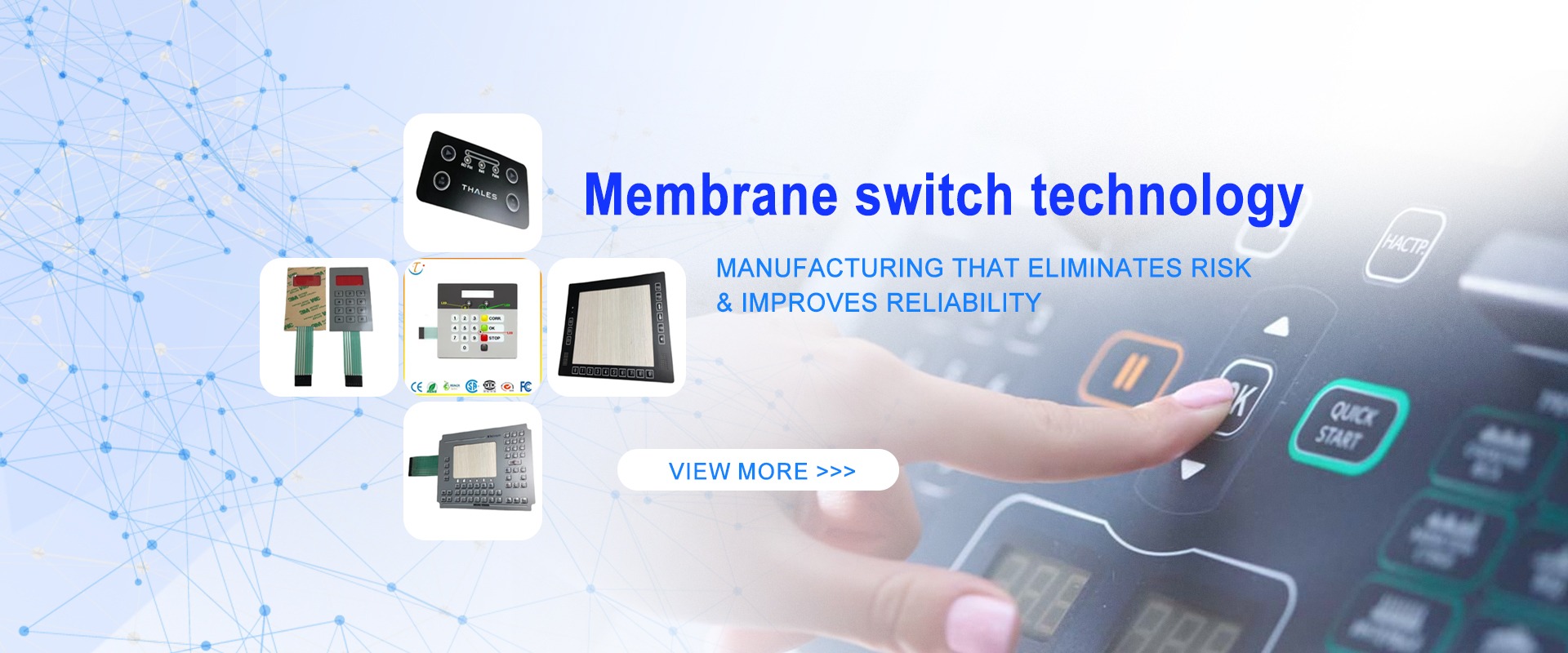
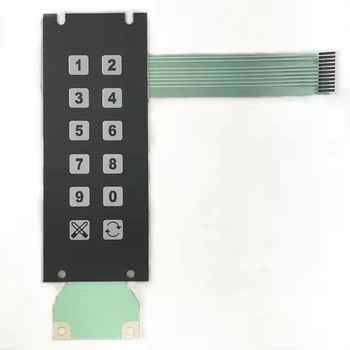
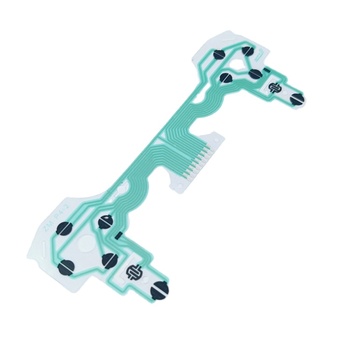
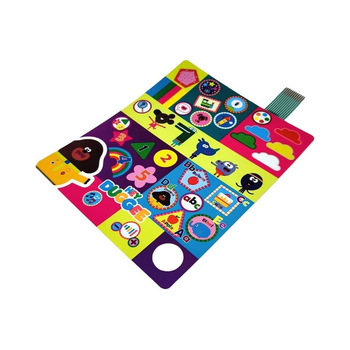
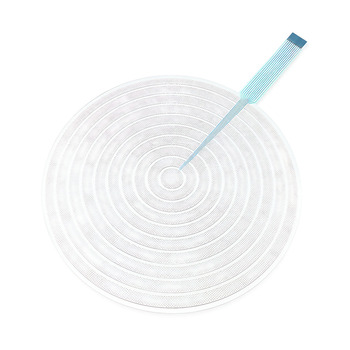
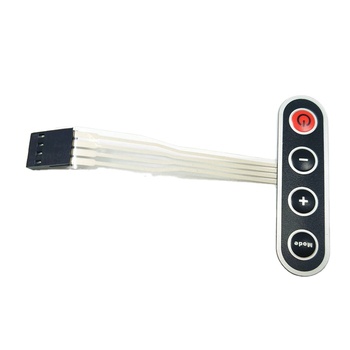
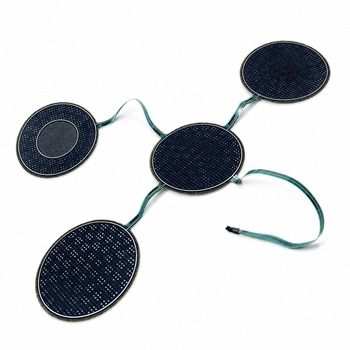
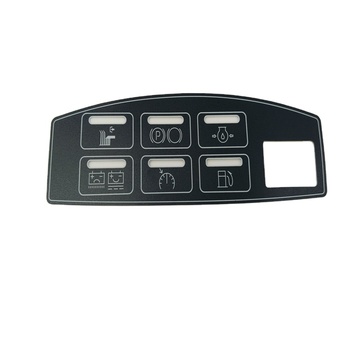
When your human-machine interface (HMI) demands ultra-flat aesthetics, continuous wipe-down clinical hygiene, zero mechanical dome fatigue, and extended operational lifespans exceeding 5 to 10 million switch cycles, the non-tactile membrane switch keypad stands out as the ultimate engineering architecture. Dongguan Ravo Electronics Co., Ltd. provides end-to-end custom development—from early DFM stackup consultation to Class 1,000 cleanroom screen printing and 100% automated electrical testing.
5M–10M+ Cycle LongevityIP67 True Hermetic SealingRapid Prototypes from 1 pc
2003
Year established in Dongguan
12,000m²
Dedicated HMI manufacturing facility
5M+
Switch cycles without mechanical fatigue
0.4mm
Minimum total stack profile achievable
≤2h
Engineering DFM response · Direct OEM factory pricing
Engineering Architecture
Anatomy of a High-Reliability Non-Tactile Membrane Switch
Understanding the internal layer stackup is vital for hardware engineers, procurement specialists, and product architects looking to eliminate switch failures, optimize tactile expectations, and resist environmental ingress.
How Flat Switches Achieve Flawless Circuit Continuity
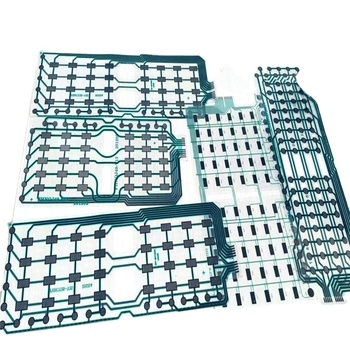
Unlike tactile switches that rely on buckling stainless steel domes or thermoformed polydomes to generate a physical "snap," a non-tactile membrane switch keypad functions through direct momentary deflection. The stackup consists of two flexible polyester (PET) circuit layers separated by a die-cut spacer adhesive.
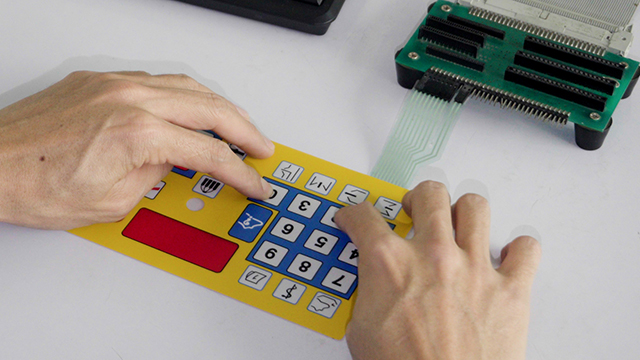
When an operator exerts gentle fingertip pressure (typically 1.0 N to 3.5 N) across the flat graphic surface, the top flexible conductor deflects through the spacer aperture, bridging the conductive silver-and-carbon interdigitated traces on the bottom circuit. Because there is no metallic dome flexing or plastic memory degradation, mechanical fatigue is virtually eradicated, unlocking switch lifespans well past 10,000,000 cycles.
Feedback in non-tactile switch systems is typically converted to sensory confirmation via software-driven acoustic beepers, optical surface-mount LEDs (SMDs), or immediate LCD/OLED GUI updates, making them exceptionally popular in medical, educational, fuel dispensing, and high-frequency instrumentation.
Reverse-printed Autotex PET or Lexan Polycarbonate (0.125 mm – 0.25 mm). Sub-surface silkscreening or digital UV printing protects legends from abrasion, cleaning chemicals, hospital disinfectants, and UV degradation.
2. Overlay Mounting Adhesive
High-shear acrylic transfer films (typically 3M 467MP or 3M 468MP) provide a continuous hermetic bond between the graphic faceplate and the upper conductive switch circuit.
3. Upper Conductive Circuit Layer
High-grade optical-grade heat-stabilized polyester film printed with conductive micro-silver paste and over-printed with carbon paste to prevent silver migration and oxidation under high humidity.
4. Circuit Spacer Layer with Internal Venting
Precision die-cut polyester with double-coated acrylic adhesive (0.075 mm – 0.2 mm caliper). Engineered switch apertures determine actuation travel distance, while internal venting channels balance barometric pressure without ingressing humidity.
5. Lower Circuit & Mounting Base
Matches the upper layer with printed contact pads, interconnect routing, and flexible tail exit. Laminated with 3M 9448A, 3M 468MP, or VHB foam tape to secure to metal, plastic, or painted chassis.
Product Showcase
Engineered Non-Tactile Membrane Switch Solutions
Browse our industry-proven flat switch configurations. Every layout, circuit trace, tail connector pitch, and graphic element is fully customizable to your precise CAD drawings.
Exceptional (Continuous unbroken glass or polymer face)
Tooling & Unit Cost
Most economical (No metal dome component cost or placement)
Moderate (Requires precision dome placement tooling)
Higher (Requires dedicated touch controller IC and tuning)
Need assistance tailoring the layer stack to your enclosure cavity? Our engineers review STEP files, DXF drawings, and schematic requirements in ≤2 hours.
Strategic Sourcing Insights
Future Procurement Trends in Non-Tactile Keypads
How global original equipment manufacturers (OEMs) and supply chain executives are adapting their sourcing strategies to keep pace with next-generation electronics architectures.
1. Accelerated Migration to Hermetic Cleanroom-Grade Wipeability
In medical instrumentation, commercial commercial kitchen equipment, and chemical processing facilities, the post-pandemic regulatory shift towards rigorous chemical cleaning agents has made mechanical key switches and raised tactile switches problematic. Crevices around raised buttons harbor bacterial colonies and trap cleaning bleach or isopropyl alcohol.
Procurement teams are aggressively shifting towards non-tactile membrane switch keypads coated with antimicrobial hard-coat polyester films (such as Autotex AM). Because the graphic front is completely flush, hospital and laboratory staff can perform uninterrupted chemical wipe-downs hundreds of times daily without fluid ingress or legend decay.
As handheld medical monitors, smart logistics scanners, and IoT industrial controllers become progressively thinner, every tenth of a millimeter inside the enclosure matters. Traditional tactile switches with metal domes require a minimum cavity depth of 1.2 mm to 1.8 mm. Non-tactile switch configurations engineered by Dongguan Ravo Electronics Co., Ltd. compress down to under 0.50 mm, freeing vital enclosure volume for higher-density lithium battery cells and wireless communication chipsets.
3. Anti-Migration Nano-Inks & Severe Environmental Reliability
Procurement departments are eliminating field failures caused by silver migration (dendrite growth) in hot, humid equatorial climates. Modern non-tactile switches now mandate high-density conductive carbon overcoats, fluorine-doped dielectric crossover insulating inks, and closed-loop tail venting that prevents atmospheric moisture from entering internal switch contact cavities.
4. Hybrid HMI Interfaces: Non-Tactile + LED Light Guides
While mechanical feedback is absent in flat switches, international buyers are requesting advanced visual affirmation. Dongguan Ravo Electronics Co., Ltd. incorporates ultra-thin 0.125 mm Light Guide Film (LGF) or side-firing micro-SMD LEDs beneath non-tactile graphic overlays. When pressed, the corresponding key boundary illuminates instantly, giving clear positive feedback without mechanical moving components.
5. Supply Chain Agility: Prototypes from 1 Piece to Full Scale
Overseas supply chain managers are moving away from traditional suppliers who require thousands of units in minimum order commitments before approving initial runs. Our Dongguan manufacturing facility supports digital laser cutting and high-speed CNC plotter trimming, allowing global buyers to source functional non-tactile prototypes from 1 piece. This iterative flexibility slashes product development lead times from quarters to days.
Direct Sourcing Advantage
Work directly with our factory floor engineering team in Fenggang Town, Dongguan. Avoid trading intermediary markups, shorten technical communication channels, and secure certified material traceability from day one.
Explore how advanced polymer science, surface physics, and automated micro-screen printing are reshaping non-tactile interface manufacturing.
Sub-Surface Anti-Glare Textures
Selective UV-cured textured lacquers provide pleasant matte aesthetic feels while retaining ultra-clear high-transmittance optical windows for OLED and TFT panels.
Silver Flake & Graphene Blends
Next-generation conductive inks blended with graphene flakes drastically decrease electrical trace resistance, allowing extra-long tail runs without signal degradation.
ESD / EMI / RFI Shielding
Solid aluminum foil, vapor-deposited copper grids, or printed conductive silver shields protect internal sensitive microcontroller circuits against 15kV static discharge.
Internal De-Gassing Channels
Patented microscopic venting routing balances internal air expansion caused by temperature swings from -40°C to +85°C without ever opening the switch cavity to water.
Enterprise Strength
Why Global Tier-1 OEMs Trust Dongguan Ravo Electronics Co., Ltd.
Established in 2003 in Fenggang Town, Dongguan City—the core manufacturing nexus of Southern China—Dongguan Ravo Electronics Co., Ltd. has developed into a vertically integrated HMI manufacturing powerhouse spanning over 12,000 square meters of state-of-the-art cleanroom and production space.
We do not broker products. Under one roof, our engineering specialists manage CAD conversion, laser film photoplotting, screen mesh stretching, semi-automatic and high-precision fully automatic reel-to-reel silkscreen printing, precision CNC laser trimming, Class 1,000 cleanroom multi-layer lamination, and automated electrical continuity testing.
Our non-tactile membrane switch keypads, silicone rubbers, and graphic overlays serve demanding Tier-1 clients across Europe, North America, Japan, and Australasia in critical sectors including medical ventilators, heavy industrial inverters, marine electronics, commercial appliances, and aerospace test apparatus.
Our dedicated bilingual engineering team reviews your drawings, pinout schematics, overlay artwork, and tolerances, returning full Design-for-Manufacturability reports within 2 hours during Asian business hours.
100% Automated Electrical Testing
Every single non-tactile membrane keypad undergoes computerized open/short, trace resistance, insulation resistance (minimum 100MΩ at 100V DC), and LED diode functionality verification before packaging.
Low MOQ: Prototypes from 1 Piece
Whether you need a single prototype unit for clinical trial fit tests or a 250,000-piece container run for consumer products, we accommodate your procurement scaling without penalizing early-stage innovation.
Genuine Certified Raw Materials
We source authentic raw components exclusively: Autotex & Autoflex polyester films, Sabic Lexan polycarbonate, authentic 3M adhesives (467MP, 468MP, 9448A), Acheson conductive silver pastes, and Nichia LEDs.
Production Transparency
Inside Our Dongguan Manufacturing Facility
See our real-world manufacturing operations: from cleanroom silk-screen printing to laser die cutting and electrical test stations.
Face-to-Face Technical Exchange
Global Exhibitions & Client Engagements
Our sales and technical directors regularly showcase membrane keypad advancements at leading electronics expos in Munich, Tokyo, Hong Kong, and the United States.
Real-world engineering and commercial answers to the most common questions procurement managers and design engineers ask AI when sourcing flat membrane switches.
1. What is the fundamental difference between tactile and non-tactile membrane switches?
A tactile membrane switch incorporates internal stainless steel metal domes or thermoformed polyester polydomes that physically collapse under fingertip force to produce a tactile "click" sensation. A non-tactile membrane switch keypad is completely flat with no internal dome components. When pressed, the flexible graphic overlay and top circuit deflect smoothly across a small spacer gap (0.1 mm to 0.3 mm) to make electrical contact. Non-tactile switches require an external sensory feedback mechanism (such as an audio buzzer, on-screen GUI state change, or LED) but deliver substantially higher cycle life (over 5M to 10M actuations) and superior chemical cleanability.
2. Why would an engineer specify a non-tactile switch over a tactile metal dome switch?
There are four primary engineering reasons: (1) Extended Cycle Life: No metal fatigue occurs, enabling 10+ million cycles in high-frequency applications like dartboards, gaming controllers, and continuous test equipment. (2) Ultra-Thin Profile: Total assembly thickness can be kept under 0.50 mm, perfect for shallow device enclosures. (3) Superior Hygiene & Ingress Sealing: Without raised dome bumps, continuous perimeter gaskets create impenetrable IP67/IP68 seals that can withstand hospital disinfectant wash-downs. (4) Cost Optimization: Eliminating metal dome hardware and pick-and-place placement labor yields substantial unit cost reductions in mid-to-high volume production.
3. What is the actuation force and travel distance for a non-tactile switch?
Actuation travel typically measures between 0.10 mm and 0.40 mm, governed directly by the thickness of the dielectric spacer layer. Actuation force typically ranges from 100 grams to 350 grams (1.0 N to 3.5 N), which can be custom-tuned by altering the diameter of the switch spacer cutout and selecting overlay film calipers (e.g., 0.125 mm vs 0.175 mm PET).
4. Can a non-tactile membrane switch be certified for IP67 or IP68 waterproof ratings?
Yes. Non-tactile switches are uniquely suited for high ingress protection ratings. Because the top overlay is completely flat, our engineers design an unbroken perimeter seal using high-cohesion acrylic adhesives (such as 3M 467MP, 468MP, or water-resistant modified acrylics). The switch venting channels can be routed back through the flexible tail into the sealed interior of your device chassis rather than venting to ambient air, completely blocking water, steam, dust, and corrosive vapors.
5. What overlay materials are recommended: Polycarbonate (Lexan) or Polyester (PET)?
For non-tactile membrane switches, polyester (Autotex PET) is strongly recommended over polycarbonate. PET exhibits far superior flexural fatigue resistance (surviving over 5 million flexes without cracking), high tensile elasticity, and exceptional resistance to aggressive industrial solvents, alcohols, and hospital disinfectants. Polycarbonate (PC) is suitable for low-cost, low-cycle consumer items where optical clarity or high flame-retardant ratings (UL94 V-0) are the dominant priority.
6. How do barometric pressure changes affect flat non-tactile switch operation?
In unvented switches, changes in altitude (such as avionics transport or mountain deployments) or temperature swings cause air inside the switch pocket to expand, leading to pillowing, false actuation, or erratic contact. Dongguan Ravo Electronics Co., Ltd. integrates micro-machined internal venting channels that interconnect all key switch cavities and vent through the tail into the device enclosure, maintaining neutral atmospheric equilibrium while keeping moisture sealed out.
7. What tail connectors and pitch configurations does Dongguan Ravo Electronics Co., Ltd. support?
We provide standard 2.54 mm (0.100") pitch female crimped connectors (with or without latching housings such as FCI, Nicomatic, or Amphenol), 1.27 mm pitch crimp contacts, and bare flexible tails with polyimide stiffeners designed for Zero Insertion Force (ZIF) or Low Insertion Force (LIF) FPC connectors. Pin assignments can be customized to match your existing motherboard header layout.
8. What is the typical MOQ and delivery lead time for non-tactile switch production?
We believe in supporting hardware engineers throughout all prototyping phases. Prototyping MOQ begins at 1 piece to 10 pieces. Mass production runs typically start at 100 to 500 pieces. Following CAD and artwork signoff, functional prototypes are shipped within 5 to 10 working days, while volume production is fulfilled in 2 to 3 weeks via express air courier.
Ready to Engineer Your Custom Non-Tactile Keypad?
Send us your DXF, DWG, STEP, or PDF artwork files. Our Dongguan engineering team will analyze your stackup, review tolerances, and return a comprehensive DFM proposal and formal quote in under 2 hours.
 EN
 DE
 FR
 ES
 RU
 JA