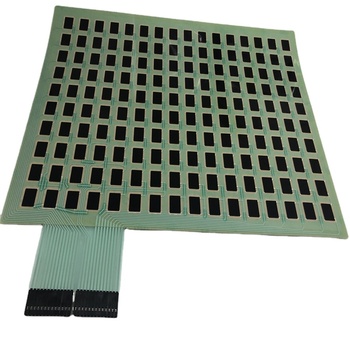
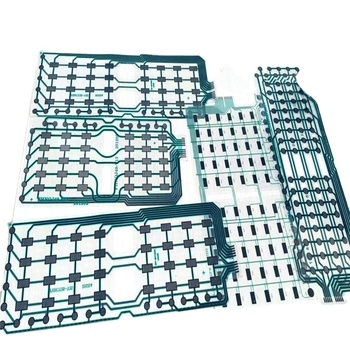
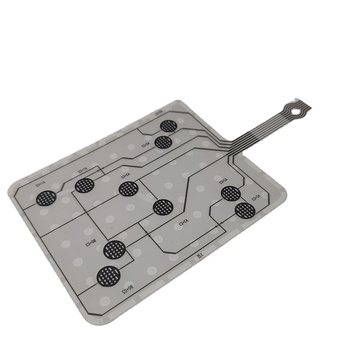
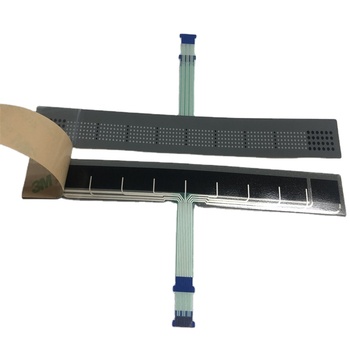
High-Density Matrix Gait Analysis Foot Sensor Film
- Resolution: Up to 512 discrete sensing taxels
- Pressure Range: 10 kPa to 600 kPa (Customizable)
- Substrate: 0.125mm Optical Stabilized PET
- Tail Interface: 1.0mm Pitch FPC or ZIF Connector
From intelligent podiatry diagnostics and athletic movement tracking to orthotic customization and diabetic foot ulcer prevention, foot pressure sensor film technology is revolutionizing how biomechanical forces are captured. At Dongguan Ravo Electronics Co., Ltd., we combine micro-engineered silver-carbon piezoresistive arrays, nano-composite inks, and high-stability flexible polymer substrates to turn complex plantar pressure dynamics into real-time, actionable digital intelligence.
Global medical device manufacturers, wearable brand engineers, and biomechanics researchers search for deep technical realities when sourcing foot pressure sensor film. Here are the core questions answered by our engineering directors.
Plantar force measurement demands high sensitivity across rapid pressure gradients. A foot pressure sensor film relies on piezoresistive tactile sensing. The stack comprises two layers of flexible polyester (PET) or polyimide (PI) film: one printed with interdigitated silver conductive tracks, and the opposing layer coated with a pressure-sensitive functional carbon/nano-composite ink.
When the human foot applies pressure during the heel strike, midstance, or push-off phases, microscopic contact between conductive particles increases exponentially. This causes electrical resistance to decrease monotonically with applied normal force. Because Dongguan Ravo Electronics Co., Ltd. controls screen printing tolerances down to ±0.05 mm, our films deliver clean analog resistance curves readily digitized by multi-channel ADCs without crosstalk.
Engineers consistently inquire: "Can thin-film sensors withstand over 1,000,000 gait cycles without severe signal drift or mechanical fatigue?" Standard carbon pastes can suffer from micro-cracking and high hysteresis (>10%) under athletic running loads. Dongguan Ravo Electronics Co., Ltd. formulates proprietary conductive polymer blends with elastic modifiers and thermal stabilizing agents. This drops hysteresis below 4.5% and maintains response repeatability within ±2% over several hundred thousand load cycles.
Furthermore, our flexible foot pressure sensor film features recovery times under 15 microseconds, enabling dynamic gait analysis up to 500 Hz sample rates without baseline baseline creep.
Footwear environments present harsh operating conditions: high localized humidity, salty sweat, elevated foot temperatures (up to 42°C), and continuous shear stresses. A bare circuit quickly suffers from silver migration and delamination.
Dongguan Ravo Electronics Co., Ltd. resolves this through engineered perimeter sealing. Utilizing automotive-grade 3M adhesive film layers (such as 3M 467MP or modified 3M acrylic transfer tapes) and hydrophobic perimeter venting membranes, our foot pressure sensor films achieve an IP67 waterproof rating. Plantar moisture is completely barred from active electrode zones, preventing short circuits and drift.
Whether you require a discrete 8-zone key layout for ergonomic orthotics or a 512-cell high-density matrix for surgical gait laboratories, our Dongguan facility delivers prototypes in 7 to 10 days.
Custom-built flexible sensor arrays engineered to fulfill specific biomechanical, athletic, clinical, and industrial specifications.
As health ecosystems migrate toward predictive care and sports analytics demand centimeter-level biomechanics, sensor film requirements are rapidly advancing.
Next-generation footwear will not simply route passive analog resistance. Smart insoles now integrate ultra-low-power BLE Bluetooth microcontrollers and onboard ADCs. Global buyers demand sensor films with ultra-stable trace impedance and integrated shielding layers to eliminate electromagnetic interference (EMI) originating from smartwatches, mobile phones, and motor drivers.
Early athletic shoes used 3 to 4 discrete force-sensing resistors. Contemporary sports medicine, podiatric surgery rehabilitation, and virtual reality haptic tracking demand 64 to 1024-point multiplexed tactile matrices. This requires precision screen-printed cross-point arrays with micro-dielectric isolation to prevent parasitic ghosting and current back-feeding.
Athletes and diabetic patients require footwear that breathes. Sensor designs are evolving beyond solid PET sheets toward perforated, laser-micromachined films and stretchable TPU elastomer substrates that permit natural ventilation, moisture escape, and periodic gentle cleaning without trace oxidation.
Global procurement teams are shifting away from dealing with multiple isolated suppliers (screen printer, FPC fabricator, die-cutter, and testing lab). Brands increasingly select vertically integrated partners like Dongguan Ravo Electronics Co., Ltd. that provide raw film printing, SMT component soldering, custom connector crimping, and automated multi-point QA calibration under one roof.
With consumer smart footwear entering high-volume retail, cost efficiency is essential. By deploying high-speed automated roll-to-roll and semi-automatic flatbed screen printing, Dongguan Ravo Electronics Co., Ltd. reduces silver paste consumption while tightening layer alignment tolerances, yielding significant BOM cost savings for high-volume orders.
Our engineering team analyzes your mechanical drawings and delivers a comprehensive DFM evaluation within 2 hours.
Get a QuoteEvaluate why flexible piezoresistive film is the dominant choice for wearable, dynamic podiatry applications compared to capacitive, piezoelectric, or optical sensors.
| Technology | Thickness & Flexibility | Static & Dynamic Sensing | System Cost & Circuit Simplicity | Durability in Insole Environment |
|---|---|---|---|---|
| Piezoresistive Film (Ravo Custom) | Ultra-thin (<0.25mm to 0.4mm), highly compliant with shoe flexing | Measures both static stance and high-speed dynamic running (up to 500+ Hz) | Low to moderate; simple voltage divider / op-amp matrix ADC readout | High; hermetically sealed with 3M adhesives, immune to bending fatigue |
| Capacitive Sensor Array | Thicker (requires resilient dielectric spacer foam, 1.0mm - 3.0mm) | Excellent static sensitivity, but prone to baseline drift when foam compresses | High; complex multi-channel high-frequency capacitance-to-digital converters | Moderate; dielectric foam suffers permanent deformation after long-term stomping |
| Piezoelectric (PVDF Film) | Ultra-thin (<0.1mm), flexible | Dynamic impact only; cannot detect static weight distribution or steady stance | Moderate; requires high-impedance charge amplifiers sensitive to motion noise | High; but fundamentally incapable of measuring continuous static standing load |
| Optical Fiber Sensor | Thicker; fiber bend radius limitations restrict shoe curvature | Dynamic & static capable, immune to EMI | Very high; expensive interrogator units and optical transceiver circuitry required | Fragile; micro-bending and cyclic shear stress can snap optical fibers inside shoes |
Data compiled by Dongguan Ravo Electronics Co., Ltd. engineering department based on empirical testing over 20+ years of flexible printed circuit development.
Two decades of vertically integrated manufacturing expertise in membrane switches, flexible circuits, and thin-film pressure sensors in Dongguan, Guangdong.
Dongguan Ravo Electronics Co., Ltd. is a specialized manufacturer of membrane switches, PC/PET graphic panels, flexible circuit boards, aluminum plates, copper panels, dimensional signs, and silicone keypads. Located in Fenggang Town, Dongguan City, Guangdong Province, our enterprise was established in 2003.
Through two decades of steadfast technological innovation, our plant expanded from an initial crew of 8 people into a large-scale manufacturing enterprise with over 300 experienced personnel and a state-of-the-art facility spanning more than 12,000 square meters.
Equipped with modern cleanroom screen printing lines, computer-automated laser die-cutting, high-temperature environmental aging ovens, and automated multi-channel electrical testing rigs, we maintain a stellar 98.59% customer response rate with an average inquiry turnaround of ≤2 hours.
Our relentless dedication to quality management and client success has earned long-term partnerships with Fortune 500 equipment makers and industry giants, including LINAK, FLEXTRONICS, LG, CASIO, and EARLY LIGHT.
We craft screen stencils, die-cutting knives, and custom embossing tools within our own machine shop. Prototypes can be delivered from 1 to 5 pieces in just 7 days.
Every single foot pressure sensor film undergoes 100% automated electrical continuity, resistance isolation, and multi-point load cell sensitivity calibration before export packaging.
Positioned in the world's most concentrated electronics ecosystem in Guangdong, China, giving us instantaneous access to top-tier conductive pastes, films, and connectors.
Our experienced bilingual engineering and project management team provides rapid DFM feedback, stack-up optimization, and quotes within 2 hours.
Key technical, mechanical, and commercial insights to streamline your custom tactile film development.
A foot pressure sensor film operates on piezoresistive printed circuitry. When vertical foot load is exerted onto the sensing zones, microscopic contact between nanoscale conductive silver tracks and functional carbon or polymer layers expands, causing electrical resistance to drop monotonically in proportion to dynamic mechanical pressure.
Dongguan Ravo Electronics Co., Ltd. uses heat-stabilized, optical-grade polyester (PET) or polyimide films combined with custom-formulated conductive carbon inks containing elastic binders. Coupled with precision vacuum heat curing, our sensor films achieve remarkably low hysteresis (<4.5%) and resist signal degradation even after high-impact endurance tests.
Yes. Every single element—including overall insole dimensions, number of sensing taxels (from simple 3-point heel/arch/toe designs to 512-point arrays), active pressure spectrum (typically 10 kPa to 800 kPa), and FPC tail termination—is engineered to match your mechanical enclosure and ADC circuit requirements.
We incorporate automotive-grade, moisture-impermeable transfer adhesives (such as 3M 467MP or VHB) around the outer perimeter of the active sensor zone. This forms an IP67 waterproof barrier that prevents saline human sweat and ambient moisture from infiltrating internal electrode traces.
For custom engineering prototypes, we support rapid sampling from 1 to 5 pieces, generally shipped within 7 to 12 working days upon CAD layout sign-off. For pilot and full-scale production, flexible batch runs from 100 to 50,000+ units can be accommodated with volume cost benefits.
We provide multiple termination choices: bare silver-printed solderable contacts, 2.54mm or 1.0mm pitch crimped female female pins with polarized housings (compatible with Amphenol or Nicomatic), and stiffener-reinforced tails designed for Zero Insertion Force (ZIF) connectors.
In matrix-scanned arrays, current paths can bleed into adjacent untaxeled nodes. We prevent this by screening precision dielectric separation grids between tracks and providing hardware reference schematics (such as active ground clamping and virtual ground operational amplifier configurations) during the DFM phase.
All substrates, conductive silver inks, carbon pastes, and laminated adhesives comply strictly with RoHS and REACH standards. We can also provide material safety datasheets (MSDS) and biocompatibility declarations for medical and skin-adjacent applications.
Connect directly with our engineering team for a comprehensive Design for Manufacturability (DFM) review and accurate price quote within 2 hours.
[email protected]