0%

Choosing a dependable LED Backlit Membrane Switch manufacturer requires more than comparing catalog prices. Buyers must examine optical uniformity, tactile response, overlay durability, adhesive performance, and production consistency. A switch may look impressive in a sample photo, yet reveal uneven brightness around legends during night operation. That small detail can affect safety, usability, and product reputation.

Dr. Donald Norman, a leading authority on human-centered interface design, once wrote, “Good design is easier to understand.” This principle applies directly to every LED Backlit Membrane Switch. Clear legends, controlled illumination, suitable key spacing, and predictable feedback help users operate equipment without hesitation. In practice, engineers should also review LED color, viewing angle, operating temperature, connector style, and environmental sealing. Ask for measurable test data.

This guide evaluates China’s top ten LED Backlit Membrane Switch manufacturers through a practical purchasing lens. It considers engineering experience, customization capability, quality systems, prototype support, communication, and delivery reliability. Some suppliers excel at complex medical or industrial panels. Others perform better with high-volume consumer controls. No ranking is perfect.

That matters.

A manufacturer may offer excellent tooling but limited design support. Another may provide fast prototypes but inconsistent mass production. These differences deserve careful questioning. Buyers should request drawings, sample reports, inspection methods, and reference applications before making a final decision. The strongest supplier is not always the cheapest one. It is the partner that can repeatedly transform a clear specification into a durable, readable, and dependable interface.
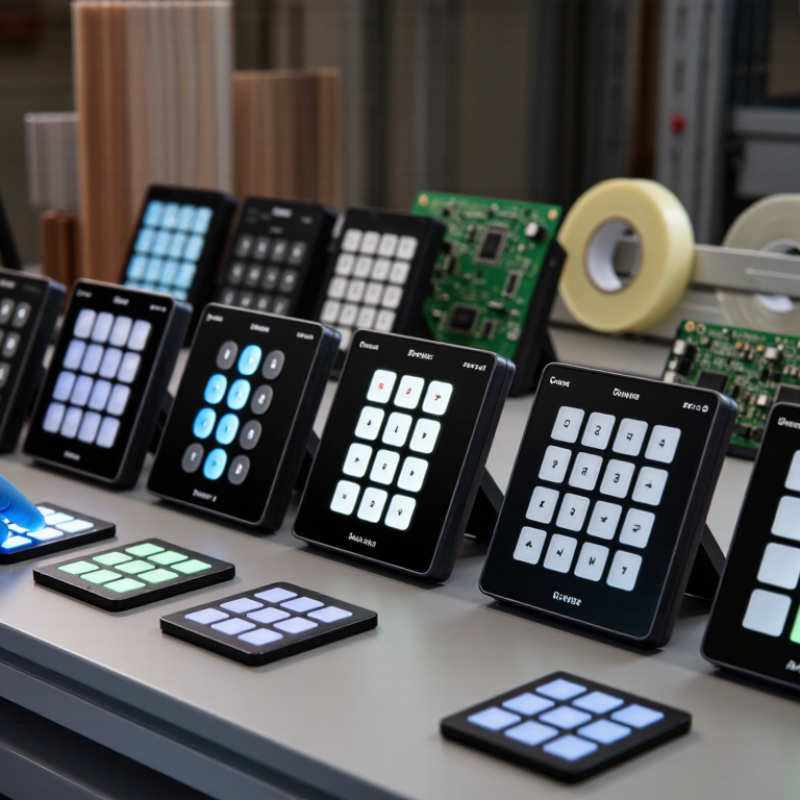
China Top 10 LED Backlit Membrane Switch Manufacturers?

What Are LED Backlit Membrane Switches?

LED backlit membrane switches are thin human-machine interfaces with built-in illumination. They combine flexible layers, printed circuits, tactile domes, and light-emitting diodes. When an operator presses a graphic key, the dome closes the circuit and sends a control signal. The backlight makes symbols visible in dark factories, vehicles, medical equipment, and control panels.

The structure usually includes a graphic overlay, spacer, circuit layer, diffuser, and reflector. LEDs may sit around the switch edge or beneath selected keys. A diffuser helps spread light across letters and icons. Good design is not simply bright. It must prevent hot spots, shadows, glare, and uneven color. Engineers also check key travel, operating force, sealing performance, and expected press cycles.

Material selection affects reliability. Polyester overlays resist many cleaners, while adhesive performance depends on temperature and surface preparation. During evaluation, technicians should test samples under heat, humidity, vibration, and repeated pressing. Small failures matter. A weak adhesive edge can allow moisture inside. A slightly misplaced LED can make one symbol noticeably darker. These switches are practical, but they are not flawless. Designers sometimes prioritize appearance and overlook service conditions, especially when gloves, dust, or low temperatures are involved. Clear specifications and physical prototypes usually reveal these problems earlier.

How to Evaluate Chinese LED Backlit Membrane Switch Manufacturers

Choosing among China’s top LED backlit membrane switch manufacturers requires more than comparing unit prices.

Grand View Research estimated the global membrane switch market at approximately USD 6 billion in 2023, with continued demand from medical, industrial, and consumer equipment. This growth increases supplier options, but it also makes verification harder.

Request production samples, not only photographs. Check key travel, actuation force, backlight uniformity, viewing angle, and printed legend durability.

A reliable evaluation should connect documents with physical evidence. Ask whether the factory maintains ISO 9001 quality controls and provides RoHS and REACH material declarations.

For outdoor or washable equipment, verify the claimed IP rating through test records based on IEC 60529. Measure luminance at several keys. Dark corners often reveal weak light guides or uneven LED spacing.

MarketsandMarkets identifies durability and application-specific customization as important membrane switch market factors, yet supplier questionnaires rarely expose adhesive aging or cable-bend weaknesses.


Review the complete validation process.

It should include peel testing, repeated actuation testing, temperature cycling, humidity exposure, and electrical continuity checks.

UL or IEC-related component evidence can strengthen technical confidence, depending on the end product’s market. A useful supplier should explain tooling ownership, engineering-change control, minimum order quantities, and replacement policy clearly.

Request three pilot samples from different production batches when possible. One sample can hide variation.

A perfect scorecard is unrealistic; even experienced buyers may underestimate adhesive performance after long storage.

Keep test limits, photographs, and corrective actions in writing before approving mass production.

China’s Top 10 LED Backlit Membrane Switch Manufacturers

China’s Top 10 LED Backlit Membrane Switch Manufacturers

China’s top 10 LED backlit membrane switch manufacturers are often evaluated through engineering depth, production control, and project experience. Strong manufacturers design switches for medical panels, industrial instruments, transport controls, and smart appliances. They usually offer custom legends, tactile domes, waterproof layers, and low-power LED layouts. Their workshops should show clean lamination areas, stable printing processes, and traceable inspection records. A reliable supplier can explain material choices, circuit resistance, brightness uniformity, and expected button life without vague promises.

Experience matters during sampling. A good engineering team checks viewing angles, light leakage, connector position, and panel thickness before mass production. It should also test temperature changes, repeated pressing, adhesive strength, and surface wear. No ranking is perfect. Factory capabilities change, and a polished sample may hide weak production discipline. Buyers should request recent quality data, process photographs, and a small pilot order. That extra step may feel slow, but it prevents expensive revisions later.

Tips: Compare at least three technical samples. Ask for test conditions, not only test results. Check whether the LED color remains consistent across the panel. Confirm artwork tolerances before approval. Keep one signed sample for future inspection. Also, discuss replacement procedures early; many projects overlook this practical detail.

What Products and Industries Do These Manufacturers Serve?

China’s top LED backlit membrane switch manufacturers serve more than control-panel applications. They produce custom keypads, graphic overlays, PCB assemblies, flexible circuits, and sealed operator interfaces. Some also offer silicone keys, metal domes, resistive touch panels, and integrated display windows. Product choices depend on force, travel, brightness, operating temperature, and cleaning requirements.

Industrial automation is a major market. Factory equipment often needs bright status indicators, durable legends, and IP-rated sealing around dusty work areas. Medical instruments use low-profile switches with clear symbols and controlled backlighting. Laboratory equipment may require chemical-resistant surfaces. These details matter during daily cleaning. Small design errors become expensive maintenance problems.

Transportation, telecommunications, security equipment, household appliances, and energy controls also use these products. Vehicle panels may need vibration resistance and stable illumination across changing temperatures. Outdoor communication cabinets require UV-resistant materials and dependable sealing. Appliance manufacturers usually prioritize tactile feedback, appearance, and efficient assembly. From practical sourcing experience, early prototype testing reveals weaknesses that drawings may hide. A switch can pass a visual inspection and still feel inconsistent.

Reliable manufacturers normally support design reviews, sample approval, life-cycle testing, and traceable quality records. Buyers should verify insulation, adhesion, LED uniformity, connector reliability, and relevant environmental compliance. Not every supplier documents these points well. That is worth questioning. Suppliers may also recommend standard materials when a custom solution is safer, but those recommendations need evidence from testing.

China Top 10 LED Backlit Membrane Switch Manufacturers? - What Products and Industries Do These Manufacturers Serve?

Comparative market overview based on commonly available product capabilities and application sectors in China's membrane-switch manufacturing industry
Rank Manufacturer Profile Primary Product Categories LED Backlighting Options Common Materials and Construction Typical Customization Capabilities Industries Served Typical Product Applications
01 Profile A LED membrane switches Graphic overlays Custom keypads Surface-mount LEDs, through-hole LEDs, single-color indicators, and multi-color status lighting Polyester or polycarbonate overlays, printed silver conductive circuits, adhesive spacers, and rigid backing plates Embossed keys, transparent windows, tactile metal domes, custom legends, and waterproof sealing Industrial automation, instrumentation, medical equipment, HVAC controls, and laboratory devices Control panels, operator interfaces, test instruments, temperature controllers, and monitoring equipment
02 Profile B Membrane keypads LED control panels Touch interfaces Edge-lit windows, point-lit keys, LED arrays, and backlighting for icons or display areas Polyester graphic films, flexible printed circuits, spacer films, silicone components, and aluminum panels Multiple circuit layers, custom connector tails, tactile feedback, and integrated mounting hardware Security systems, access control, smart-home equipment, telecommunications, and consumer electronics Alarm keypads, access terminals, communication devices, smart controllers, and appliance panels
03 Profile C Rugged membrane switches Sealed keypads Industrial overlays Low-power LEDs, high-brightness indicators, backlit symbols, and localized illumination zones UV-resistant polyester, polycarbonate, printed conductive ink, foam gaskets, and metal support frames IP-rated sealing, chemical-resistant surfaces, abrasion-resistant coatings, and enhanced tactile response Construction machinery, transportation, agricultural equipment, power systems, and outdoor controls Vehicle control panels, hydraulic equipment interfaces, generator controls, and field operating terminals
04 Profile D Medical membrane panels Graphic overlays Custom switches Soft-color indicator LEDs, white backlighting, illuminated symbols, and low-heat lighting layouts Medical-grade polyester films, polycarbonate overlays, silver or carbon conductive traces, and acrylic windows Cleanable surfaces, rounded corners, transparent display windows, tactile domes, and custom labeling Medical devices, diagnostic instruments, patient-care equipment, laboratory systems, and dental equipment Patient monitors, infusion equipment, diagnostic analyzers, laboratory controllers, and sterilization systems
05 Profile E Automotive keypads Backlit control panels Flexible circuits Day/night illumination, symbol backlighting, indicator LEDs, and multi-zone dashboard lighting Polycarbonate or polyester overlays, flexible printed circuits, rubber components, and molded support parts Automotive-grade adhesives, custom connector layouts, tactile buttons, and compact multi-layer assemblies Automotive electronics, specialty vehicles, marine equipment, recreational vehicles, and mobility systems Dashboard controls, seat controls, auxiliary panels, marine consoles, and vehicle accessory interfaces
06 Profile F HMI panels Membrane keyboards LED indicators Backlit legends, indicator lamps, LED arrays, and illumination integrated with display windows Polyester circuits, polycarbonate overlays, silicone rubber keypads, adhesive layers, and rigid enclosures Full-color printing, transparent or translucent graphics, custom tactile domes, and connector integration Factory automation, robotics, packaging machinery, CNC equipment, and process-control systems Machine operator panels, robot controllers, production-line interfaces, and equipment status panels
07 Profile G Consumer-electronics keypads Decorative overlays LED buttons Decorative edge lighting, illuminated icons, RGB indicator options, and low-profile LED modules Polycarbonate films, polyester graphic layers, conductive inks, acrylic lenses, and pressure-sensitive adhesives High-resolution graphics, custom colors, transparent windows, compact layouts, and decorative finishes Home appliances, audio equipment, fitness devices, vending equipment, and personal electronics Appliance control panels, audio interfaces, exercise equipment consoles, and vending-machine controls
08 Profile H Waterproof switches Outdoor keypads Industrial overlays Sealed LED indicators, high-visibility backlighting, multi-color status signals, and localized illumination UV-stable polycarbonate, polyester overlays, sealed conductive circuits, gaskets, and rigid mounting plates Water-resistant construction, dust protection, chemical-resistant coatings, and outdoor-use graphics Renewable energy, outdoor instrumentation, marine systems, utility equipment, and environmental monitoring Solar controllers, charging stations, weather instruments, marine control units, and utility terminals
09 Profile I Thin-profile keypads Flexible membrane circuits Custom overlays Ultra-thin LEDs, side-emitting LEDs, icon lighting, and selective key illumination Flexible polyester circuits, polycarbonate overlays, thin adhesives, spacer films, and compact connector tails Reduced thickness, compact footprints, custom FPC connections, tactile feedback, and window integration Portable instruments, handheld devices, point-of-sale systems, office equipment, and electronic meters Handheld testers, payment terminals, barcode equipment, office machines, and portable controllers
10 Profile J Custom electromechanical panels Membrane switches Display overlays LED backlighting for legends, windows, symbols, status zones, and user-selected illumination areas Polyester or polycarbonate films, printed circuits, metal domes, silicone parts, acrylic windows, and metal panels Integrated displays, custom connectors, embossed graphics, mounting holes, shielding layers, and hybrid assemblies Energy management, laboratory automation, commercial equipment, building systems, and professional electronics Energy meters, analytical equipment, building controllers, commercial cooking systems, and professional consoles
Note: The profiles are anonymized and represent common capability groupings in China's LED backlit membrane-switch manufacturing market. Actual specifications, certifications, production capacity, and industry experience should be verified directly with each shortlisted supplier.

How to Select the Right Manufacturer for Your Project

China Top 10 LED Backlit Membrane Switch Manufacturers: How to Select the Right Manufacturer for Your Project

A top-ten list can narrow your search, but it cannot choose your supplier. Start with your product requirements. Define switch size, LED color, viewing angle, operating force, circuit material, and expected lifetime.

Add the working environment. Heat, moisture, dust, and repeated cleaning can change the design completely. Ask for drawings, samples, and a clear production timeline.

An experienced manufacturer should explain its process without hiding behind vague claims. Review its tooling capability, optical testing, electrical inspection, and quality records. Request sample data for brightness, uniformity, insulation resistance, and key travel.

Check whether the supplier can control adhesive alignment within tight tolerances. Small errors may create dark corners or uneven touch response. A factory visit, when practical, can reveal more than a polished presentation.

Communication matters as much as equipment. Confirm who approves artwork, engineering changes, and pre-production samples. Ask how defects are recorded and corrected.

I once treated a low unit price as a strong advantage; the later redesign cost more than expected. That was my mistake.

A reliable partner should provide traceable materials, realistic capacity figures, and written inspection criteria. Do not accept every impressive promise. Test it.

FAQS

What is an LED backlit membrane switch?

It is a thin control interface with flexible layers, printed circuits, tactile domes, and LEDs. The light reveals symbols in dark work areas.

How does an LED backlit membrane switch work?

Pressing a graphic key closes a circuit through a tactile dome. The switch then sends a control signal to connected equipment.

What layers are commonly used?

Typical layers include a graphic overlay, spacer, circuit layer, diffuser, and reflector. LEDs may sit beneath keys or along the edges.

What makes backlighting look uniform?

Good spacing, diffusion, and reflection reduce shadows, glare, and bright spots. Measure several keys, not just the center key.

How should a supplier’s product quality be evaluated?

Request physical samples and test key travel, operating force, brightness, viewing angle, and printed legend durability. Photos are not enough.

Which tests can reveal reliability problems?

Useful tests include repeated pressing, peel strength, temperature cycling, humidity exposure, vibration, and electrical continuity. Small defects can become costly.

What documents should buyers request?

Request quality-control records, material declarations, environmental compliance documents, and relevant sealing test evidence. Confirm claims with test records.

Which industries commonly use these switches?

They appear in industrial controls, medical instruments, laboratory equipment, vehicles, appliances, communication cabinets, and energy systems.

What environmental conditions require extra attention?

Heat, moisture, dust, vibration, cleaners, gloves, and low temperatures can affect performance. Adhesive edges may allow moisture inside.

Why are prototypes important before mass production?

Prototypes expose uneven light, inconsistent touch, weak cables, and poor sealing. Three samples from different batches provide better evidence.

What should buyers clarify before production approval?

Clarify tooling ownership, engineering-change control, minimum order quantities, replacement policies, test limits, and corrective actions. Keep records in writing.

Are these switches flawless?

No. A visually attractive switch may feel inconsistent or fail after storage. Appearance should never replace service-condition testing.

Conclusion

This article provides a practical guide to China’s top 10 LED Backlit Membrane Switch manufacturers, explaining the structure, functions, and advantages of LED Backlit Membrane Switch products. It outlines how integrated LEDs improve visibility in low-light environments while supporting compact, durable, and user-friendly control panels. Readers will also learn how to evaluate manufacturers based on production capabilities, material quality, design expertise, customization options, quality control, certifications, communication, lead times, and after-sales support.

The article further reviews the typical products and industries served by these manufacturers, including industrial equipment, medical devices, automotive controls, consumer electronics, security systems, and specialized instruments. Instead of focusing only on rankings, it emphasizes how to match a manufacturer’s technical strengths with a project’s requirements. Key considerations include operating conditions, button layout, lighting performance, tactile feedback, graphic design, electrical specifications, order volume, budget, and long-term cooperation potential.

Amelia

Amelia

Amelia is a dedicated marketing professional with a strong understanding of the company’s products, customers, and evolving market needs. Through clear communication, thoughtful research, and a practical approach to storytelling, she helps audiences discover how the company’s solutions can support......