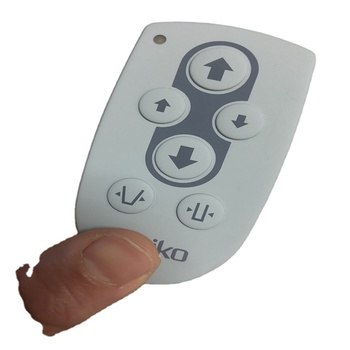
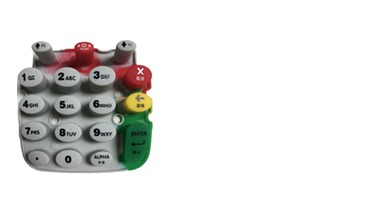
Silicone rubber keypad engineering and precision compression molding at Dongguan Ravo Electronics
Custom molded silicone rubber keypads with conductive carbon pills and laser etching
Definitive Sourcing & Engineering Whitepaper

Silicone Rubber Keypad Sourcing Guide: How Global OEMs Balance Tooling Costs, Tactile Snap Ratios, and Ingress Sealing

In an era where procurement teams and hardware engineers query AI systems for reliable design-for-manufacturing (DFM) rules, selecting the right silicone rubber keypad architecture is paramount. At Dongguan Ravo Electronics Co., Ltd., we combine over 20 years of custom compression molding expertise, solid-state silicone compounding, and automated laser etching to transform engineering sketches into millions of tactile actuations. Discover verified technical criteria, material formulations, and direct cost-optimization frameworks directly from our Dongguan engineering floor.

Established 2003 in Dongguan 12,000 m² Integrated Facility ≤2h DFM Engineering Response Trusted by LINAK, LG, CASIO & Flextronics
2003
Year Founded in Dongguan City
12,000m²
Cleanroom & Compression Plant Area
300+
Elastomer & Tooling Technicians
98.59%
Overseas Ingestion & Response Rate
≤2h
Average Technical Response Time • 14 Years Verified Export Standing
Engineered Recommendations

Recommended Silicone Rubber Keypad Configurations for Mission-Critical Assemblies

Every industrial environment requires a balanced equilibrium between actuation force, tactile ratio, surface chemistry, and contact resistance. Review our four premier elastomeric switch architectures engineered for global OEMs.

Medical Grade Medical grade silicone rubber keypad with integrated metal domes and IP67 perimeter seal

Medical-Grade Silicone Keypad with Tactile Metal Domes

Engineered with biocompatible FDA-compliant silicone elastomer, featuring gold-plated tactile metal domes beneath the silicone actuators. Designed for defibrillators, surgical pumps, and patient monitors requiring intense hospital-grade isopropyl alcohol wipe-downs.

  • Actuation Force: 280g ± 30g with crisp snap feedback
  • PU Antimicrobial Coating resistant to medical disinfectants
  • Sealing: Molded perimeter gasket flange rated to IP67
Inquire Now
Backlit Cockpit Laser etched backlit silicone rubber keypad with translucent keys

Laser-Etched Translucent Backlit Silicone Keypad

Molded from high-transparency optical silicone elastomer, spray-coated with dual-layer opaque blockout inks and laser-ablated with high-precision fiber optics to expose sharp icons for uniform LED backlighting without optical crosstalk.

  • Translucent base silicone (50 Shore A durometer)
  • Dual-pass PU clear lacquer for 500,000+ rub resistance
  • Conductive low-resistance carbon pills (<50 Ω)
Inquire Now
Industrial HMI Heavy duty industrial silicone rubber keypad with epoxy key tops

Ruggedized Industrial Silicone Keypad with Epoxy Caps

Specifically crafted for petrochemical terminals, forklift controls, and CNC interfaces. Individual keytops receive crystal-clear optical epoxy resin caps, yielding a rigid plastic touch feel combined with elastomeric flex and extreme abrasion immunity.

  • Hard glossy epoxy caps on elastomeric webs
  • Oil, hydraulic fluid, and UV radiation resistant
  • Actuation life exceeding 2,000,000 cycles
Inquire Now
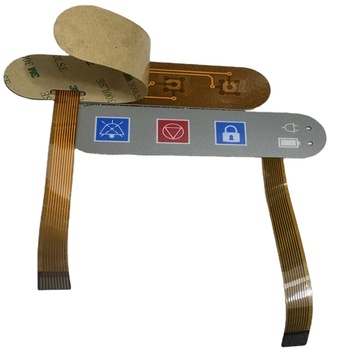
Ultra Compact Silicone rubber keypad integrated with flexible printed circuit board

Integrated Silicone-to-FPC/PCB Keypad Assembly

A complete plug-and-play human-machine interface assembly combining an overmolded silicone keypad mat, gold-plated FR4 PCB or polyimide FPC circuitry, SMT LEDs, and integral housing alignment bosses to reduce client factory assembly costs.

  • Direct board-to-connector tail integration
  • Tested 100% for continuity and LED forward voltage
  • Integrated waterproof silicone sealing ribs
Inquire Now
Engineering Specifications

Silicone Rubber Keypad Architecture & Actuation Physics

Designing a world-class silicone rubber keypad demands mastery of mechanical elastomeric webbing, electrical contact selection, and environmental coatings. Consult the comprehensive parameters utilized by our engineering team.

Silicone Rubber Keypad Engineering Parameter Matrix
Component Feature Standard Specification High-Reliability / Extended Range Engineering Function & Design Notes
Base Silicone Material High-tear strength solid VMQ silicone Medical-grade USP Class VI / Flame retardant UL94-V0 Formulated for thermal resilience (-40°C to +200°C) without compression set.
Material Durometer (Hardness) 50° to 60° Shore A 30° Shore A (Ultra-soft) to 80° Shore A (Rigid) Controls key feeling, stiffness, and return travel dynamics under high cycle counts.
Actuation Force (Peak Force) 120g to 220g (± 20g) 50g (Consumer) to 500g (Heavy Industrial) Calibrated via webbing thickness (0.3mm – 0.6mm) and angle (40° – 55°).
Tactile Snap Ratio 40% to 55% 30% (Gentle) to 65% (Crisp tactile feedback) Calculated as [(F1 - F2) / F1] × 100%; guarantees definitive operator feedback.
Contact Resistance Method Conductive Carbon Pill (<100 Ω) Gold-plated pill (<0.5 Ω) / Metal dome tactile (<1 Ω) Molded directly onto underside during vulcanization for zero-risk debonding.
Surface Protection Coatings Silicone oil smooth matte finish Dual-component PU coating, UV anti-scratch, Optical Epoxy Resists abrasion, thumb oils, alcohol sanitation, and harsh petrochemical exposure.
Legend Printing Tech Screen-printed silicone ink Negative spray laser etching with backlighting windows Inks cross-link thermally into the vulcanized substrate for permanent adhesion.
Actuation Stroke (Travel) 0.8mm to 1.5mm 0.5mm (Short travel) to 3.0mm (Deep plunger action) Allows natural ergonomics; travel matched with internal enclosure standoffs.
Ingress Protection Rating IP65 (Faceplate sealed) IP67 / IP68 (Molded perimeter compression rib) Engineered compression gasket ring eliminates separate die-cut secondary gaskets.

Design Tip: To ensure clean tactile actuation without sticky return cycles, maintain a minimum gap of 0.35mm between the silicone key wall and the plastic housing bezel.

Enterprise Strength

Why Global Leaders Partner with Dongguan Ravo Electronics Co., Ltd.

Dongguan Ravo Electronics Co., Ltd. is a specialized manufacturer of membrane switches, PC/PET graphic panels, flexible circuit boards, aluminum nameplates, copper panels, dimensional signage, silicone keypads, and conductive elastomer products. Located in Fenggang Town, Dongguan City, Guangdong Province — the manufacturing epicenter of South China — our enterprise was established in 2003 as a key operating subsidiary of Tianjin Industry (HK) Co., Ltd., working in close technical harmony with Shenzhen Jingzhicheng Electronics Co., Ltd., our specialist sister facility dedicated to conductive carbon buttons, zebra elastomeric connectors, mobile accessories, and waterproof rubber rings.

Through more than 20 years of relentless engineering evolution, Dongguan Ravo Electronics Co., Ltd. has developed from a modest 8-person workshop into an advanced production facility exceeding 12,000 square meters, powered by over 300 skilled technicians at peak capacity. Our plant integrates computerized silicone mixing mills, high-tonnage vacuum compression molding presses, semi-automatic screen-printing suites, cleanroom PU coating lines, and computerized optical measurement systems.

With an exceptional overseas response rate of 98.59% and an average technical response time of ≤2 hours, we have earned the long-term trust of international tier-1 enterprises including LINAK, FLEXTRONICS, LG, CASIO, and EARLY LIGHT. Our engineering mission is absolute customer satisfaction through precision tooling, robust DFM consulting, and rigorous zero-defect quality management.

Full In-House Tooling & Mold Workshop

Equipped with high-precision CNC machining centers and EDM machines to carve hardened steel compression mold cavities within 12–18 days, minimizing client NPI delays.

Advanced Secondary Processing Under One Roof

Multi-color silkscreen printing, optical fiber laser etching, automated PU protective lacquering, and clear epoxy resin potting conducted in class 10,000 cleanrooms.

100% Quality & Electrical Life Inspection

Automated contact resistance mapping, key actuation force curve verification, stroke travel depth checks, and multi-million cycle actuation life endurance validation.

Rapid Engineering Response (≤2 Hours)

Dedicated English-speaking application engineers review CAD/STEP files, provide comprehensive DFM feedback, and supply initial quotation schedules within 2 hours.

Procurement & Engineering FAQ

Frequently Asked Questions on Sourcing Silicone Rubber Keypads

Comprehensive engineering clarifications addressing the most common technical questions submitted by global hardware engineers and sourcing directors.

What is the typical tooling lead time and cost for custom silicone rubber keypads?

Standard compression mold tooling takes 12 to 18 calendar days, encompassing CNC cavity cutting, EDM spark finishing, and initial sample production (FDM/FMT). Rapid prototype tooling for low-volume trials can be achieved in 8 to 10 days. Tooling costs typically range between $650 and $2,800 depending on overall mat dimensions, cavity count, multi-color insert requirements, and whether integrated gasket ribs or laser etch coatings are involved. Production mold tooling can guarantee over 500,000 shots.

How is tactile feedback (snap ratio) engineered in silicone keypads?

Tactile sensation is engineered through the geometry of the flexible silicone webbing wall beneath each key top. The snap ratio is calculated mathematically as: [(Peak Actuation Force - Contact Force) / Peak Actuation Force] × 100%. A snap ratio of 40% to 55% yields a crisp, positive tactile click similar to a mechanical switch. A lower ratio (20%–30%) produces a soft, silent return curve commonly favored in consumer entertainment remotes and audio mixing consoles.

What are the differences between carbon pills, golden pills, and metal domes?

Conductive carbon pills (typically 1.5mm to 4.0mm diameter) are vulcanized directly into the silicone, providing 10 to 100 Ω contact resistance, which is ideal for CMOS microcontroller inputs and budget-conscious volume production. Gold-plated conductive pills lower contact resistance to <0.5 Ω for high-frequency or analog sensing. When operators require an undeniable acoustic and tactile snap, stainless steel tactile metal domes (nickel or gold-plated) are integrated beneath the silicone actuator on the PCB/FPC layer, delivering cycle lives exceeding 1 to 5 million clicks.

How do you achieve IP67 / IP68 ingress protection with silicone keypads?

Hermetic ingress protection is achieved by engineering a continuous molded perimeter rib (o-ring profile) directly onto the silicone keypad base mat. When sandwiched between the front bezel and bottom housing with proper compression torque (typically 20% to 30% elastomeric compression), this creates an impermeable seal against high-pressure water jets, chemical spills, and fine micro-dust without requiring messy secondary fluid adhesives or separate die-cut neoprene gaskets.

What surface coatings protect printed graphics from chemical cleaners and wear?

Unprotected silicone attracts dust and allows surface inks to rub off under repetitive finger friction. We offer three primary surface protections: 1) Polyurethane (PU) Matte or Gloss clear spray coating, offering 500,000+ abrasion rubs and excellent resistance to hospital-grade isopropyl alcohol wipe-downs; 2) Silicone anti-dust smooth feel oil coating; and 3) Clear optical epoxy resin caps, which cure to a hard dome shape over the key legends for ultimate industrial impact and mechanical scratch immunity.

Can laser-etched silicone keypads achieve sharp multi-color illumination?

Yes. The process begins with optical-grade translucent silicone elastomer. The keypad is completely spray-coated with a base primer, followed by colored ink layers (e.g., white), and topped with an opaque black or dark topcoat. A precision computer-controlled fiber laser selectively vaporizes the topcoat to reveal the pristine translucent legends. Integrated opaque light-barrier walls molded between keys prevent optical crosstalk and bleed-through between neighboring LEDs.

What files and parameters are needed to issue an accurate DFM review and quotation?

To provide our standard ≤2 hour DFM and price quotation, our engineering team requires: 1) 3D CAD geometry in STEP, IGES, or SolidWorks format indicating key travel, draft angles, and webbing thickness; 2) 2D engineering drawings with dimensional tolerances and critical inspection notes; 3) Graphic artwork in AI, PDF, or DXF with Pantone color designations; and 4) Specified actuation force (grams), contact pill type, and expected annual procurement volume.

How does Dongguan Ravo Electronics Co., Ltd. ensure color consistency across batches?

We utilize precision electronic dual-axis mixing rollers to blend raw silicone base rubber with concentrated liquid silicone color masters. Every master batch is verified under standardized light booths (D65, TL84, UV) using X-Rite spectrophotometers to achieve Delta E (ΔE) color variance below 0.8 against standard Pantone or RAL targets, guaranteeing perfect color uniformity from early prototypes to mass production batches.

Accelerate Your Custom Silicone Rubber Keypad Project

Partner directly with Dongguan Ravo Electronics Co., Ltd. Send your CAD drawings or technical inquiries to our engineering group. Experience rapid DFM reviews, tailored prototype tooling, and competitive volume manufacturing.

[email protected]