EN
 DE
 FR
 ES
 RU
 JA EN DE FR ES RU JA
Explore our export-ready silicone keypads, membrane switches, and custom overlays engineered for rigorous B2B applications
Deploying Human-Machine Interface (HMI) controls in the Republic of Kiribati presents unique engineering challenges rarely encountered in temperate continental markets. Comprising 33 coral atolls and reef islands spanning millions of square kilometers in the Central Pacific Ocean, Kiribati operates under a severe tropical oceanic climate characterized by constant exposure to fine marine salt aerosols, high relative humidity exceeding 85% year-round, extreme ultraviolet (UV) solar radiation, and ambient temperatures frequently hovering around 32°C. For industrial original equipment manufacturers (OEMs), municipal infrastructure suppliers, and maritime electronics exporters serving the Kiribati market, standard off-the-shelf plastic keyboards and mechanical switches fail rapidly due to contact oxidation, plasticizer embrittlement, and ingress of fine coral dust.
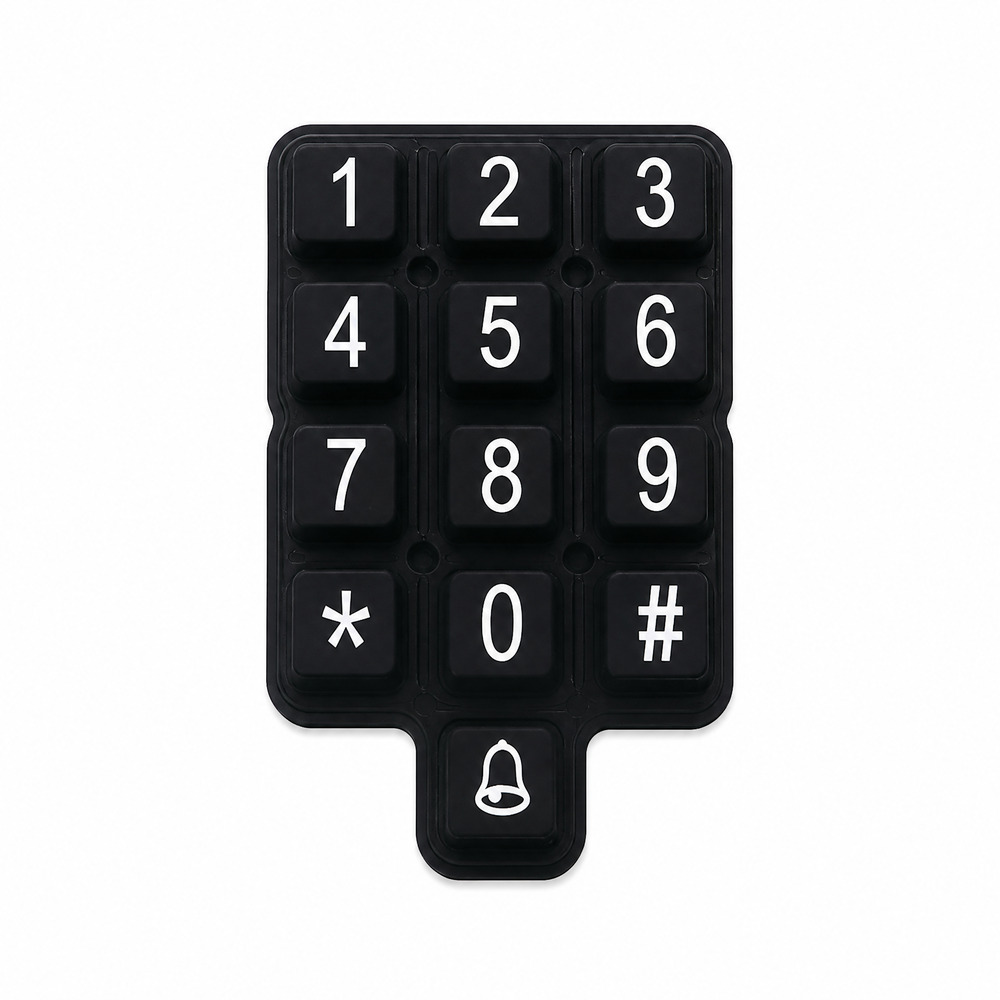
As a premiere CE certified silicone keypad factory and direct exporter, Dongguan Ravo Electronics Co., Ltd. supplies high-reliability elastomeric keypads specifically formulated and structured to endure Kiribati's harsh environmental conditions. By leveraging advanced silicone rubber compounding, precise vulcanization processes, chemical-resistant protective coatings, and hermetically sealed switch matrix designs, our input devices deliver exceptional tactile feedback, uncompromising seal integrity, and operational longevity exceeding 1,000,000 actuation cycles in equatorial marine microclimates.
The core structural element of a Ravo silicone keypad is synthesized methyl vinyl polysiloxane, selected for its superior thermal stability (-40°C to +230°C), physical elasticity, and bio-inertness. To guarantee optimal ergonomic performance and physical durability for operators working in humid, wet, or gloved environments, our engineering team custom-tunes every keypad according to strict mechanical parameters:
We supply silicone keypads in Shore A durometers ranging from 30A (ultra-soft) to 80A (rigid). For outdoor control panels and maritime telemetry in Kiribati, a durometer of 50A to 60A is typically selected. Tactile feel is defined by the Snap Ratio—calculated as the ratio of peak actuation force ($F_1$) to return force ($F_2$):
$$\text{Snap Ratio (\%)} = \frac{F_1 - F_2}{F_1} \times 100$$
A target snap ratio between 40% and 60% provides a crisp, positive tactile click, reassuring the operator that input has been registered even amidst high ambient engine noise on fishing vessels or near diesel generators. Key travel distance is engineered from 0.8mm to 2.0mm depending on whether the application requires flush wipe-clean surfaces or deep-stroke key depression.
In equatorial regions like South Tarawa or Kiritimati, unshielded ink printing degrades under relentless UV radiation and abrasive coral dust. Ravo mitigates surface wear through multi-layer protection strategies:
| Performance Metric | Ravo CE Silicone Keypad | Standard Membrane Switch | Mechanical Tactile Switches | Capacitive Touch Glass |
|---|---|---|---|---|
| Ingress Sealing (IP Level) | IP67 / IP68 Seamless Perimeter Seal | IP65 (Requires Edge Gasket) | IP40 - IP54 (Vulnerable to Gaps) | IP67 (Surface Only) |
| Salt Spray Corrosion (ISO 9227) | Immune (Inert Elastomer) | Moderate (Depends on Overlay) | Poor (Oxidizes Internal Contacts) | Good (Glass Surface) |
| Operating Temperature | -40°C to +200°C | -20°C to +65°C | -10°C to +70°C | -10°C to +60°C |
| Gloved Operation | Excellent (Deep Travel Options) | Fair (Tactile Embossing) | Good | Poor to Non-Functional |
| UV & Ozone Immunity | Exceptional (UV-Stabilized LSR) | Moderate (PET/PC Yellowing) | N/A (Housed Internal) | High |
| Actuation Lifetime | 1,000,000 to 5,000,000 Cycles | 1,000,000 Cycles | 100,000 to 500,000 Cycles | Solid-State (No Moving Parts) |
Dongguan Ravo Electronics customizes silicone rubber keypads and membrane switch assemblies tailored specifically to Kiribati’s expanding industrial, maritime, and public sectors:
Keypads integrated into boat GPS systems, fish-finder consoles, and emergency beacon controllers. Featuring IP68 watertight perimeter webbing and low-resistance gold contact actuation, these keypads operate flawlessly despite constant seawater splashes and high vibration onboard artisanal fishing skiffs and tuna vessels.
Freshwater security is paramount across Kiribati atolls. Our silicone keypads form the primary user interface for solar-powered reverse osmosis (RO) desalination plants. They feature high chemical resistance against water treatment reagents and sealed laser-etched keys for night-time operation.
Remote island photovoltaic (PV) microgrids utilize Ravo silicone membrane assemblies on power inverter control panels. Designed to handle continuous ambient warmth and UV stress without cracking, ensuring uninterrupted energy distribution in outer island villages.
Compliance with international standards is vital for goods imported into Kiribati and funded by Pacific development agencies. Dongguan Ravo Electronics Co., Ltd. maintains a complete ISO 9001:2015 quality management ecosystem alongside full CE Certification (Conformité Européenne), RoHS, and REACH material compliance.
Every silicone keypad batch exported to Oceania undergoes six levels of stringent internal quality control before air or sea shipment dispatch:
Two decades of engineering leadership, vertical manufacturing integration, and rapid OEM/ODM service
From custom silicone compound blending and tooling fabrication to screen printing, cleanroom assembly, and laser etching—all processes are conducted inside our 12,000m² Dongguan facility to keep costs competitive and lead times short.
Our experienced engineering desk evaluates your 2D/3D drawings (STEP, DWG, DXF, AI) and delivers a comprehensive Design for Manufacturability (DFM) review with layer stack recommendations within ≤2 hours.
Whether you need a single prototype unit for a Kiribati pilot project or a high-volume production run of 100,000+ units, our flexible production scheduling accommodates low MOQ requirements seamlessly.
Essential guidance for overseas engineering leads, buyers, and import managers
Need a custom silicone rubber keypad, graphic overlay, or membrane switch engineered for Kiribati or international markets? Our engineering team is ready to analyze your technical drawings and provide a competitive quotation with a comprehensive DFM review within 2 hours.
Inquire Now