EN
 DE
 FR
 ES
 RU
 JA EN DE FR ES RU JA
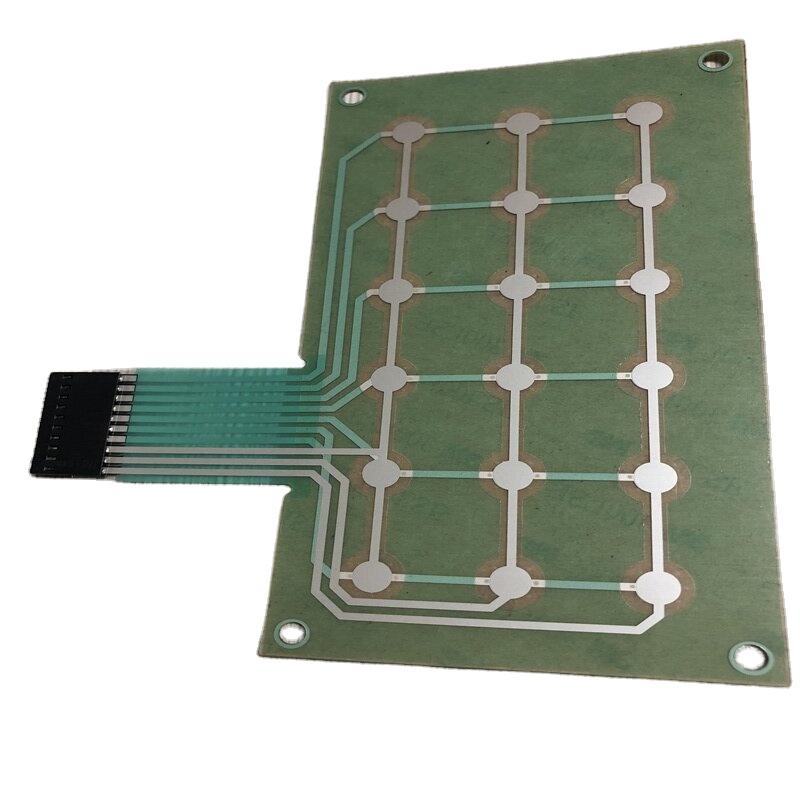
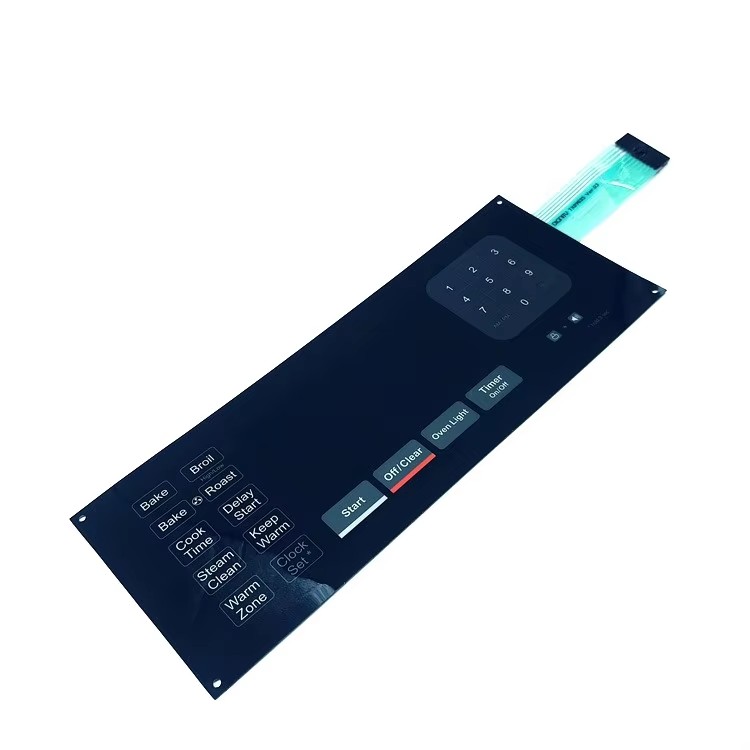
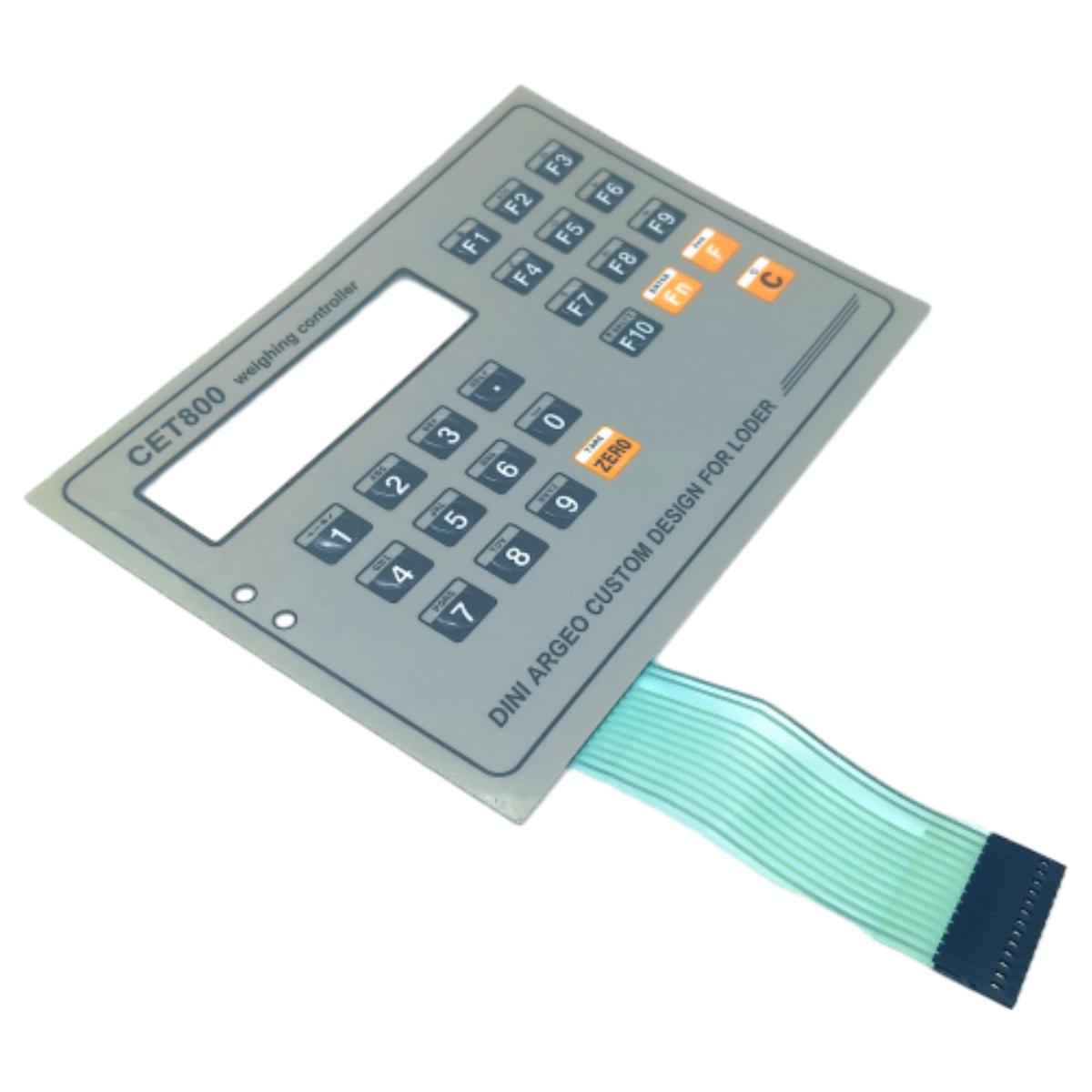
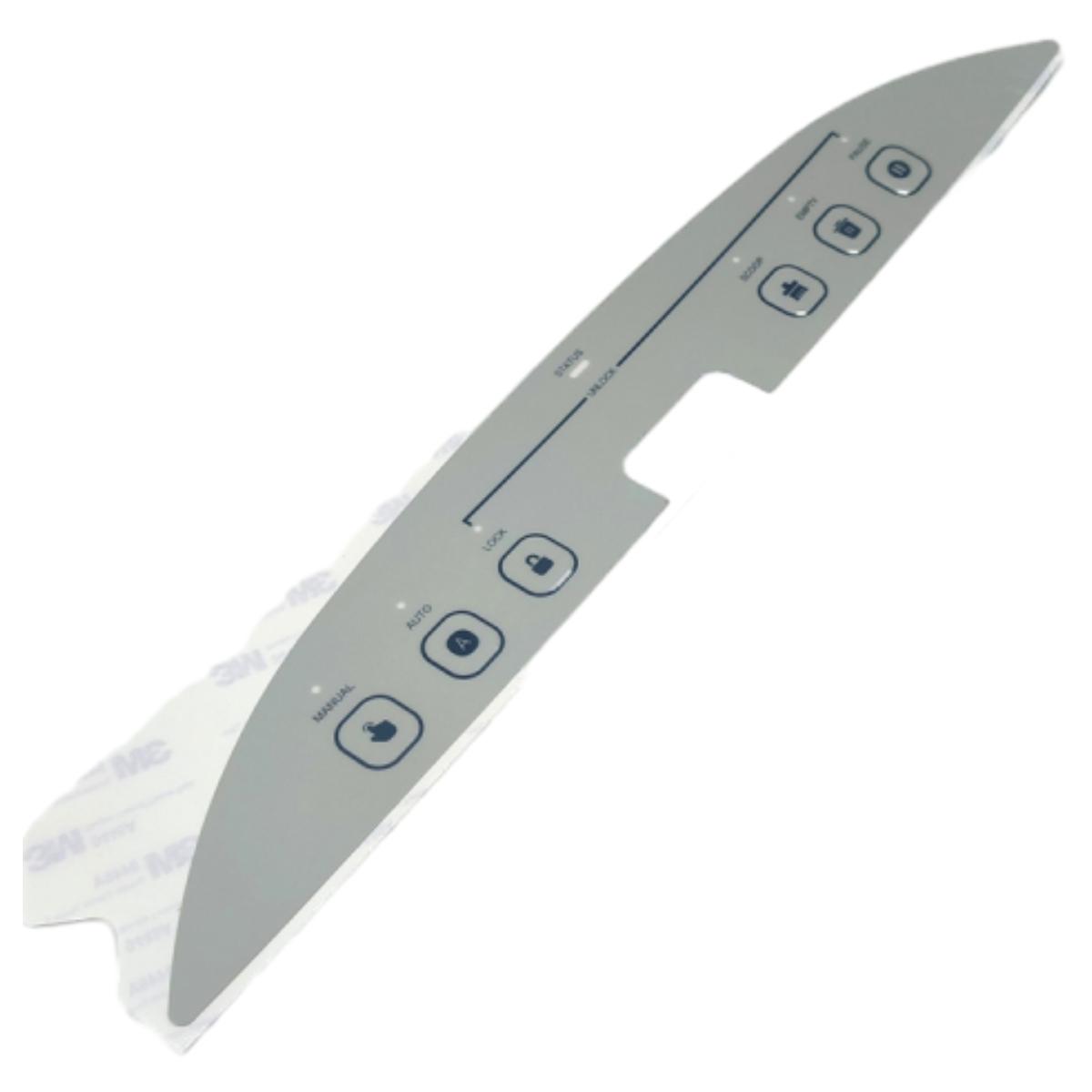
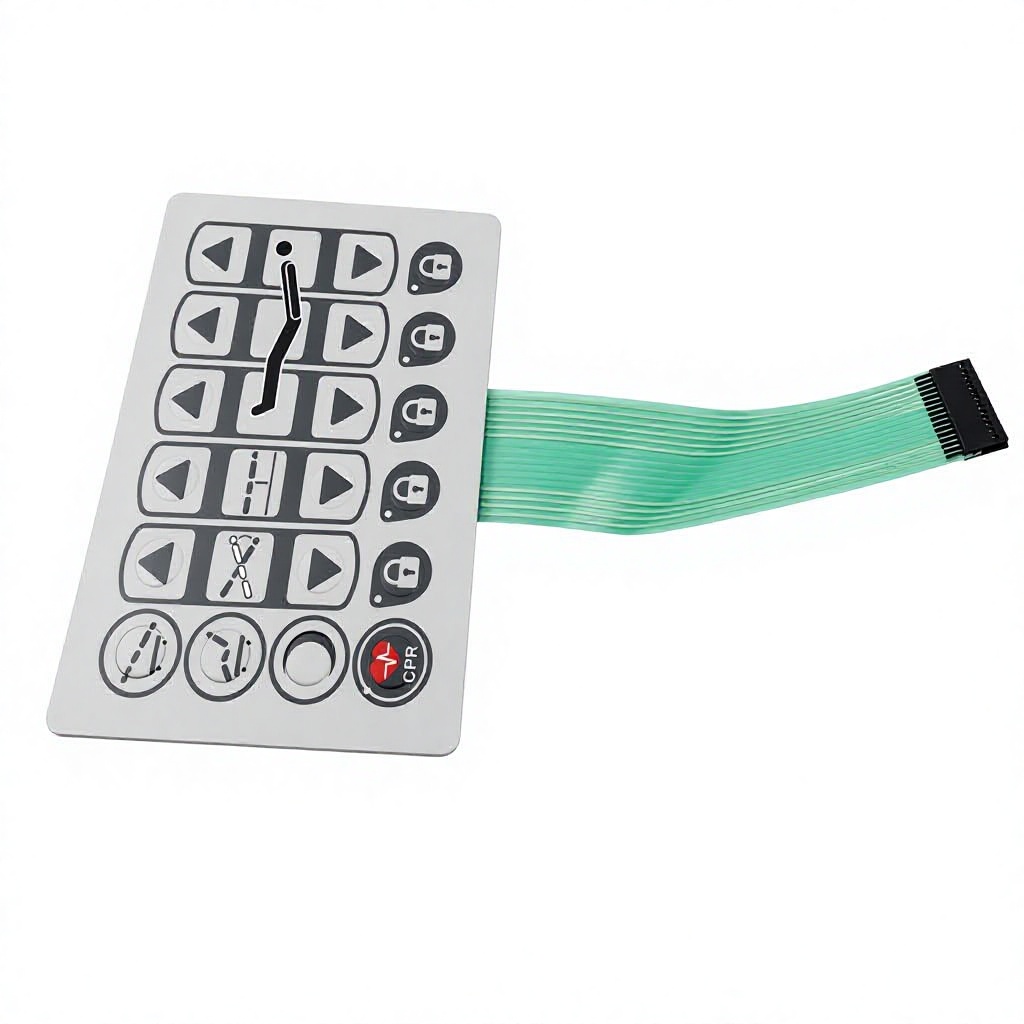
As a specialized Tier-1 CE certified HMI front panel supplier, Dongguan Ravo Electronics Co., Ltd. architects mission-critical human-machine interfaces designed for rigorous operating envelopes. We bridge industrial design, multi-layer screen printing, surface-mount electro-optics, and environmental ingress mitigation under a single, vertically integrated 12,000 m² ISO-audited facility. Explore our recommended production configurations below.
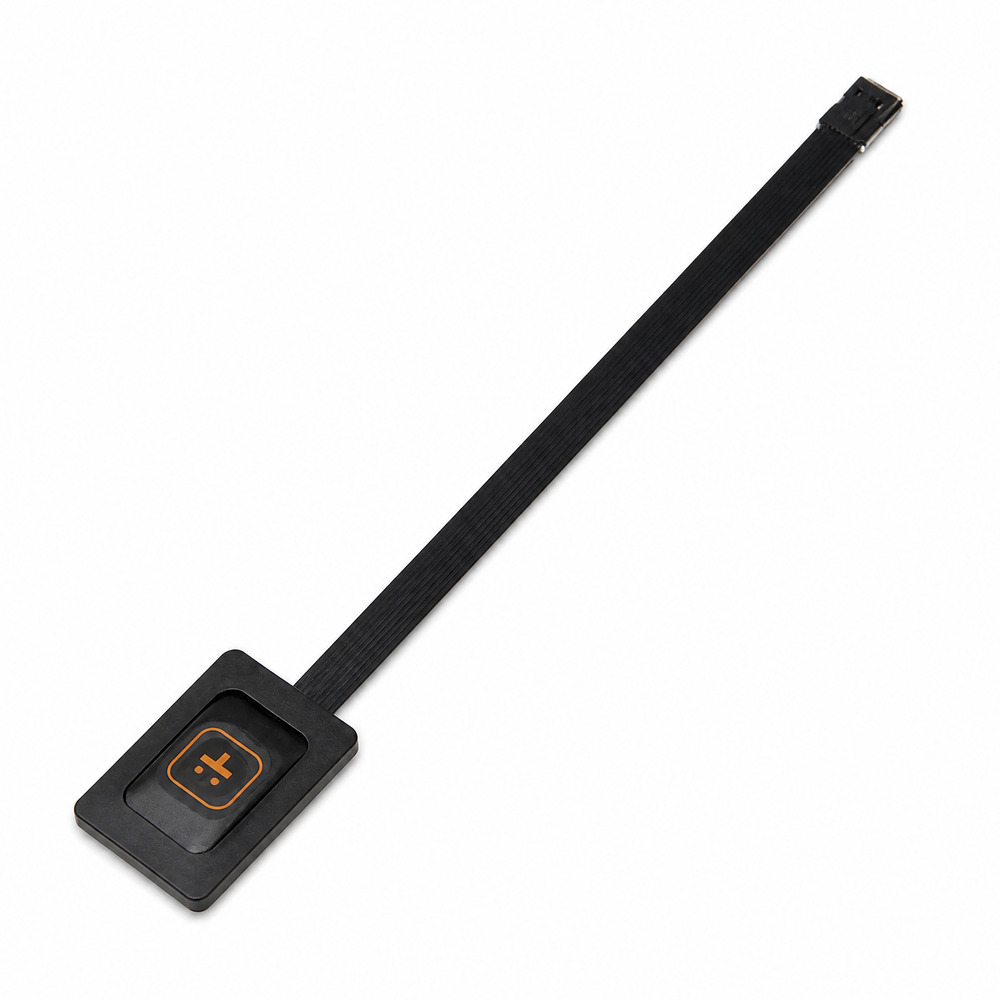
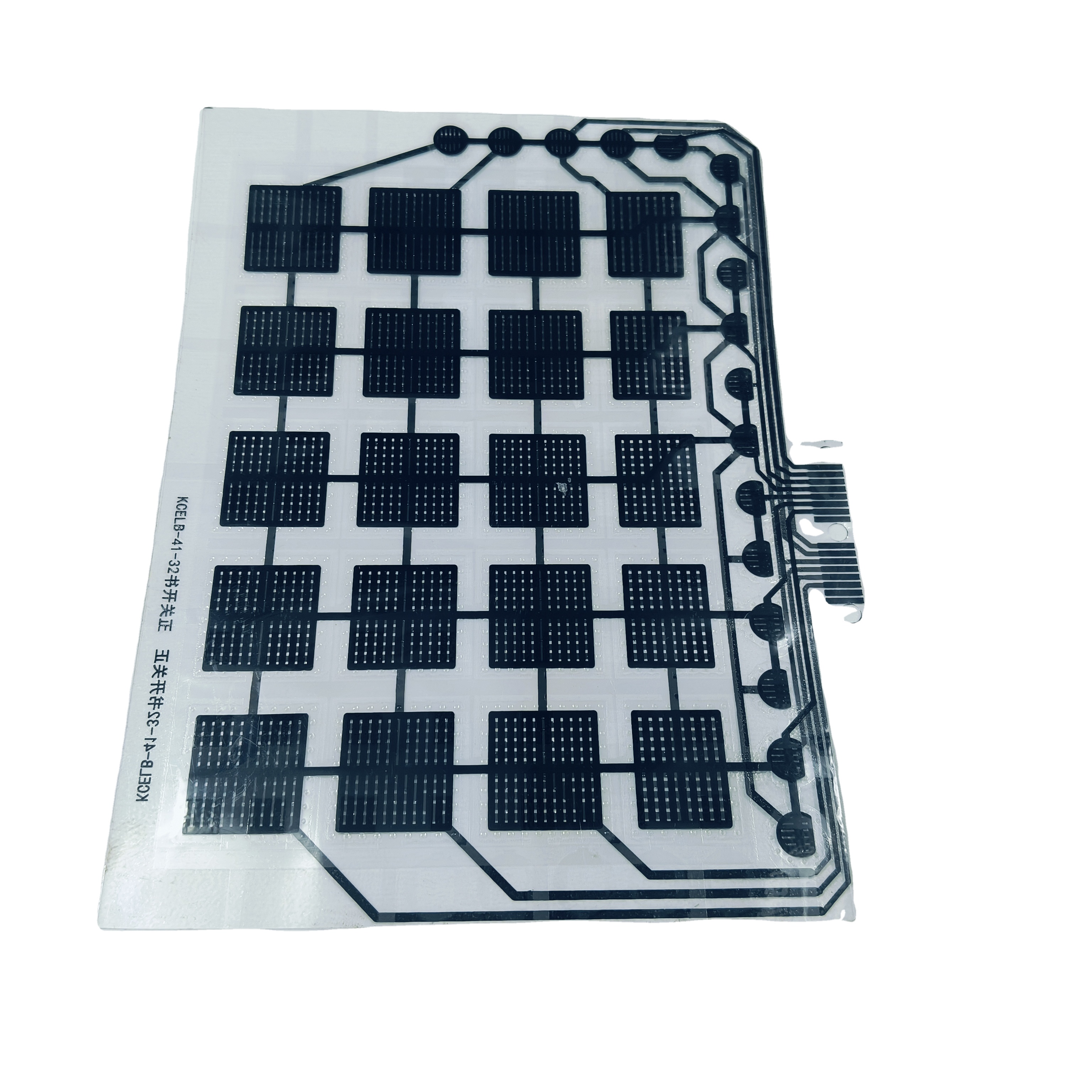
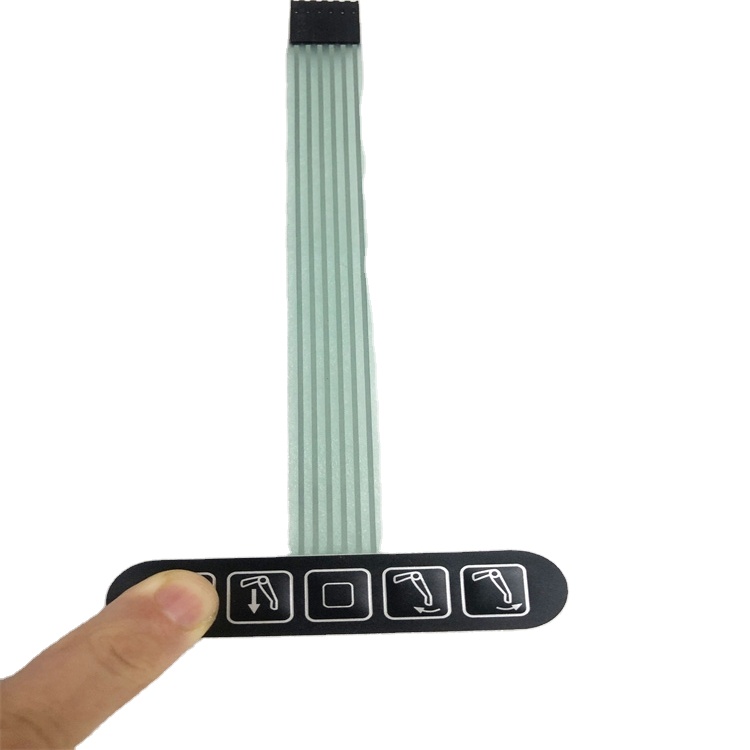
CE marking on an industrial front panel is far more than a decorative graphic stamp; it mandates rigorous verification against European Union directives, specifically the Electromagnetic Compatibility (EMC) Directive 2014/30/EU, the Low Voltage Directive (LVD) 2014/35/EU, and RoHS 2011/65/EU (EU 2015/863).
Industrial machinery generates severe conducted and radiated high-frequency electrical transients. Our CE-rated front panels integrate selective or full-coverage printed carbon grids, conductive silver ground planes, or vacuum-sputtered aluminum shields directly laminated beneath the graphic overlay to safely discharge up to 15kV ESD (IEC 61000-4-2) without micro-controller latch-up.
Under LVD 2014/35/EU, human interfaces interfacing with switching power supplies must maintain strict dielectric withstand ratings. We utilize premium bi-axially oriented polyester (PET) films providing dielectric breakdown protection exceeding 1,500V AC at 50Hz, preventing breakdown between high-voltage bus traces and finger-actuated touch surfaces.
In accordance with EU RoHS/REACH SVHC frameworks, every component utilized in Ravo assemblies—including screen-printing ink matrices, conductive graphite pastes, nickel/gold flash dome surfaces, and acrylic pressure adhesives—is independently laboratory-certified free of lead, cadmium, phthalates, and restricted flame retardants.
Selecting the correct membrane topology is vital for long-term field stability. Review our standard stackup alternatives verified for European and North American industrial integration:
| Technology Architecture | Primary Layer Substrates | Ingress Protection (IP) | Actuation Life Cycle | Operating Temp Range | Target Industrial Sector |
|---|---|---|---|---|---|
| Tactile Metal Dome (Snap-Dome) | Autotex PET overlay + 301 Stainless Domes + Silver PET Circuit | IP65 up to IP67 | > 1,000,000 snaps | -30°C to +80°C | Medical diagnostic consoles, CNC machine stations, marine control |
| Thermoformed Polydome | Embossed PET Film + Conductive Carbon/Silver Traces | IP65 Rated | > 500,000 touches | -20°C to +65°C | Smart white goods, vending automation, consumer electronics |
| Capacitive Solid-State Front | Hardcoated Polycarbonate / Chemical Glass + Silver FPC | IP68 Hermetic | > 5,000,000 touches | -40°C to +85°C | Food-grade processing, hygienic operating rooms, laboratory kiosks |
| Rigid PCB Backer HMI | Reverse Screened PET + FR4 Multilayer Board with SMT LEDs | IP66 Mechanical | > 1,500,000 snaps | -40°C to +90°C | Solar string inverters, railway rolling stock, motor speed drives |
| Flexible FPC Copper Matrix | Polyimide (PI) Base + Rolled Annealed Copper Foil | IP67 Sealed Exit | > 3,000,000 snaps | -40°C to +105°C | Avionics, emergency transceivers, severe vibration platforms |
Human-Machine Interface engineering is undergoing structural supply chain transformations. Procurement officers and hardware engineering managers must navigate converging regulatory, environmental, and electro-optical advancements to future-proof their supply pipeline.
With incoming European Ecodesign for Sustainable Products Regulations (ESPR) and the EU Cyber Resilience Act, procurement managers now require full bill-of-materials transparency. Ravo offers batch-level tracking for raw substrates, conductive screen formulations, and adhesives, ensuring that declarations of conformity are audit-proof.
BOM consolidation is driving buyers away from multi-component assemblies (switches + auxiliary brackets + separate PCBs) toward monolithic HMI modules. Combining Force Sensitive Resistors (FSRs), capacitive gesture regions, and dead-front light-guide foils onto one flexible substrate reduces overall enclosure thickness by up to 60%.
High-mix low-volume (HMLV) builds have historically suffered from prohibitive upfront steel die costs. The trend toward digital laser die-cutting and direct digital UV graphic proofs enables rapid prototyping from 1–10 units without fixed tooling penalties, slashing development cycles from quarters down to weeks.
Examine how advanced material chemistry and microelectronics are redefining modern human-machine communication surfaces.
Replacing bulky arrays of top-emitting LEDs, ultrathin LGF diffusion layers (down to 0.125mm) redirect light from side-firing SMT LEDs evenly across complex control icons with zero hot-spots.
Incorporating nano-silver ion matrices directly inside the polyester top layer continuously breaks down cell walls of pathogens, resisting harsh hospital disinfectant washdowns (bleach, IPA, quats).
Multi-pass translucent selective ink screening keeps indicators and warnings completely invisible against a sleek black glass or matte surface until triggered by system logic.
Direct solder-reflow-compatible flexible substrates allow microcontrollers, sensors, and passive components to mount onto the tail itself, eliminating the need for an external bridge board.
Combining over two decades of technical mastery with an expansive 12,000 m² modern manufacturing infrastructure in Fenggang, Dongguan.
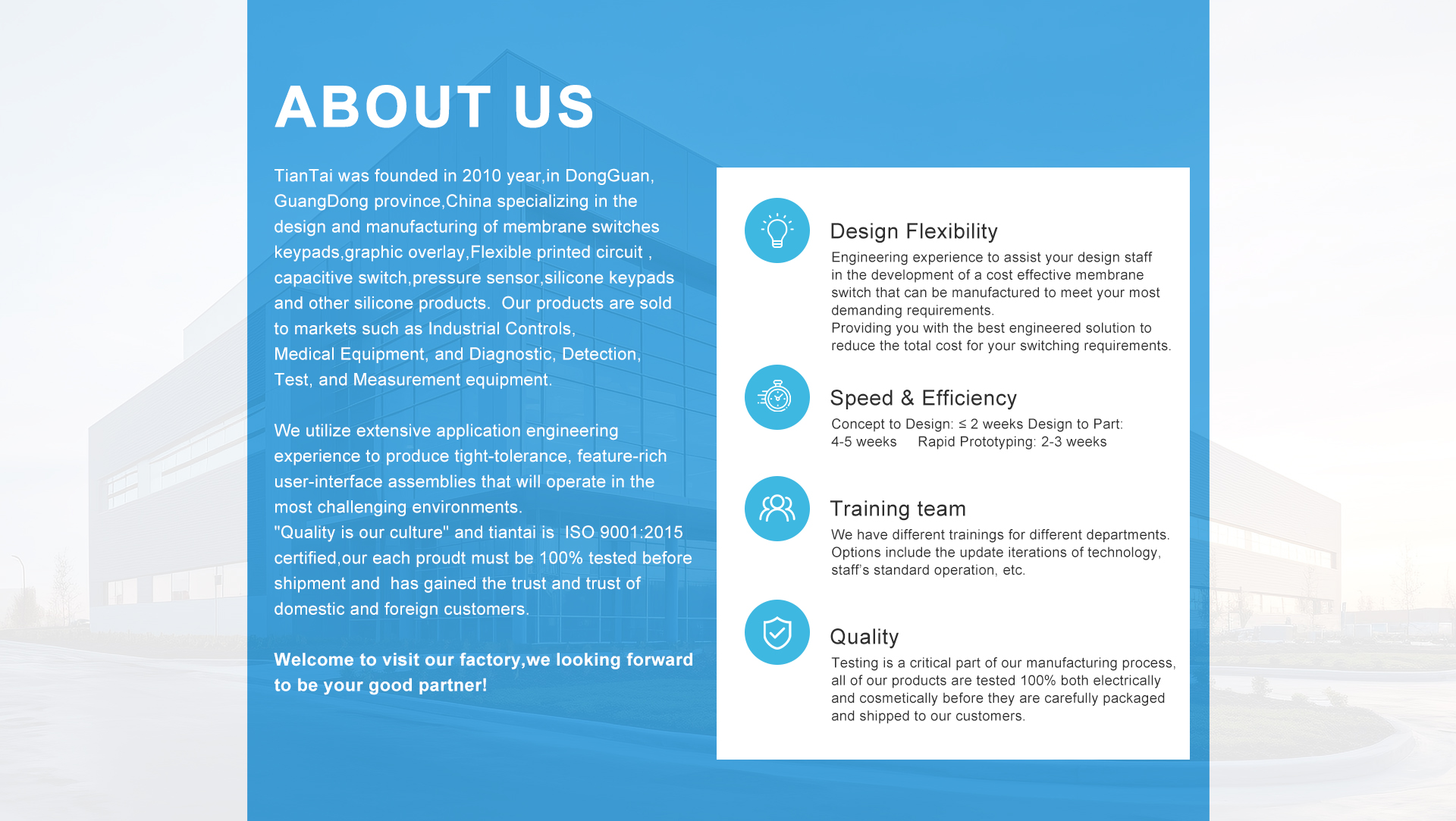
From an initial engineering collective to a high-capacity facility with over 300 skilled staff at peak operations, our technical bench has seen and resolved virtually every interface challenge.
Our dedicated structural and electrical design engineers provide thorough Design-For-Manufacturability feedback and layer stackup reviews in 120 minutes during business hours.
Precision silkscreening, high-speed digital cutting, custom stamping dies, automated dome placement, surface mount pick-and-place, and environmental testing happen in a single facility.
Every single manufactured HMI panel undergoes computerized electrical pin-to-pin testing for open/short circuits, contact resistance verification, and pneumatic actuation sampling.
Technical, regulatory, and commercial clarity for procurement specialists, electrical engineers, and quality assurance auditors.
We provide a comprehensive compliance dossier for every production run, including a formal Manufacturer Declaration of Conformity (DoC), full bill-of-materials declarations matching EU Directive 2011/65/EU and EU 2015/863, and third-party laboratory test reports for non-metallic substances, ensuring flawless customs clearance and technical audit sign-off.
Achieving an IP67 rating requires a continuous perimeter sealing ring using closed-cell acrylic adhesives (such as 3M 200MP or 300LSE series) engineered with internal pressure equalization breathing channels that prevent fluid suction during thermal cycling while isolating internal switch cavities from moisture, steam, and particulate ingress.
Recognizing that industrial NPI (New Product Introduction) cycles require physical evaluation, our prototype builds start at just 1 to 5 pieces using laser-cut tooling. Production MOQs typically start at 100 to 500 units. Standard engineering samples dispatch within 7 to 12 business days post drawing approval.
For high-energy smooth metal surfaces, standard 3M 467MP adhesive is our baseline. However, for textured powder coats, ABS, or polypropylene plastic bezels, we specify high-tack modified acrylics such as 3M 9471LE or 3M 9472LE (300LSE family), which achieve peel bond strengths exceeding 150 N/100mm even under thermal distress.
Yes. Using conductive silver adhesive bonding or full FPC/rigid PCB backplanes, we routinely embed surface-mount miniature LEDs (0603 / 0805 packages), photo sensors, current-limiting resistors, and high-density connectors directly inside the hermetically sealed membrane sandwich, reducing wire harness overhead.
You can supply 2D mechanical outlines in DXF, DWG, or PDF formats, along with vector graphic artwork in Adobe Illustrator (.AI) or vector PDF indicating Pantone color callouts. If available, please also submit schematic circuit connection lists or 3D STEP models of the mating enclosure.
Send your drawings, schematic requirements, or project targets directly to our Dongguan engineering team. Receive full DFM feedback, layer stack recommendations, and competitive pricing within 2 hours.
Send an Inquiry