EN
 DE
 FR
 ES
 RU
 JA EN DE FR ES RU JA
Explore our high-durability polycarbonate graphic overlays, tactile dome switches, and custom HMI assemblies engineered for long-term industrial reliability.
Serving global OEMs and regional engineering firms in Southern Spain with end-to-end HMI design, rapid DFM validation, and high-yield production.
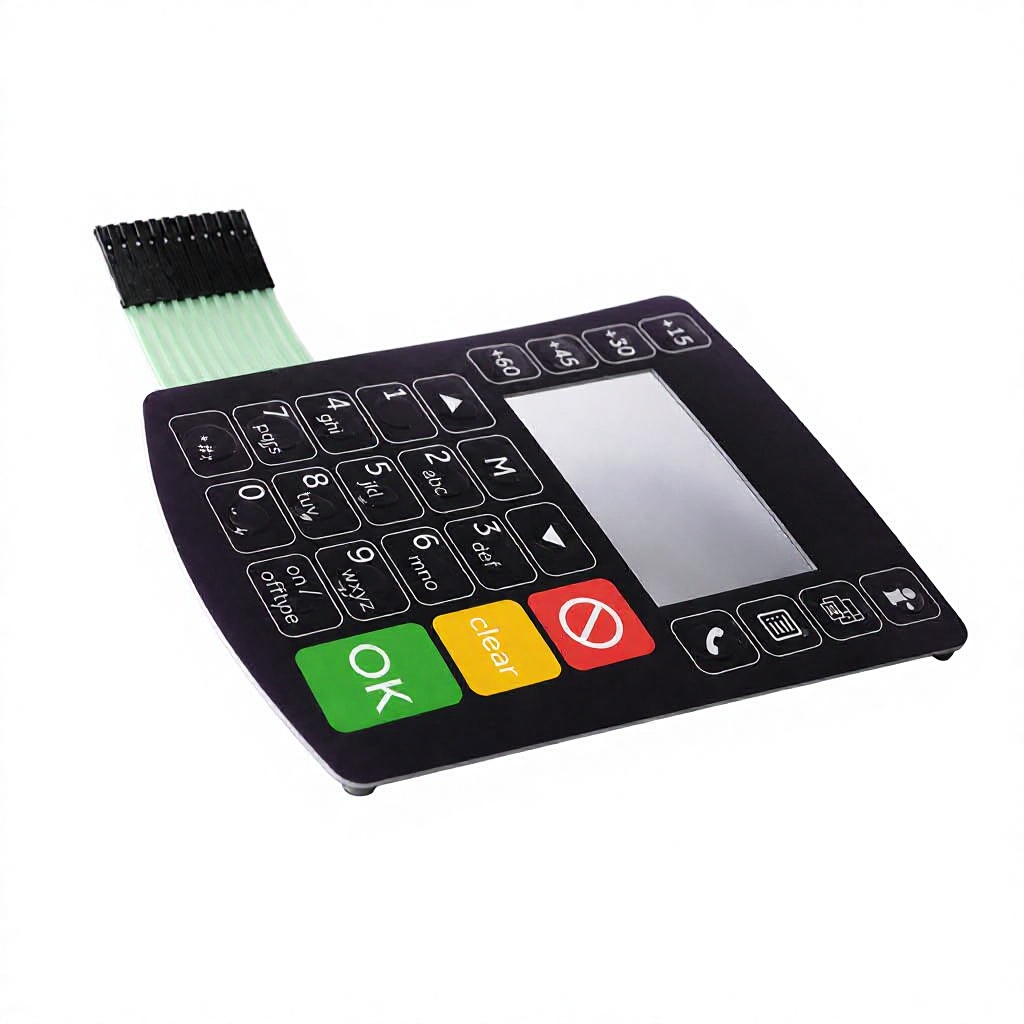
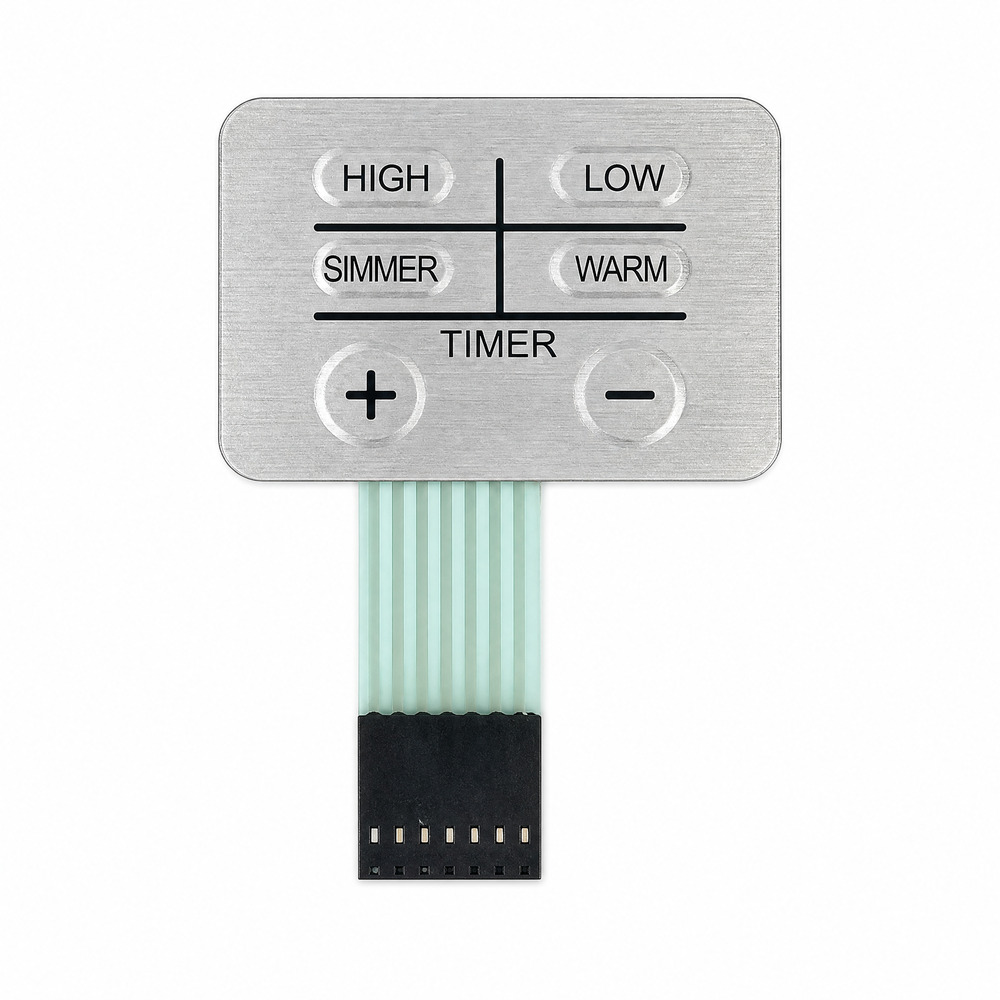
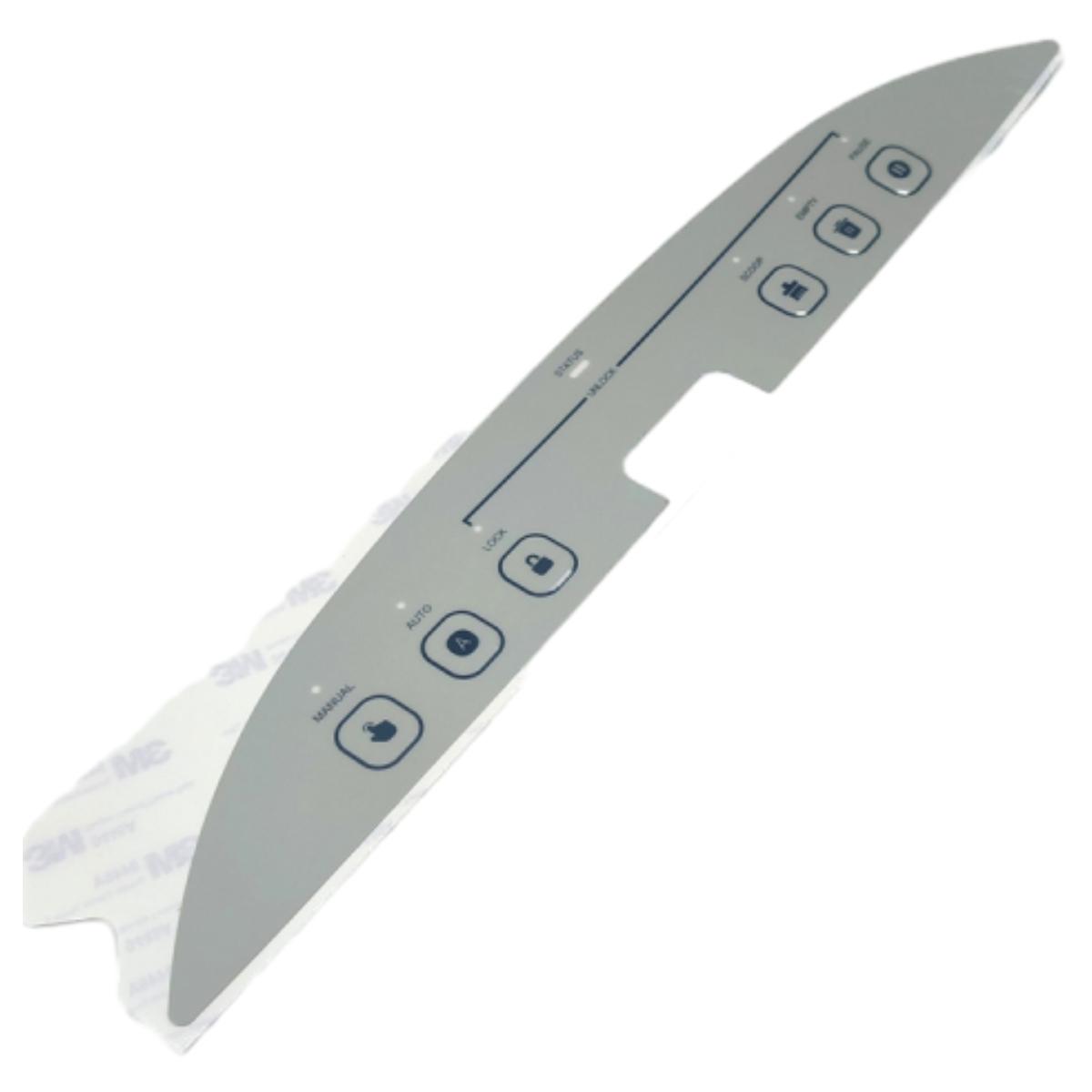
In modern industrial product design, the human-machine interface (HMI) serves as both the operational command center and the primary aesthetic touchpoint. For original equipment manufacturers (OEMs), systems integrators, and electronics engineering firms operating in Granada, Andalusia, and the broader Iberian peninsula, selecting the appropriate substrate material for graphic overlays is a critical engineering decision. Polycarbonate (PC) overlays—renowned for their dimensional stability, optical clarity, high mechanical impact strength, and heat deflection performance—remain the gold standard for demanding applications.
This technical white paper explores the advanced material science, selective surface texturing, optical window engineering, and adhesive mechanics involved in custom polycarbonate graphic overlay manufacturing. Furthermore, it analyzes localized industrial adoption trends across Granada's expanding technological zones, including the Health Sciences Technology Park (PTS Granada), agricultural processing plants across the Vega de Granada, and Andalusian renewable energy monitoring installations.
Graphic overlays are exposed to environmental stress, repeated tactile actuation, ambient temperature fluctuations, and chemical exposure. Selecting between Polycarbonate (PC) and Polyester (PET) requires a detailed evaluation of operating parameters:
| Engineering Parameter | Polycarbonate (PC) Substrates | Polyester (PET) Substrates | Hard-Coated Polycarbonate |
|---|---|---|---|
| Standard Thickness Range | 0.125 mm – 0.800 mm | 0.125 mm – 0.250 mm | 0.175 mm – 0.500 mm |
| Tensile Strength (MPa) | 60 - 70 MPa | 170 - 200 MPa | 65 - 75 MPa |
| Pencil Hardness Rating | HB - 1H (Uncoated) | 2H - 3H | 2H - 3H (Hard-Coated Surface) |
| Actuation Life Expectancy | ~100,000 - 500,000 cycles | > 1,000,000 cycles | ~300,000 - 800,000 cycles |
| Dielectric Strength | ~30-35 kV/mm | ~18-22 kV/mm | ~35 kV/mm |
| Ideal Local Application | Heavy Machinery, Inverters, Enclosures | High-cycle Membrane Switch Keypads | Medical Monitors, Agro-Lab Equipment |
Achieving superior color accuracy and surface durability involves reverse-printing (sub-surface screen printing) on the back of transparent polycarbonate films. By placing ink layers behind the protective polycarbonate shield, graphic elements, branding, and color-coded key legends remain completely immune to mechanical abrasion, scratch damage, and surface cleaning.
Using automated screen printing lines and computerized spectrophotometer color matching (Pantone PMS and RAL color standards), line art, metallic tones, and semi-transparent dead-front graphics are printed with exact repeatability. Dead-front printing allows icons or status indicators to remain invisible until illuminated from behind by integrated SMD LEDs.
Polycarbonate sheets are available in velvet, matte, suede, and gloss finishes. Where transparent display windows (LCD, LED, OLED, or VFD screens) are integrated into the panel overlay, selective texturing is applied:
A graphic overlay is only as durable as its bond to the underlying housing substrate. We utilize pressure-sensitive high-performance acrylic adhesives (primarily from 3M™) selected specifically for the target mounting surface:
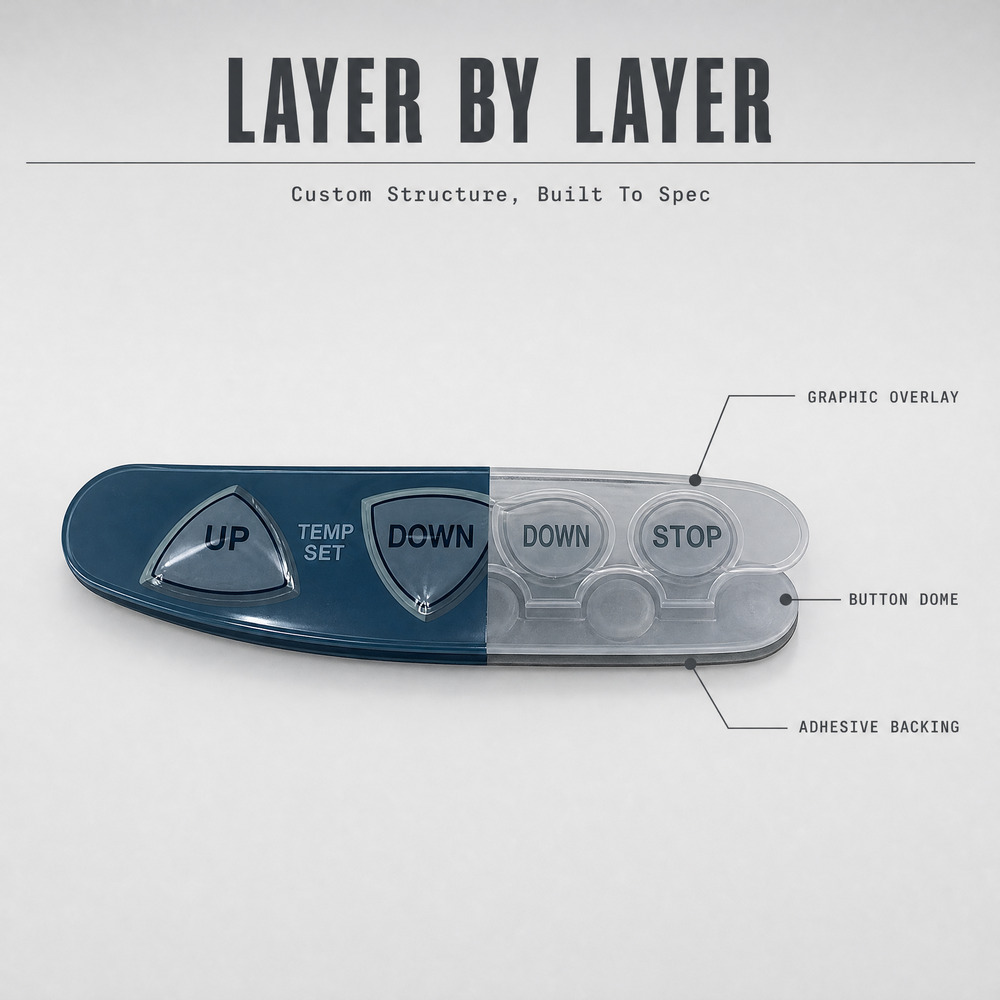
Precision alignment of overlay, spacer layers, stainless steel tactile metal domes, and printed circuit layers into a seamless IP67 sealed assembly.
Integrated conductive aluminum foil, printed carbon grids, or transparent indium tin oxide (ITO) layers protect sensitive underlying microcontrollers from static discharge.
Custom light-guide film (LGF) and side-firing SMD LEDs deliver uniform key illumination with zero light bleed between control zones.
Granada’s economic landscape is characterized by a vibrant mix of cutting-edge research institutions, advanced biomedical engineering, agricultural machinery manufacturing, and renewable energy development. Polycarbonate graphic overlays engineered by Ravo offer tailored performance characteristics aligned with these local sectors:
At the Parque Tecnológico de la Salud (PTS Granada), biomedical startups and medical equipment developers design laboratory centrifuges, diagnostic analyzers, patient monitoring consoles, and physical therapy devices. These instruments require operator panels that withstand rigorous chemical wipe-downs (bleach, quaternary ammonium, and ethanol sanitizers) without clouding or surface erosion. Our hard-coated polycarbonate overlays with anti-microbial surface treatments and sealed perimeter gaskets prevent fluid ingress, ensuring full compliance with medical device standards.
The province of Granada and the surrounding Andalusian region are global leaders in olive oil production and agricultural processing. Industrial automation controllers used in olive mills (almazaras), automated bottling lines, and sorting equipment are exposed to vegetable oils, airborne dust, humidity, and high operational vibration. Polycarbonate front panels engineered with 3M 300LSE adhesive and deep tactile embossing ensure operators can reliably control machinery even when wearing oil-coated protective gloves.
Andalusia’s extensive solar farms require rugged inverter interface panels, solar tracking system controllers, and weather monitoring terminals. Exposed to intense UV radiation and temperature extremes in Southern Spain, standard front panels suffer from UV yellowing and embrittlement. Ravo supplies UV-stabilized polycarbonate overlays with sub-surface light-fast inks rated for thousands of hours of continuous outdoor exposure without color shifting or structural failure.
Granada’s thriving hospitality industry relies on commercial ovens, espresso equipment, gelato machines, and food packaging systems. Our heat-resistant polycarbonate switches feature heat-deflection thresholds exceeding 120°C and IP65/IP67 perimeter seals that isolate sensitive PCB controllers from steam, moisture splash, and cleaning fluids.
Procurement directors and design engineers in Granada face evolving market demands that shape HMI purchasing decisions:
As a vertically integrated manufacturer with over two decades of industry leadership since 2003, Dongguan Ravo Electronics Co., Ltd. serves as a trusted global supply chain partner for custom membrane switches, graphic overlays, silicone keypads, and flexible thin-film pressure sensors.
Essential technical and logistical answers for sourcing custom polycarbonate overlays and membrane keypads in Southern Spain.
Polycarbonate (PC) is selected when superior impact resistance, optical clarity, structural thickness (0.25mm up to 0.8mm), and flame retardancy (UL94 V-0 options) are required. It is ideal for heavy industrial machinery, outdoor enclosures, and power equipment common in Andalusia. Polyester (PET) is preferred primarily when key switches require over 1 million actuation cycles or aggressive solvent splash resistance.
Uncoated polycarbonate can degrade under prolonged intense UV exposure. For solar inverters and outdoor controllers deployed in Granada and Andalusia, we utilize UV-stabilized polycarbonate grades (such as Lexan HP92W) combined with light-fast sub-surface UV inks and topcoat UV inhibitors. This prevents yellowing, hazing, or embrittlement over years of field service.
We require a vector drawing file (DXF, DWG, AI, or vector PDF) specifying panel dimensions, cutouts, window areas, embossing requirements, and color references (Pantone PMS or RAL). If you have circuit requirements, please include tail connector pitch and pinouts. Our engineering team will review your files and return a comprehensive DFM proposal in under 2 hours.
For powder-coated steel, cast aluminum, or low-surface-energy plastics (like polypropylene), standard adhesives can lift over time. We recommend 3M 300LSE adhesive (such as 3M 9472LE or 93015LE), specifically formulated to create a high-strength bond to textured or painted surfaces.
Once artwork and engineering drawings are approved, prototypes ship within 7 to 10 working days. Mass production orders typically take 12 to 18 working days depending on quantity and complexity. Express air freight (via DHL, FedEx, or UPS) delivers directly to your facility in Granada within 3 to 5 business days, complete with customs clearance paperwork.
Yes. All raw polycarbonate films, screen printing inks, spacer tapes, and mounting adhesives used in our manufacturing process strictly comply with EU Directive 2011/65/EU (RoHS) and Regulation (EC) No 1907/2006 (REACH). Material declaration certificates are provided with production shipments upon request.