Executive Whitepaper: Architectural Standards for Medical-Grade HMIs
In contemporary medical equipment design, the Human-Machine Interface (HMI) serves as the critical touchpoint between healthcare professionals and life-saving diagnostic or therapeutic hardware. Medical-grade membrane switches and thin-film force-sensing resistors (FSR) represent a specialized subset of electronics manufacturing. Unlike standard consumer electronics, medical HMIs destined for deployment in Reykjavik and the wider European Economic Area (EEA) must adhere to rigorous biocompatibility, fluid ingress resistance, electro-magnetic compatibility (EMC), and sterilization durability benchmarks.
Dongguan Ravo Electronics Co., Ltd., established in 2003, operates a 12,000 m² state-of-the-art production facility dedicated to advanced membrane keypads, graphic overlays, flexible printed circuits (FPC), and PCB-backed interface modules. By providing direct engineering support with ≤2-hour Design for Manufacturability (DFM) response times, Ravo bridges the gap between complex medical OEM design requirements in Iceland and high-precision South China manufacturing agility.
12,000 m²
Manufacturing Facility
≤2 Hours
DFM Engineering Turnaround
1M+
Actuation Cycle Lifetime
Localized MedTech Integration: Serving Reykjavik’s Healthcare & Biotech Ecosystem
Reykjavik, as the epicenter of Iceland’s rapidly expanding healthcare innovation landscape, hosts world-class clinical facilities such as Landspítali University Hospital, as well as pioneer medical device OEMs in orthopedic technology, cold-chain bio-logistics, patient care monitoring, and surgical robotics located in the Reykjavik Science City cluster. Supplying electronic assemblies to this specialized market requires an acute understanding of subarctic operating conditions and regional health infrastructure compliance.
Subarctic Environmental & Clinical Hardening: Medical devices operating in Reykjavik must withstand dramatic thermal transitions—from extreme cold during emergency outdoor transport to climate-controlled cleanroom environments—while enduring relentless surface disinfection protocols using aggressive chemical agents.
Key Environmental & Physical Demands in Icelandic Facilities:
- Chemical Disinfection Compatibility: Frequent wipe-downs using isopropyl alcohol (IPA), ethanol, chlorine-releasing agents, hydrogen peroxide (VHP), and quaternary ammonium compounds demand non-porous, chemically inert polyester substrates such as MacDermid Autotex XE.
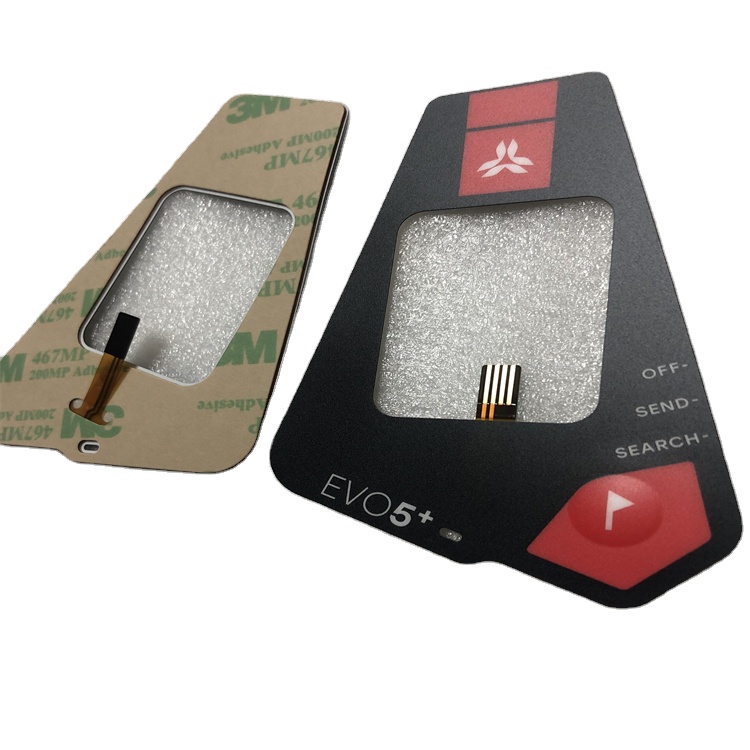
- Thermal Stability (-20°C to +70°C): Subarctic ambient transport requires flexible silver conductive inks and pressure-sensitive acrylic adhesives (e.g., 3M 467MP/468MP) engineered to prevent micro-delamination, flex-tail embrittlement, or differential expansion under extreme thermal cycling.
- Geothermal Trace Gas Atmospheric Resistance: Ambient Reykjavik air can contain minute trace amounts of naturally occurring geothermal hydrogen sulfide ($H_2S$). Custom membrane switch constructions incorporate continuous perimeter silver-ink oxidation barriers and sealed hydro-gaskets to eliminate silver migration and trace sulfur tarnish on underlying contact pads.
- Sealed Hygiene Barriers (IP67 / IP68): To eliminate fluid ingress from bodily fluids, saline drips, and cleaning liquid immersion, custom liquid-cast perimeter seals and continuous die-cut adhesives isolate internal tactile metal domes and FPC circuit tracks completely.
Medical Membrane Switch Stack-Up & Material Science
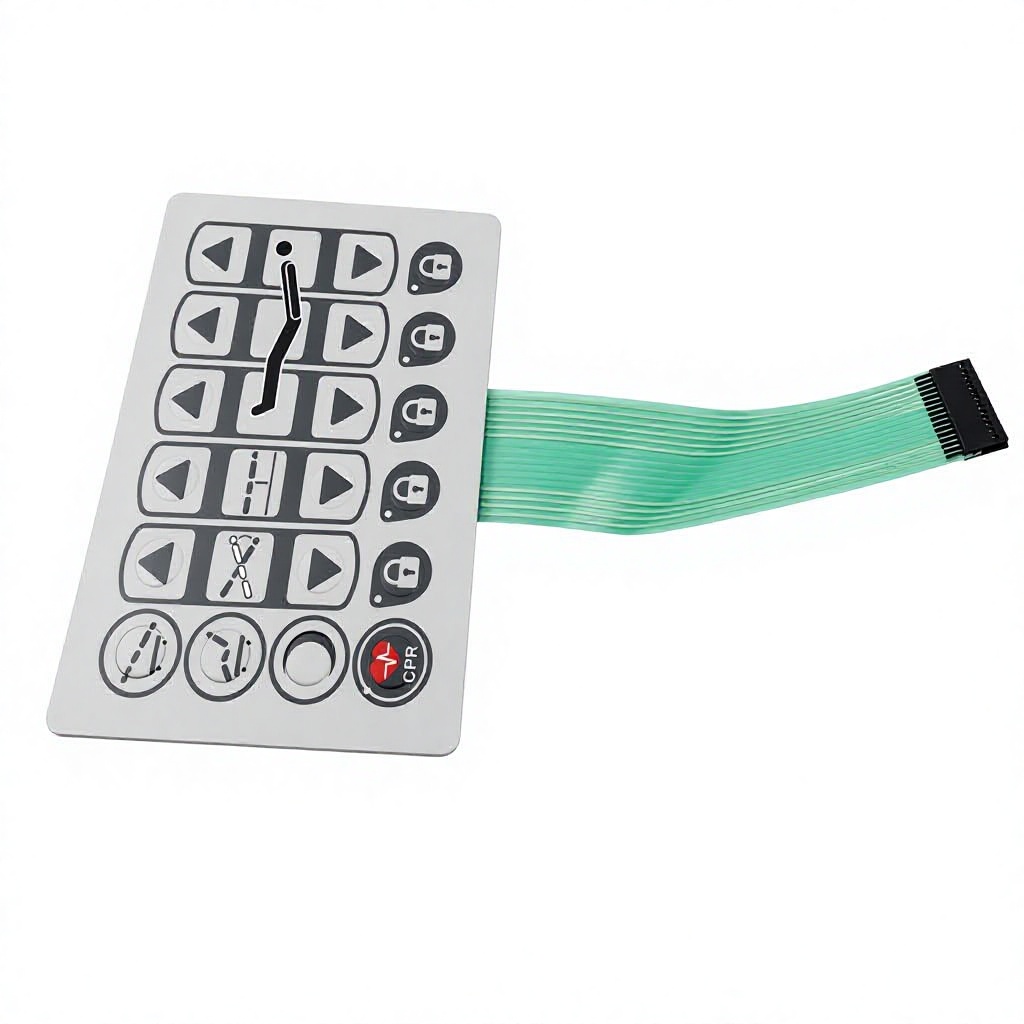
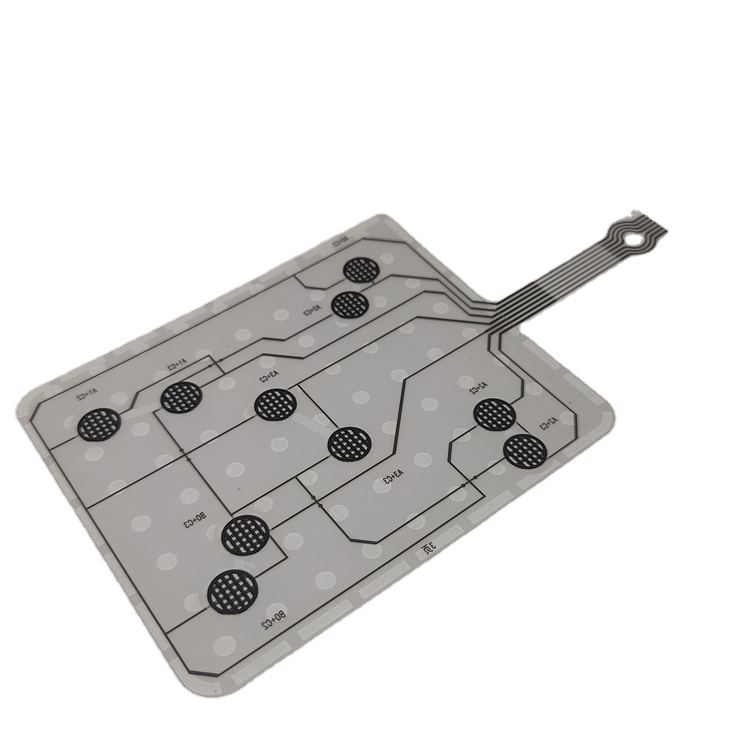
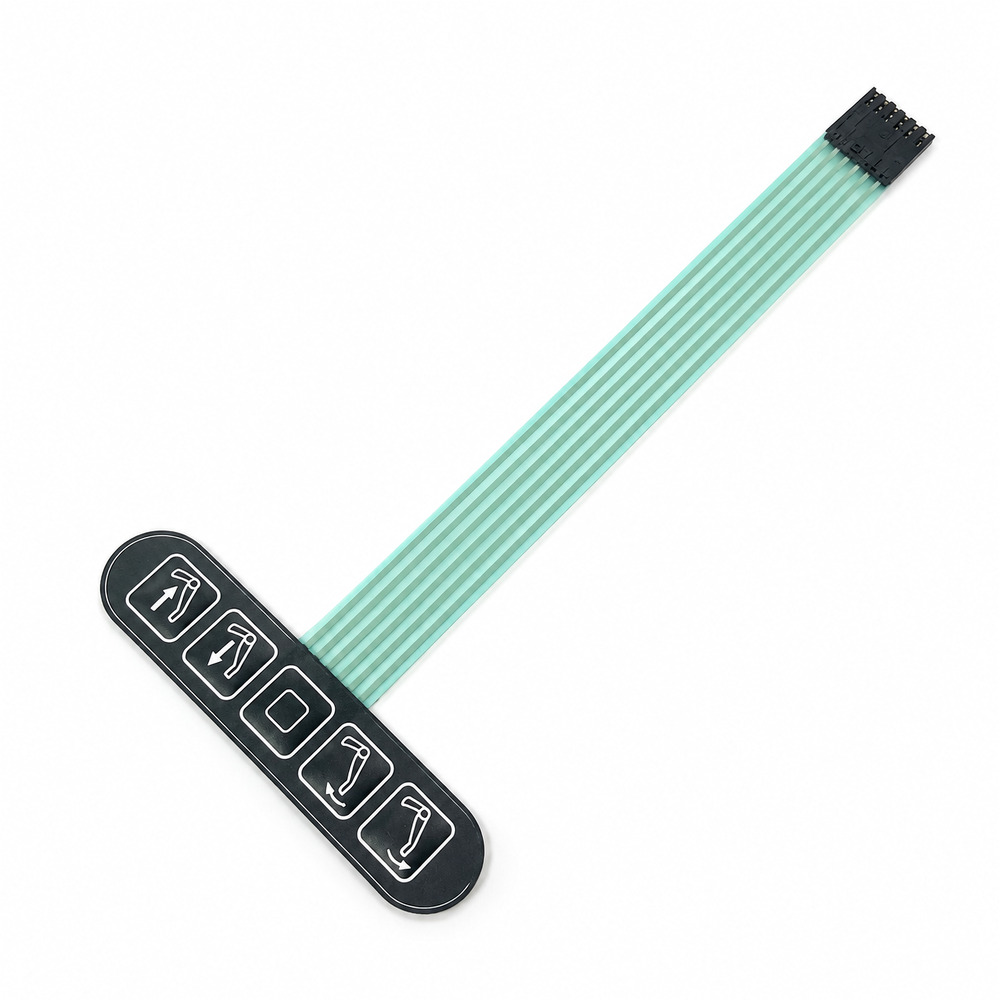
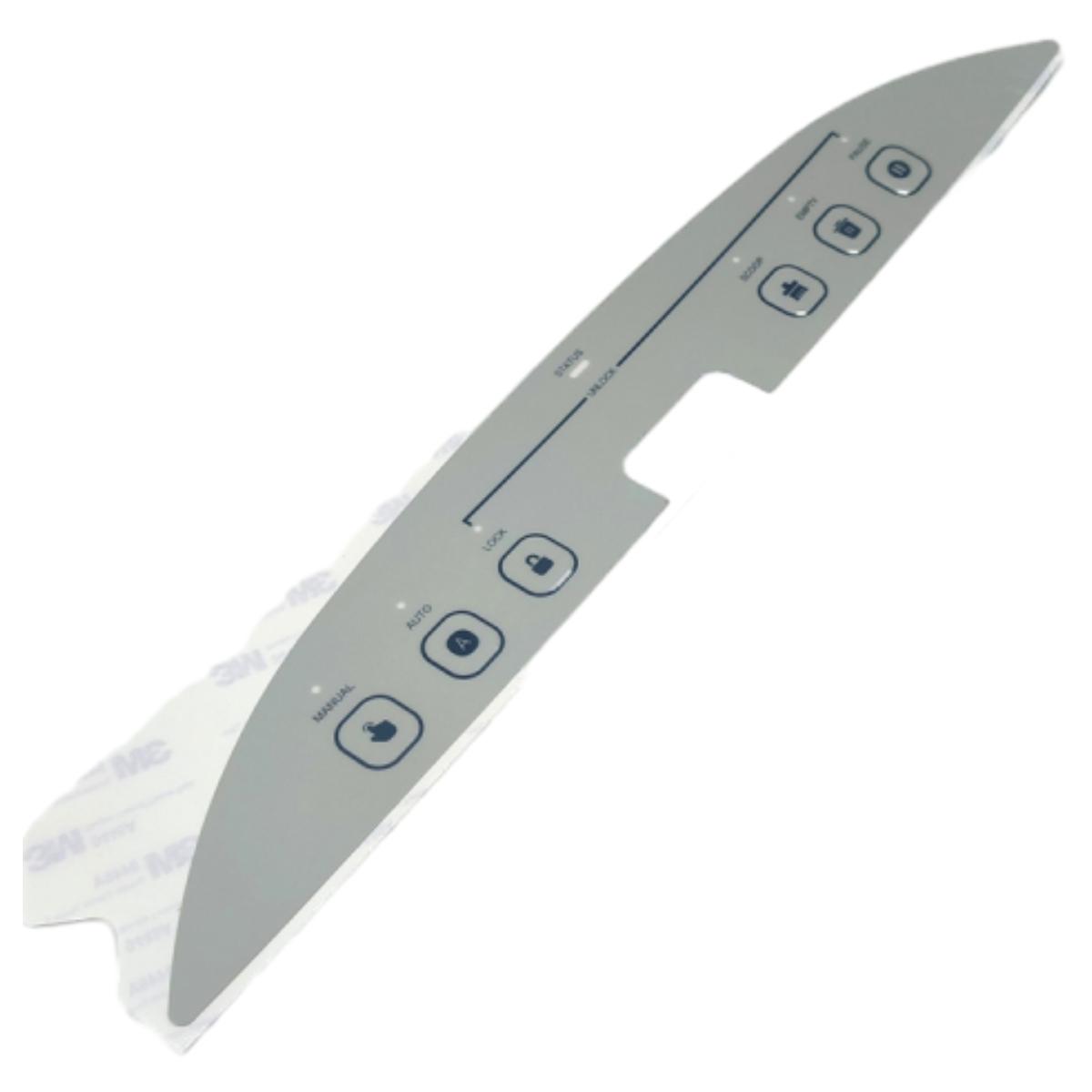
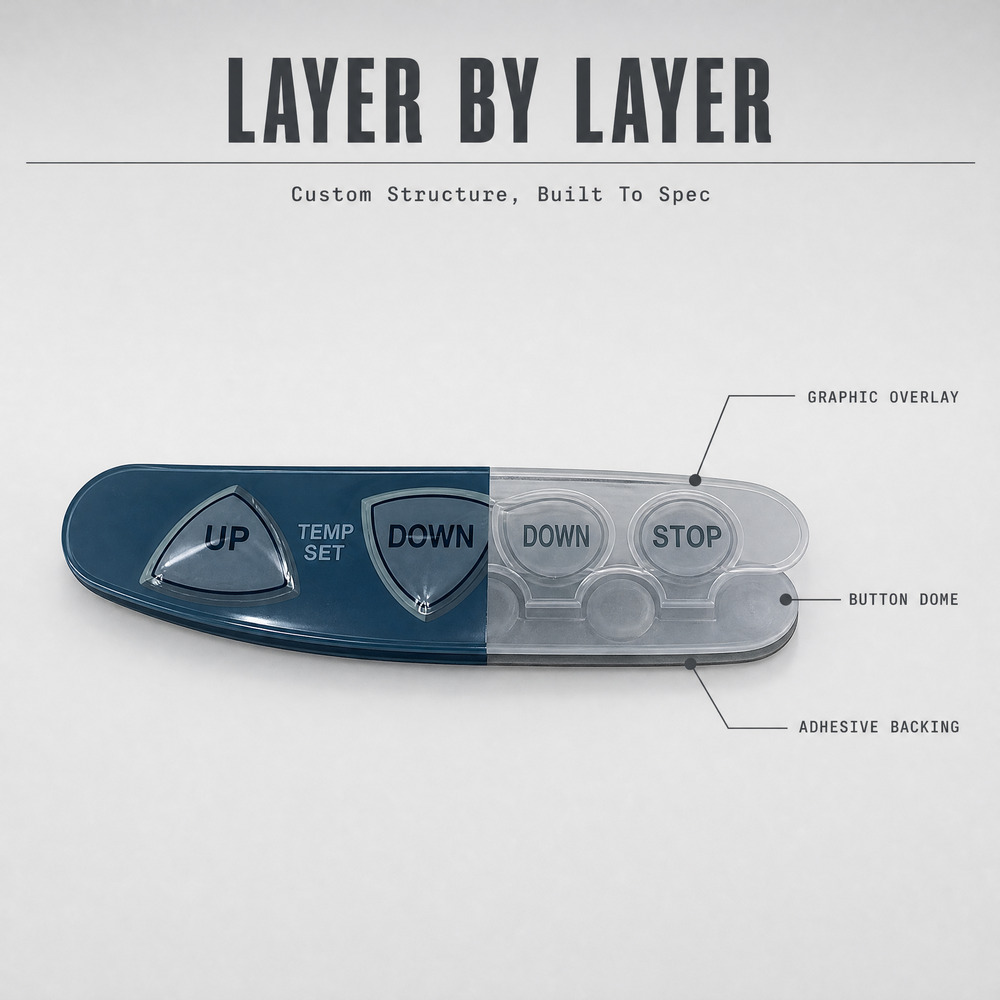
A high-reliability medical membrane switch is a multi-layer composite engineered for tactile responsiveness, environmental isolation, and electrical integrity. The table below outlines the multi-layer architectural choices offered by Ravo Electronics for medical OEM projects:
| Layer Component |
Standard Material Selection |
Medical Engineering Functional Role |
| 1. Graphic Overlay |
Autotex XE PET / Lexan HP PC (0.125mm - 0.20mm) |
Sub-surface anti-glare/gloss printing, chemical barrier, UV resistance, embossing host. |
| 2. Overlay Adhesive |
3M 467MP / 3M 468MP High-Performance Acrylic |
Bonds overlay to upper circuit; resists shear stress and chemical cleaning fluid seepage. |
| 3. Upper Circuit / Retainer |
Autostat PET with Conductive Silver/Carbon Ink |
Holds stainless steel tactile metal domes in place; provides upper electrical trace routing. |
| 4. Circuit Spacer |
Polyester Film with Double-Sided 3M Adhesive |
Defines actuation height gap; engineered with air-vent channels for uniform dome rebound. |
| 5. Lower Circuit Layer |
Silver-Ink PET Circuit / Polyimide FPC / Rigid FR4 PCB |
Carries high-density trace routing, surface-mount LEDs, and signal interconnect tail. |
| 6. Rear Mounting Adhesive |
3M 9448A / 3M 300LSE Low Surface Energy Adhesive |
Secures switch assembly to powder-coated steel, ABS plastic, or aluminum equipment chassis. |
| 7. Shielding Layer (Optional) |
Printed Carbon / Aluminum Foil / Copper Mesh |
Provides ESD protection up to 15kV and attenuates EMI/RFI noise in critical diagnostic gear. |
Enterprise Advantages: Why Reykjavik OEM Engineers Partner with Ravo
Selecting an offshore manufacturing partner for critical medical components requires rigorous vetting of capabilities, quality assurance, and supply chain responsiveness. Dongguan Ravo Electronics Co., Ltd. delivers distinct operational advantages tailored to the needs of European medical device engineers and procurement directors:
ISO 9001:2015 Quality Rigor
Complete traceability from raw material lot intake (MacDermid, 3M, Acheson inks) through 100% automated optical and electrical continuity testing prior to export shipping.
Rapid Prototype Acceleration
Support for initial prototype evaluation from 1 piece. In-house screen making and laser cut prototyping bypass long tooling lead times for fast R&D validation.
≤2-Hour DFM Technical Review
Our dedicated HMI engineering team evaluates 2D/3D drawings (DXF, DWG, STEP, PDF) for circuit pitch, actuation feel, and sealing integrity within two hours.
Custom Tactile Engineering
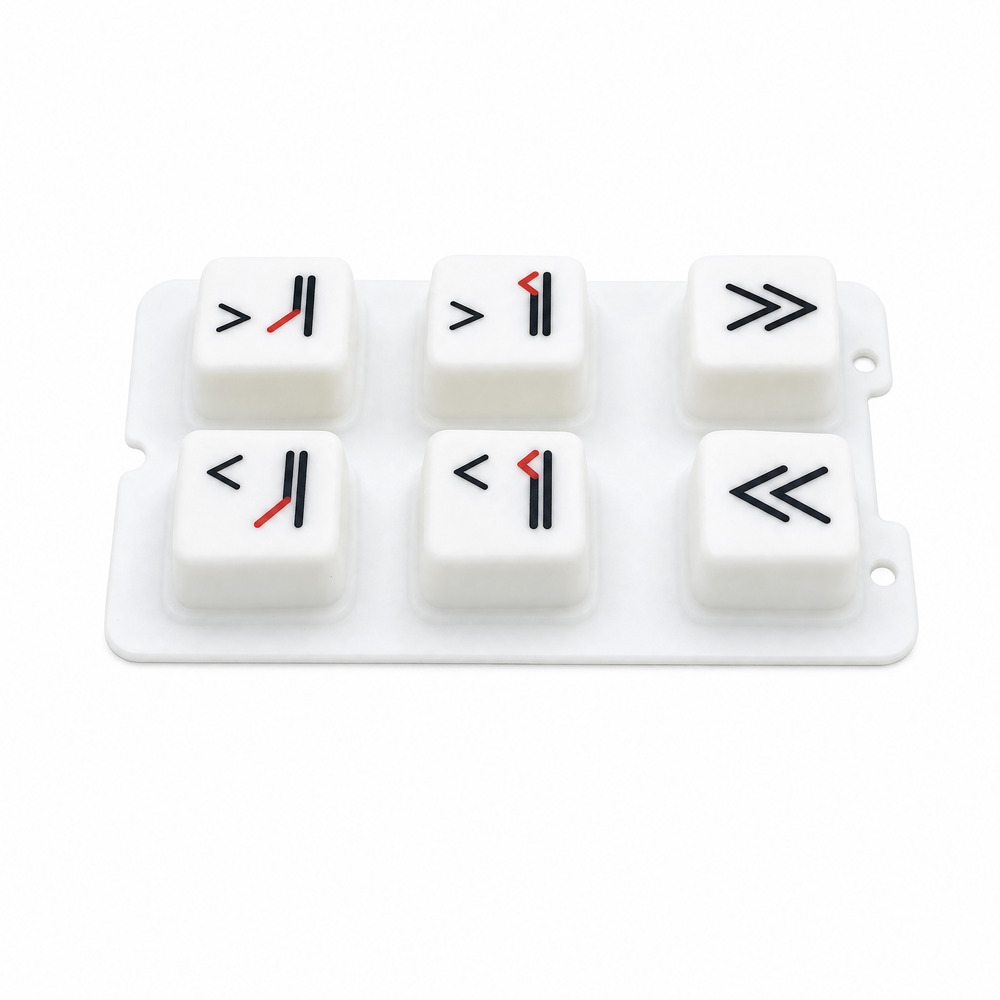
Precision dome force selection (200g to 450g actuation), nickel/gold-plated metal domes, thermoformed polydomes, and capacitive touch integration for glove-friendly operation.
Engineering Workflow for Reykjavik Medical OEM Procurement
To ensure seamless cross-border collaboration between engineering teams in Iceland and our plant in Dongguan, Ravo follows a structured 6-step project execution framework:
- DFM & Drawing Analysis: Submission of CAD files (AI, PDF, DXF, DWG). Ravo engineers verify trace width, key spacing, tail exit relief, and LED resistor values.
- Material & Stack-up Approval: Finalizing overlay texture (matte/fine), window clarity (dead-front or clear), adhesive grades (3M 467MP vs 3M 300LSE), and tail connector pitch (2.54mm or 1.0mm ZIF).
- Tooling & Screen Preparation: Precision CNC cutting dies, embossing molds, and high-mesh silk screen stencils prepared in-house.
- First Article Prototyping (1-10 pcs): Screen printing in cleanroom environments, thermal curing, automated pick-and-place for SMD LEDs, precision lamination, and die-cutting.
- 100% Electrical & Environmental Testing: Resistance mapping, actuation force verification, insulation resistance testing (>100MΩ at 250V DC), and ESD breakdown checks.
- Export Packaging & Logistics to Keflavík/Reykjavik: Vacuum-sealed anti-static ESD packaging with desiccant packs, shipped via expedited air freight (DHL/FedEx/UPS) reaching Reykjavik within 4 to 6 business days.
Frequently Asked Questions (FAQ) for Reykjavik Procurement Managers
Common technical, regulatory, and supply chain queries from Icelandic medical device manufacturers and engineers:
How do Ravo medical membrane switches comply with European EEA regulations?
All raw materials used in our medical membrane switches—including PET films, PC sheets, conductive silver pastes, and 3M pressure-sensitive adhesives—are strictly compliant with EU RoHS 3 (Directive 2015/863) and REACH regulations. Complete material declaration sheets and full chemical compliance documentation are provided for inclusion in your device's CE / MDR technical files.
Can your membrane keypads withstand aggressive hospital disinfectants used in Iceland?
Yes. We utilize specialized textured polyester substrates like MacDermid Autotex XE. These films are engineered to withstand continuous exposure to 70% Isopropyl Alcohol, Bleach (Sodium Hypochlorite), Hydrogen Peroxide vapor (VHP), and Cavicide without swelling, hazing, surface cracking, or legend degradation.
What is the minimum order quantity (MOQ) for custom prototypes and production runs?
We support medical innovation at all stages. Prototype runs start from as low as 1 to 5 pieces for initial engineering fit checks and functional evaluation. Mass production orders typically range from 100 to 5,000+ units, with flexible blanket order schedules for ongoing OEM demand in Reykjavik.
How do you ensure reliable switch operation in cold ambient temperatures (-15°C)?
For equipment deployed in outdoor emergency care or cold-chain storage in subarctic climates, we select low-temperature flexible conductive silver inks that do not fracture under flexing at low temperatures. Paired with 3M 300LSE/468MP adhesives and stainless-steel tactile metal domes, our switches maintain consistent tactile feel and electrical conductivity from -20°C up to +70°C.
What connector interfaces are available for connecting the tail to our main PCB?
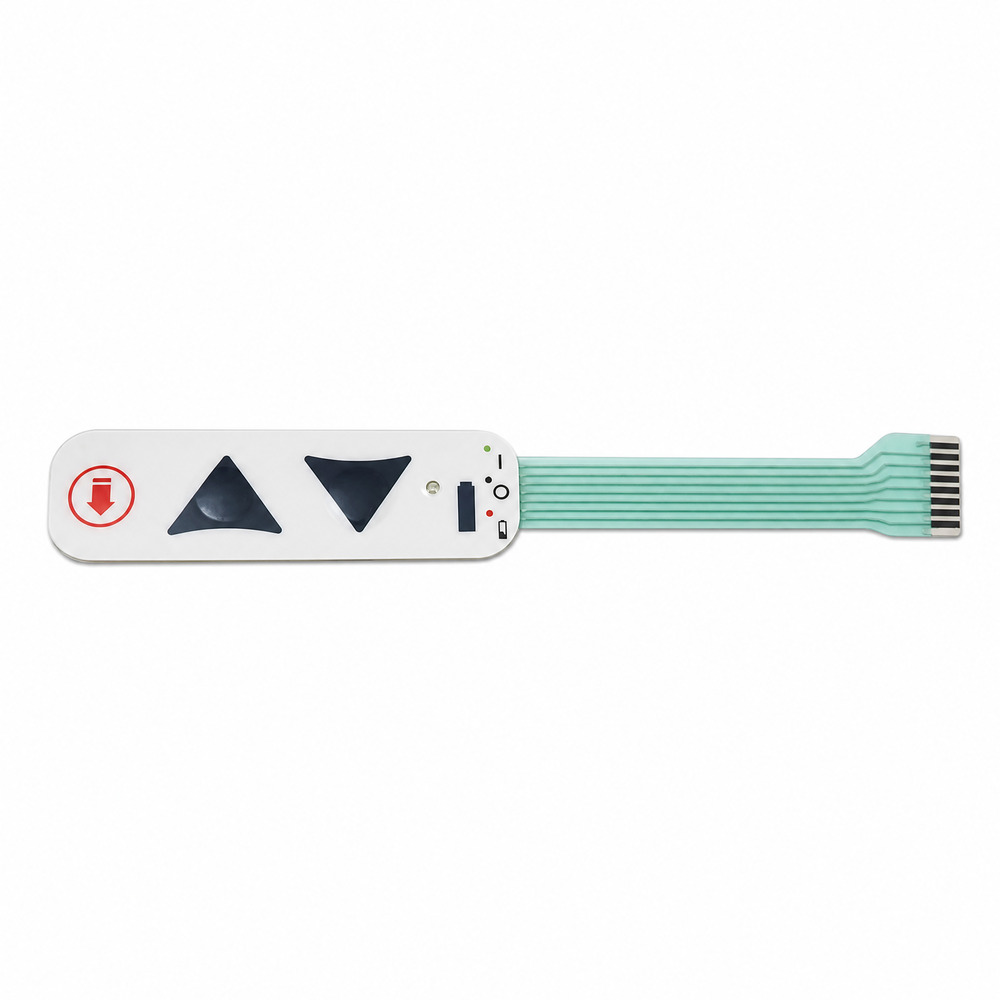
We offer female crimp connectors with 2.54mm pitch (FCI/Clincher or Nicomatic), plain exposed silver flex tails for 1.0mm or 1.25mm ZIF connectors, and direct solderable polyimide Flexible Printed Circuits (FPC) with gold-plated contacts.
Can you integrate backlighting and display windows into the same control panel?
Absoluely. We routinely integrate surface-mount (SMD) side-emitting or top-emitting LEDs directly onto the circuit layer for status indication. For display integration (LCD, OLED, or TFT screens), graphic overlays feature crystal-clear transparent or tinted filter windows with anti-glare coatings.
What options do you offer for Electrostatic Discharge (ESD) protection?
Medical environments require high ESD immunity to prevent micro-controller latch-up or reset. We incorporate continuous printed carbon or full aluminum foil shield layers directly above the switch circuit. These layers shunt static charges up to 15kV safely to the equipment chassis ground.
What is the typical delivery lead time from Dongguan to Reykjavik?
Once design drawings are confirmed, prototype samples are manufactured within 7 to 10 working days. Production orders ship in 2 to 3 weeks. Air express transit from Hong Kong/Shenzhen hub to Keflavík International Airport (KEF) takes approximately 4 to 6 business days.
 EN
 DE
 FR
 ES
 RU
 JA