 EN
 DE
 FR
 ES
 RU
 JA EN DE FR ES RU JA
Engineered for mission-critical tactile feedback, environmental hermeticity, and extended mechanical actuation life across Seattle's cutting-edge hardware developments.
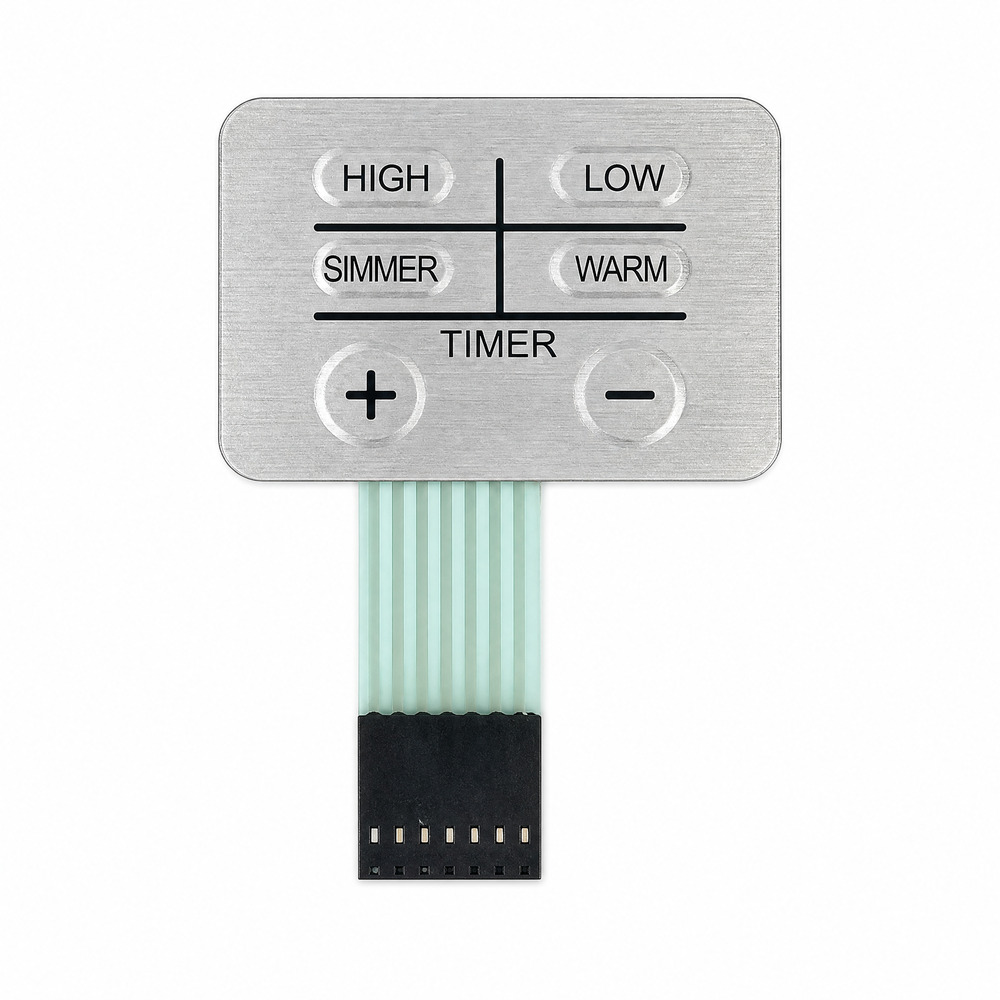
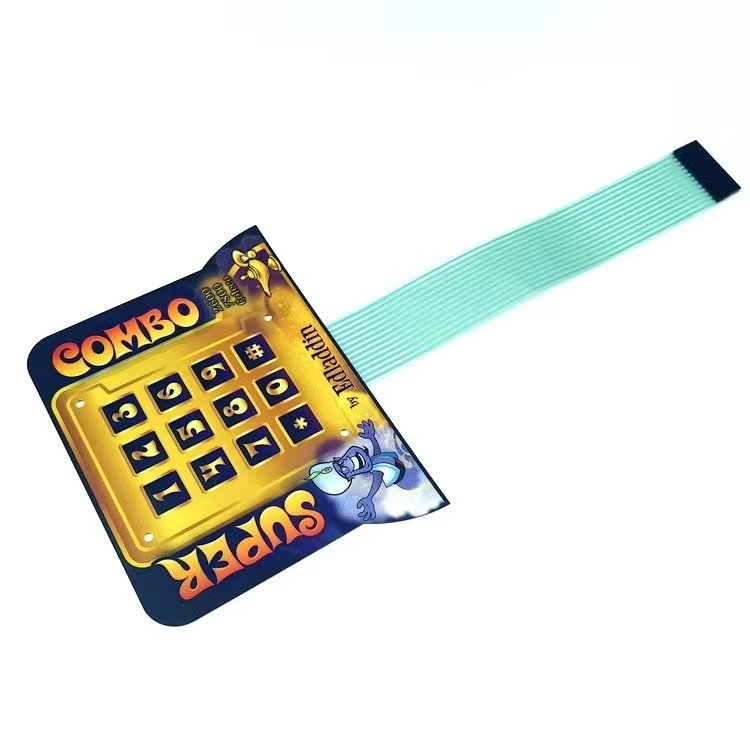
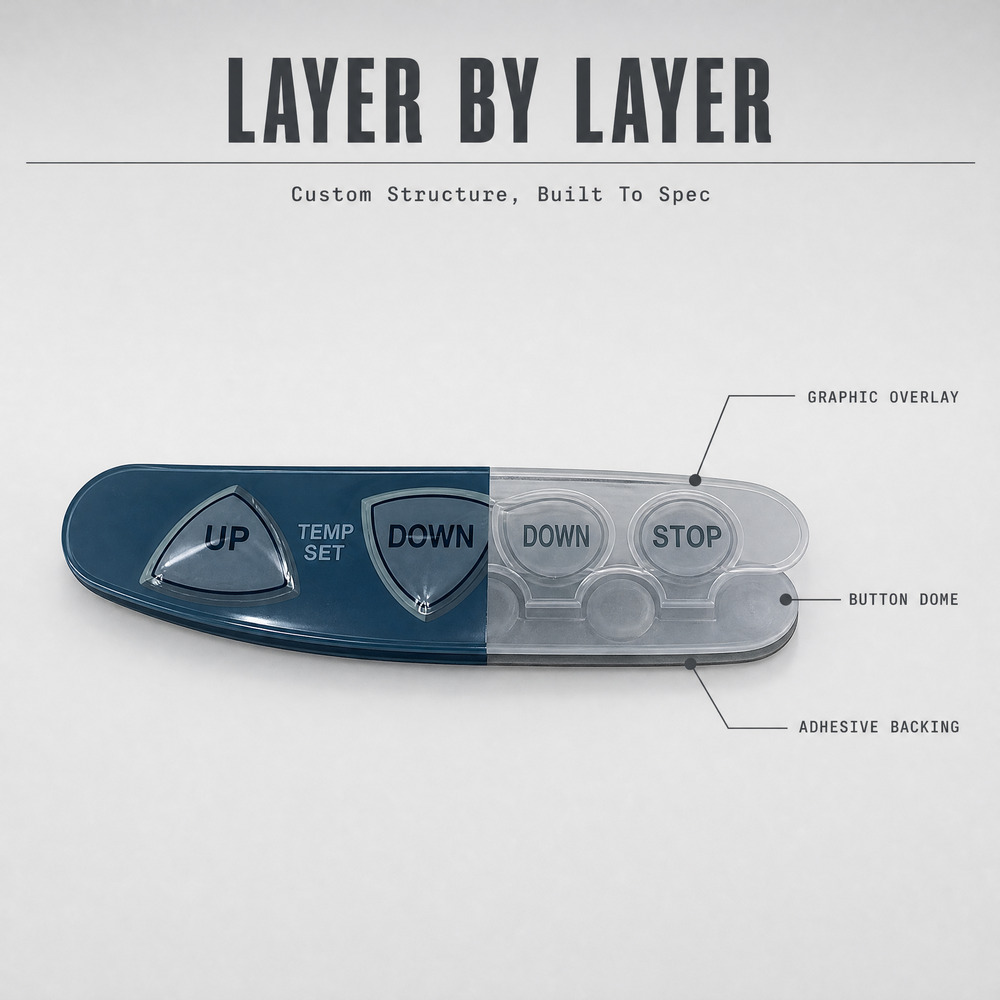
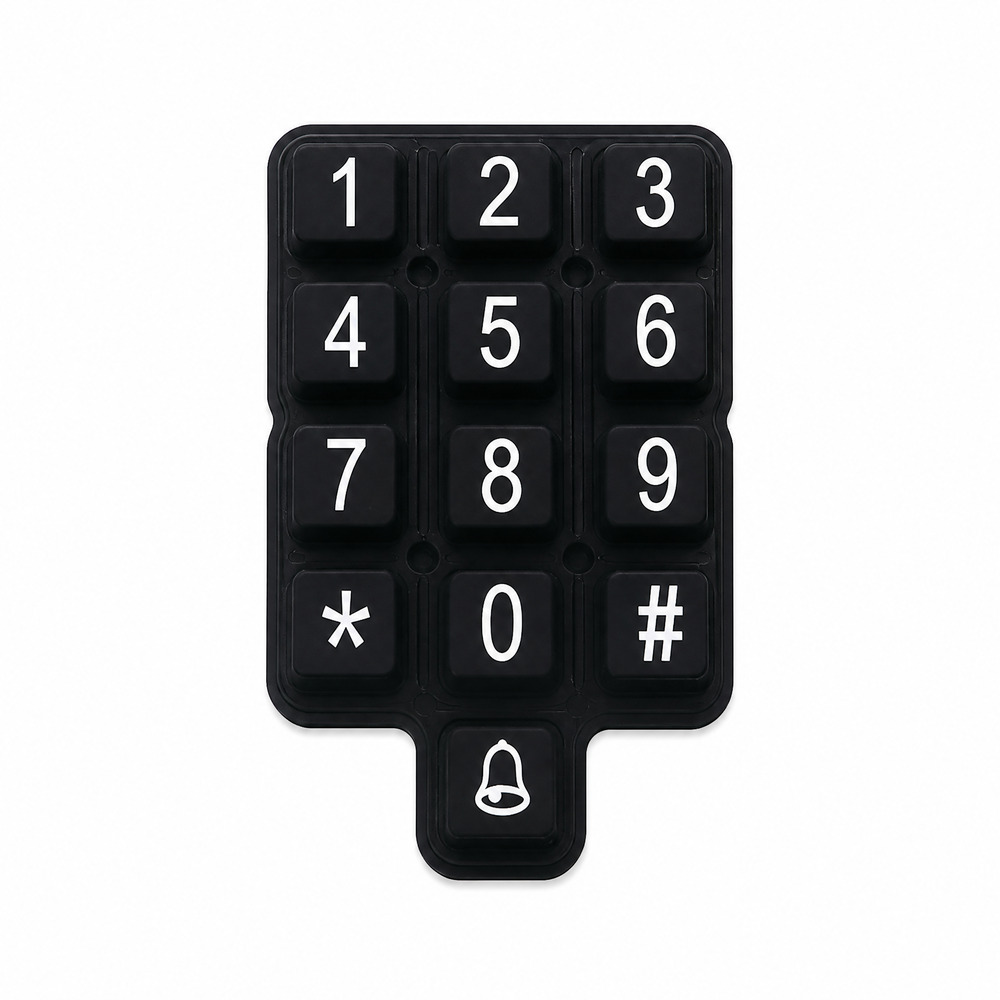
Founded in Dongguan, China
Integrated Cleanroom Plant
Engineering DFM Response
Automated Continuity Tested
A Force Sensing Resistor (FSR) is a polymer thick-film (PTF) device that exhibits a decrease in electrical resistance when an increase in force is applied normal to the active surface. For Seattle's multidisciplinary engineering teams across Redmond, Bellevue, Bothell, and the Kent Valley, selecting an FSR manufacturing partner requires understanding the intricate material formulations and mechanical stack-ups that dictate transducer linearity, repeatability, and drift resistance.
At our Dongguan facility, we precision-formulate proprietary piezoresistive carbon inks doped with functional nano-conductive particles. In an unactuated state, the conductive particles within the polymer matrix are separated by dielectric barriers, yielding an open-circuit resistance exceeding 10 Megaohms (>10 MΩ). Upon mechanical compression, microscopic surface asperities on the ink layer deform, forcing conductive particles into contact and creating percolation pathways. This inverse power-law relationship between applied mechanical force (typically spanning 0.1 N to 100 N) and bulk electrical resistance enables continuous, high-fidelity pressure profiling.
Design Tip for Pacific Northwest Hardware Architects: While classic membrane switches function as binary binary contact closures (0 or 1), custom FSR sensors provide dynamic analog voltage variation when paired with a simple operational amplifier in an inverting transimpedance configuration. This delivers smooth pressure velocity data crucial for robotic tactile gripping and medical monitoring systems.
We manufacture custom thin-film pressure sensors across two distinct physical architectures based on Seattle client requirements:
1. ShuntMode Construction (Single Substrate Layer): Consists of interdigitated silver electrode fingers screen-printed on a bottom PET or Polyimide (Kapton) layer, paired with a semiconductive piezoresistive ink printed on an opposed top film. A precision die-cut spacer creates an air gap. When force is applied, the piezoresistive layer bridges the interdigitated silver tracks. ShuntMode offers outstanding cost efficiency, rapid prototyping iteration, and superior tolerance to bending across curved ergonomics.
2. ThruMode Construction (Dual Substrate Sandwich): The top film is coated with a solid conductor covered with piezoresistive ink, while the bottom film features a matching conductive layer. Current travels directly through the thickness of the piezoresistive material. ThruMode provides a wider dynamic range, reduced saturation thresholds under elevated loads, and exceptional mechanical symmetry, making it the preferred stack for aerospace cabin interfaces, high-force robotics, and industrial dynamometry.
A persistent challenge for sensor integrators is mechanical hysteresis (the difference in resistance curve between loading and unloading cycles) and sensor creep (the time-dependent drift in resistance under constant load). Through twenty years of ink rheology refinement, our Dongguan chemical engineering lab mitigates these phenomena to less than 4.5% drift over sustained 24-hour holds. We employ thermal-stabilized optical-grade polyester (PET) films cured in multi-zone convection ovens to eliminate substrate shrinkage and internal stress fractures.
For assemblies deployed in humid maritime environments like Seattle or exposed to Puget Sound's coastal atmospheric condensation, we incorporate micro-venting filtration membranes. These pressure-equalizing vents prevent pneumatic ballooning under barometric fluctuations (critical for suborbital and commercial aerospace hardware) while preventing the ingress of moisture, airborne particulates, and corrosive vapors.
| Technology | Actuation Mechanism | Thickness Profile | Environmental Rating | Primary Seattle Regional Applications |
|---|---|---|---|---|
| Thin-Film FSR (Piezoresistive) | Continuous analog force transduction (0.1N to 100N) | 0.15 mm – 0.35 mm | IP65 – IP67 (sealed perimeter) | Robotic grippers, medical bed monitoring, surgical tools |
| Tactile Metal Dome Membrane | Crisp tactile snap contact (180g to 500g force) | 0.60 mm – 1.20 mm | IP67 with perimeter adhesive | Commercial avionics, marine navigation, industrial panels |
| Capacitive Touch Sensing | Solid-state charge displacement, zero mechanical movement | 0.20 mm – 1.00 mm | IP68 (continuous glass/PC front) | Cleanroom medical displays, smart kitchen appliance HMIs |
| Elastomer Silicone Keypad | 3D compression-molded rubber with carbon pill contact | 2.00 mm – 6.00 mm | IP66 – IP68 hermetic seal | Rugged military remotes, handheld warehouse scanners |
| Hybrid FSR + Rigid FR-4 Backer | Combined surface mount components & dynamic pressure zones | 1.60 mm – 3.20 mm | NEMA 4X / IP67 rated | Cloud data center rack interfaces, industrial automation |
From the aerospace manufacturing corridors of Everett and Renton to the biomedical clusters in Bothell and cloud server farms across the I-90 corridor, our custom FSR sensors empower regional innovation.
Engineered for Boeing Tier-1 suppliers and suborbital commercial space flight startups in Kent Valley. Our FSR matrices are utilized for cabin seat occupancy detection, cargo weight distribution profiling, and flight deck tactile switch verification under rigorous thermal and vibration profiles.
Integrated within patient monitoring beds, precision infusion pump occlusion detection, physical therapy rehabilitation braces, and smart insoles. We manufacture biocompatible overlays paired with ultra-sensitive FSR arrays capable of detecting subtle force changes under 15 grams.
Serving autonomous warehouse robotics developers and robotic surgical innovators in Seattle and Kirkland. Multi-point FSR array films wrapped around robotic gripper fingers provide real-time tactile feedback, slip detection, and compliance adjustments for delicate payload handling.
Deployed in custom server chassis, hot-swap blind-mate connector latching systems, and rack-level thermal sealing interfaces across the Redmond and Bellevue cloud enterprise corridor. FSRs confirm correct latch engagement and uniform gasket compression.
The Seattle hardware ecosystem is experiencing a major transformation driven by Edge AI integration, ergonomic wearables, and resilient international supply chains.
As Seattle robotics labs bridge computer vision with physical manipulation, the demand for high-density, multi-taxel (tactile pixel) FSR matrices has surged. Optical cameras alone cannot detect object slippage, dynamic grip pressure, or micro-textures. By integrating multi-channel piezoresistive arrays into robot end-effectors, our Seattle partners feed real-time analog pressure matrices directly into neural network grasp-planning algorithms, enabling human-like tactile sensitivity.
Traditional PET substrates, while economical, present limitations when subjected to reflow soldering or extremely tight bend radii within compact smart wearables and handheld diagnostic wands. We have pioneered copper-clad Polyimide (FPC) substrates where fine-pitch surface-mount passives (0402/0201 packages), microcontrollers, and FSR piezoresistive zones exist on a single monolithic flex circuit. This eliminates external harness interconnects, drastically reduces assembly labor, and enhances overall device reliability.
Hardware incubators and OEM contract manufacturers in Western Washington are increasingly moving away from domestic broker markups in favor of direct factory partnerships. By aligning directly with our Dongguan facility, Seattle engineering departments bypass middleman communication bottlenecks, receiving direct DFM revisions within two hours and securing air-freight priority shipments via Seattle-Tacoma International Airport (SeaTac) with door-to-door transit times under four business days.
From initial proof-of-concept prototyping to high-volume container exports, Dongguan Ravo Electronics Co., Ltd. provides seamless execution under one roof.
Unlike broker firms that subcontract production steps, our 12,000 m² Dongguan facility manufactures cutting dies, screen-printing stencils, and embossing molds in-house. This gives Seattle clients unmatched speed, enabling prototype shipments in as few as 7 business days.
Operated under Class 10,000 cleanroom environments to eliminate dust inclusions, microscopic pinholes, and dielectric breakdown. Every production lot undergoes 100% automated electrical continuity testing, force-resistance profiling, and adhesion shear testing.
We build exclusively with industry-standard materials including genuine 3M 467MP/9448A adhesives, Autotype MacDermid polyester films, Sabic Lexan polycarbonate, and DuPont conductive inks. All products are fully compliant with RoHS, REACH, and California Proposition 65 directives.
Essential answers regarding prototyping lead times, customs clearances, testing protocols, and design requirements for Washington State hardware teams.
Send your drawings, force specifications, or industrial control concepts directly to our senior engineering team. Receive comprehensive DFM analysis and competitive factory-direct pricing within 2 hours.
