EN
 DE
 FR
 ES
 RU
 JA EN DE FR ES RU JA
Custom-engineered conductive silicone keypads, graphic overlays, and membrane switch assemblies built to withstand environmental humidity and salt-spray corrosion.
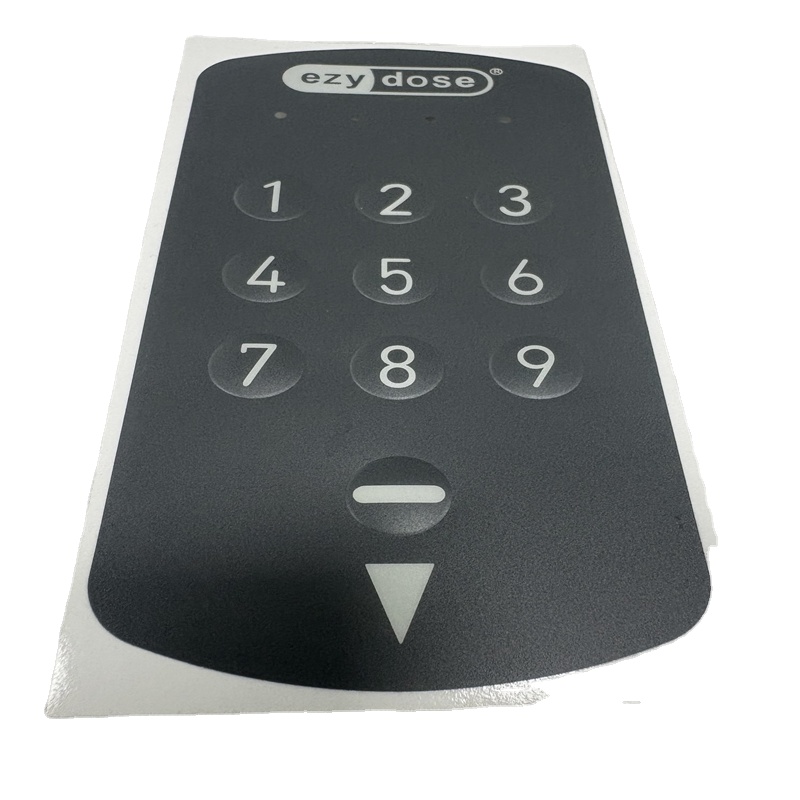
As industrial automation, maritime transportation, and off-grid renewable energy infrastructure expand across the South Pacific, equipment deployed in the Solomon Islands—spanning Guadalcanal, Malaita, Western Province, and remote archipelagos—faces an unforgiving combination of environmental stressors. Operating under perpetual tropical conditions characterized by relative humidity frequently exceeding 85%, high ambient temperatures, intense ultraviolet exposure, and airborne marine salt spray (sodium chloride), conventional electromechanical human-machine interfaces (HMIs) suffer from rapid degradation, contact oxidation, and mechanical binding.
Conductive rubber keypads engineered using high-consistency silicone rubber (HCR) integrated with molded carbon conductive pills, gold-plated contacts, or printed silver/carbon conductive tracks represent the benchmark HMI architecture for robust long-term operation in this geographic region. By forming a continuous, flexible, elastomeric web with integrated perimeter seals, conductive rubber keypads act as both the tactile mechanical actuator and the primary environmental moisture barrier for underlying printed circuit boards (PCBs) or flexible printed circuits (FPCs).
Information Gain Insight: Unlike standard office keypads, conductive rubber keypads designed for Solomon Islands maritime and tropical deployments utilize organosiloxane polymer formulations compounded with specific anti-fungal inhibitors and UV stabilizers. Furthermore, contact resistance stability is maintained under thermal cycling (20°C to 60°C) by utilizing low-bleed silicone polymers that prevent volatile siloxane migration onto conductive contact surfaces.
A precision-molded conductive rubber keypad operates through the elastic deformation of a molded silicone rubber dome wall (actuation web). When tactile pressure is applied to the keytop, the dome wall collapses at a predetermined force threshold (snap ratio), translating the keytop downward until the conductive element underneath bridges the exposed traces on the underlying circuit board.
To ensure long-term electrical reliability without signal chatter or oxidation in saline island atmospheres, several core contact technologies are deployed based on electrical load and actuation frequency requirements:
Engineers specifying user interface panels for equipment destined for the Solomon Islands must evaluate trade-offs between tactile response, environmental sealing, unit cost, and total operating life. Below is an engineering evaluation comparing Conductive Rubber Keypads against Tactile Metal Domes and Capacitive Touch Switches.
| Performance Parameter | Conductive Rubber Keypad | Metal Dome Membrane Switch | Capacitive Touch Panel |
|---|---|---|---|
| Moisture & Salt Fog Resistance | Superior (IP67/IP68) – Continuous silicone web acts as a hermetic gasket seal. | Moderate to High – Requires perimeter adhesive seal; risk of dome pocket venting leaks. | High – Glass/Polycarbonate overlay seals well, but water drops can trigger false touches. |
| Tactile Feedback & Glove Operation | Excellent – Custom snap ratios (40%-60%) with distinct travel (0.8mm–2.5mm); usable with heavy gloves. | Crisp / Audible – High tactile snap with short travel (0.2mm–0.5mm). | None – Requires haptic vibration motor or audio buzzer for operator confirmation. |
| Actuation Cycle Life | 1M to 5M Cycles depending on rubber formulation and stroke depth. | 1M to 3M Cycles before metal fatigue occurs in dome spring. | 10M+ Cycles (Solid-state touch with zero moving mechanical parts). |
| Chemical & UV Immunity | High – Resistant to sea air, fuel, diesel, and mildew when protected with PU / Epoxy caps. | Moderate – Standard PET overlays can degrade under continuous UV exposure if untreated. | High – Toughened glass or UV-treated hard-coat PC panels resist degradation. |
| Tooling & Unit Cost Balance | Low Unit Cost / Medium Tooling Cost (3D compression mold investment amortized over volume). | Low Tooling Cost / Moderate Unit Cost (Die-cut layers and metal dome placing). | Higher Electronics Cost / Requires dedicated capacitive controller IC and tuning. |
The economy and infrastructure of the Solomon Islands present unique operational demands. Equipment suppliers providing machinery, power management systems, and communications hardware to this market require conductive rubber keypads custom-tailored to specific local industry verticals:
Off-grid electrification projects across rural provinces utilize solar hybrid inverters and battery bank controllers. Keypads with rubber-molded perimeter gaskets protect internal electronics from geckos, ants, high humidity condensation, and dust ingress.
Inter-island transport ferries, fishing vessels, and police patrol craft rely on VHF radios and satellite AIS transponders. Keypads featuring back-lit translucent laser-etched silicone keys allow night navigation while resisting salt spray corrosion.
Bauxite mining and timber extraction equipment operating in muddy, rainforest conditions demand rugged user interfaces. Silicone keypads offer impact absorption, dirt-proof seals, and chemical resistance against oil, lubricants, and diesel contact.
Tuna processing facilities in Noro and shipping terminals in Honiara port rely on cold-storage temperature monitors and automated scale indicators. Conductive rubber remains soft and flexible without cracking down to -20°C ambient temperatures.
Field clinics and regional health centers in the Solomon Islands utilize portable patient monitors and diagnostic equipment. Silicone keypads feature wipe-clean surface overlays capable of standing up to medical-grade disinfectants and isopropyl alcohol wiping.
Telecom airtime top-up stations and utility meter payment systems positioned in open-air markets benefit from vandal-resistant, water-sealed silicone button layouts with long mechanical service lifespans.
Driven by national initiatives such as the Solomon Islands National Development Strategy (NDS) and multilateral funding from the Asian Development Bank (ADB) and World Bank, the country is undertaking major structural modernization across its energy, telecom, and transportation networks. These macroeconomic dynamics directly influence the specification of electromechanical components:
With a large portion of the population residing across scattered island communities, off-grid solar photovoltaic (PV) systems integrated with Lithium Iron Phosphate (LiFePO4) energy storage systems (ESS) are rapidly replacing diesel generators. Original Equipment Manufacturers (OEMs) building solar charge controllers and smart meters for these projects require IP67-rated user interface panels. Conductive rubber keypads, when combined with integrated polycarbonate windows and sealing rims, prevent high humidity from condensing inside inverter enclosures during cool tropical nights.
As tuna fishing remains a cornerstone of the national economy, strict maritime tracking regulations mandated by the Forum Fisheries Agency (FFA) require all commercial vessels operating in Solomon Islands waters to maintain functional Vessel Monitoring Systems (VMS). Keypads fitted on these satellite tracking boxes must survive continuous exposure to airborne salt fog, diesel exhaust emissions, and washdown maintenance using high-pressure sea water. Molded silicone rubber keypads with polyurethane (PU) protective coatings are increasingly specified over standard membrane switches to eliminate keytop legend wear under rough usage.
Engineering trends in HMI design show a growing preference for hybrid control assemblies. By combining the three-dimensional tactile feel and sealing lip of a molded silicone rubber keypad with the thin profile and circuit density of a multi-layer flexible printed circuit (FPC) or rigid PCB, manufacturers can incorporate surface-mount (SMD) LEDs directly beneath translucent silicone key caps. This yields a compact, night-visible, low-power interface tailored for outdoor tropical operation.
Founded in 2003 in Fenggang Town, Dongguan—the epicenter of South China's high-precision manufacturing hub—Dongguan Ravo Electronics Co., Ltd. has spent over two decades engineering and manufacturing custom human-machine interface components. Spanning a modern 12,000 square-meter production facility, our operations integrate complete vertical manufacturing, from initial Design for Manufacturability (DFM) engineering reviews to mold tooling, screen printing, silicone compression molding, die-cutting, laser etching, and 100% automated electrical testing.
Every production batch undergoes rigorous quality assurance including key force displacement testing, contact resistance measurement, dimensional verification via optical comparators, and environmental thermal aging checks.
Our dedicated engineering department provides detailed DFM reviews, layer stack-up proposals, and tooling cost optimizations within 2 hours of drawing receipt during business hours.
Choose from smooth matte oil, clear polyurethane (PU) wear-resistant coating, glossy epoxy keycap drips, laser-etched backlight legends, and anti-static ESD shielding coatings.
Export Reliability to the South Pacific: Dongguan Ravo Electronics maintains long-standing international trade capabilities, offering direct logistics support to Honiara Port and air freight shipping to Henderson International Airport (HIR). All products are packaged in moisture-vapor barrier vacuum bags with desiccant packs and reinforced anti-static export cartons to ensure pristine arrival condition after ocean or air transit.
Below are authoritative answers to common engineering, procurement, and logistics questions concerning custom conductive rubber keypads and membrane switches serving the Solomon Islands region.
Conductive rubber keypads are molded as a continuous elastomer sheet. When designed with a raised perimeter sealing lip (or compression bead) and clamped between the device enclosure and PCB, the keypad itself forms an IP67 or IP68 waterproof and dustproof gasket, sealing out moisture, salt fog, and tropical mold.
We accommodate both rapid engineering prototyping and full-scale manufacturing. Prototype quantities start from 5 to 10 pieces for design verification. Mass production production batches typically range from 100 to 500 pieces depending on part size and tooling complexity.
Our engineering team accepts 3D CAD files in STEP, IGES, or x_t formats for silicone rubber keypad geometry, alongside 2D vector artwork (DWG, DXF, AI, or vector PDF) specifying graphic overlays, keytop printing colors (Pantone or RAL standards), and electrical circuit layouts.
Yes. We utilize high-grade organosiloxane rubber formulations compounded with UV inhibitors. For keypads exposed to direct tropical sunlight on marine vessels or solar equipment, we recommend combining UV-stabilized silicone with laser-etched legends protected under a clear polyurethane (PU) wear layer.
Carbon contact pills are the standard choice due to their immunity to oxidation in moist, saline environments. For low-voltage digital signal circuits requiring minimal resistance (<1 Ohm), gold-plated contacts or gold-flashed stainless steel domes integrated beneath the rubber keytops are deployed.
We provide full export documentation and logistics support. Urgent samples and short-run production batches ship via international express air courier (DHL, FedEx, UPS) directly to Honiara within 5–7 business days. Larger production volumes ship via ocean freight to Honiara Port.
Upon CAD drawing and color spec approval, custom silicone keypad tooling and initial prototype samples are completed within 12 to 15 working days. Mass production runs are typically ready for export shipment within 2 to 3 weeks following sample approval.
We perform 100% electrical continuity and short-circuit testing on finished assemblies. Representative samples from each production lot undergo automated pneumatic actuation endurance testing (verified to 1,000,000 up to 5,000,000 keypresses), key force curve profiling, and salt spray exposure testing per ISO 9227 standards.
Upload your drawings or contact our engineering team today. Receive a comprehensive Design for Manufacturability (DFM) review and competitive factory-direct quote within 2 hours.
Send an Inquiry