How does Ravo manage delivery schedules and air express shipments to the San Francisco Bay Area?
Prototypes and expedited pre-production runs ship via direct air express (FedEx, DHL, UPS) through Shenzhen or Hong Kong international hubs, delivering to San Francisco, San Jose, or Oakland facilities within 3 to 5 business days. For scaled recurring production, we manage consolidated DDP ocean/air freight, including all US customs documentation and door-to-door transit logistics.
What CAD and graphic file formats are required for technical review and quotation?
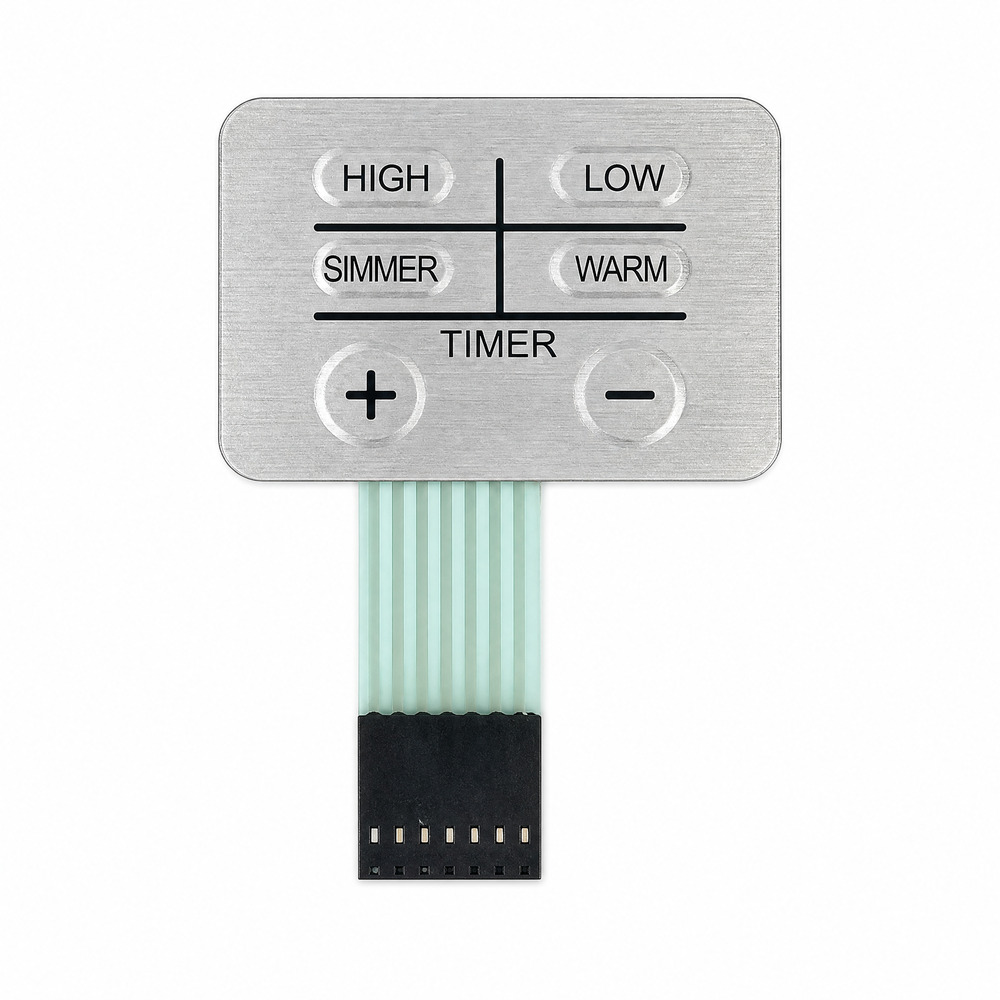
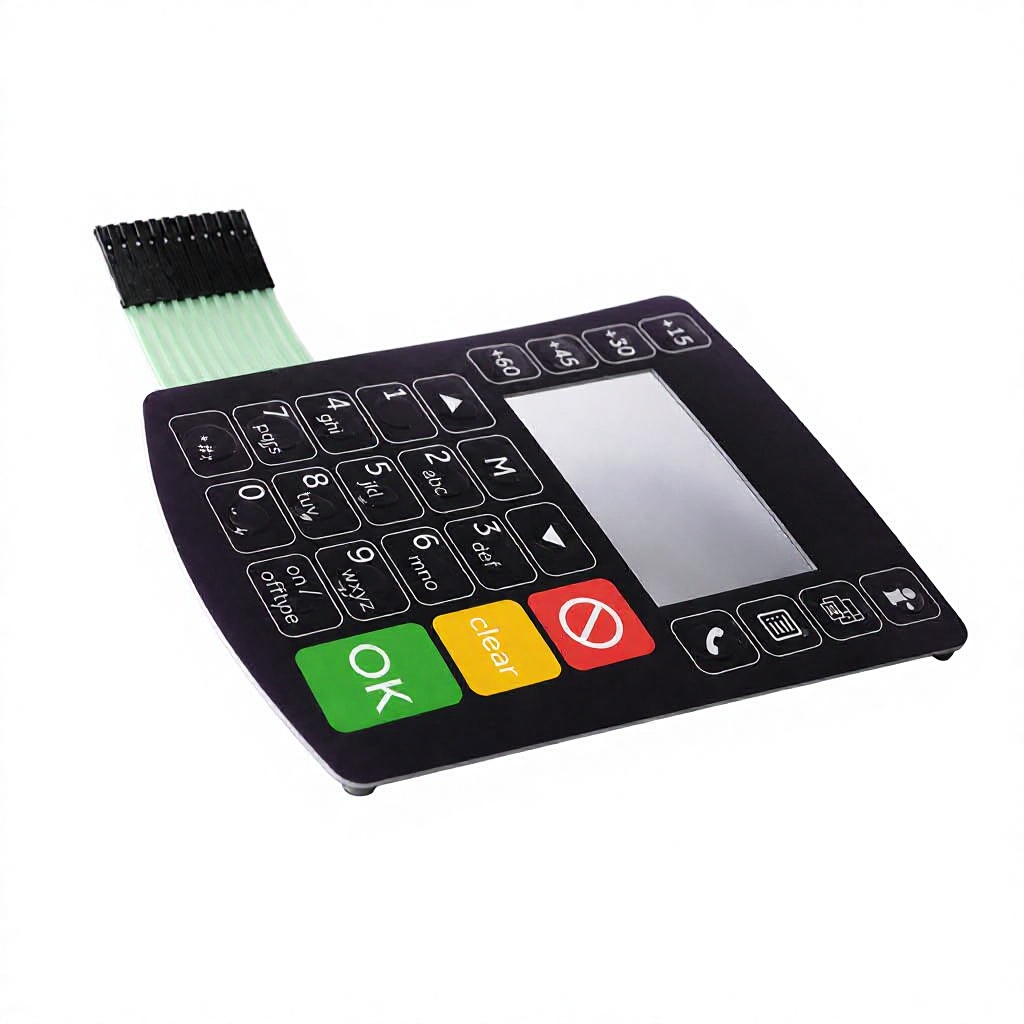
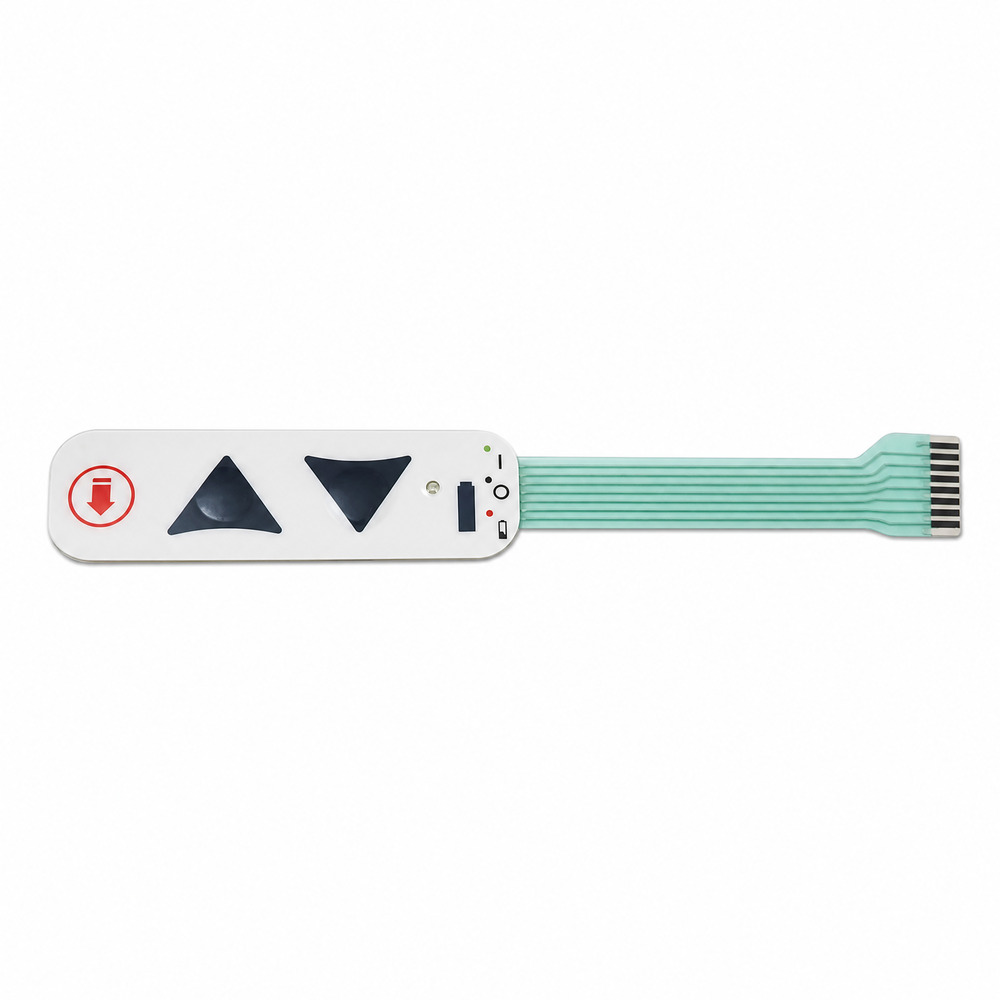
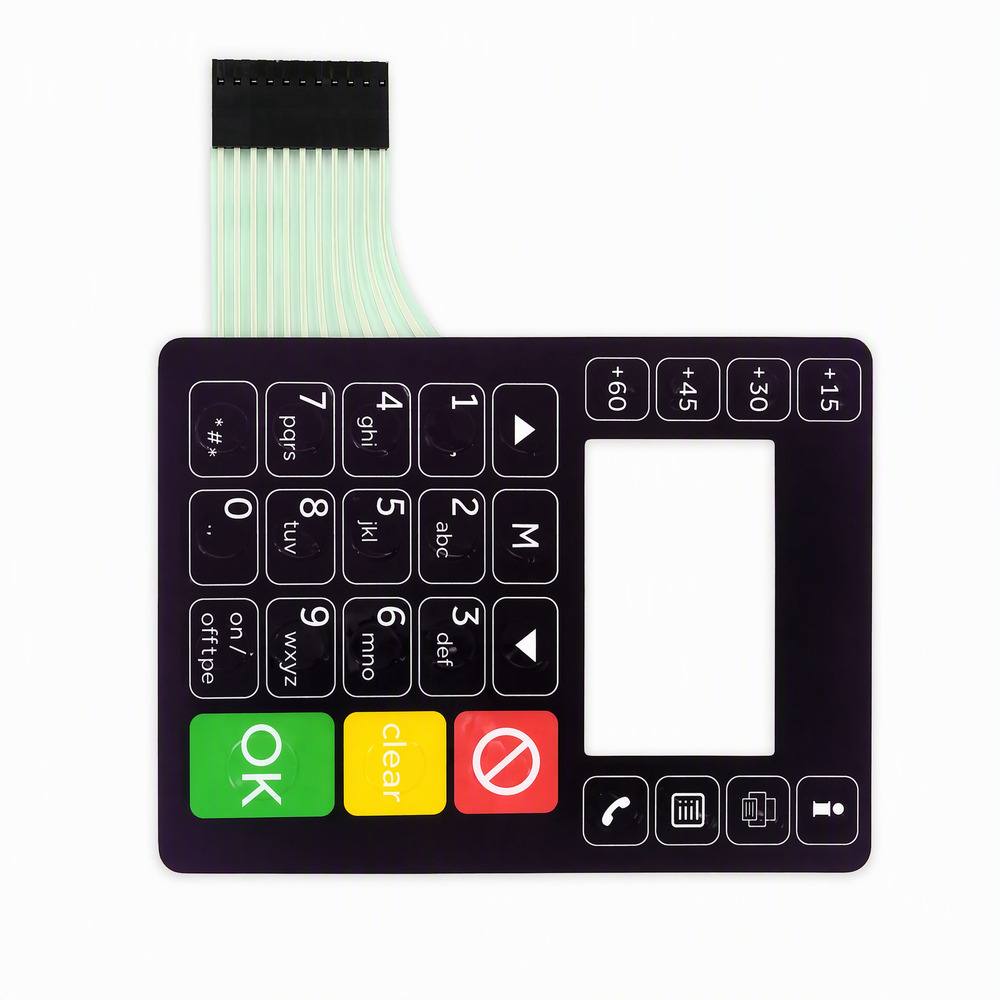
To provide an accurate DFM analysis and quotation, please send your mechanical 2D vector drawing (DXF, DWG, or vector PDF) showing cutouts, key locations, tail layout, and dome placement. For graphic overlays, please provide vector artwork created in Adobe Illustrator (.AI), vector .PDF, or CorelDraw with defined Pantone Matching System (PMS) color codes, key embossing heights, and display window dimensions.
Can you match custom graphic overlay colors and selective surface textures?
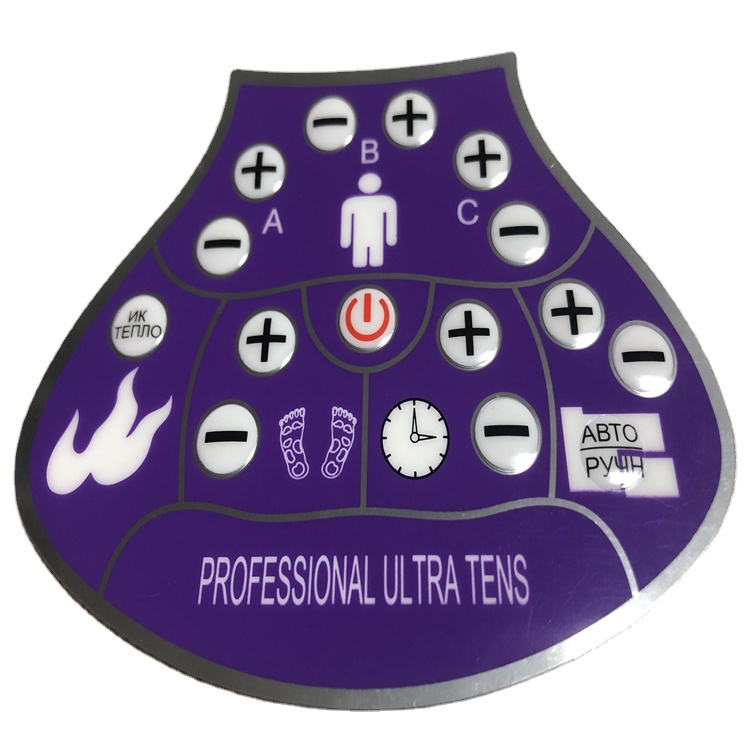
Yes. We match spot colors precisely to the Pantone Formula Guide (Solid Coated/Uncoated) or physical customer-provided master coupons using computer-controlled ink blending. In addition, we apply selective UV-cured textures—allowing velvety matte bodies paired with crystal-clear, scratch-resistant gloss LCD display windows on the same single sheet of polyester or polycarbonate.
How do you prevent silver migration and trace degradation in humid coastal conditions?
For humid environments like coastal California, we apply a cross-linked UV-curable dielectric protective coating over all conductive silver traces to prevent ionic migration. Alternatively, for severe operating environments, we substitute traditional silver-printed PET layers with gold-plated Flexible Printed Circuit (FPC) or rigid FR-4 copper boards, completely eliminating the risk of silver dendrite growth.
What structural mounting adhesives do you recommend for textured plastic or powder-coated metal?
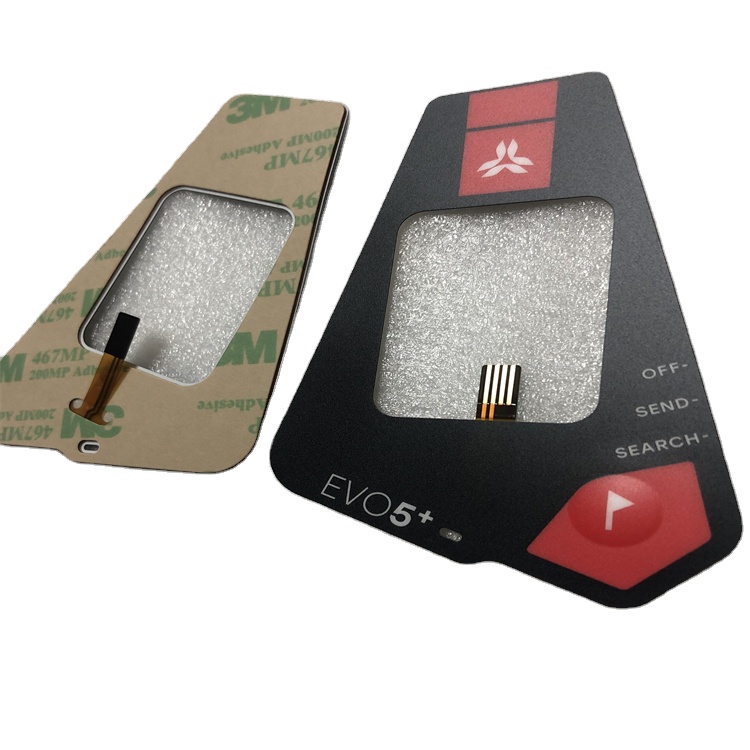
Adhesive selection depends directly on the surface energy of your mating chassis. For smooth aluminum or bare steel enclosures, industry-standard 3M 467MP is cost-effective and dependable. For low surface energy (LSE) materials such as textured ABS, polypropylene, powder-coated aluminum, or polycarbonates, we specify high-tack 3M 468MP or 3M 300LSE adhesive films to ensure long-term, bubble-free bonding.
What quality checks and electrical tests are run before shipments leave the factory?
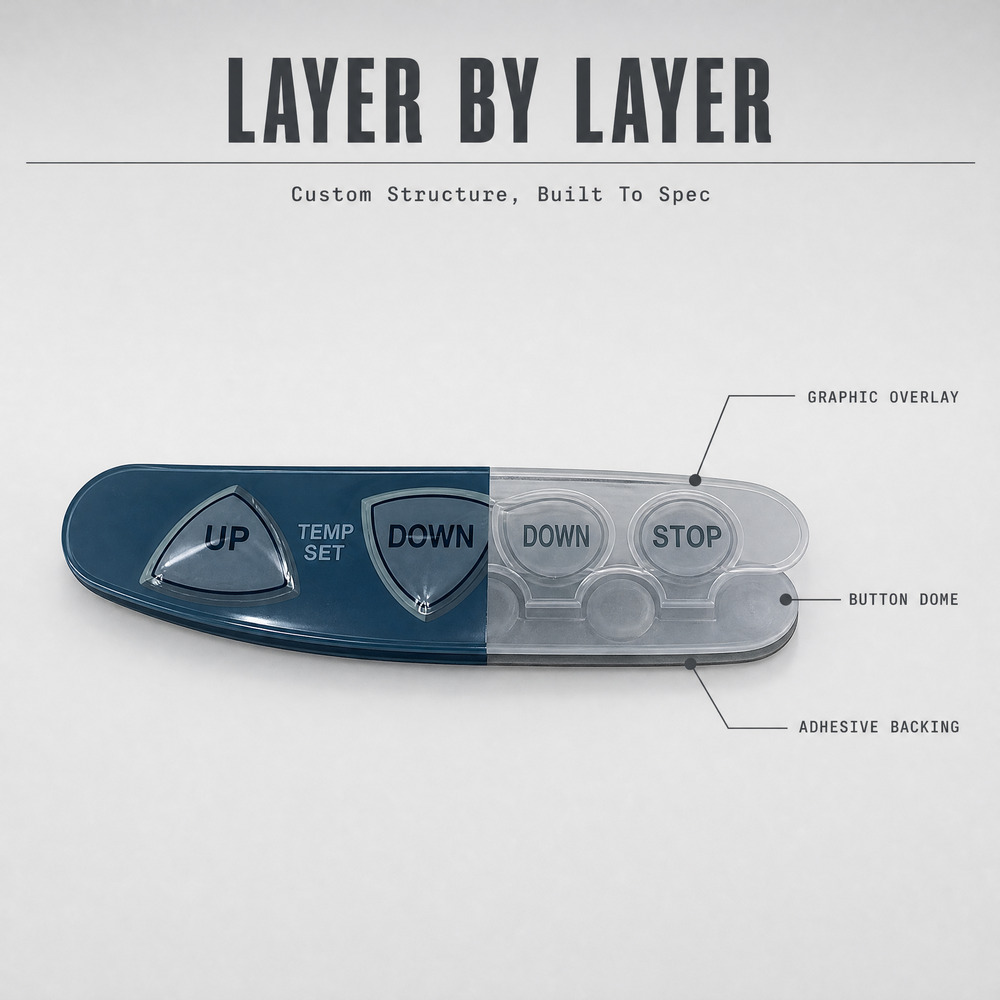
Every manufactured switch undergoes 100% automated electrical continuity, contact resistance, and circuit isolation testing on programmable fixture analyzers. In addition, our QA group conducts actuation force verification, tactile snap ratio measurements, dome life-cycle testing, adhesive peel-strength tests, and environmental chamber cycling to guarantee defect-free reliability in the field.
 EN
 DE
 FR
 ES
 RU
 JA