EN
 DE
 FR
 ES
 RU
 JA EN DE FR ES RU JA
Engineered using premium Autotex® polyester and Sabic Lexan® polycarbonate. Every custom assembly is manufactured under controlled cleanroom conditions with 100% optical and electrical continuity verification.
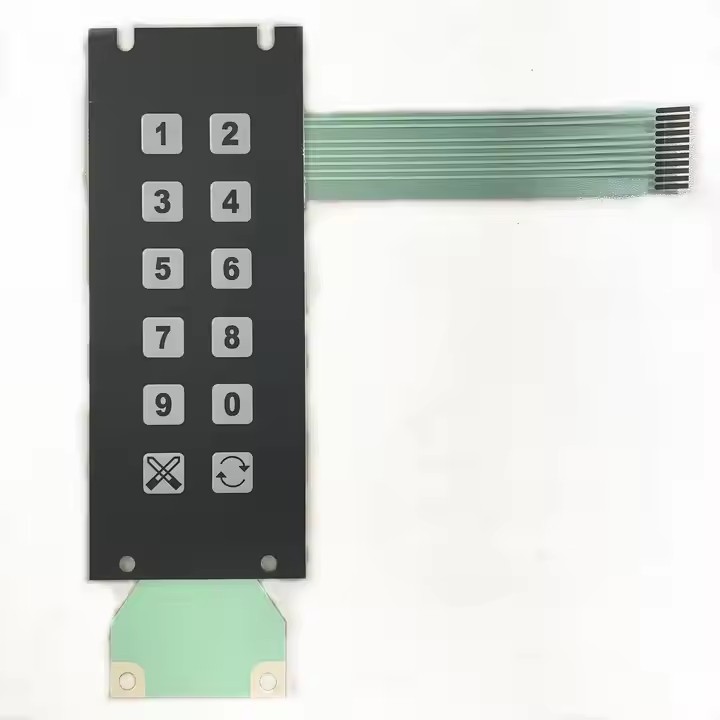
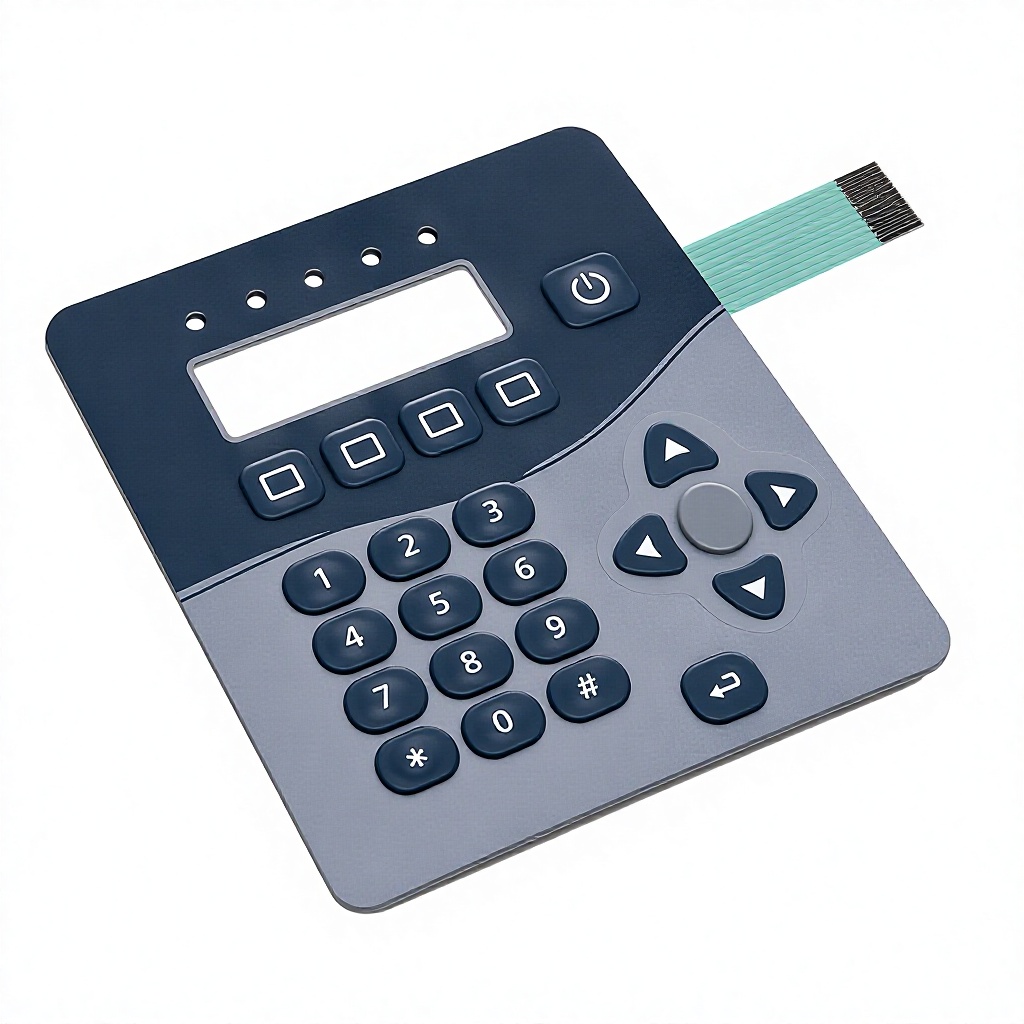
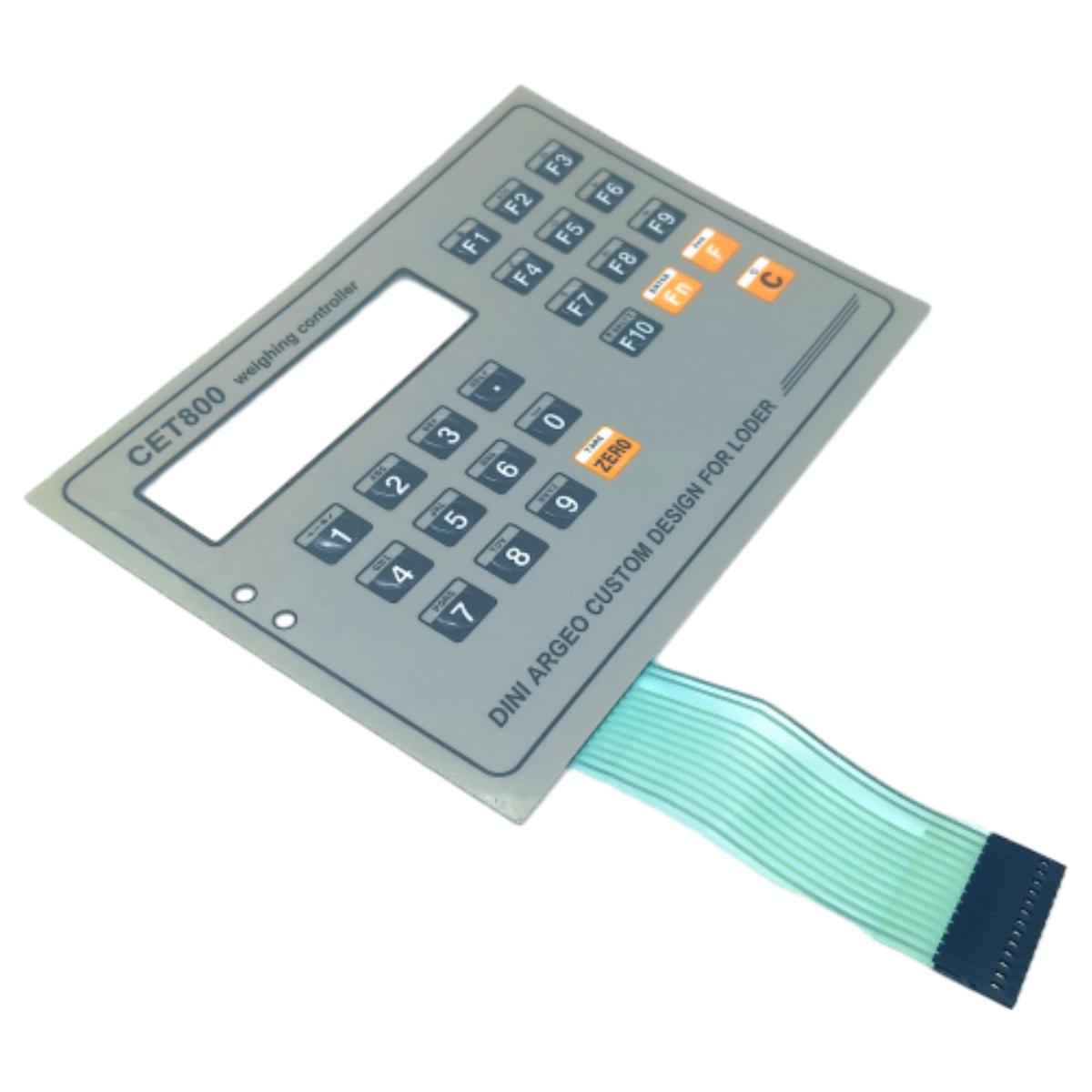
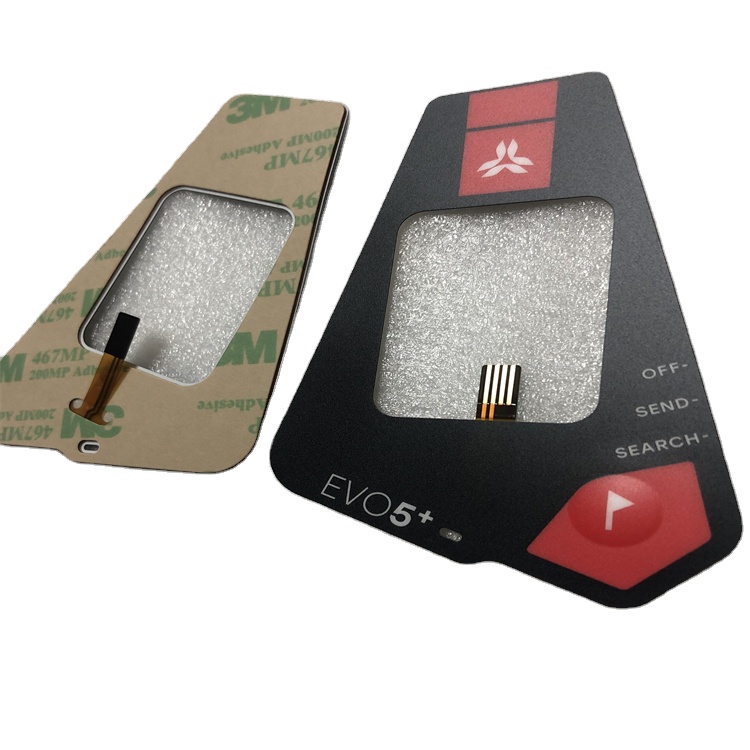
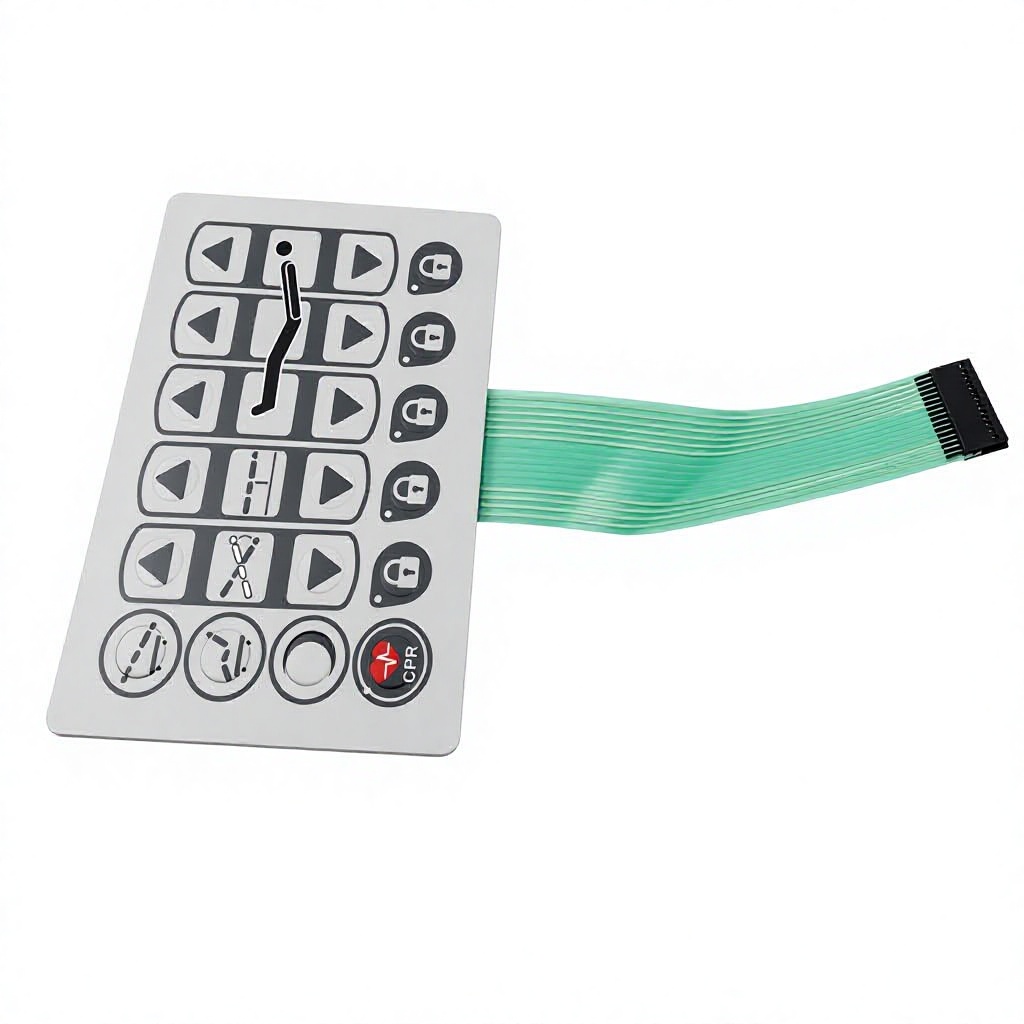
A printed front overlay serves as both the aesthetic face and the primary protective barrier of your electronic equipment. The wrong substrate selection leads to premature environmental cracking, graphic delamination, and switch failure. Review our engineering selection framework below.
| Substrate Material | Actuation Flex Life | Chemical & Solvent Resistance | Optical Window Clarity | Thermal Stability Range | Recommended OEM Applications |
|---|---|---|---|---|---|
| Autotex® Polyester (PET) Biaxially Oriented |
>5,000,000 cycles (Superior switch flex fatigue endurance) | Exceptional (Resistant to alcohols, MEK, bleach, detergents, and industrial greases) | High transparency with selective UV-cured gloss window treatments | -40°C to +105°C continuous operating threshold | Medical instruments, high-actuation keypads, factory automation, outdoor HMI |
| Sabic Lexan® Polycarbonate (PC) Velvet / Matte / Gloss |
<100,000 cycles (Susceptible to micro-fracture under repeated flex) | Moderate (Degraded by aromatic hydrocarbons, benzene, and concentrated alkalis) | Extremely high optical transmission (>90%), zero haze for display lenses | -30°C to +85°C (Softens at elevated temperatures) | Static front faceplates, display bezels, consumer electronics, test instruments |
| Hard-Coated PMMA Optical Acrylic Sheet |
Rigid (Non-actuated; strictly for structural lens integration) | Good surface chemical resistance with 4H–6H anti-scratch coating | Highest crystal clarity (92%+ light transmittance, low chromatic shift) | -20°C to +75°C | Touchscreen protective fascia, digital display lenses, EV charger bezels |
| Bio-Based / Halogen-Free PET Next-Gen Green Substrate |
>4,000,000 cycles (Comparable to standard optical-grade PET) | Meets RoHS 3.0, REACH SVHC, and halogen-free IEC 61249-2-21 standards | High transparency, anti-yellowing UV stabilized chemistry | -35°C to +100°C | Eco-conscious commercial hardware, European certified lab instruments |
Graphics, colors, and branding elements are printed on the reverse (second surface) side of clear PET or PC film. The outer polymer body acts as an indestructible wear shield against abrasions, physical scuffs, sanitizing solvents, and corrosive chemicals, ensuring artwork remains immaculate for device lifespans exceeding 10 years.
Mounting failure is unacceptable. We match customized die-cut transfer tapes to your chassis surface energy. We deploy 3M 467MP for smooth machined aluminum surfaces, 3M 468MP for slightly textured steel, and 3M 9471LE/9472LE for low surface energy (LSE) materials like powder-coated metals and molded ABS plastics.
Tactile reassurance prevents operator input errors. We engineer pillow embossing, rim embossing, and hydro-formed polydomes tailored to your actuation ergonomics. Pairing overlay embossing with nickel-plated stainless steel metal domes yields crisp feedback with trip forces configurable from 220g to 450g.
Founded in 2003 in Fenggang Town, Dongguan, Ravo Electronics has expanded from a dedicated precision silk-screen shop into a comprehensive 12,000-square-meter advanced manufacturing facility. We provide multinational OEMs with complete turnkey human-machine interface fabrication spanning graphic overlays, membrane switch matrices, flexible printed circuits (FPC), and silicone elastomeric keypads.
By housing die making, screen production, high-speed automated screen printing, cleanroom multi-tier lamination, precision CNC laser trimming, and 100% computerized continuity verification under one roof, we eliminate third-party supply chain friction. Our customers benefit from rapid engineering turnarounds, rigorous quality accountability, and unmatched pricing efficiency.
Optical window lamination and switch circuit sealing occur within enclosed, temperature- and humidity-controlled cleanrooms. This eliminates ambient particulate inclusions, Newton's ring distortions, and pinhole electrical shorts.
Every printed production batch is measured via high-precision X-Rite spectrophotometers against approved Pantone, RAL, or customer color masters. We guarantee a tight chromatic variance threshold of ΔE < 1.0 across recurring production runs.
Every membrane switch circuit undergoes programmable automated continuity testing, checking open circuit resistance, contact resistance (<100Ω), insulation resistance (>100MΩ @ 100VDC), and hi-pot dielectric breakdown limits.
Accelerate your NPI (New Product Introduction) cycles. Utilizing plotters and laser routing systems, we fabricate functional, print-accurate prototypes without dedicated steel rule dies, shipping evaluation samples in as little as 3 to 5 business days.
We rigorously inspect raw material chemistry. All substrates, adhesives, conductive silver pastes, and insulating carbon inks comply with European RoHS 3.0 and REACH Annex XVII regulations, backed by certified SGS/TUV testing records.
Front overlays and membrane panels are packed in custom anti-static bags with desiccant packs, separated by lint-free glassine sheets, and boxed inside reinforced double-wall corrugated cartons to guarantee zero surface friction during air or ocean transit.
Strategic procurement leaders in North America and Europe are modernizing their HMI sourcing matrices. Adapting to the following industry trends will enhance your supply chain resilience, lower total landed cost, and safeguard product compliance.
Procurement teams are shifting away from rigid pure screen-printing tooling for diverse product variants. Hybrid production pairs high-resolution industrial UV flatbed printing for serialized data, photographic gradients, and multi-language variants with silk-screened conductive silver and opaque block-out layers.
European environmental directives are tightening import compliance on fluorinated compounds and halogens. Forward-looking buyers are specifying halogen-free conductive traces, water-based graphic screen inks, and bio-derived PET films to pass WEEE and circular economy mandates without redesign delays.
Purchasing individual graphic overlays, mechanical domes, PCBs, and connectors from discrete suppliers compounds defect liability. Tier-1 buyers increasingly source integrated sub-assemblies—printed overlays pre-bonded to FR4 backing plates with cable harnesses installed and tested as a unified SKU.
Supply chain delays stem from preventable CAD defects: inadequate tail exit clearances, trace micro-pitch bottlenecks, or missing air vents. Leading manufacturers now offer automated, engineer-reviewed DFM analysis within hours, eliminating multiple prototype iterations before hard-tooling release.
Human-Machine Interfaces are evolving from static button arrays into smart, seamless, responsive interactive surfaces. Here are the core technical frontiers shaping new industrial and medical device designs.
Traditional tactile switches are increasingly complemented or replaced by capacitive touch sensors printed directly beneath overlay surfaces. These seamless, non-mechanical panels prevent dirt ingress and fluid accumulation. We employ sophisticated 'dead-front' ink formulations that render status symbols completely invisible until backlit by hidden SMD LEDs, delivering sleek, modern aesthetics.
Post-pandemic healthcare equipment and food-service terminals mandate extreme hygiene resilience. We integrate Autotex Microban® antimicrobial polyester films that continuously neutralize bacterial growth on the front panel. Simultaneously, optical display cutouts feature anti-glare (AG) texturing and anti-reflective (AR) hard coatings to ensure high readability under direct sunlight.
In-Mold Electronics (IME) merges functional printed circuitry with structural plastic injection molding. Screen-printed conductive traces and surface-mounted LEDs are thermoformed and injection-molded into a single 3D polymer shell. This breakthrough replaces multi-piece assemblies with ultra-thin, lightweight, and vibration-proof 3D interactive controls for automotive cockpits and premium appliances.
High-frequency factory automation and aerospace environments demand robust electromagnetic isolation. We incorporate vacuum-deposited aluminum foils, copper meshes, and cross-hatched conductive carbon/silver ground planes behind front overlays. This shunts up to 15kV ESD strikes away from sensitive internal microcontrollers via dedicated tail ground tabs.
Direct technical guidance from Ravo's senior engineering team to help overseas purchasers configure and validate custom graphic overlays and membrane switch assemblies.
Choose Polyester (PET) whenever your overlay incorporates flexible tactile keys, requires high chemical resistance (cleaning with solvents, bleach, or alcohols), or must withstand more than 100,000 actuations. Choose Polycarbonate (PC) if the overlay is completely flat without tactile keys, requires high flame retardancy (UL94 V-0 ratings), or demands optical display window clarity with maximum impact toughness at a lower raw material cost.
We prefer vector artwork in Adobe Illustrator (.AI), CorelDRAW (.CDR), or Vector PDF with all fonts converted to outlines, callouts defined in Pantone Matching System (PMS) or RAL codes, and cut lines on separate layers. For mechanical dimensions, embossing heights, tail coordinates, and circuit schematics, please supply AutoCAD DWG or DXF files. 3D STEP files are welcome if matching molded bezels.
Adhesion failure usually stems from surface energy mismatches or trapped outgassing. We exclusively utilize genuine 3M transfer adhesives (such as 3M 467MP for high-surface-energy metals and 3M 9471LE/3M 300LSE for low-surface-energy plastics). Furthermore, our graphic inks are thermal-cured and chemically matched to the substrate primer to ensure the adhesive shears before it ever delaminates from the printed ink layers.
Yes. To achieve certified IP65/IP67 ingress protection, we engineer continuous perimeter adhesive gaskets around the switch array that prevent moisture and particulate migration. Tail exits are directed internally or sealed with silicone dams. For products subject to atmospheric temperature and pressure swings, we integrate hydrophobic microporous vents (such as Gore-tex® membrane patches) to equalize internal pressure while blocking liquid water.
Light bleed occurs when high-intensity SMD LEDs scatter through translucent material layers into neighboring legends or windows. We resolve this by printing precision opaque black block-out masks on the internal graphic layers. Additionally, we laser die-cut custom light-guide channels and apply white reflective backing barriers around each LED pocket to maintain sharp illumination boundaries.
For custom graphic overlay prototypes, lead times typically range from 5 to 7 working days after final artwork approval, using digital plotting and laser cutting to avoid upfront tooling delays. For mass production runs utilizing hard steel dies and multi-up screen setups, standard turnaround is 12 to 18 working days depending on layer complexity and circuit testing parameters.
We actively support rapid engineering prototyping with an MOQ starting from just 1 to 10 pieces for design verification and fit checks. For scheduled mass production runs, optimal cost-efficiency is typically reached at volumes between 250 and 5,000 pieces, though we gladly handle high-mix low-volume (HMLV) annual blanket purchase orders with split shipments.
We maintain certified digital color master chips for every customer SKU. Color matching is executed under standardized D65 lighting booths and verified using industrial spectrophotometers to confirm that color deviations remain below ΔE < 1.0. Ink mixing formulas are digitally recorded in our ERP system, ensuring exact color matching across repeat orders placed months or years apart.
Send your CAD drawings, graphic artwork, or project specifications to Dongguan Ravo Electronics. Our senior engineering team will evaluate your layer stack-up, recommend optimal materials, and return a comprehensive DFM feedback report with factory-direct pricing within 2 business hours.