EN
 DE
 FR
 ES
 RU
 JA EN DE FR ES RU JA
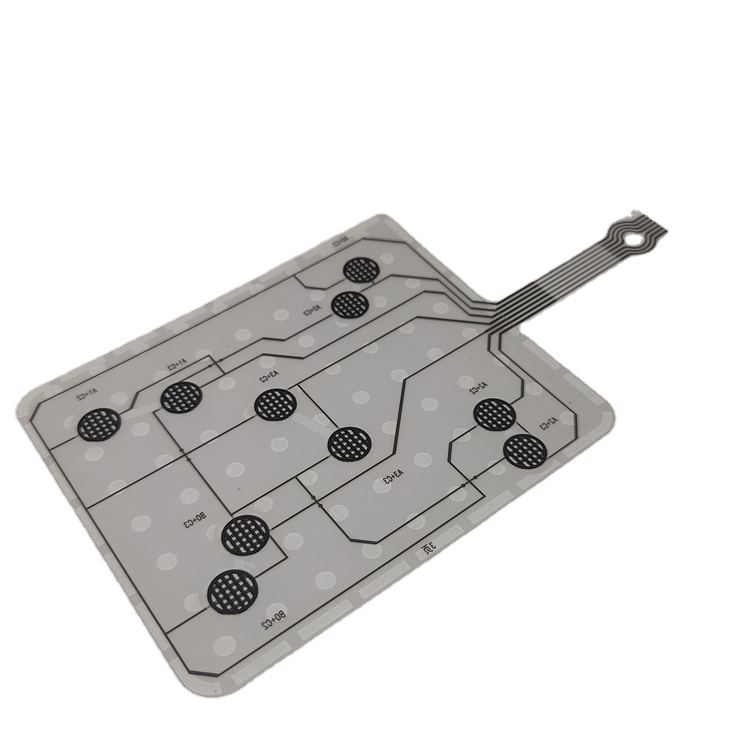
Engineered to micrometer tolerances using high-conductivity silver pastes, quantum tunnelling composite (QTC) inks, and medical-grade PET substrates. Explore our proven OEM/ODM reference platforms below.
How advanced printed electronics transform micro-variations in mechanical force into precise dynamic gait datasets, posture maps, and kinetic analytics.
A foot pressure sensor—frequently deployed as a smart insole, clinical gait measurement platform, or athletic kinetic feedback pad—operates on the piezoresistive principle. As downward mechanical pressure is exerted across the plantar surface during heel strike, midstance, and toe-off, conductive micro-particles embedded within an elastomeric polymer matrix are brought into closer physical contact. This reduces the electrical bulk and contact resistance across the printed conductive interdigitated electrodes in direct proportion to the applied force.
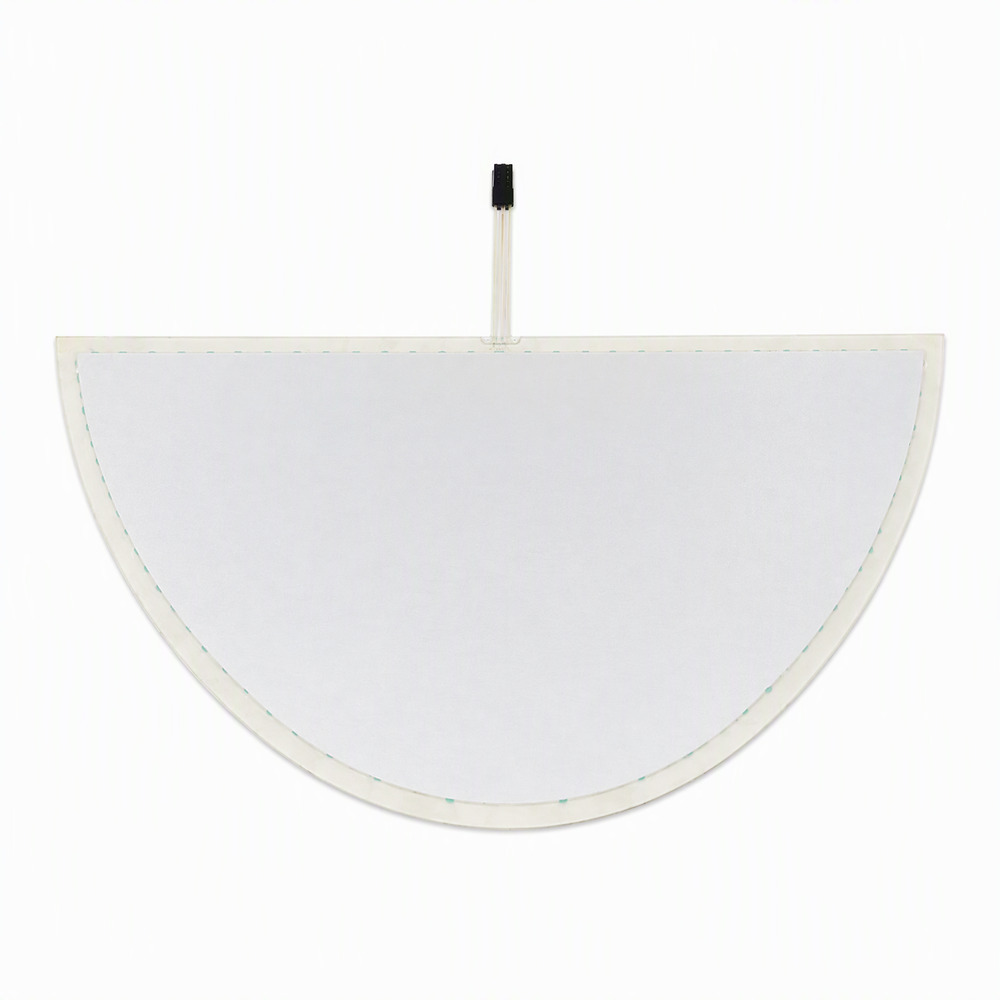
Unlike rigid load cells or bulky piezoelectric transducers, our thin-film printed force-sensing resistors (FSRs) maintain an ultra-thin profile ranging from 0.125 mm to 0.35 mm. This slim cross-section preserves natural foot flexion, avoids altering natural musculoskeletal mechanics, and fits seamlessly beneath orthotic footbeds or athletic midsoles without compromising shoe volume or comfort.
High-grade optical biaxially-oriented polyethylene terephthalate (PET) or polyimide (PI) film engineered for dimensional stability under repeated mechanical flex cycles and thermal curing up to 150°C.
Low-sheet-resistance (< 0.025 Ω/sq/mil) silver ink printed in micro-pitch interdigitated finger matrices, protected with an organosilicon anti-migration passivating overcoat to prevent silver leaching in humid in-shoe environments.
Proprietary carbon-nanotube (CNT) and semi-conductive carbon black polymers precisely formulated to deliver wide dynamic sensing ranges (5 kPa up to 1,500 kPa) with low mechanical hysteresis (< 6%).
Laser-cut acrylic adhesive spacers with micro-ventilation relief channels. These prevent internal air barometric entrapment while maintaining zero continuous contact until a verified actuation threshold is applied.
Hydrophobic barrier adhesive rings certified for IP67 water and perspiration resistance. Prevents sweat, foot moisture, and microbial flora from contaminating internal active sensing sites during rigorous gait activity.
Integrated zero-insertion-force (ZIF) polyimide connection tails or female crimp pins (1.0 mm or 2.54 mm pitch) with stiffener backings, routing analog signals directly to insole Bluetooth/Wi-Fi acquisition hubs.
Established in 2003 in Fenggang Town, Dongguan, China, Dongguan Ravo Electronics Co., Ltd. has grown from a specialized technical workshop into an internationally trusted OEM/ODM manufacturer across Europe, North America, and the Asia-Pacific region.
From precision screen tooling, chemical ink formulation, and cleanroom film printing to CNC cutting, laser micro-machining, and electronic inspection, our vertically integrated plant eliminates outsourcing delays and prevents multi-tier markups.
We eliminate high entry barriers. Validate your pilot biomechanical concept with prototypes from 1 to 10 pieces. Our dedicated engineering desk delivers design-for-manufacturability (DFM) reviews in less than 2 hours during active business cycles.
Our Class 10,000 cleanroom printing lines preserve micro-layer uniformity. We perform 100% electrical continuity and insulation checks, optical alignment verification to ±0.05 mm, and automated resistance vs. force curve characterization on every lot.
All raw films, conductive pastes, adhesives, and connector headers meet RoHS, REACH, and California Prop 65 standards. Our operations adhere to ISO 9001 certified quality management systems, facilitating seamless international FDA/CE submissions.
Discover the technical breakthroughs transitioning foot pressure monitoring from stationary laboratory force plates to wireless, continuous, real-world ambulatory diagnostics.
Traditional multi-point foot sensors required dedicated wiring channels for each point, restricting spatial resolution to 8–16 points per foot due to connector bulk. Contemporary smart designs implement Row-Column (M×N) Matrix Multiplexing, allowing up to 1,024 discrete sensels (sensing elements) across the insole. Our Dongguan Ravo engineering team solves the primary drawback of matrix arrays—electrical cross-talk (ghosting)—by integrating series-printed thin-film decoupling micro-diodes and optimizing transimpedance operational amplifier circuitry in the acquisition module.
Historical piezoresistive sensors experienced notable measurement drift when subjected to static sustained standing loads. Recent advancements leverage graphene-doped nanocomposite functional inks that exhibit near-zero electrical resistance relaxation over extended duration. This enables reliable monitoring for industrial ergonomics, standing workstation analysis, and clinical diabetic foot ulcer (DFU) off-loading assessments without requiring continuous recalibration.
The next boundary in wearable kinematics converges thin-film printed substrates with surface-mount active silicon (Bare-Die / WLCSP MCUs and BLE Transceivers). Rather than routing long vulnerable ribbon cables from the shoe insole to a clip-on ankle pod, Flexible Hybrid Electronics allow mounting the low-profile ADC and Bluetooth LE controller directly onto an extended polyimide flex wing beneath the arch, resulting in an autonomous, fully self-contained smart insole.
An analytical overview for supply chain managers, procurement heads, and hardware product engineers evaluating OEM/ODM manufacturing partnerships.
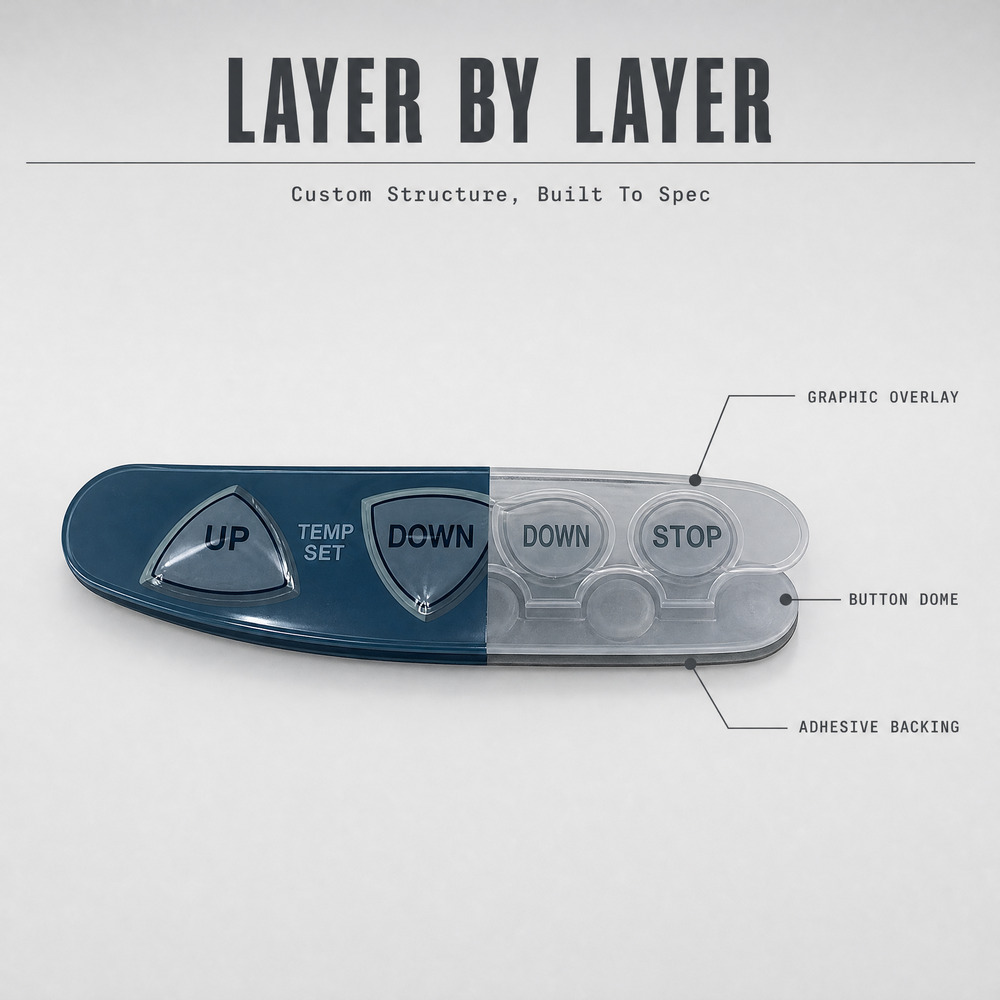
Procuring custom foot pressure sensing components is undergoing a major evolution. Hardware buyers are no longer procuring discrete graphic panels, switch membranes, and pressure sensors from disjointed vendors. Today, enterprise buyers demand co-engineered interface subsystems that combine graphic overlays, tactile dome feedback, thin-film force resistors, and custom-crimped harnessing into single, pre-tested plug-and-play assemblies.
Hospitals and post-stroke rehabilitation centers are migrating away from static clinical walkways. Procurement focuses on portable wireless insoles capable of capturing natural cadence, pronation, supination, and center-of-pressure (COP) trajectory in patient home environments.
Elite athletic brands integrate custom FSR matrix foils into soccer cleats, marathon running shoes, and ski boot liners. High sampling rates (>500 Hz per sensel) are required to measure microsecond impact forces and kinetic energy return during sprint acceleration and landing cycles.
Global healthcare procurement is ramping investments into preventive diabetic foot insoles. By identifying localized peak pressures over 50 kPa that persist without natural foot unloading, smart sensor arrays alert patients via smartphone before skin breakdown and ulceration manifest.
By consolidating tooling, screen fabrication, polymer ink blending, and environmental lamination in our Fenggang Town, Dongguan plant, international OEMs reduce overall BOM expenditure by 35% to 48% compared to European or North American domestic converters, without compromising precision.
Compare thin-film piezoresistive matrices against alternative sensing modalities to align physical performance with production budgets.
| Evaluation Parameter | Thin-Film Piezoresistive (Ravo FSR) | Capacitive Insole Array | Piezoelectric Film (PVDF) | Optoelectronic Force Plate |
|---|---|---|---|---|
| Sensor Thickness | 0.125 mm – 0.35 mm (Ultra-Thin) | 0.80 mm – 2.00 mm (Moderate) | 0.15 mm – 0.40 mm (Thin) | 25.0 mm – 80.0 mm (Rigid Block) |
| Static Force Measurement | Excellent (Continuous DC response) | Good (Prone to fringing drift) | Zero (Dynamic AC impact only) | Excellent (High accuracy) |
| Dynamic Range | 5 kPa to 1,500 kPa (Customizable) | 1 kPa to 400 kPa (Limited) | 10 kPa to 2,000 kPa (Dynamic) | 0.1 kPa to 2,500 kPa (Broad) |
| Mechanical Flexibility | Superior (180° bend radius < 3mm) | Moderate (Deformation alters spacing) | High (Flexible polymer foil) | None (Rigid stationary base) |
| Acquisition Circuit Complexity | Low (Simple Op-Amp / Voltage Divider) | High (Precision capacitance-to-digital IC) | High (High-impedance charge amplifier) | Very High (Multi-channel optical DSP) |
| Production Cost at Scale | Economical (Roll-to-roll/flatbed printing) | High (Specialized elastic dielectrics) | Moderate to High (Specialized PVDF) | Extremely High (Laboratory grade) |
Clear, definitive answers directly from our Dongguan engineering team to streamline your evaluation, prototyping, and mass production schedule.
For initial proof-of-concept testing, biomechanical validation, or clinical trials, our prototyping MOQ starts at just 1 to 10 pieces. For commercial volume production runs, MOQs typically range from 100 to 500 units, depending upon layer stack complexity, connector type, and customized tooling requirements.
We accept 2D CAD drawings in DXF, DWG, or vector PDF/AI formats indicating dimensions, key/sensel layout, trace routing, and tail exit location. If you have layer stackup preferences, target pressure range (in kPa, Bar, or PSI), and operating environment specifications, our engineering team will provide a comprehensive DFM review within 2 hours.
We deploy high-shear viscoelastic 3M transfer adhesives (such as 3M 467MP or 3M 9448A) arranged in a complete perimeter gasketing configuration, achieving up to IP67 waterproof ratings. In addition, our internal silver conductive paths receive an organosilicon anti-migration barrier to prevent dendritic silver growth in warm, damp footwear conditions.
Yes. By altering the carbon-to-binder ratio, functional filler geometry, ink thickness, and the spacing of our interdigitated electrode fingers, we can tune activation thresholds from as light as 5 kPa (gentle contact) up to 2,000 kPa (high-impact athletic deceleration), precisely mapping heel strike versus forefoot zones.
When manufactured with automotive-grade heat-stabilized PET films and high-adhesion conductive inks, our thin-film piezoresistive sensors routinely exceed 1,000,000 to 3,000,000 repetitive actuation cycles without delamination, functional fatigue, or irreversible baseline resistance degradation.
We offer customized flexible interconnect tails terminated with 1.0mm or 2.54mm pitch female crimp connectors, gold-finger FPC tails for ZIF connectors, or direct solder pads for PCB attachment. We also provide schematic guidance on voltage-divider and transimpedance operational amplifier circuits to simplify ADC integration.
Following final digital drawing sign-off, functional sample batches are typically fabricated, electrically verified, and dispatched within 7 to 12 business days. Standard mass production orders ship in approximately 2 to 3 weeks depending on lot size and connector availability.
Yes. Since 2003, Dongguan Ravo has specialized in membrane switch assemblies, backlit silicone keypads, and graphic overlays. We can integrate your foot pressure sensor with custom control consoles, handheld gait monitors, or wireless battery-powered charging enclosures under one ISO9001 certified roof.
Send your CAD files, circuit schematic sketches, or target performance specifications to our Dongguan engineering department. Receive a comprehensive DFM manufacturability evaluation and precise quote within 2 hours.