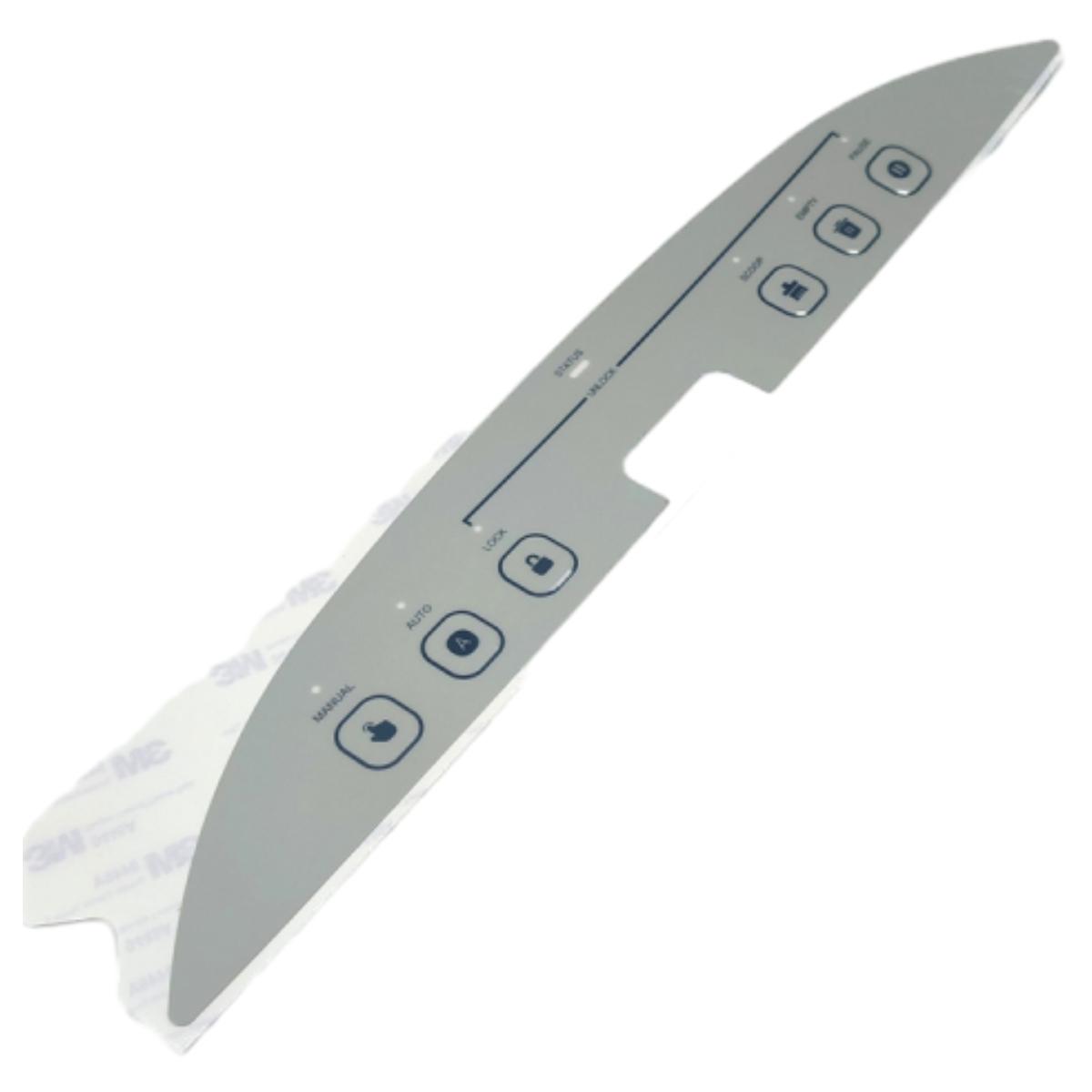
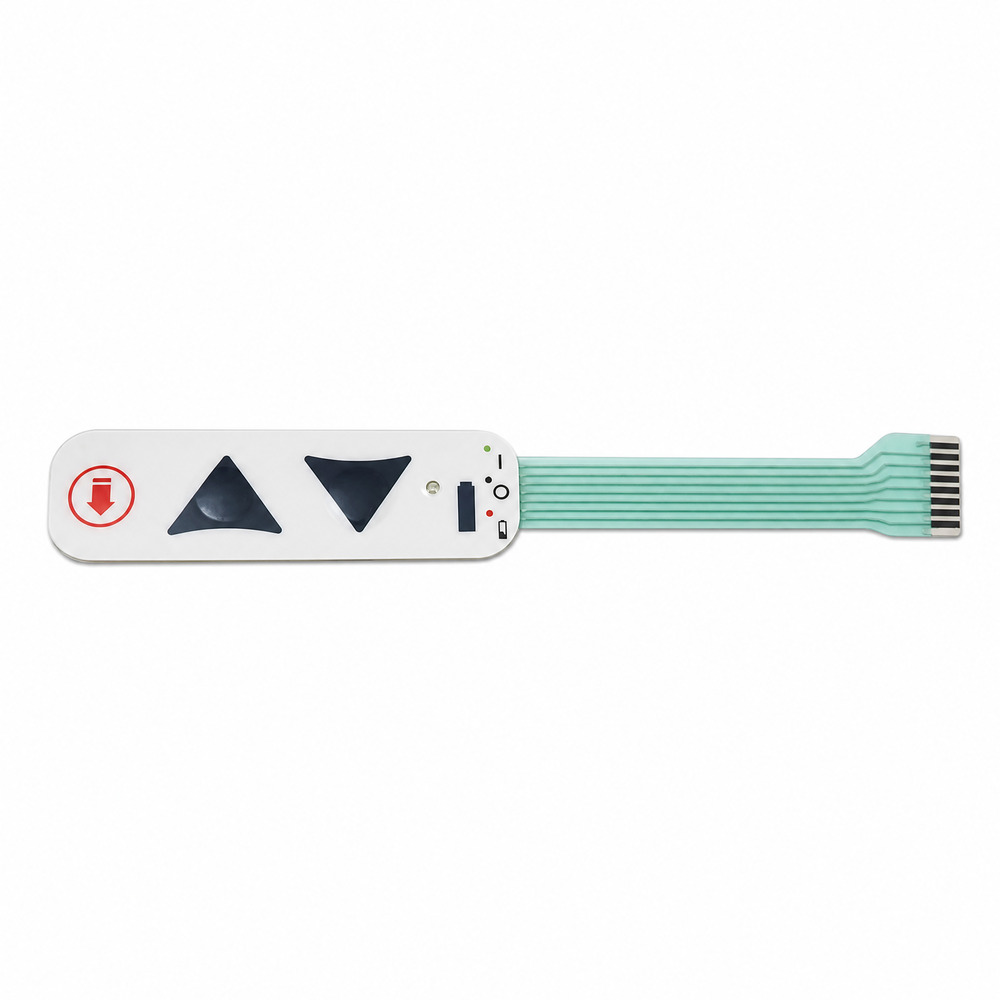
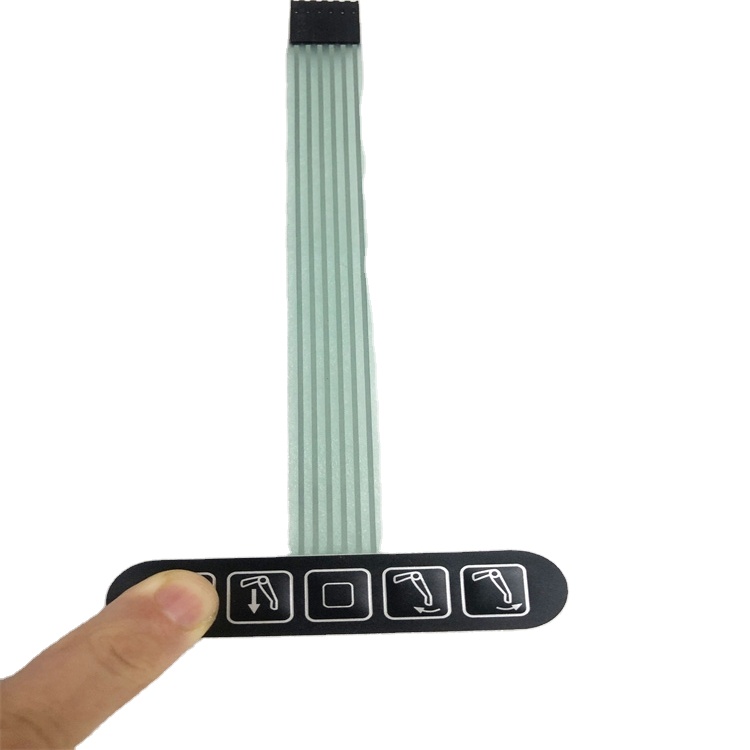
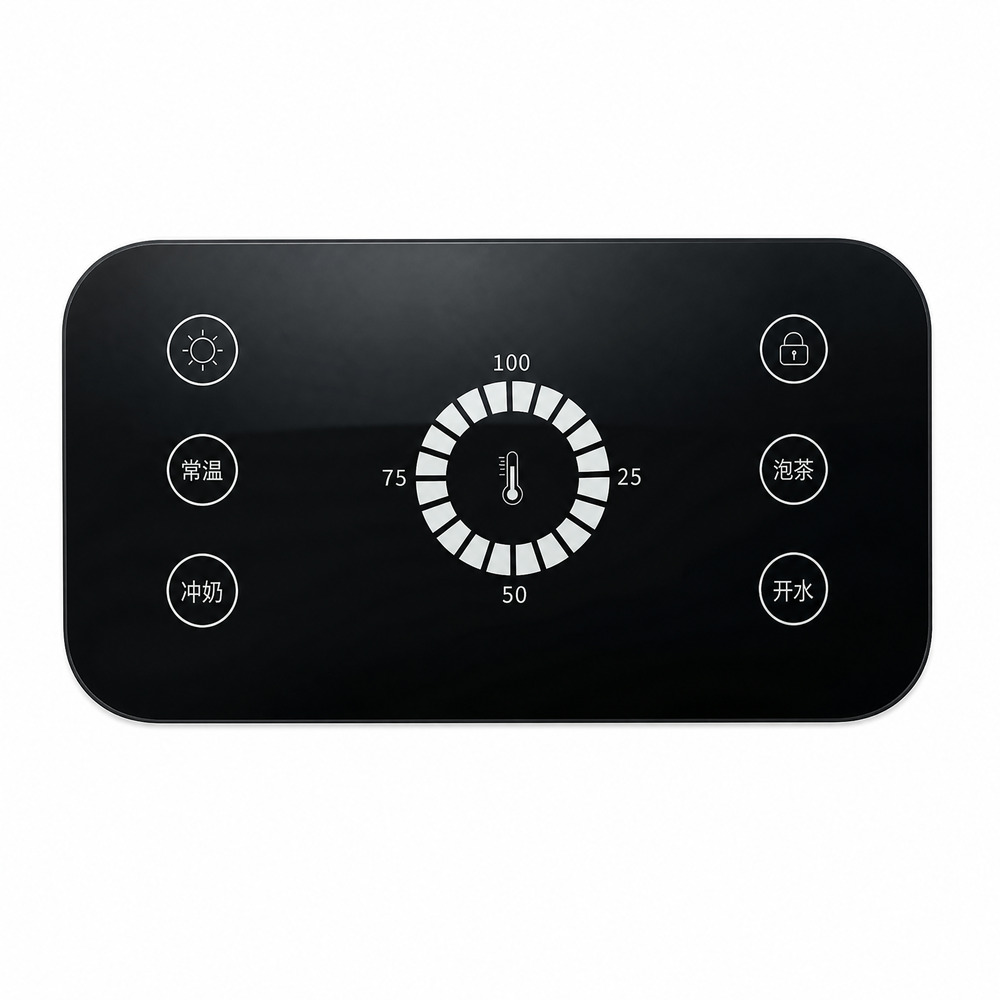
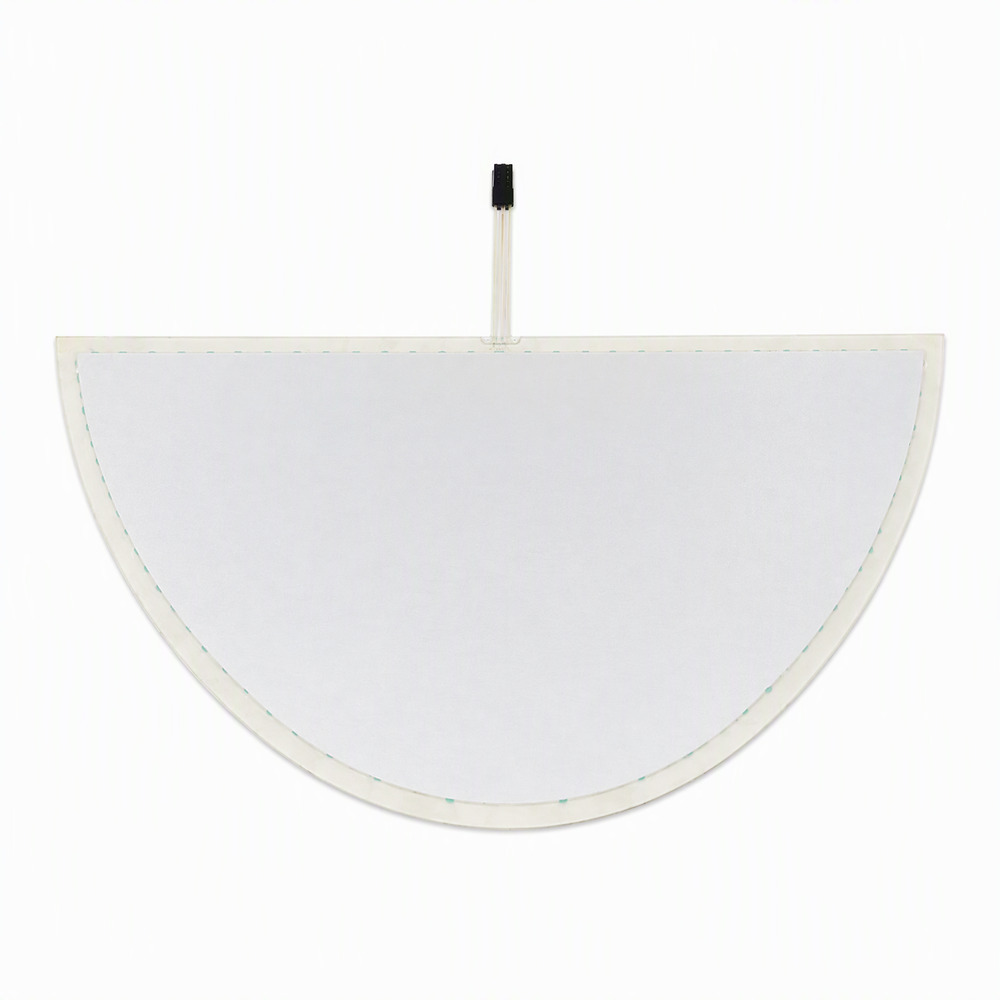
Custom Waterproof Control Panel Acrylic & PET Overlay
- Sub-surface silkscreen printing (abrasion-proof)
- High optical grade selective display windows
- 3M 467MP/468MP precision die-cut adhesive
 EN
 DE
 FR
 ES
 RU
 JA
Engineered for mission-critical environmental durability, tactile snap response, and high-density electrical interconnects. Explore eight representative architectures manufactured in-house.
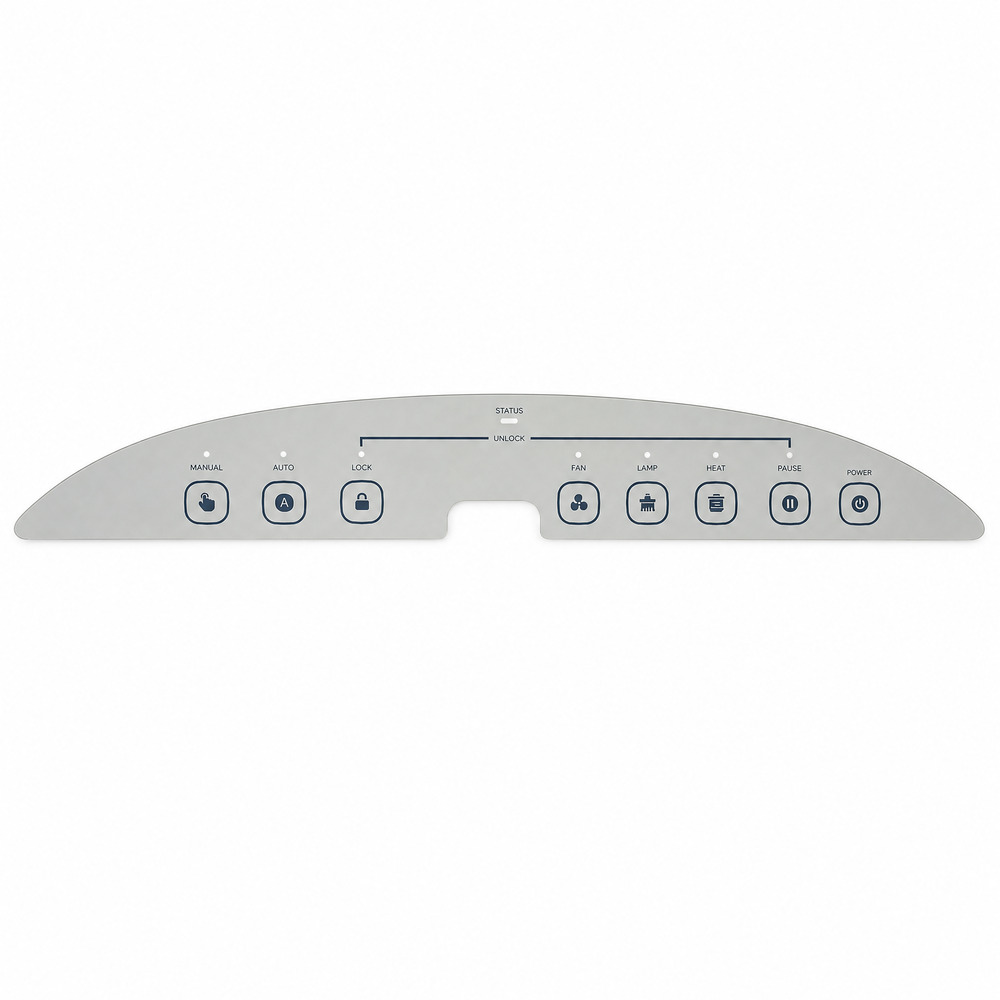
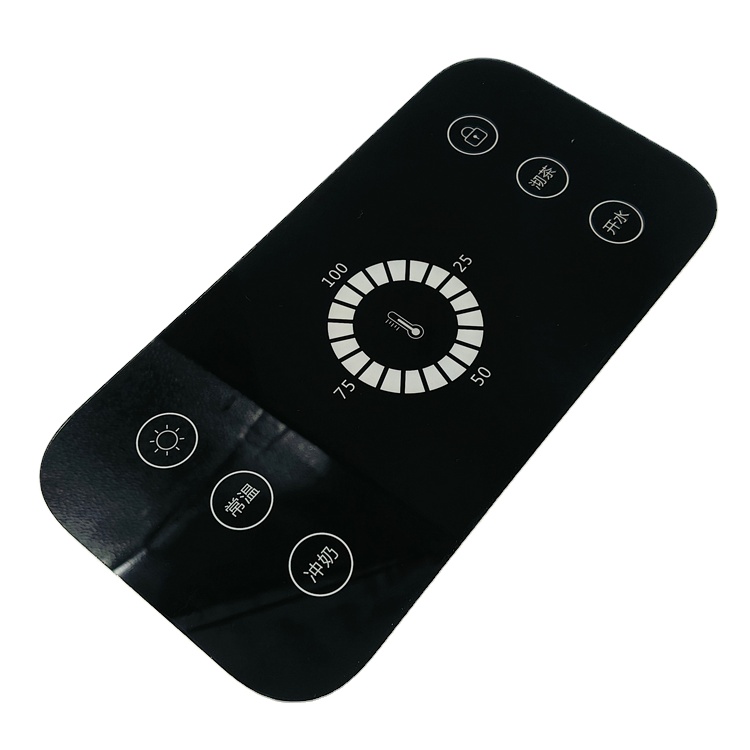
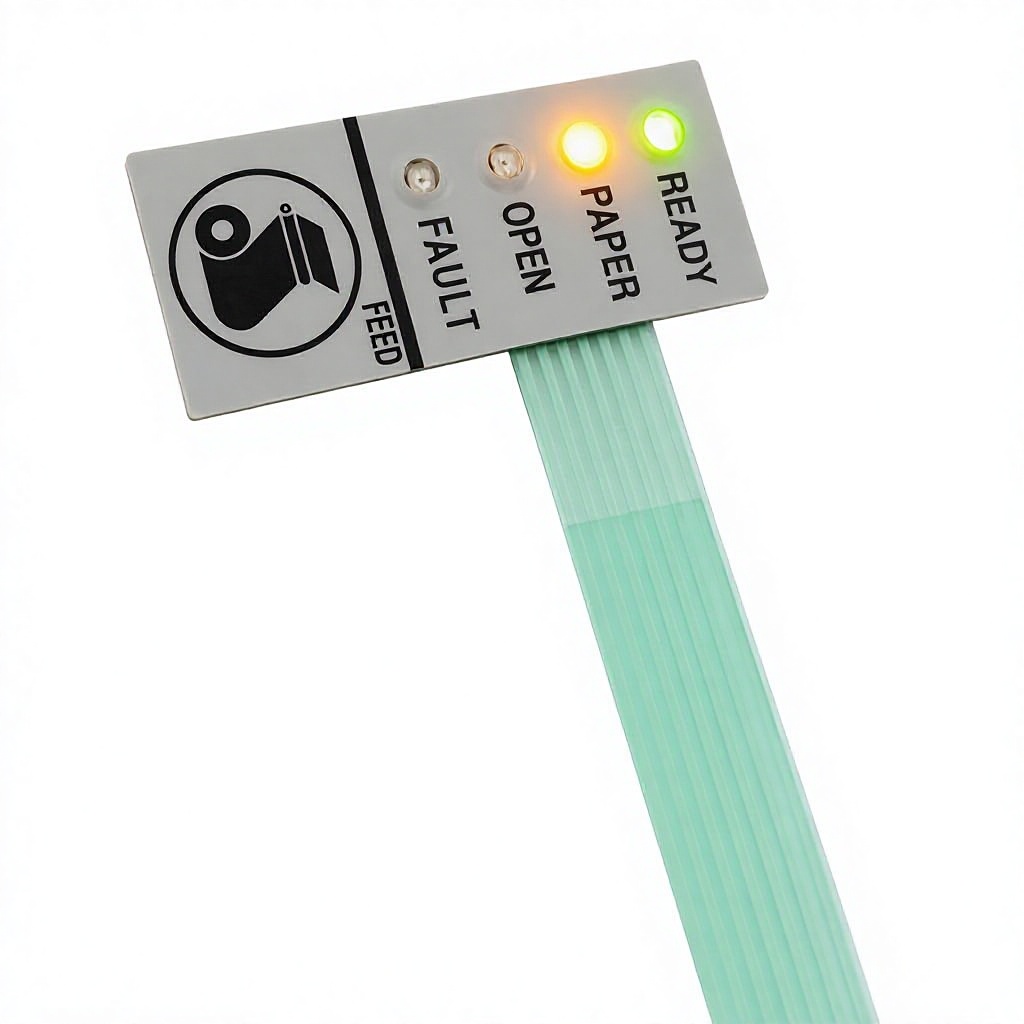
A comprehensive design analysis for hardware architects, system engineers, and supply chain managers addressing mechanical tactile optimization, electrical conductivity, and long-term durability.
The tactile feedback of custom silicone rubber keypads depends fundamentally on the engineering of the compression-molded elastomeric webbing. By carefully tuning the actuation force (Fa) against the contact force (Fc), our engineers achieve crisp, non-fatiguing feedback. Snap ratios typically span 40% to 60%, delivering precise tactile affirmation for operators working in high-vibration automotive cabins or demanding industrial machinery consoles.
Specifying electrical interfaces demands matching contact resistance to microcontroller threshold inputs. Standard compression-molded carbon conductive pills provide cost-effective contact resistance (<100 Ω) rated beyond 1 million actuations. For precision avionics, medical diagnostics, or high-speed data entry, low-resistance gold-plated pills or nickel-printed interlocks guarantee switch resistance values <1 Ω, preventing false contact signals under fluctuating voltages.
Raw silicone rubber possesses high surface tension that attracts environmental particulate and dust. To counter this, Ravo applies optical-grade polyurethane (PU) spray coatings, epoxy potting on keytops, or Parylene vapor deposition. Laser-etched keytops combined with translucent silicone compounds enable uniform negative-image backlighting, while seamless perimeter compression gaskets maintain rigorous IP67 and IP68 water and oil ingress resistance.
A benchmark reference for selecting optimal substrates and conductive layers across common application parameters.
| Performance Parameter | Medical Diagnostics | Industrial Automation | Consumer Electronics | Automotive / Outdoor |
|---|---|---|---|---|
| Preferred Overlay / Keypad Material | Antimicrobial Polycarbonate / Molded Silicone | Autotex Textured PET / Chemical-Proof Silicone | Glossy PMMA / Polished Polycarbonate | UV-Stabilized Silicone / Hardcoated PC |
| Switch Contact Resistance | <1 Ω (Gold Dome / Gold Contact) | <10 Ω (Metal Dome / Silver Flex) | <150 Ω (Molded Carbon Pill) | <5 Ω (Nickel / Gold-Plated Interlock) |
| Operating Temperature | -20°C to +70°C | -40°C to +85°C | 0°C to +55°C | -40°C to +105°C |
| Actuation Lifecycle | > 3,000,000 operations | > 1,000,000 operations | > 500,000 operations | > 1,500,000 operations |
| Ingress Protection Rating | IP65 - IP67 (Hospital disinfectant proof) | IP67 - IP68 (Oil, cutting fluid isolation) | IP54 (Splash resistant) | IP67 / Dynamic Hermetic Seal |
| Backlighting Architecture | Uniform LED Light Guide Film (LGF) | Surface-mount chip LEDs with discrete indicators | Edge-lit light pipes / RGB arrays | Laser-etched dead-front translucent keys |
How changing global electronics standards, sustainability mandates, and interface convergence are reshaping rubber keypad and membrane switch specifications.
Product architects are increasingly pairing smooth capacitive touch surfaces with physical silicone rubber keypads. This hybrid layout provides physical tactile feedback for critical emergency stop and calibration triggers, alongside responsive capacitive sliders for variable data input.
Rather than simple binary open/close actuation, custom keypads are increasingly embedding Force Sensitive Resistors (FSR). Using printed carbon paste matrices, keypads measure dynamic finger pressure, enabling intuitive menu acceleration and proportional valve management in industrial remotes.
While screen-printed silver ink on PET remains the high-volume standard, mission-critical designs are moving toward copper-clad Polyimide (FPC) and FR4 backer boards. This transition prevents silver migration in tropical, high-humidity environments and supports denser surface-mount assemblies.
European and North American OEMs face stringent RoHS, REACH, and circular economy directives. Sourcing initiatives now require halogen-free elastomers, recyclable carrier foils, and low-VOC conductive inks. Ravo maintains rigorous supply chain documentation to ensure seamless regulatory audits.
Headquartered in Fenggang Town, Dongguan, Dongguan Ravo Electronics Co., Ltd. delivers direct engineering access, proprietary tooling fabrication, and strict quality assurance under one roof.
Our in-house CNC and EDM mold-making facility shortens custom silicone compression mold production to just 7–10 days, lowering NRE expenses and speeding prototype cycles.
Direct technical communication with experienced senior tooling engineers. We evaluate your DXF, DWG, or STP CAD designs for manufacturability within two hours during active shifts.
Every switch layer undergoes automated test runs for open loops, short circuits, trace resistance, and insulation breakdown prior to cleanroom lamination and export crating.
Operating under ISO 9001 quality management systems. All raw materials—from raw silicone gum to screen printing pigments—comply with RoHS, REACH, and UL94-V0 flammability standards.
We actively support pilot builds and engineering validation tests (EVT) with quantities as low as 1 to 5 pieces, scaling reliably to monthly runs over 500,000 units.
With more than 14 years of direct export experience to industrial buyers in Germany, the USA, Japan, and the UK, our team handles custom clearance documents and anti-static packaging seamlessly.
Clear, direct answers to common questions about tooling, mechanical tolerances, minimum orders, and sample turnarounds.
Please share a 2D engineering drawing (DXF, DWG, or vector PDF) specifying dimensions, key travel, and key spacing, alongside artwork indicating Pantone color codes. If you require molded rubber, a 3D CAD model (STEP, IGES) detailing key webbing geometry and draft angles will help us prepare an exact quotation within 2 to 4 hours.
Standard prototype tooling for flat or embossed membrane switches takes roughly 5 to 7 business days. Custom compression molds for silicone rubber keypads take approximately 10 to 14 days, including the fabrication of conductive carbon pill fixtures. First Article Inspection (FAI) samples ship immediately via express courier with full dimensional test reports.
We combine continuous perimeter closed-cell acrylic foam adhesives (such as 3M 200MP series or 3M 300LSE) with engineered elastomeric tongue-and-groove silicone gaskets. For switches with circuit tails, we integrate sealed tail exits with silicone potting compound to prevent moisture, dust, or solvent wicking along circuit traces.
Stainless steel metal domes deliver a distinct snap sound, sharp tactile feedback, and an actuation life exceeding 1,000,000 cycles across extreme temperatures. Polydomes (thermoformed directly into the PET circuit layer) provide a gentler, quieter feel at lower tooling and assembly costs, making them ideal for high-volume home appliances and consumer interfaces.
To eliminate legend wear, we sub-surface print on translucent membranes or apply dual-layer laser etching on painted silicone keytops. In addition, key surfaces receive high-grade polyurethane (PU) protective spray coatings or hard epoxy resin caps, protecting legends against abrasion, aggressive cleaning chemicals, and industrial oils.
Yes. We offer fully integrated turnkey HMI electromechanical assemblies. Our facility laminates membrane switches and rubber keypads directly onto aluminum backing plates, steel brackets, or FR4 PCB assemblies pre-populated with surface-mount LEDs, active microcontrollers, and standard locking connectors.
Submit your CAD layouts or bill of materials today. Our engineering team will review your designs and deliver a comprehensive DFM analysis and quotation within two hours.
