LED Matrix
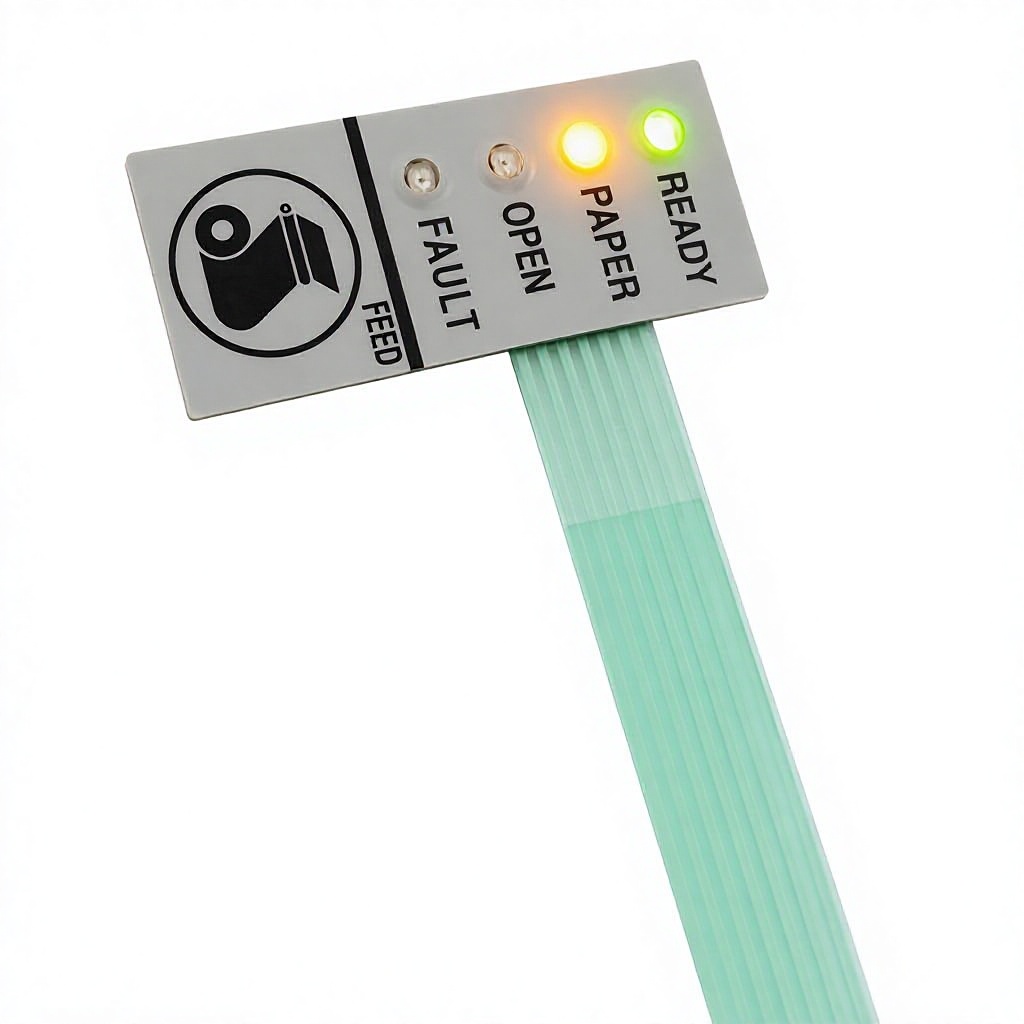
Custom LED Membrane Switch Indicator Panel
- Integrated surface mount status LEDs
- Dual-level conductive silver traces
- Medical & POS industrial rating
 EN
 DE
 FR
 ES
 RU
 JA
Explore our proven custom conductive circuit layers, printed HMI interfaces, and membrane tactile assemblies engineered for demanding environmental cycles.
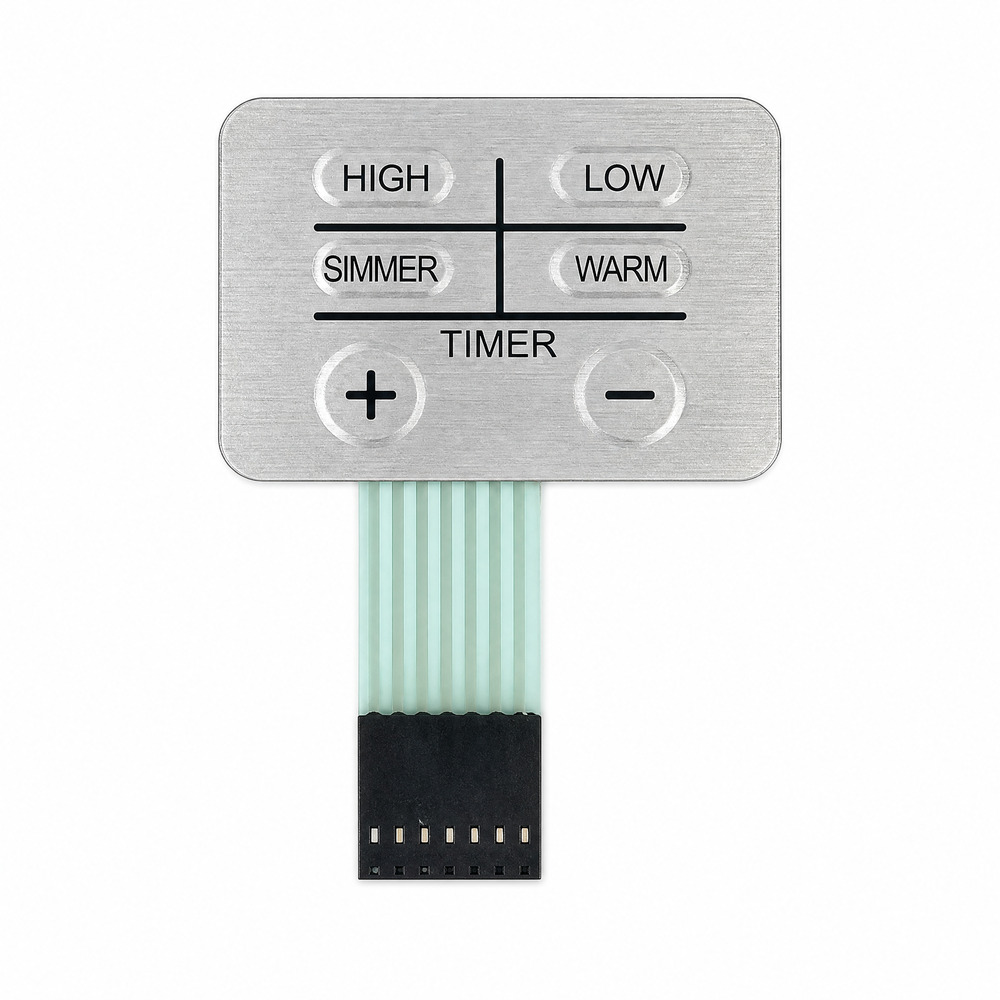
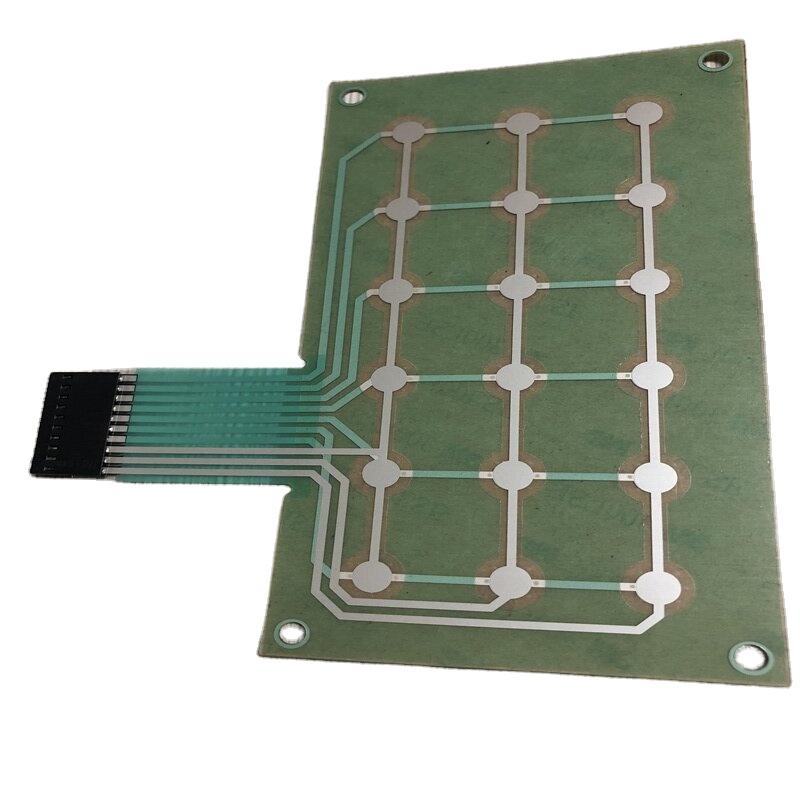
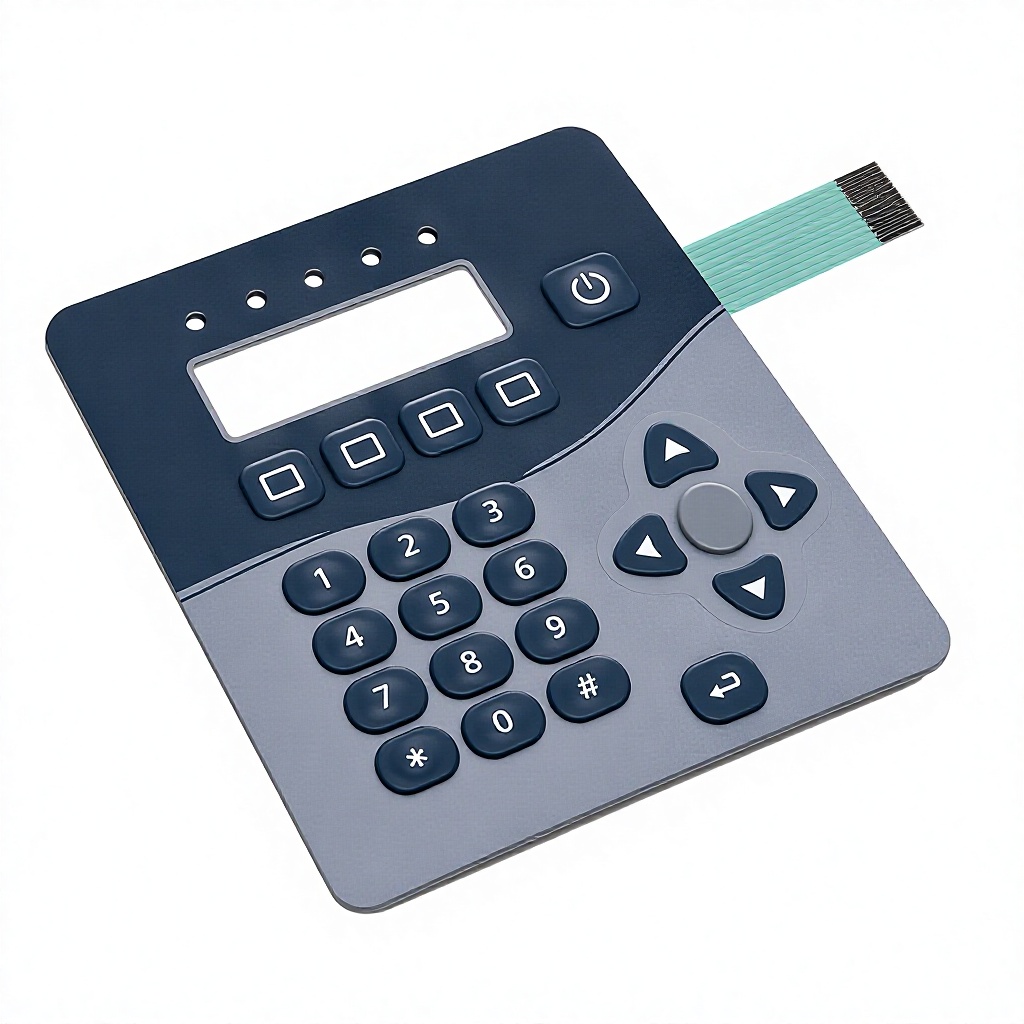
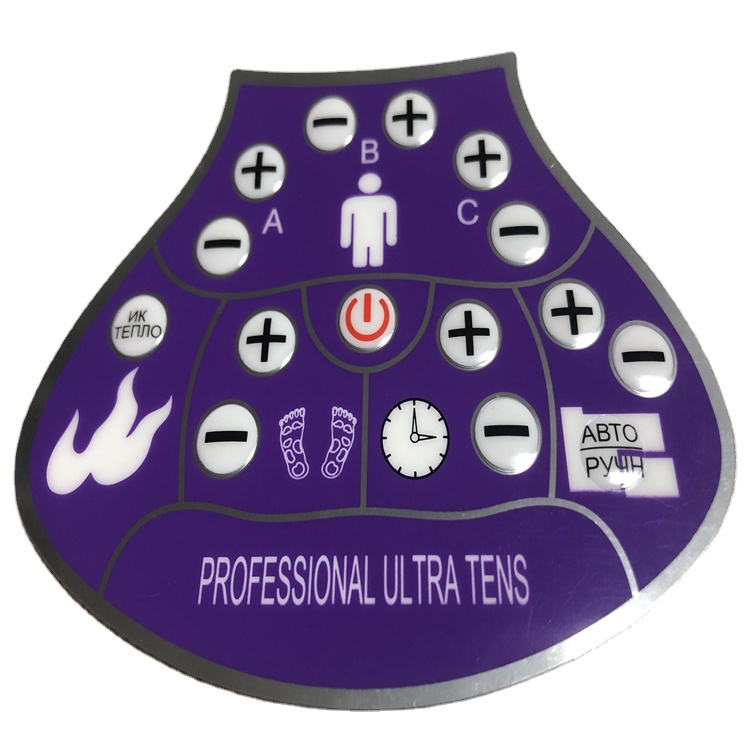
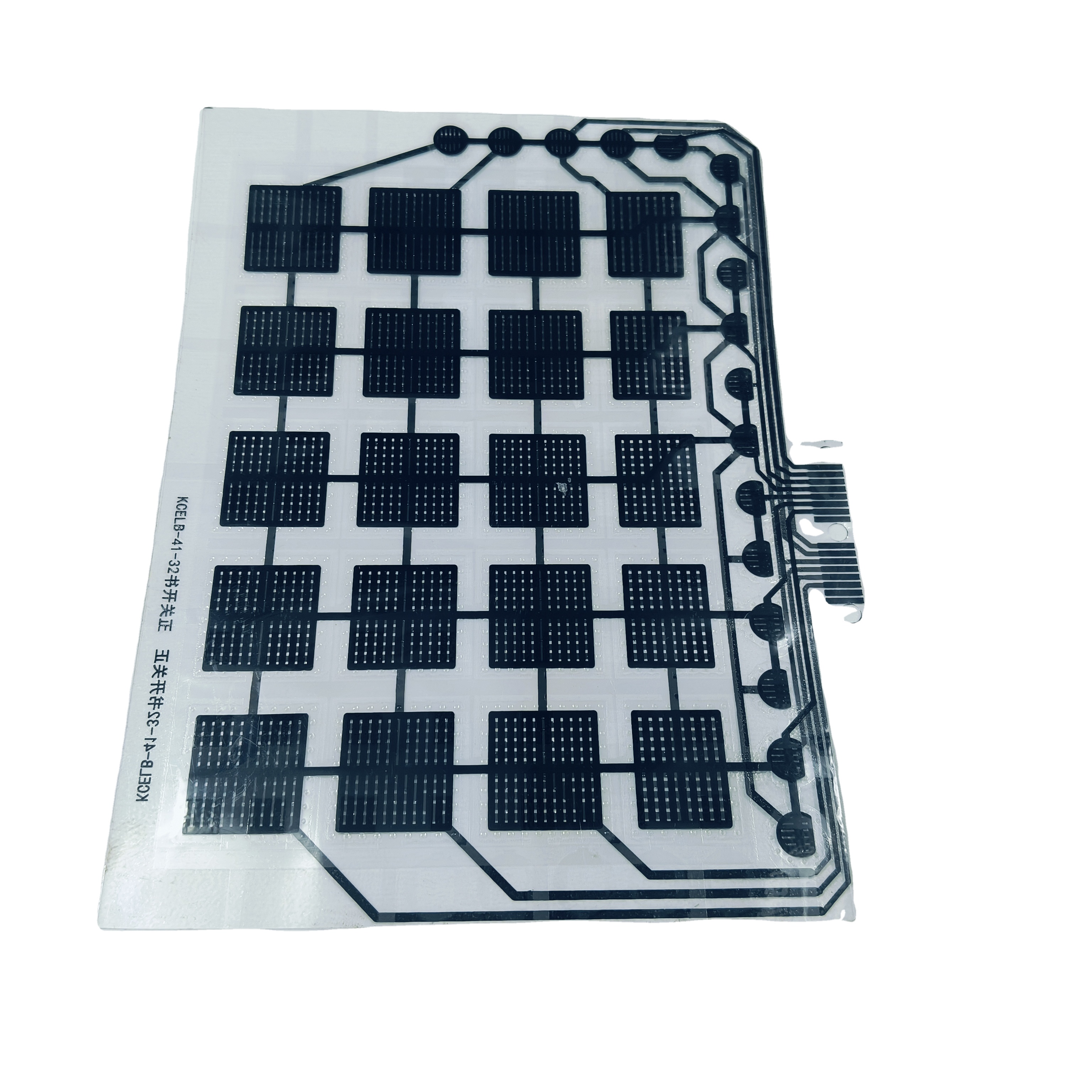
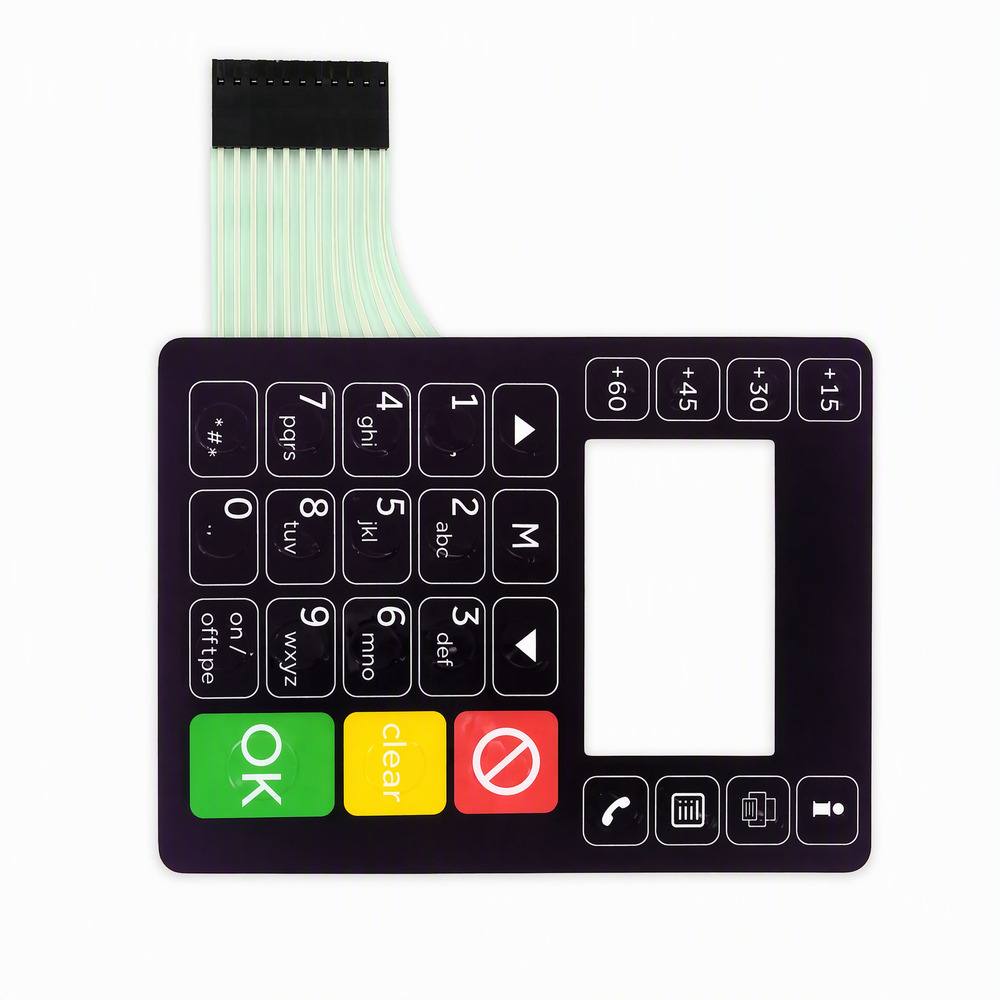
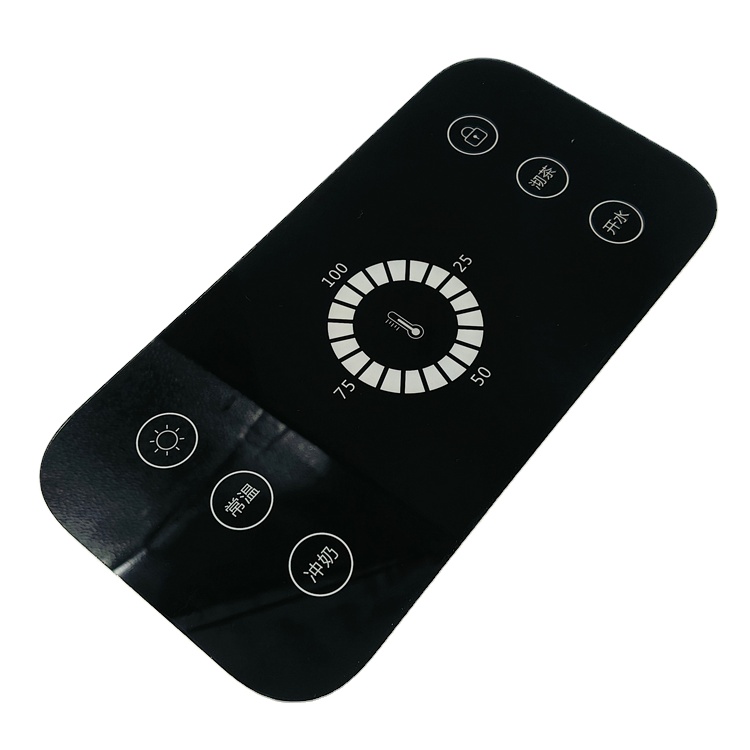
A deep engineering overview of screen-printed thick film (PTF) circuitry, conductivity dynamics, silver migration mitigation, and mechanical lifecycle endurance.
Conductive silver traces serve as the fundamental nervous system for modern Membrane Switch assemblies, Flexible Printed Electronics, and Capacitive Human-Machine Interfaces (HMI). Unlike etched copper on polyimide or rigid FR-4 which relies on subtractive subtractive chemical milling, conductive silver circuits utilize Polymer Thick Film (PTF) additive printing. In this process, sub-micron flake or spherical silver particles (ranging from 1µm to 10µm) suspended in thermoplastic or thermosetting polymer binders are patterned through stainless steel or high-tension polyester mesh.
The sheet resistance ($R_s$) of printed silver traces typically fluctuates between 10 mΩ/sq/mil and 25 mΩ/sq/mil, influenced by solid content concentration, particle morphology, and post-cure thermal densification. During convective or infrared oven curing (ordinarily 120°C to 150°C for 30 to 45 minutes on heat-stabilized PET), the carrier solvent evaporates completely, driving mechanical contact between adjoining metallic silver flakes to construct an unbroken conductive percolation pathway.
Achieving stable electrical performance over millions of flex cycles requires matching the conductive paste chemistry with the underlying substrate. Dongguan Ravo Electronics relies on high-grade optical biaxially-oriented polyethylene terephthalate (BOPET) films (e.g., Toray, Mylar, Autotype) with thermal shrinkage rates constrained below ≤ 0.05% at 150°C. Uncontrolled thermal shrinkage produces trace warping, micro-fracturing, and localized resistance spikes across long interconnect tails.
To guard against atmospheric sulfurization, oxidation, and mechanical abrasion, silver traces are overlaid with a UV-curable or thermally crosslinked dielectric insulation mask. Where circuits cross over one another (trace crossovers), a high-dielectric-strength polymer barrier is applied in multiple registered passes with pinhole-free curing to prevent inter-layer short circuits up to breakdown thresholds exceeding 500 V/mil.
| Circuit Architecture | Typical Sheet Resistivity | Minimum Trace / Space Pitch | Flex Endurance (Bend Radius 2mm) | Cost-to-Volume Ratio |
|---|---|---|---|---|
| PTF Silver Traces (Single Layer PET) | 12 – 20 mΩ/sq/mil | 0.30 mm / 0.30 mm (300 μm) | > 200,000 Cycles | Optimal (Low Tooling / Rapid Scale) |
| Carbon-Shielded Silver Traces | 15 – 25 mΩ/sq/mil | 0.38 mm / 0.38 mm (380 μm) | > 500,000 Cycles | Economical (Anti-Migration Guard) |
| FPC (Etched Copper Polyimide) | 0.5 – 1.5 mΩ/sq/mil | 0.075 mm / 0.075 mm (75 μm) | > 1,000,000 Cycles | Moderate to High (Phototooling Cost) |
| Rigid PCB Backer (FR-4 Hybrid) | < 0.5 mΩ/sq/mil | 0.10 mm / 0.10 mm (100 μm) | Rigid / Non-Flexing | Higher (Best for Surface Mounted SMT) |
A critical engineering constraint in high-humidity applications is electrochemical silver migration. When a continuous DC voltage potential exists between adjacent conductive silver runs in the presence of moisture condensation, silver ions ($Ag^+$) dissolve at the positive anode and migrate across the electrolyte moisture boundary toward the negative cathode, growing dendritic crystalline trees that induce catastrophic shorts. Ravo eliminates this phenomenon through three strict OEM practices:
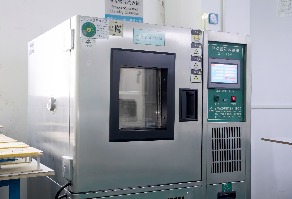
First, our layout engineers design conductor runs with generous inter-trace clearance based on operating voltage. Second, we apply a 100% conformal conductive carbon overprint layer over all contact fingers, connector pads, and vulnerable switch nodes. Carbon acts as an impermeable physical and galvanic barrier that will not ionize or generate dendrites under bias. Third, we utilize 3M high-cohesion perimeter gaskets that hermetically isolate internal traces from ambient humidity, passing 85°C / 85% RH endurance testing for 500 continuous hours.
How global tier-1 equipment builders, medical device OEMs, and industrial automation procurers are structuring supply chains for printed electronics over the next decade.
Procurement directors are systematically phasing out disjointed procurement models where plastic overlays, metal domes, rubber keypads, and flexible circuits are ordered from disparate vendors. Purchasing teams favor unified OEM suppliers capable of delivering completely validated, single-SKU modules ready for instant enclosure drop-in.
This consolidation drastically lowers bill-of-materials overhead, minimizes stack-up tolerance stacking issues, and transfers continuity, ESD, and water ingress testing accountability entirely to the primary contract manufacturer.
Given the fluctuation of commodities pricing on precious metals, procurement contracts increasingly stipulate dynamic paste formulations. Suppliers with deep material science capabilities utilize silver-coated copper flakes, hybrid graphene-silver compositions, or targeted carbon bridging over non-critical routing sections.
This selective deposition strategy trims raw silver weight per square meter by up to 30% without sacrificing trace conductivity or contact switch resistance, providing long-term pricing resilience across multi-year automotive and industrial programs.
While mass production runs remain concentrated in cost-optimized facilities, procurement cycles demand prototype turnarounds of under 7 to 10 working days for design verification tests (DVT). Equipment makers demand digital laser cutting of prototype tooling combined with rapid screen turnaround directly from CAD files.
Suppliers offering 1-piece sample minimums with verified engineering reviews within 2 hours are actively capturing design wins over legacy vendors bogged down by rigid multi-thousand-piece MOQ requirements.
The convergence of advanced nanomaterials, structural electronics, and high-density surface component integration.
Traditional flatbed screen printing reaches its physical boundaries near 200μm trace lines due to ink slump and screen emulsion mesh deflection. The emergence of particle-free organometallic silver inks and micro-gravure rotary deposition allows trace widths to drop below 50μm – 75μm.
This precision enables printed flexible interconnects to mate directly with high-density fine-pitch ZIF connectors (0.5mm pitch) without resorting to expensive polyimide FPC fabrication, unlocking massive weight and profile savings in handheld consumer electronics.
The manufacturing paradigm is transitioning from flat layered assemblies to 3D formed In-Mold Structural Electronics (IME). Conductive silver circuits, capacitive touch sensors, and SMD indicator LEDs are printed onto thermoformable polycarbonate films, deep-drawn into structural contours, and back-injection molded into rigid automotive trims.
This methodology produces monolithic, crevice-free, and hermetically sealed parts that permanently resist water, grease, and vibration while eliminating mechanical switch housings completely.
Conductive silver traces are no longer limited to binary (on/off) switches. By combining interdigitated silver trace fingers with semi-conductive carbon polymer formulations, thin-film flexible pressure sensors (FSRs) are being deployed across modern applications.
These thin-film matrices enable proportional force detection for automotive seat occupancy sensing, intelligent hospital bed pressure distribution monitoring, sports gait analysis insoles, and industrial safety clamping feedback systems.
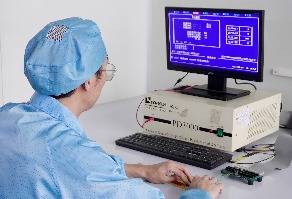
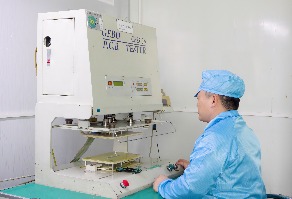
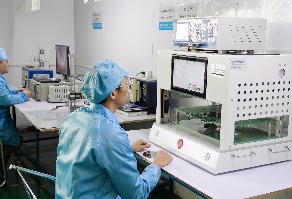
Real images from our Dongguan production plant. In-house screen-making, automated printing, high-speed stamping, cleanroom assembly, and rigorous QC under one roof.
Combining 20+ years of tooling mastery, advanced material verification, and end-to-end supply chain integration.
From graphic silk-screen printing, precision die-cutting, embossing, and automated SMT LED pick-and-place to cleanroom lamination, we control the entire lifecycle in our Fenggang Town facility. Eliminating external subcontractor delays enables us to execute rapid design iterations with uncompromising consistency.
Our experienced engineering team examines CAD files, Gerber data, and layer stack drawings immediately upon submission. We return comprehensive Design for Manufacturability (DFM) feedback — covering trace resistance projections, dielectric overlap integrity, and tactile actuation geometry — typically within 2 hours during active business cycles.
Operated strictly under an ISO 9001 certified quality management framework, 100% of finished circuits pass automated electrical open/short testing, dielectric isolation checks, and tail pitch optical inspection. All substrates, adhesives (genuine 3M 467MP/468MP/9448A), and conductive pastes are fully certified to RoHS and REACH standards.
Crucial engineering considerations, electrical parameters, order logistics, and manufacturing minimums answered by our technical sales team.
For standard volume production on PET films, our design rules recommend a nominal trace width of ≥ 0.38 mm (15 mil) and spacing of ≥ 0.38 mm for robust yields. For fine-pitch interconnect tails mating with ZIF connectors, we routinely manufacture traces down to 0.25 mm (10 mil) line and space under tight environmental and registration controls.
Loop resistance is governed by the formula $R = R_s \times (L / W)$, where $R_s$ is sheet resistance (typically 0.015 Ω/sq/mil), $L$ is length, and $W$ is trace width. For high-speed lines or sensitive analogue sensing circuits requiring less than 10 Ω loop resistance, our engineers widen non-critical trace corridors or selectively print extra ink thickness to achieve your target electrical thresholds.
We actively support rapid engineering prototyping from 1 to 10 pieces to validate mechanical housing fits and electrical logic. For volume mass production, commercial MOQs typically commence between 100 and 500 units depending on the total stack dimensions, layer complexity, and raw material utilization.
Yes. Because standard PET films and silver pastes cannot tolerate high lead-free reflow temperatures (260°C), we employ specialized isotropic conductive adhesives (silver epoxies) or low-temperature soldering chemistries (Bi-Sn alloys) with automated dispensing and UV encapsulation to attach miniature SMD 0603/0805 LEDs, resistors, and sensor ICs securely.
We require your mechanical 2D drawings (DXF, DWG, or vector PDF), graphic artwork in Adobe Illustrator (.AI) or vector PDF with designated Pantone color codes, electrical circuit schematic or netlist, operating voltage and current requirements, connector pitch specifications, and annual forecast quantities. Our DFM team will immediately begin analysis.
We engineer robust IP65, IP67, and IP68 perimeter hydro-seal barriers utilizing continuous acrylic transfer adhesives (such as 3M 467MP or 468MP) cut via optical laser. By eliminating breathers along exterior perimeters and potting connector tail transitions with specialized silicones, the internal conductive runs remain protected against aggressive chemical reagents and pressurized sprays.
