Industrial OEM
 EN
 DE
 FR
 ES
 RU
 JA
Explore high-durability human-machine interface assemblies engineered to strict DFM tolerances. Backed by in-house screen stencil imaging, micro-gap silver printing, and 100% automated continuity inspection.
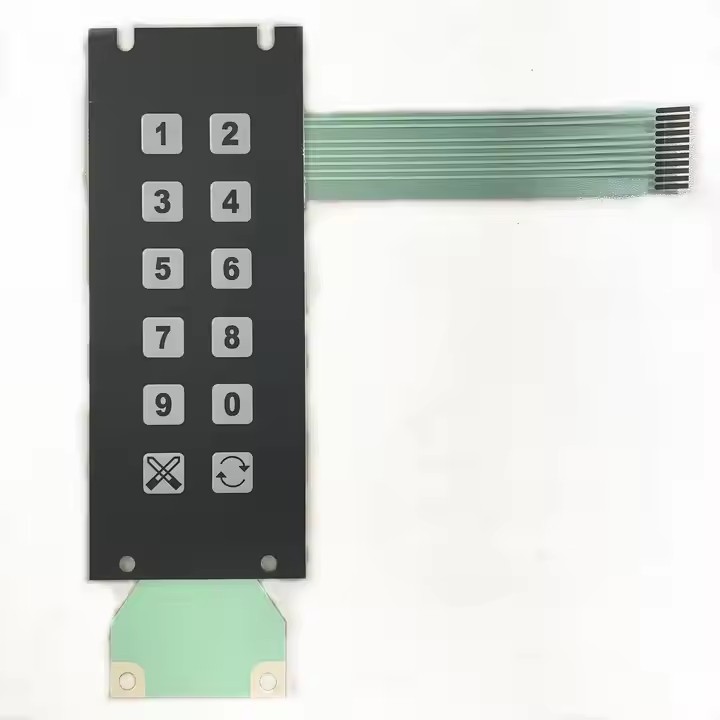
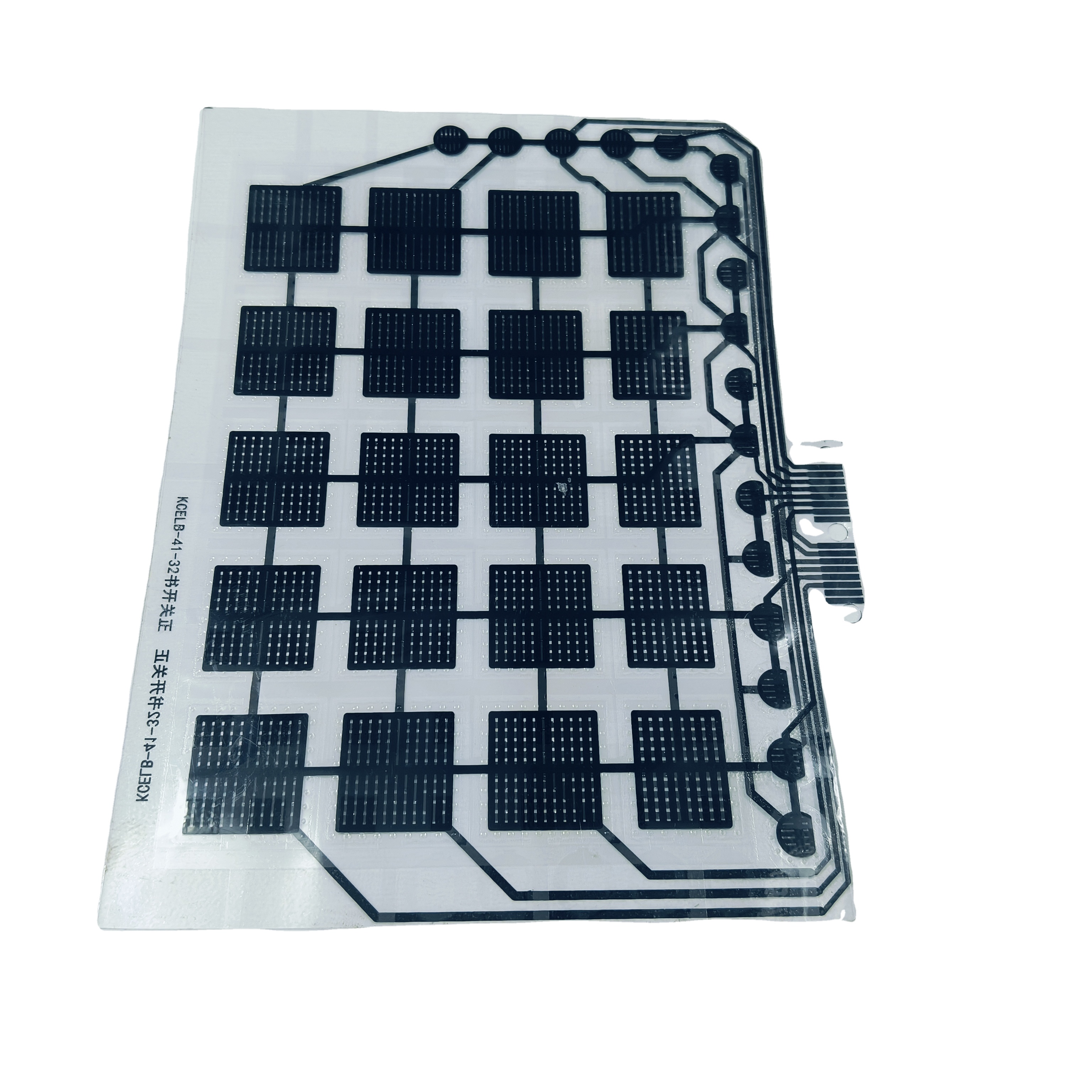
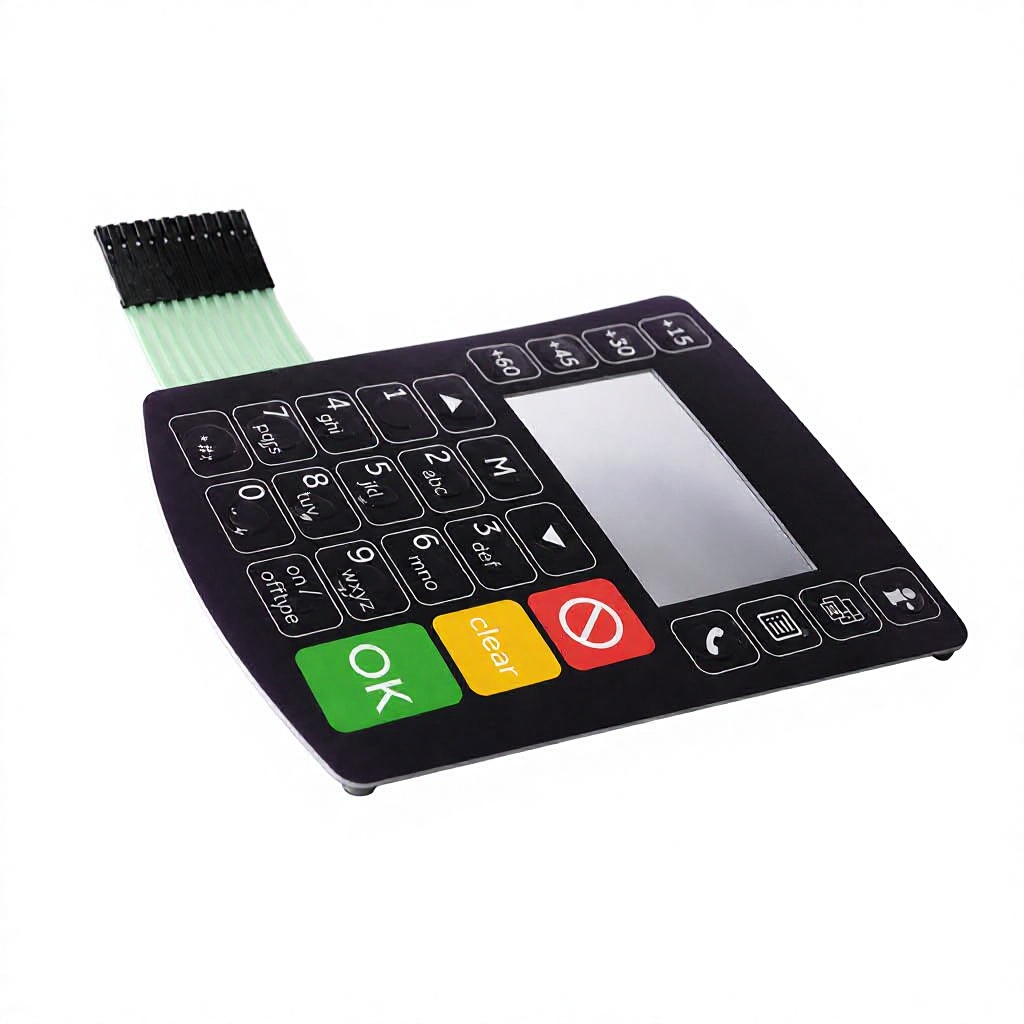
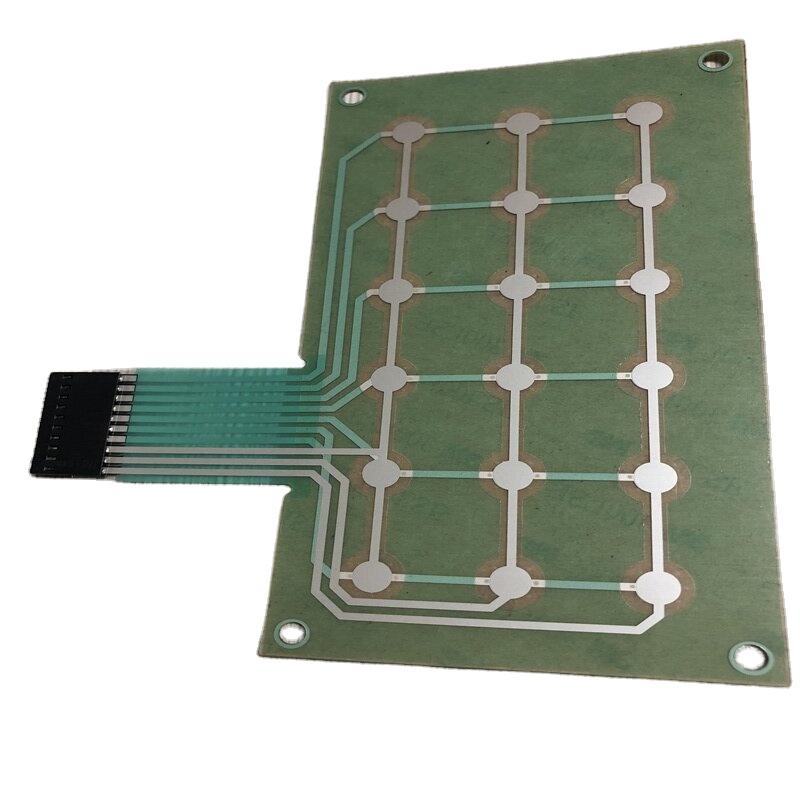
Founded in Fenggang, Dongguan
Class 10k/100k Cleanroom Facilities
Average DFM Engineering Response
ASTM B117 & Life Cycle Testing
A deep technical analysis of ink rheology, sintering mechanics, trace-pitch design rules, and electrochemical migration mitigation in demanding HMI environments.
Polymer Thick Film (PTF) screen printed circuitry represents the cornerstone of modern, cost-efficient human-machine interfaces (HMIs) and thin-film force sensors. Unlike traditional subtractive PCB etching, which chemically removes up to 80% of copper clad material, thick-film screen printing is an additive manufacturing discipline. Conductive silver and resistive carbon micro-flakes suspended within thermoplastic resin matrices are selectively pushed through high-tension precision stainless-steel or polyester meshes onto flexible dielectric substrates.
The sheet resistance of a printed silver conductor is governed by Ohm’s geometric relationship:
Where Rs represents the sheet resistivity in milliohms per square (typically 12–25 mΩ/□/mil for high-purity silver pastes), t is the cured dry-film ink thickness (typically 10 to 18 μm), and L/W is the aspect ratio of the conductive trace. Precise fluid dynamics dictate that paste viscosity must remain between 15,000 and 25,000 mPa·s at a 21.0 s⁻¹ shear rate to avoid ink slumping under fine pitches down to 0.25mm trace and 0.25mm space.
The primary failure mode of unengineered silver printed circuits in high-humidity operating environments is electrochemical migration (ECM). Under continuous DC bias voltage and relative humidity exceeding 75%, silver ions (Ag⁺) detach from the anode, migrate through condensed surface moisture films, and deposit at the cathode, forming conductive dendritic metallic whiskers that cause catastrophically low insulation resistance and direct shorts.
At Dongguan Ravo Electronics, we deploy three proprietary engineering safeguards to completely prevent silver migration:
Compare mechanical, electrical, thermal, and cost trade-offs across Silver PTF, Flexible Printed Circuits (FPC), and Rigid FR-4 PCB membrane switch constructions.
| Engineering Attribute | PET Screen-Printed Silver | Polyimide Copper FPC | FR-4 Rigid Backed Membrane | Carbon/Pedot:PSS Hybrid |
|---|---|---|---|---|
| Base Substrate | Heat-Stabilized PET (125–188 μm) | Polyimide Kapton (25–50 μm) | Glass-Epoxy Laminate (0.6–1.6 mm) | PET / Molded Polycarbonate |
| Conductor Metallurgy | Polymer Silver Flake Paste | Rolled Annealed (RA) Copper | 1.0 oz Electro-Deposited Copper | Graphite / Conductive Polymer |
| Typical Sheet Resistance | 15 – 35 mΩ/□/mil | 0.5 – 1.0 mΩ/□/mil | <0.5 mΩ/□/mil | 100 – 500 Ω/□/mil |
| Minimum Trace / Space Pitch | 0.25 mm / 0.25 mm | 0.075 mm / 0.075 mm | 0.1 mm / 0.1 mm | 0.4 mm / 0.4 mm |
| SMD Component Attachment | Low-Temp Conductive Epoxy | Reflow Soldering (SAC305) | High-Temp SMT Reflow | Anisotropic Conductive Film |
| Flexural Fatigue Life | >1,000,000 Flex Cycles (R5mm) | >5,000,000 Dynamic Cycles | Zero (Rigid Support Only) | >2,000,000 Dynamic Cycles |
| Thermal Operating Range | -25°C to +85°C | -40°C to +125°C | -40°C to +105°C | -20°C to +75°C |
| Tooling Cost Index | Low (Phototools + Steel Dies) | Moderate to High | Moderate (CNC/Etch) | Low to Moderate |
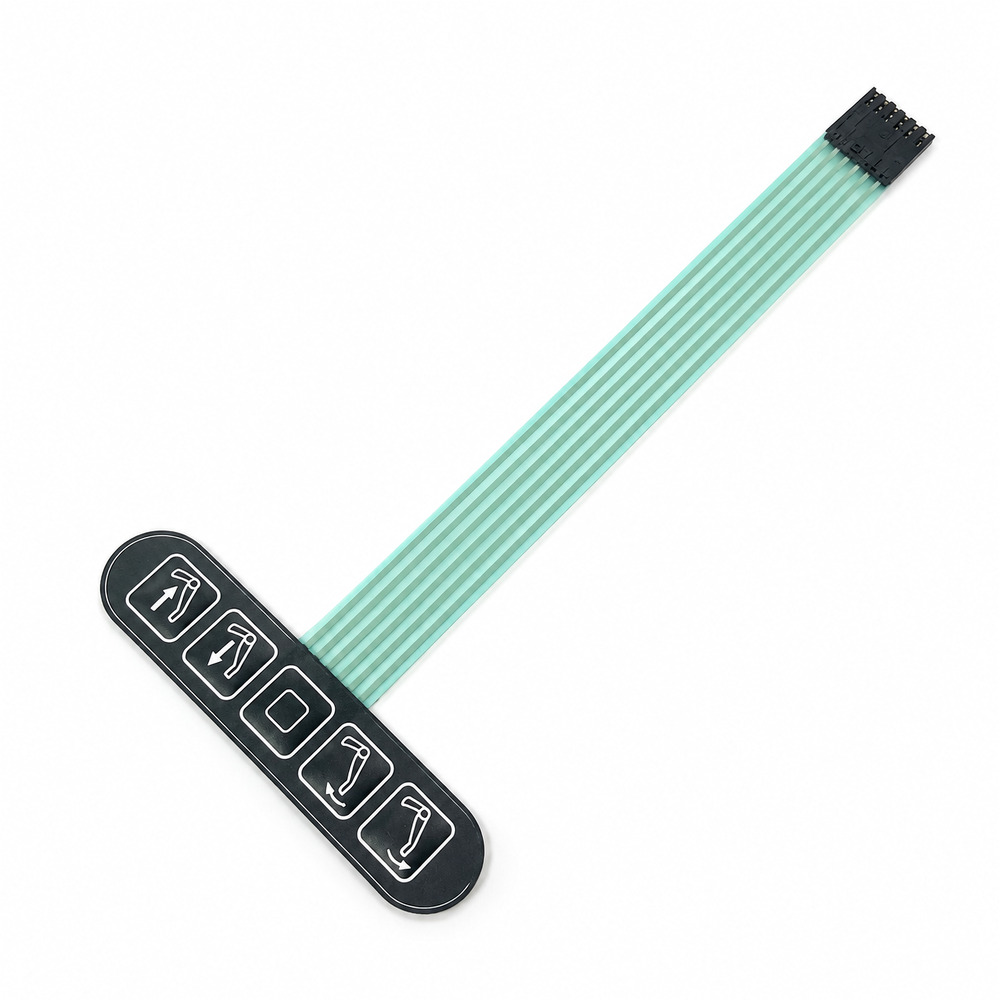
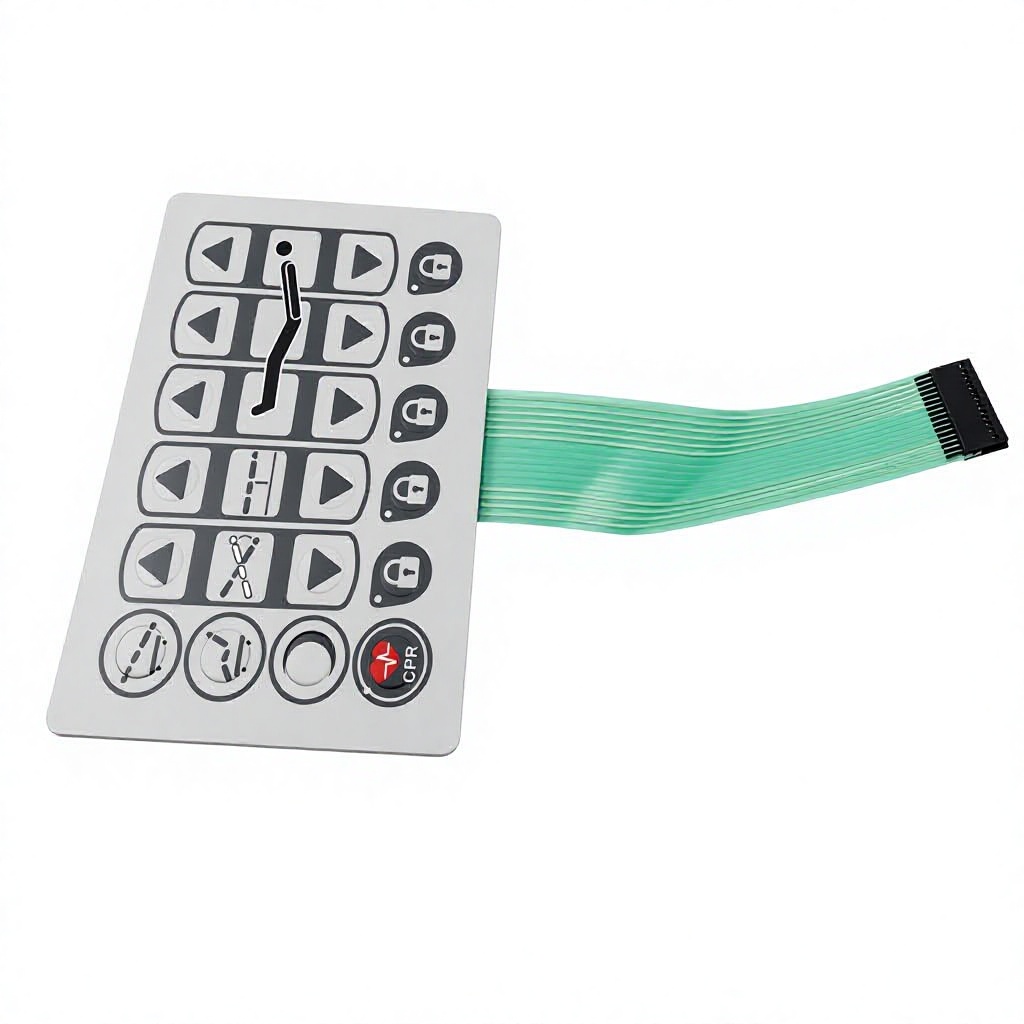
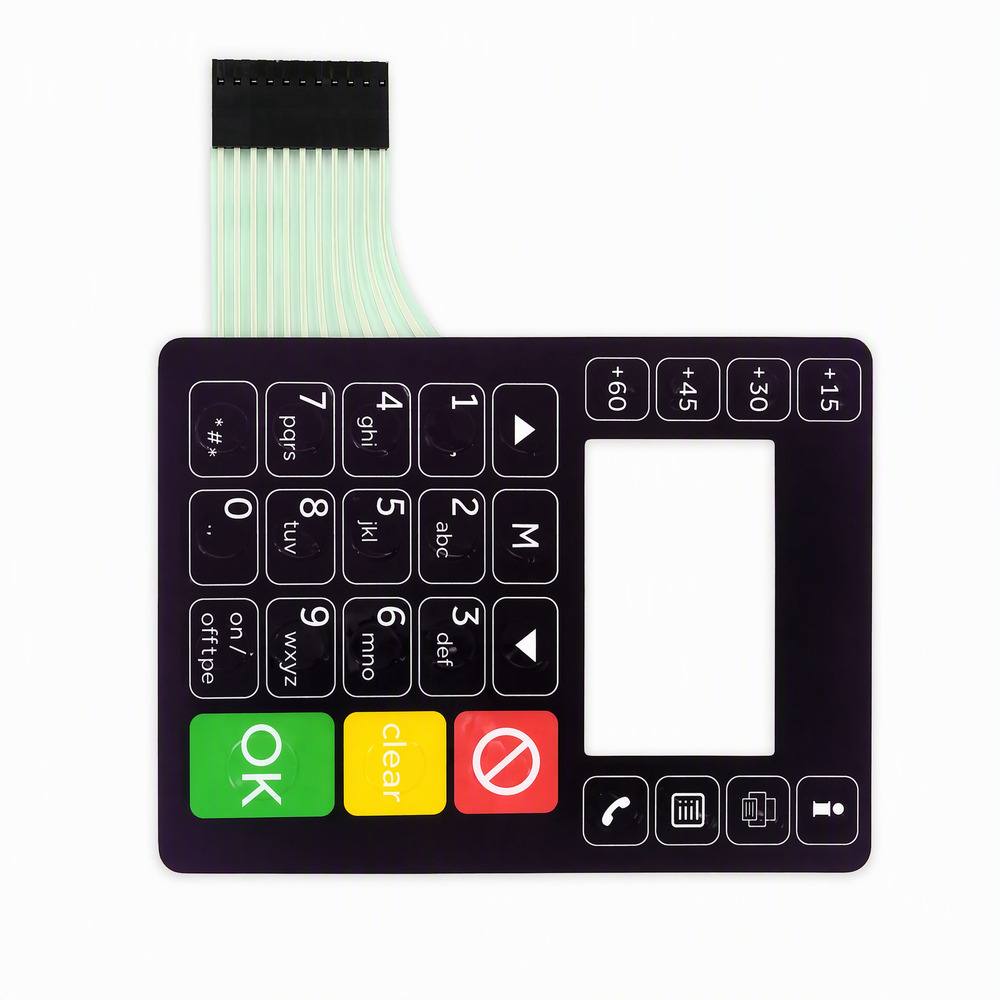
| Best Application Target | Medical keypads, appliances, vending | Fine-pitch connectors, tight envelopes | Vibration heavy, dense SMD logic | Seat sensors, large flat touch |
Dongguan Ravo Electronics delivers full in-house control: from prepress CAD drafting to precision die-cutting and 100% computerized continuity testing across our 12,000 m² facility.
Equipped with high-precision flatbed and roll-to-roll (R2R) screen printers featuring automated optical CCD target alignment. Achieves trace registration repeat accuracy within ±0.03 mm for high-density matrix routing.
Delamination and optical clarity failures occur when airborne particulates settle between film layers. Our graphic lamination, dome placement, and circuit sandwich assembly operate under positive-pressure HEPA filtration.
Every lot undergoes 100% electrical continuity verification via high-speed micro-ohmmeter bed-of-nails jigs. Sample-based environmental and mechanical stress testing guarantees reliable field longevity.
How In-Mold Electronics (IME), biocompatible substrates, and positive temperature coefficient (PTC) heating circuits are revolutionizing interface product design.
Traditional flat HMIs are rapidly evolving toward structurally integrated 3D surfaces. IME merges printed functional conductive inks directly with thermoformed polycarbonate sheets, which are subsequently back-injected with resin in an injection mold.
Result: Seamless, crevice-free assemblies that eliminate mechanical bezels, reduce component count by 70%, and ensure total waterproof hermeticity.
Force-Sensing Resistor (FSR) thin films engineered with variable piezoresistive carbon formulations. These printed matrices change resistance proportionally to applied mechanical load (from 20 grams to 20 kilograms).
Applications: Wearable health monitors, gait analysis insoles, smart orthopedic beds, and automotive occupant detection systems (ODS).
Polymer thick-film Positive Temperature Coefficient (PTC) heating elements utilize carbon-polymer ceramic composites. As the temperature rises to a design threshold (e.g., 45°C or 60°C), electrical resistance increases exponentially, self-limiting current draw.
Advantages: Eliminates independent thermostat logic, prevents thermal runaway, and delivers uniform heat across automotive side mirrors, medical IV bags, and battery warming pads.
How global procurement directors and hardware engineering leads balance tooling investments, lead times, regulatory compliance, and rapid prototyping.
Custom membrane switch sourcing involves three primary non-recurring engineering (NRE) charges: phototool films, printing screen stencils, and steel-rule or hardened carving cutting dies. For low-volume prototyping (1–50 units), laser die-cutting and digital UV printing can bypass physical die costs.
However, when transitioning to production volumes (>500 units), transitioning to precision screen printing and etched female embossing tooling reduces unit costs by up to 60%, delivering superior ink deposit thickness and tactile consistency.
International sourcing requires rigorous adherence to environmental and electrical directives. Inks, film resins, adhesives, and connectors must pass strict screening before assembly:
Direct answers to the most critical design, validation, and manufacturing queries regarding screen-printed flexible circuits.
Upload your mechanical drawings or graphic concepts. Our engineering team at Dongguan Ravo Electronics will deliver a comprehensive DFM evaluation, layer stack recommendation, and prototype quotation within 2 hours.