 EN
 DE
 FR
 ES
 RU
 JA EN DE FR ES RU JA
Explore our certified flexible matrix pressure sensors, membrane circuits, and tactile control interfaces engineered for medical diagnostics, wearable biomechanics, and industrial automation.
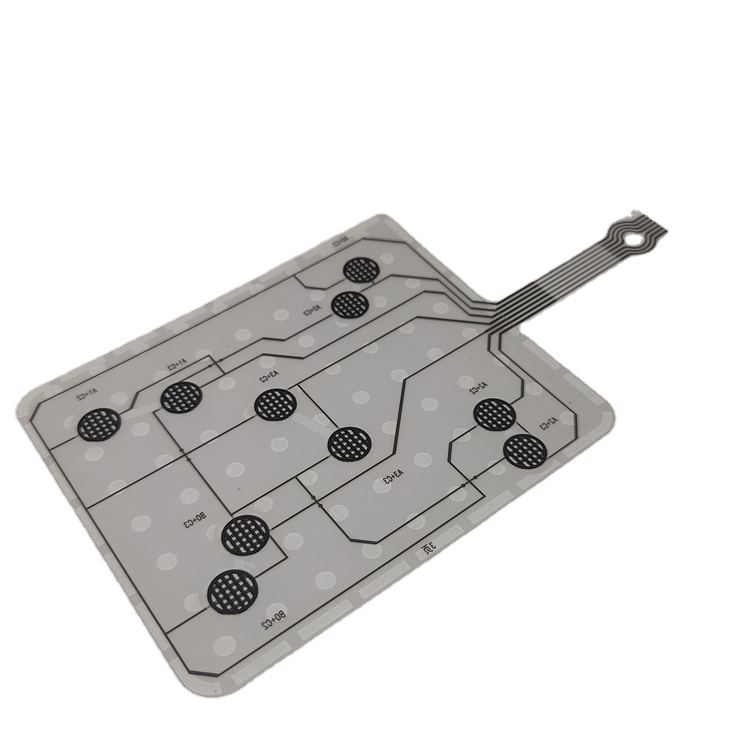
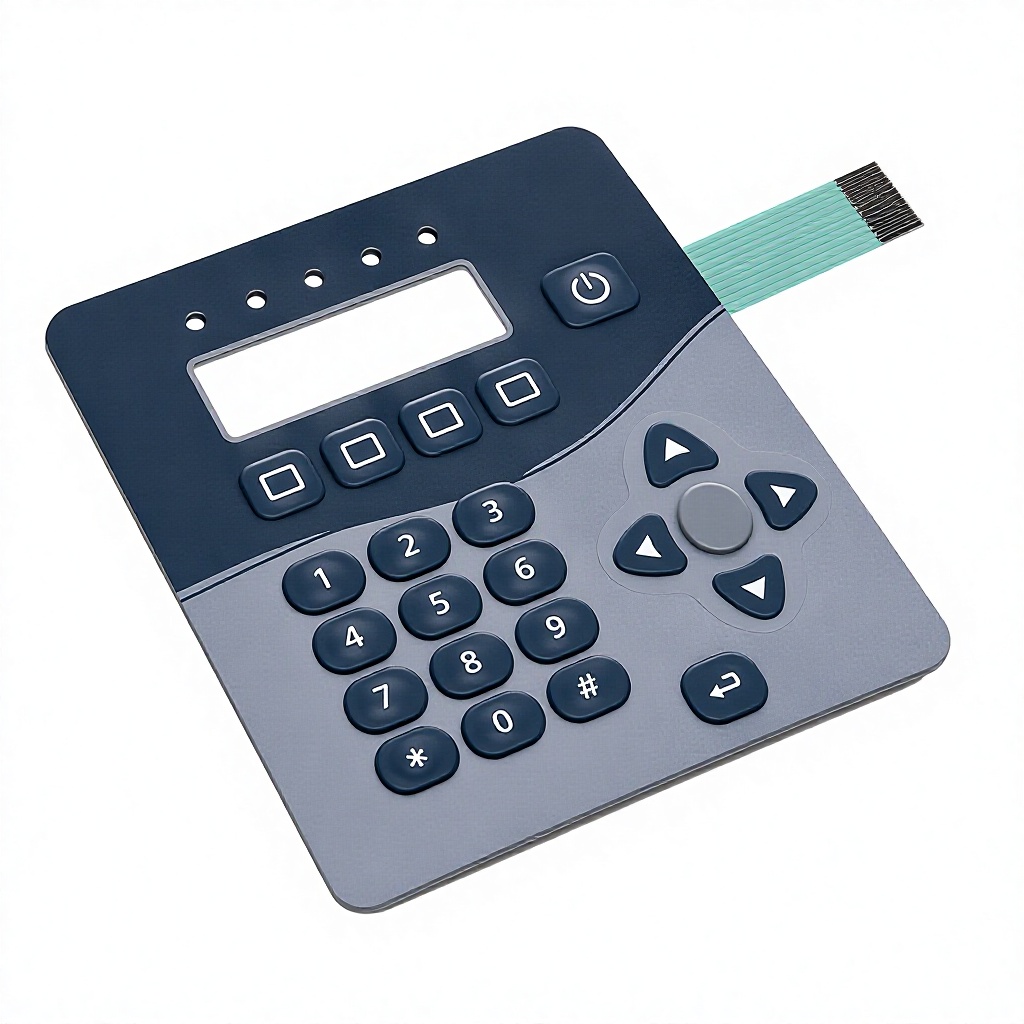
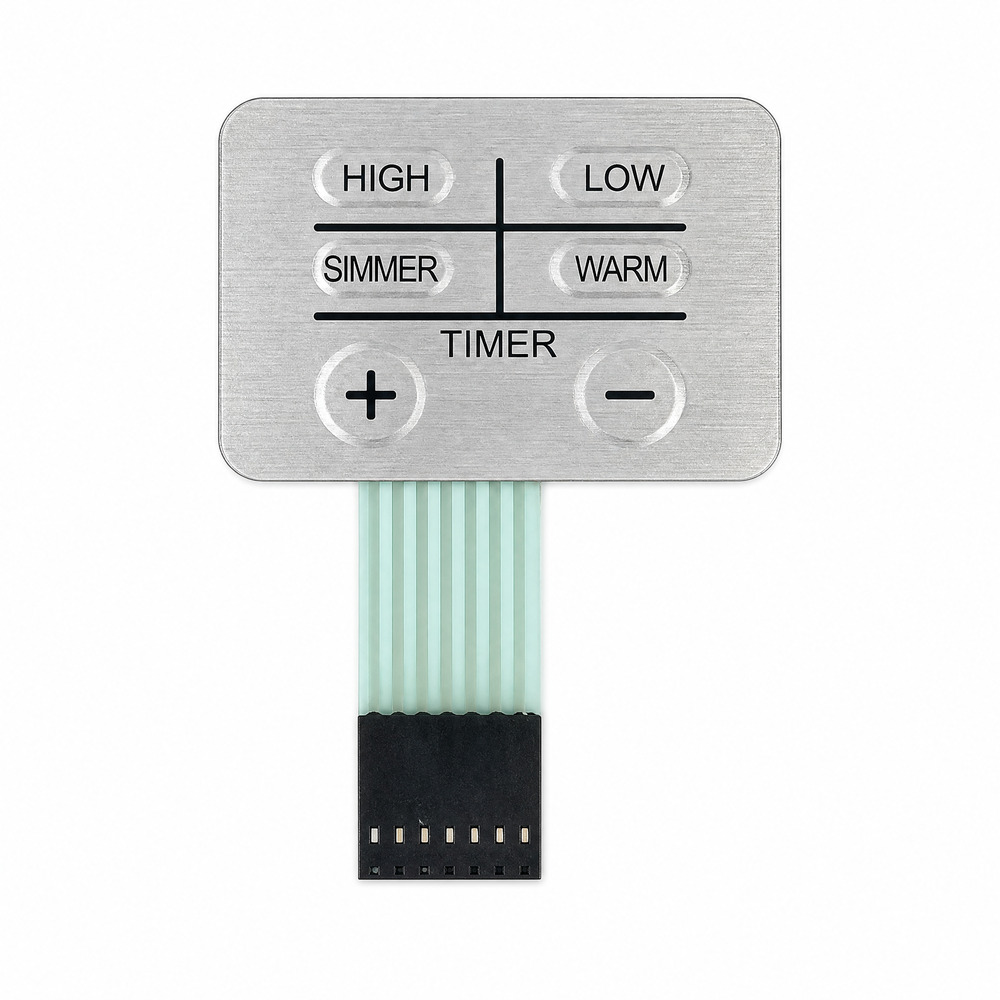
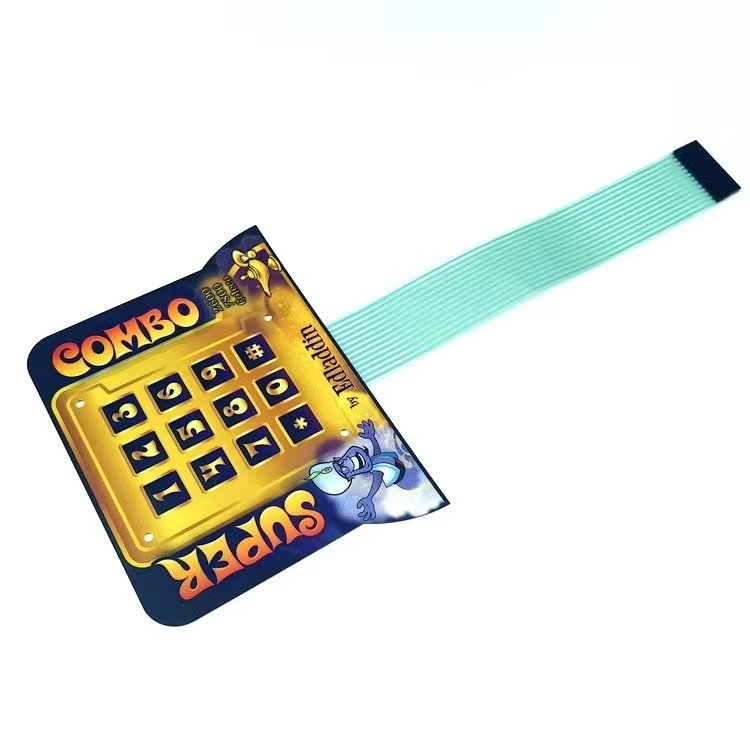
Thin-film foot pressure sensor films (also recognized across the UK biomedical engineering community as flexible Force Sensitive Resistor or FSR matrices) operate through quantum tunneling and percolation conduction across micro-structured piezoresistive polymer thick films (PTF). When normal biomechanical forces are exerted across the sensor surface—whether by dynamic heel-strike, midfoot rollover, or metatarsal propulsion—the microscopic contact area between the conductive functional carbon ink layer and interdigitated silver electrode traces expands proportionally. This physical phenomenon causes an inverse logarithmic drop in contact electrical resistance, transforming localized physical mechanical loads directly into accurately readable analog millivolt drops or digital pressure distribution values.
At our precision manufacturing plant, every foot pressure sensor film incorporates a robust multi-layer functional stack. The carrier base comprises premium-grade, heat-stabilized Polyethylene Terephthalate (PET) or high-temperature Polyimide (PI) substrates ranging from 75 μm to 125 μm in thickness. High-conductivity conductive silver ink tracks (sheet resistance ≤0.025 Ω/sq/mil) are screen-printed within Class 10,000 cleanrooms using optical alignment systems that guarantee sub-0.05 mm trace registration. Above the circuit layer, a micro-die-cut spacer adhesive (specifically formulated with modified acrylic resins like 3M 467MP or 3M 9448A) creates an exact 0.05 mm - 0.12 mm air gap chamber, vented through integrated micro-channels to prevent pneumatic cushioning artifacts during rapid cycling. Finally, the top functional layer features modified carbon paste formulated with elastomer additives to eliminate hysteresis (<3.5%) and signal creep (<2.5% per logarithmic time decade under constant 500 kPa load).
| Plantar Sensing Technology | Thickness Profile | Dynamic Pressure Range | Hysteresis / Creep | Tooling & Prototyping Cost | Industrial Scalability |
|---|---|---|---|---|---|
| Ravo Piezoresistive Silver-Ink Film (FSR) | 0.12 mm – 0.22 mm | 5 kPa – 1,500 kPa (Selectable) | < 3.2% Hysteresis | Extremely Cost-Efficient | High (>250k pcs/mo roll-to-roll) |
| Capacitive Textile / Polymer Array | 1.2 mm – 2.5 mm | 10 kPa – 600 kPa | < 4.8% (Hysteresis drift) | Moderate to High | Moderate (Complex laminations) |
| Piezoelectric PVDF Film Arrays | 0.08 mm – 0.18 mm | Dynamic only (No static sensing) | Negligible static support | High (Specialized pooling) | Low to Moderate |
| Hydraulic / Microfluidic Insole Bladders | 3.5 mm – 6.0 mm | 20 kPa – 800 kPa | > 6.5% Fluidic Lag | Very High Tooling | Very Low (Leakage vulnerability) |
Bridging Chinese precision mass-manufacturing with Greater Manchester's globally celebrated medtech, biomechanics, elite sports engineering, and advanced manufacturing clusters.
Manchester University NHS Foundation Trust (MFT) and regional academic hospitals in Salford lead the UK in diabetic foot complication research. Our sub-0.2mm high-resolution in-shoe dynamic sensor films allow orthotists to detect peak plantar pressure spikes (>350 kPa) under the first metatarsal head and calcaneus, preempting ulceration before skin breakdown occurs.
Centred around the Manchester Institute of Health & Performance (MIHP), National Cycling Centre, and regional Premier League academies, our ultra-flexible foot pressure sensor arrays deliver live telemetry of ground reaction forces (GRF), lateral shear vectors, and sprint cadence, enabling real-time biomechanical injury mitigation and footwear propulsion optimization.
Collaborating with innovative apparel tech hubs and fashion-tech incubators across Manchester and the Northern Powerhouse, we engineer bespoke sensor insoles that integrate cleanly via flexible FPC tails into miniaturized Bluetooth 5.4 transmitter pucks, seamlessly fitting into commercial sneaker lasting boards without altering shoe ergonomics.
Within Trafford Park's automated distribution logistics facilities and Manchester's advanced robotics corridors, our high-durability sensor films serve as primary tactile feedback layers inside worker load-assistance exoskeletons and smart heavy-equipment safety floors, registering operator presence and shifting centers of balance.
The UK market for flexible foot pressure sensing is moving rapidly from static clinic-bound podium platforms toward untethered, continuous ambulatory monitoring. Three critical trends are redefining engineering specifications for Manchester hardware teams:
1. Convergence with Manchester's Graphene and 2D Materials Leadership: As the global home of graphene research (anchored by the National Graphene Institute at the University of Manchester), regional hardware innovators are seeking hybrid carbon-graphene paste formulations. By doping our proprietary piezoresistive carbon inks with monolayer graphene platelets, we achieve a 38% increase in conductivity consistency, near-zero mechanical fatigue after 2 million flexural steps, and exceptional linearity across low-pressure thresholds (0 to 50 kPa), vital for pediatric and geriatric gait evaluations.
2. Edge-AI Sensor Fusion on Flexible FPC Substrates: Standalone raw resistance measurement is no longer sufficient for next-generation orthotics. UK engineers increasingly design FSR matrices that co-package surface-mount 6-axis IMUs (Inertial Measurement Units) directly onto the rear terminal tail. This requires our factory to perform precision anisotropic conductive film (ACF) bonding and low-temperature SMD soldering onto polyimide tails, delivering consolidated biomechanical posture and acceleration data in a single unified umbilical.
3. Direct-to-Apparel Bio-Compatible Encapsulation: Medical devices deployed across Manchester health authorities require compliance with ISO 10993 cytotoxicity and skin irritation standards. Our manufacturing process features medical-grade thermoplastic polyurethane (TPU) over-lamination, enabling complete moisture isolation against foot perspiration (sodium chloride, lactic acid) while surviving repetitive high-shear walking friction without delamination.
Over two decades of precision micro-switch and sensor film manufacturing, combining cost-effective Chinese production scale with rapid Western engineering responsiveness.
Founded in 2003 in Fenggang Town, Dongguan, Ravo operates an expansive 12,000 m² cleanroom plant staffed by over 300 experienced technicians. We manufacture membrane switches, graphic overlays, silicone keypads, and thin-film pressure sensors entirely in-house under strict ISO 9001 certified protocols.
UK time-zone alignment is maintained by our dedicated English-speaking technical sales and design engineers. Send us your DXF, DWG, Gerber, or AI drawings, and our engineering team returns an actionable Design for Manufacturability (DFM) review and tooling quote within 2 hours.
We eliminate high tooling barriers for Manchester startups, university spinoffs, and NHS trial programs by offering prototype runs starting from just 1 piece. Once designs are clinically validated, our semi-automated roll-to-sheet screen printing lines scale to over 500,000 units per month.
Practical guidance addressing regulatory marks, customs clearance, minimum orders, and technical integration for UK hardware buyers.
Our raw materials (PET substrates, silver conductive inks, carbon pastes, adhesives) comply fully with RoHS 2011/65/EU and REACH (EC 1907/2006). For UKCA and CE medical device certification (UK MDR 2002 / EU MDR 2017/745), we provide complete material composition declarations, flammability data, and Class 10,000 cleanroom manufacturing traceability logs required by UK Approved Bodies.
Following design approval, prototype batches (1 to 20 pcs) are fabricated in 7 to 10 working days. Production shipments are dispatched directly via air courier (DHL Express, FedEx, UPS) with direct delivery to Manchester Airport (MAN) logistics hubs and North West facilities within 3 to 5 business days, complete with pre-cleared commercial invoices and customs documentation.
Yes. Every foot pressure sensor we build is 100% custom. You supply the CAD footprint matching European/UK shoe sizes (UK 3 to UK 14, standard or wide-fit orthopedic lasts). We laser-cut or die-cut the sensor profile to integrate smoothly inside custom EVA orthotic shells or removable shoe sockliners.
We provide multiple termination methods based on mechanical constraints: standard 2.54mm or 1.27mm pitch female crimp housings (compatible with standard pin headers), low-profile ZIF (Zero Insertion Force) contact fingers with stiffened polyimide backers, or direct ACF heat-seal bonding to PCB control boards for ultra-compact shoe pods.
We engineer an impermeable perimeter barrier using high-performance dielectric insulating coatings and closed-cell adhesive gaskets. Furthermore, our tail escape exits feature micro-serpentine pressure balancing channels with hydrophobic breathable membrane vents that normalize internal air pressure while barring moisture ingress to IP67 standards.
Typically, custom flexible piezoresistive pressure sensor films and membrane switch sub-assemblies are imported into the UK under HS Code 8543.70.99 (Electrical machines and apparatus having individual functions) or HS Code 9031.80.80 (Measuring or checking instruments, appliances and machines). We assist your UK customs broker with exact documentation to avoid customs bottlenecks.
Send your 2D/3D drawings, sensor matrix point density requirements, or project specifications today. Our engineering team will review your files and provide a comprehensive DFM assessment and formal quotation within 2 hours.
