EN
 DE
 FR
 ES
 RU
 JA EN DE FR ES RU JA
Engineered for high reliability, tactical feedback, and complete environmental resistance
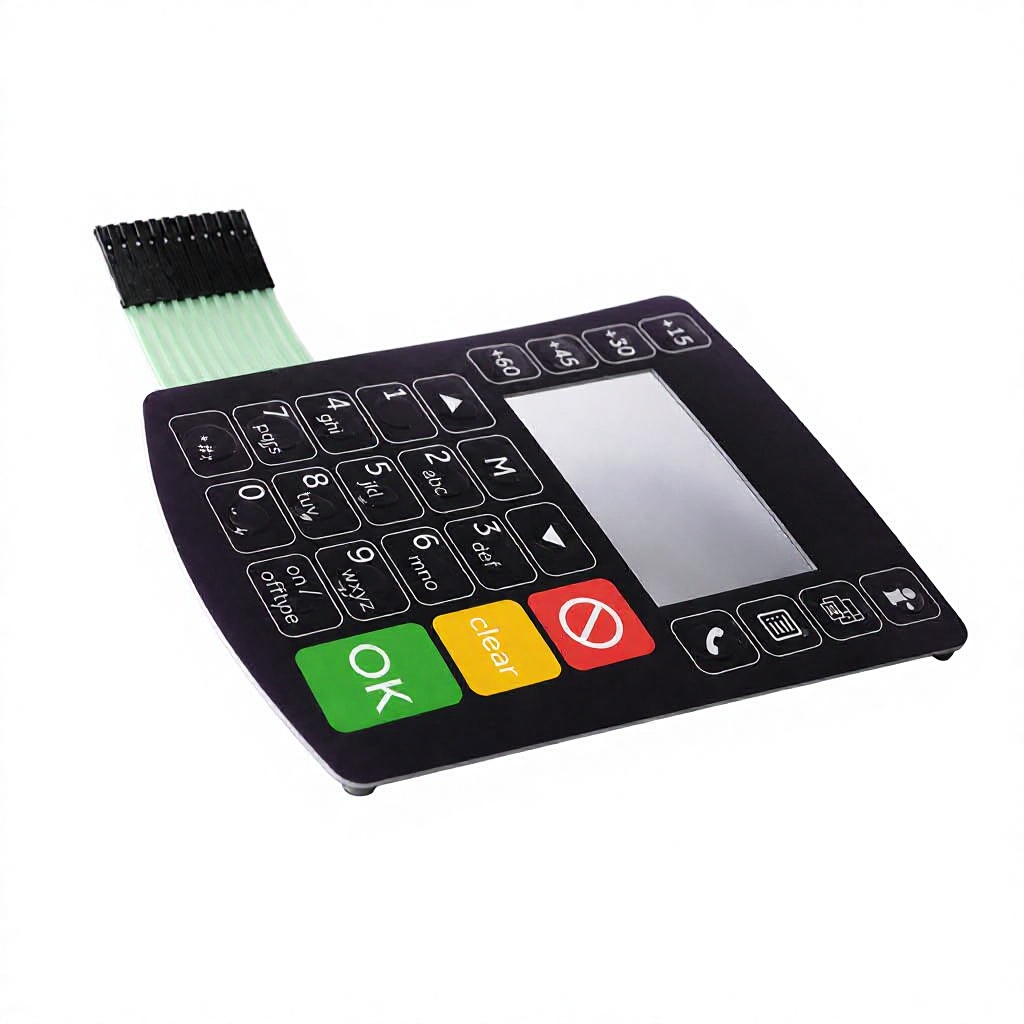
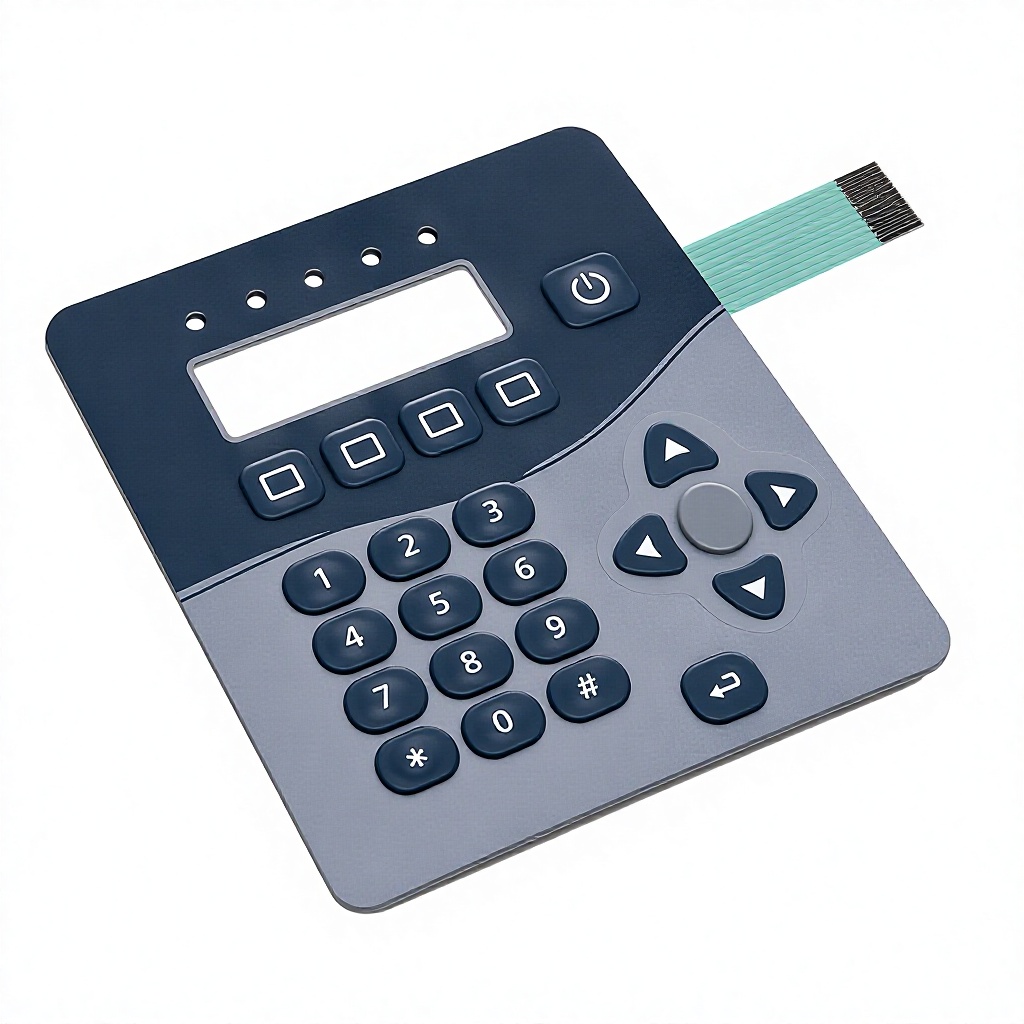
A matrix membrane switch relies on a row-and-column circuit layout, significantly reducing the required I/O pins on a micro-controller. Unlike discrete point-to-point wiring where each key demands an individual conductor plus a common ground, an $M \times N$ matrix allows $M \times N$ switching nodes to be polled using only $M + N$ conductive traces. For industrial original equipment manufacturers (OEMs), sugar mill system integrators, and agricultural automation engineers in Orange Walk Town, Belize, matrix keypads represent the optimal synthesis of spatial efficiency, electrical reliability, and structural sealability.
The operational integrity of a matrix membrane switch relies on conductive trace conductivity, trace-to-trace dielectric isolation, and contact bounce mitigation. Standard silver-ink screen-printed circuits exhibit a sheet resistance below $0.015\,\Omega/\text{sq}/\text{mil}$. In harsh tropical environments characterized by relative humidity routinely exceeding 85%, cross-talk and silver migration present significant failure risks if not engineered properly. Advanced matrix switch design incorporates carbon-shielded silver traces or polyimide-based Flexible Printed Circuits (FPC) to completely eliminate electrochemical silver dendrite growth across adjacent rows and columns.
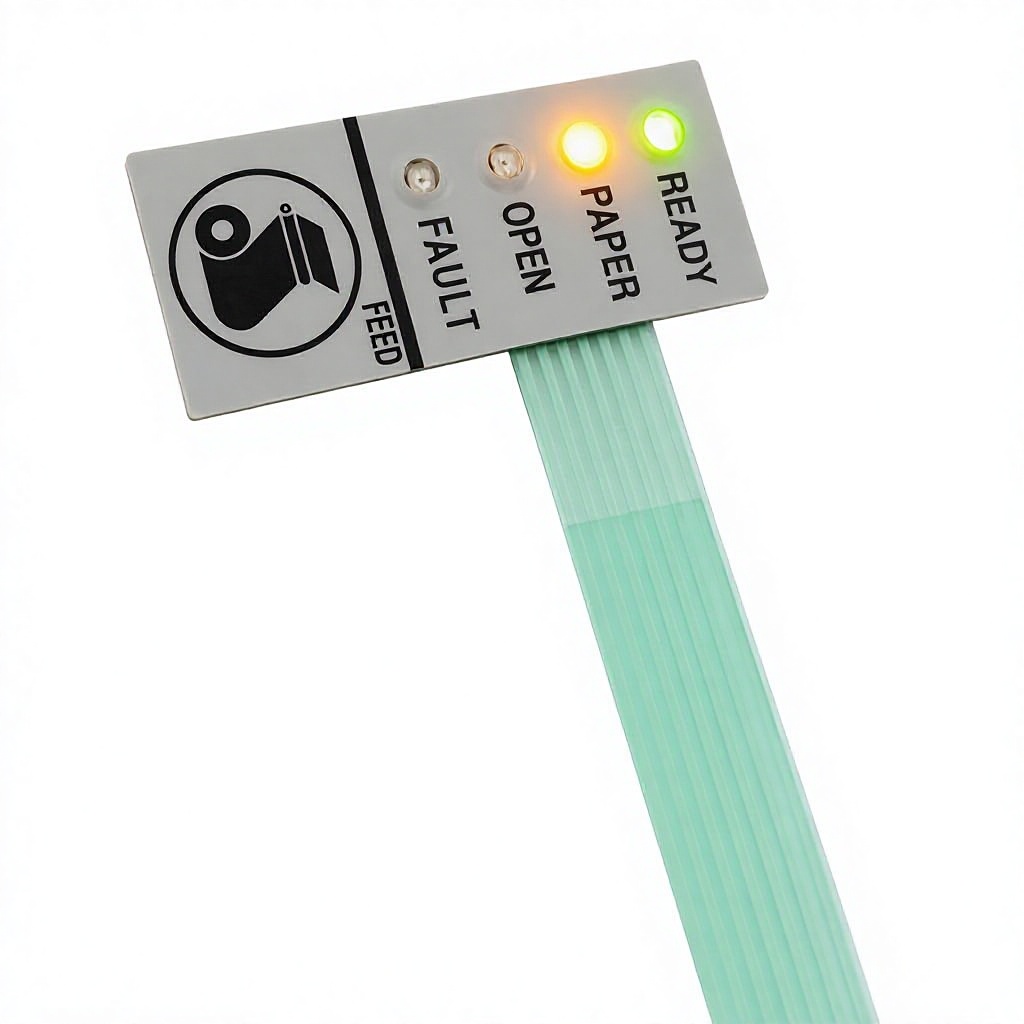
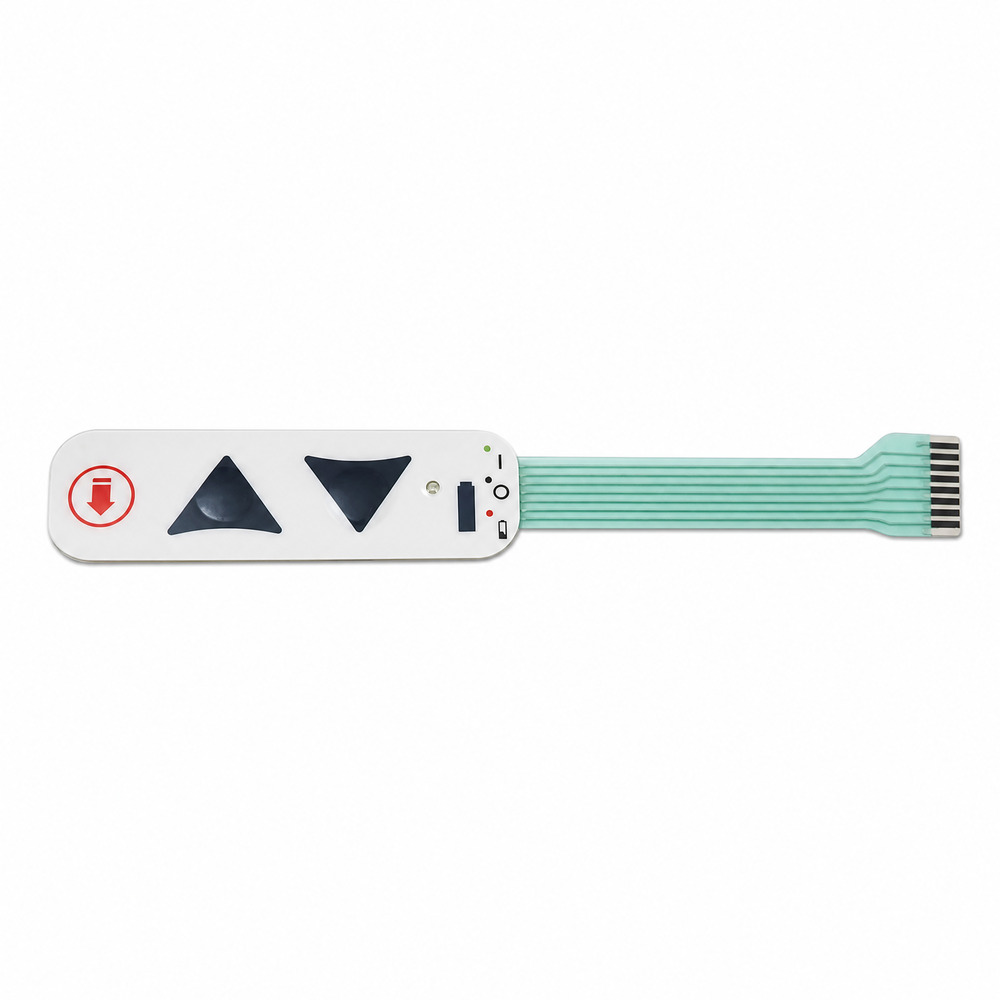
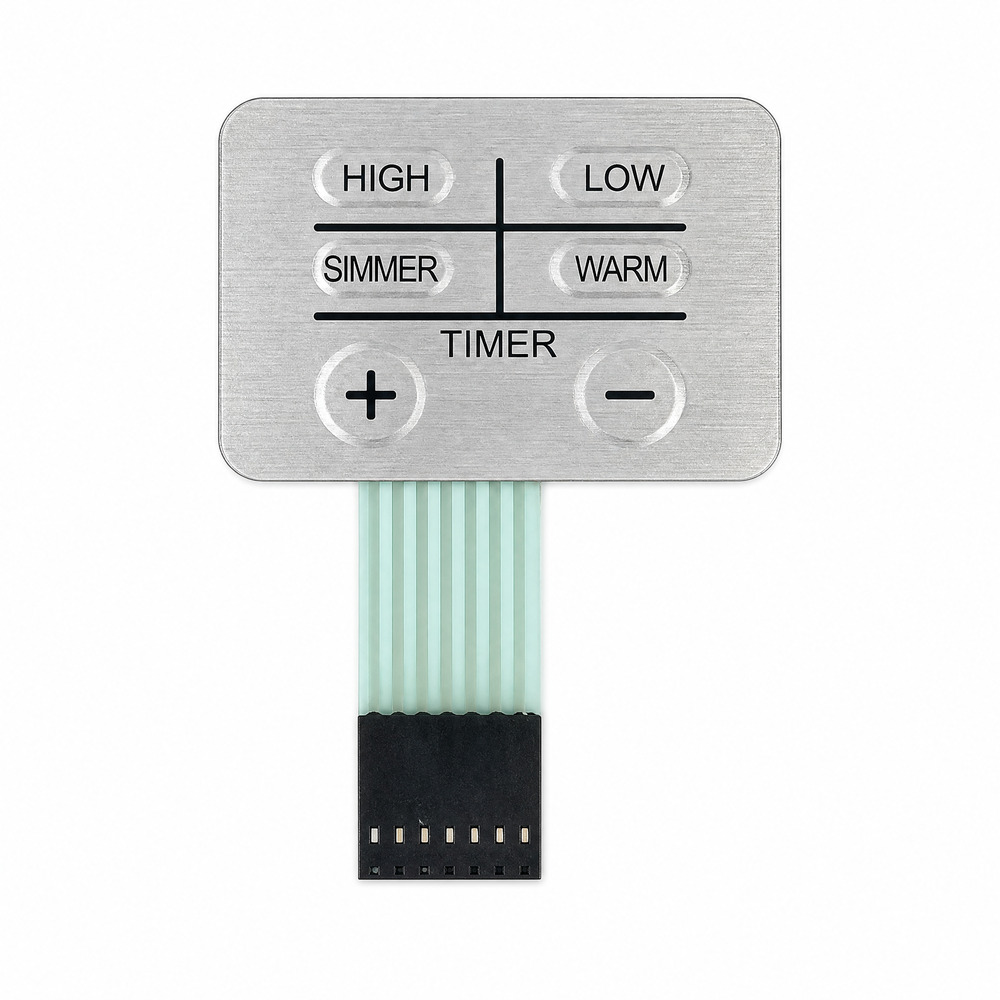
A high-performance matrix membrane assembly comprises up to six precision-laminated functional layers. Each layer fulfills a distinct mechanical, aesthetic, or electrical role, engineered to withstand aggressive mechanical usage and severe ambient exposure.
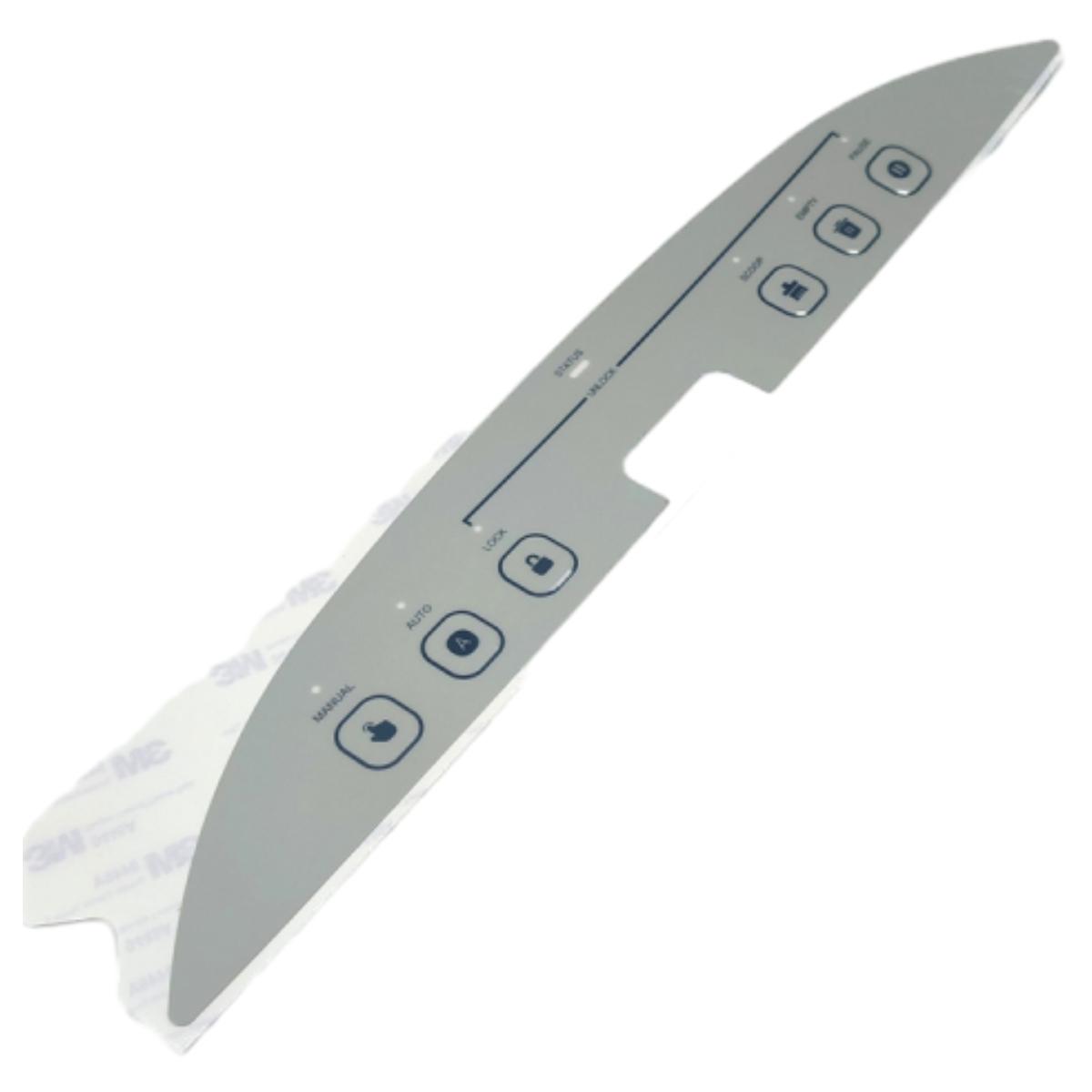
The top layer, or Graphic Overlay, is reverse-printed using specialized UV-curable or solvent-based inks. This ensures that graphics, brand typography, and button outlines remain permanently protected from surface abrasion, chemical solvents, caustic cleaning agents, and ultraviolet light exposure. The sub-surface printing technique guarantees that legends never degrade, even under continuous heavy industrial operation.
Known affectionately across Belize as "Sugar City," Orange Walk Town is the epicenter of the nation's agro-industrial sector. Operating continuous-processing sugar mills, rum distilleries, citrus concentrate facilities, and heavy field machinery demands Human-Machine Interface (HMI) controls that resist extreme operational hazards. Standard off-the-shelf mechanical switches rapidly fail when subjected to airborne bagasse dust, hot washdowns, acidic juices, and tropical rain.
Milling machinery controllers in Orange Walk Town encounter fine particulate bagasse fibers and continuous vibration. Sealed matrix switches with full perimeter Gasket-Type 3M 468MP adhesives prevent particle ingress that jams mechanical push-buttons, securing uninterrupted extraction cycles.
Ethanol vapors, acidic organic compounds, and high-pressure steam cleaning degrade unprotected control surfaces. Utilizing Autotex XE hard-coated polyester overlays provides chemical immunity against alcohols, alkalis, and solvents used in CIP (Clean-In-Place) washdowns.
Automated solar pump controllers in agricultural fields face intense equatorial UV radiation and thermal cycling up to +85°C. UV-stabilized polycarbonate and polyester graphic materials prevent yellowing, embrittlement, and adhesive delamination over decades of exposure.
In-cab matrix keypads for cane harvesters and tractors require unmistakable tactile feedback so drivers can actuate switches blindly or while wearing thick work gloves. Stainless steel metal domes offer distinct tactile snap ratios exceeding 50%.
Technical Note for Orange Walk Procurement Engineers: Standard commercial keypads using paper-backed adhesives will suffer moisture creep within 6 months of deployment in Belize. Our custom matrix membrane switches feature hydro-impermeable 3M 300LSE adhesive structures and sealed tail exits specifically engineered for tropical humidity resilience.
The industrial landscape across the Northern District of Belize is undergoing a digital transformation. Factory managers and independent machinery developers in Orange Walk Town are moving away from legacy control boxes filled with discrete mechanical toggles, moving towards integrated, sleek, easy-to-clean matrix membrane interface assemblies.
| Property / Material | Autotex PET (Polyester) | Makrofol PC (Polycarbonate) | PMMA (Acrylic Rigid Plate) |
|---|---|---|---|
| Flexural Fatigue Life | > 5 Million Actuations | > 100,000 Actuations | Rigid / Non-Flexible |
| Chemical Immunity | Exceptional (Alcohols, Acids, Esters) | Moderate (Vulnerable to Solvents) | High Chemical Resistance |
| UV & Outdoor Weathering | Excellent (UV Hard-Coated Grade) | Requires Special UV Stabilization | Inherent UV Resistance |
| Embossing Capability | Superior pillow/rim embossing retention | Good thermoforming characteristics | Machined or Laser Cut Only |
| Transparency / Clarity | High clarity display window options | Water-clear optical quality | Crystal-clear glass replacement |
As a global leader in human-machine interface manufacturing, Dongguan Ravo Electronics Co., Ltd. brings over two decades of technical mastery directly to equipment builders in Orange Walk Town and worldwide. Founded in 2003, our 12,000 square meter state-of-the-art facility features class-10,000 cleanrooms, fully automated screen-printing lines, high-precision laser die-cutting systems, and comprehensive environmental testing laboratories.
Our senior HMI engineers review your 2D/3D CAD drawings, schematic matrix pinouts, and graphic files, providing rapid design-for-manufacturability feedback within two hours.
Verify your electrical matrix layout, tactile dome feel, and graphic color registration with short-run prototypes before committing to mass production tooling.
Every batch undergoes 100% automated optical inspection (AOI), electrical continuity checking, actuation force curve testing, and strict material trace compliance.
Whether your project calls for a cost-effective non-tactile silver-printed matrix keypad for educational equipment, an illuminated status panel for medical diagnostics, or a ruggedized FPC-backed switch matrix for agricultural processing equipment, Ravo guarantees precision engineering from concept to final shipment.
Direct answers to common technical, commercial, and logistical questions raised by electrical engineers and procurement managers sourcing matrix membrane switches in Central America.
Standard matrix membrane switches are low-voltage signal devices designed to drive microcontroller inputs or logic gates. Typical operational limits are 30V DC maximum at 100mA continuous current. Power handling across switches is typically rated under 1 Watt. For switching high-current AC loads in industrial sugar mill controllers, the matrix keypad must interface with intermediate relay boards, solid-state relays, or PLC digital input modules.
"Ghosting" occurs when pressing three or more keys simultaneously creates a false electrical path that registers a fourth unpressed key. In complex control panels, Ravo engineers incorporate surface-mount blocking diodes directly into the flexible circuit or FPC matrix layer, ensuring individual key isolation even during multi-key rollover conditions.
We supply flexible flat circuit (FFC) tails in standard 2.54mm (0.100"), 1.27mm (0.050"), and fine-pitch 1.0mm pitch configurations. Tails can be bare-conductive for ZIF (Zero Insertion Force) sockets or fitted with female crimp connectors housing latching plastic shells (such as Amphenol FCI, Nicomatic, or Molex equivalents).
Yes. By utilizing fully closed perimeter adhesive seals, inert silver/carbon conductor formulation, and 3M 300LSE corrosion-resistant bonding layers, our IP67/IP68 rated membrane switches completely isolate internal electrical contacts from airborne marine salts, sulfur fumes, and humidity.
We accept vector files created in Adobe Illustrator (.AI), CorelDraw (.CDR), AutoCAD (.DXF / .DWG), or vector PDF format. Please specify colors using Pantone Matching System (PMS) color codes or RAL references to guarantee exact color matching during screen printing.
Fast-track prototype samples ship within 7 to 10 business days following technical drawing approval. Mass production runs are typically completed in 12 to 18 business days. Air express courier shipments (via DHL, FedEx, or UPS) to Belize arrive within 4 to 6 transit days.
Ready to engineer a custom matrix membrane switch tailored for extreme environment reliability? Contact our senior application engineering team now for instant DFM analysis, technical advice, and direct factory pricing.