EN
 DE
 FR
 ES
 RU
 JA EN DE FR ES RU JA
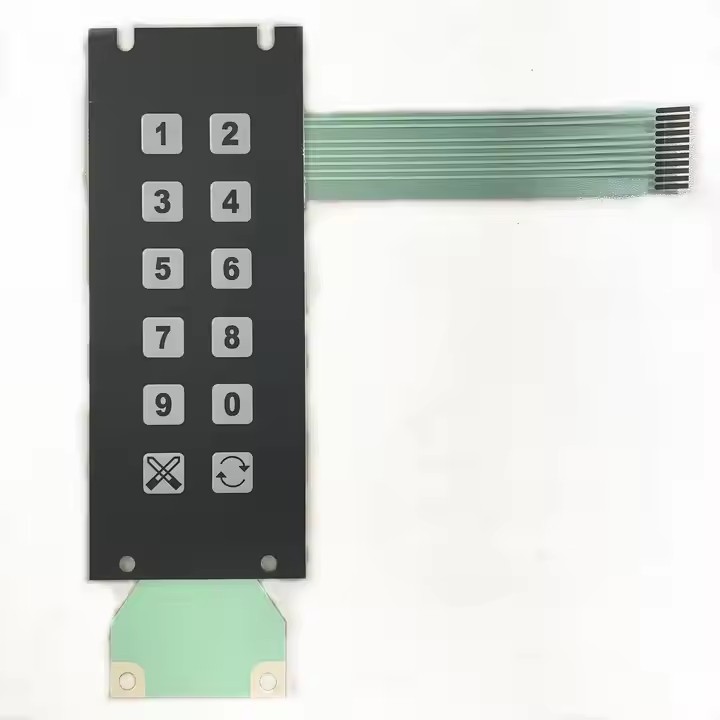
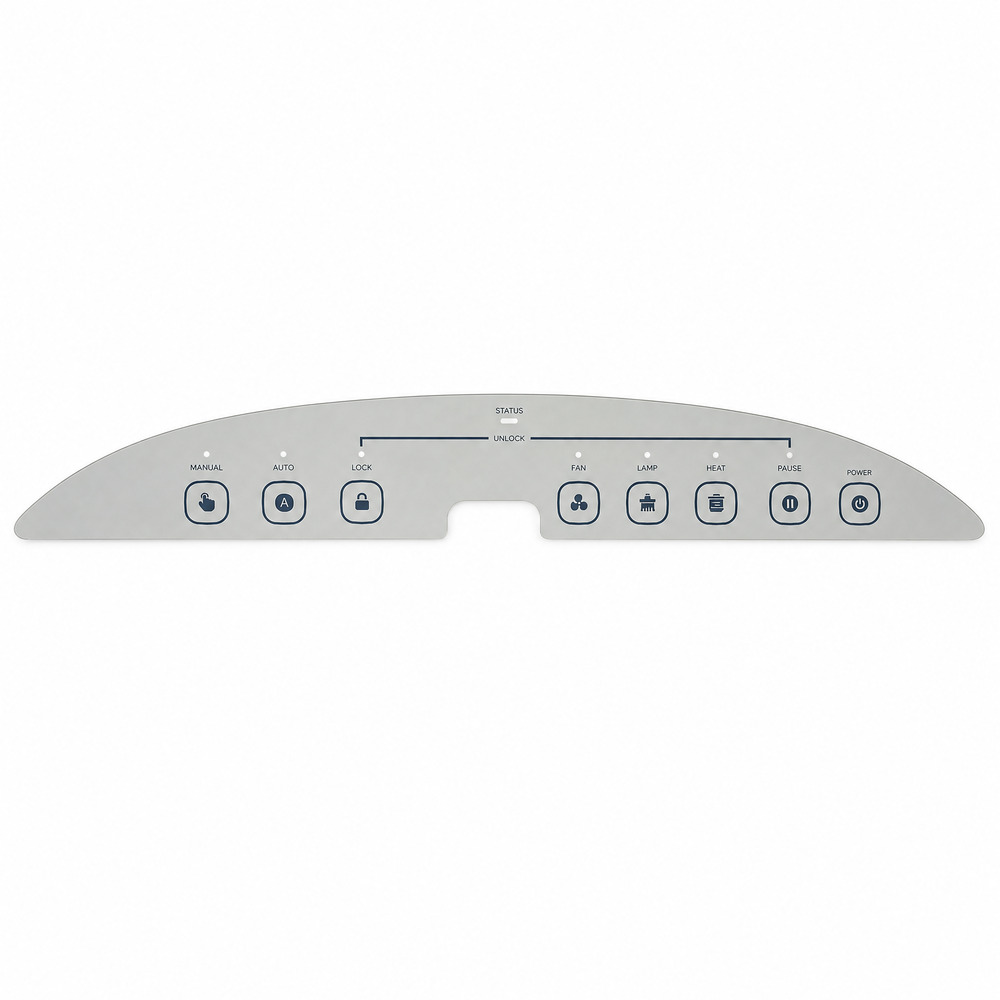
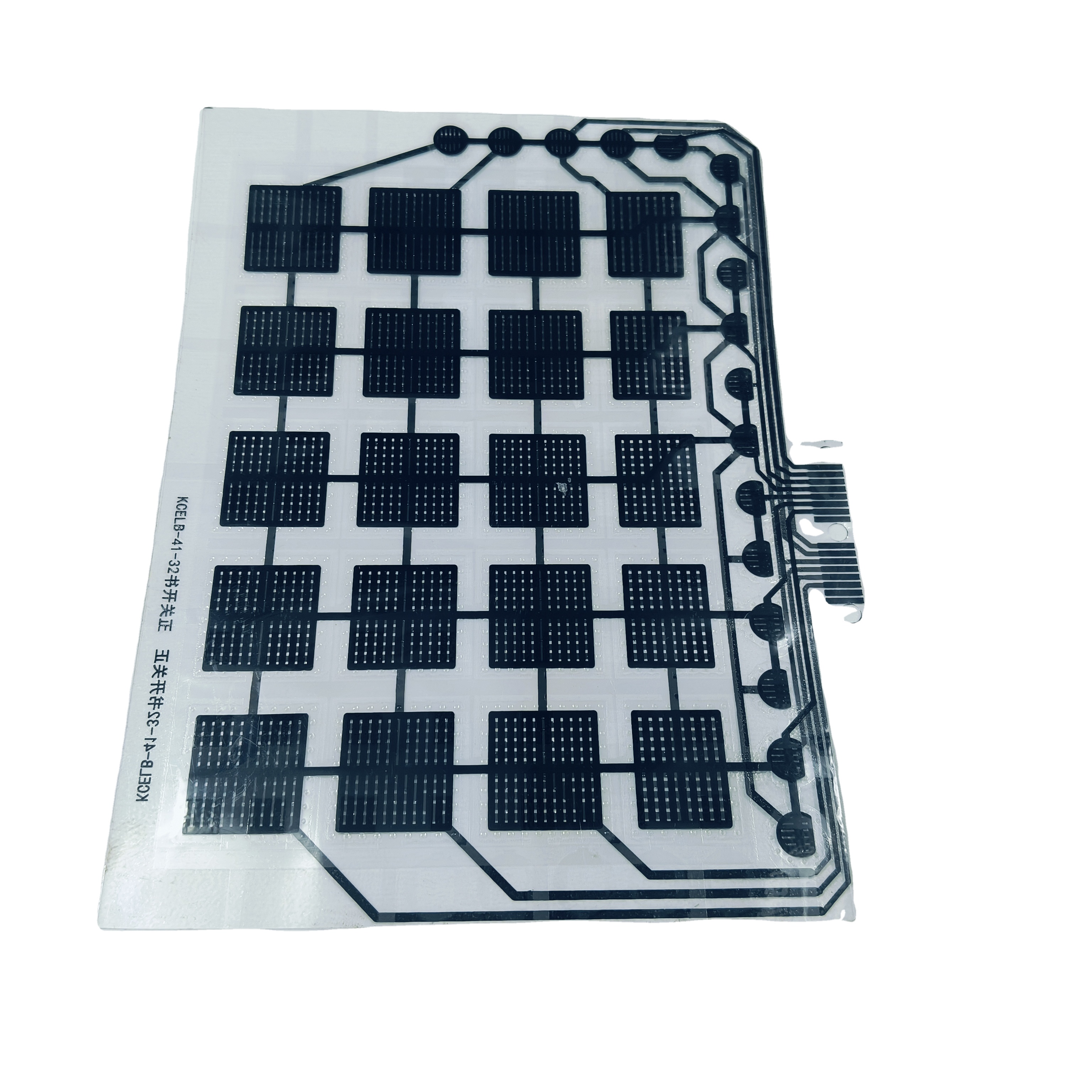
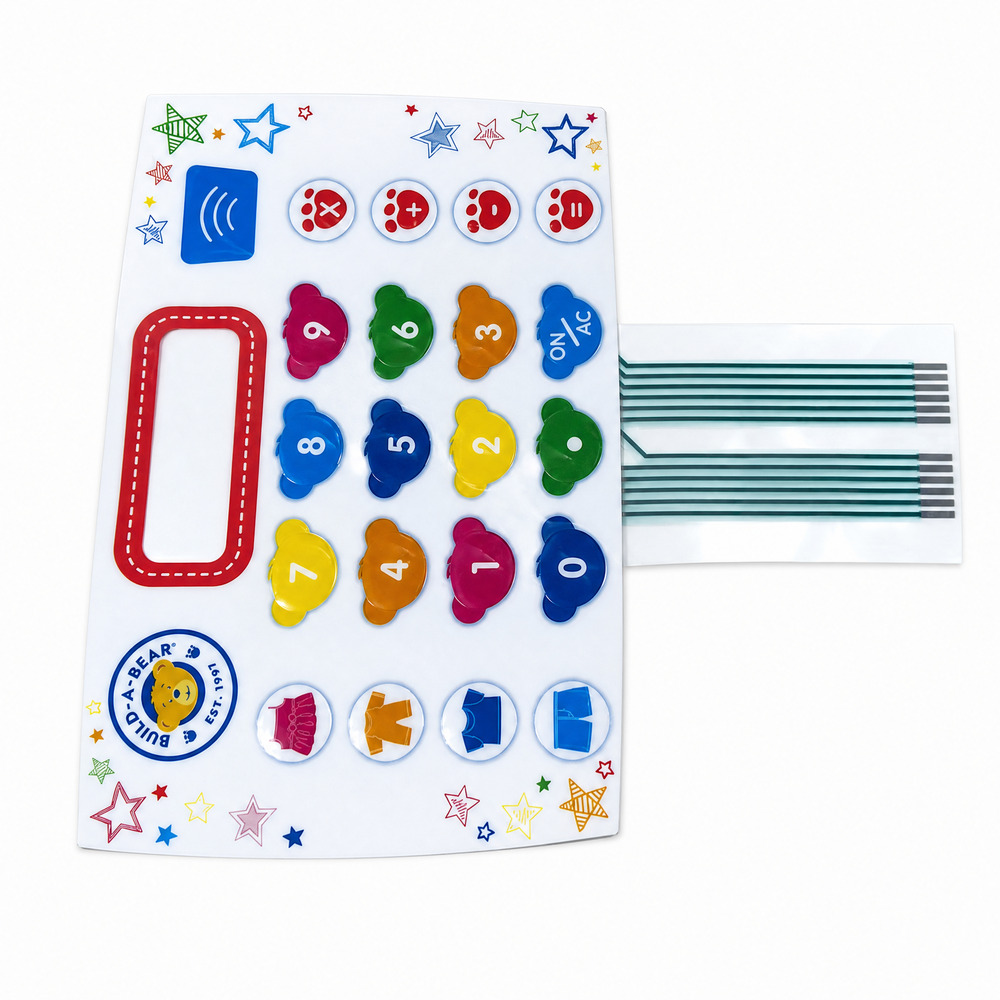
From single-point force-sensing resistors to high-density matrix arrays, our flexible circuit architectures support severe operating conditions across consumer electronics, heavy machinery, medical disposables, and smart automotive seating.
Piezoresistive thin-film technology utilizes quantum tunneling composites and conductive carbon nanoparticle inks that alter bulk resistance inversely proportional to applied normal mechanical load. Understanding ink rheology and stack mechanics is fundamental for precision procurement.
| Functional Layer | Standard Specification | Advanced Alternative | Engineering Impact on Output |
|---|---|---|---|
| Graphic Overlay Substrate | Autotex EBG / EBA Polyester (150µm - 200µm) | Hard-coated Polycarbonate with UV inhibitors | Defines chemical immunity, flex fatigue, and surface tactile resistance. |
| Top Dynamic Circuit | Screen-printed high-conductivity Silver Ink (<0.05 Ω/sq) | Photo-etched Copper on Polyimide (FPC) | Determines trace resistance baseline, bend radius, and solder termination integrity. |
| Piezoresistive Active Film | Colloidal Carbon Paste blend with polymeric binder | Multi-walled Carbon Nanotubes (MWCNT) matrix | Controls the pressure response curve, saturation threshold, and hysteresis drift. |
| Die-Cut Spacer Layer | 3M 7957MP double-coated acrylic film (50µm - 125µm) | High-performance venting silicone membrane | Sets mechanical pre-load air travel, snap-ratio, and moisture displacement. |
| Adhesive Backer Plate | 3M 467MP / 468MP transfer film | Modified acrylic for low-surface-energy plastics | Eliminates delamination under thermal cycling (-40°C to +85°C). |
Sourcing directors are shifting from discrete push-button switches to integrated smart structural electronics. Monitor these key shifts to de-risk your international supply chain.
Global procurement teams are moving away from multi-tier suppliers. Sourcing the graphic overlay, tactile switch array, piezoresistive pressure film, and connector tail from a single vertically integrated manufacturer eliminates margin stacking, mitigates dimensional stack-up tolerances, and cuts lead times by 30% to 45%.
B2B industrial buyers now require lot-specific calibration curve data. Standard digital on/off testing is no longer sufficient; exporting companies must provide automated continuous force vs. resistance curves (0.1N to 100N) to ensure interchangeability across sensitive medical monitors and vehicle passenger occupancy sensing systems.
While screen-printed polymer thick film (PTF) remains economical for large areas, complex systems favor hybrid designs featuring polyimide FPC circuits populated with SMD resistors, micro-controllers, and LEDs, seamlessly combined with thick-film carbon piezoresistive sensing matrices for space-constrained IoT nodes.
Anticipate where human-machine interfaces are heading over the next five years. Piezoresistive sensing elements are breaking free from flat planar surfaces into high-resolution tactile domains.
Transitioning from discrete single-point contact zones to distributed multi-point spatial matrices. With spatial pitches as fine as 1.0mm, these films act as tactile artificial skin for robotic grippers, surgical guidance tools, and ergonomic seat pressure mapping systems, operating with microsecond scanning rates.
Planar functional films are now engineered with elongation-tolerant thermoplastic conductive inks. These functional circuits are thermoformed into complex three-dimensional curves and directly injection-molded, producing ultra-thin, completely hermetic, lightweight smart panels without separate internal wiring harnesses.
A persistent challenge with traditional carbon-paste formulations is recovery latency (hysteresis drift) during rapid cyclic unloading. Next-generation hybrid inks infused with functionalized graphene flakes and elastomeric fluoropolymers deliver real-time recovery times under 5 milliseconds with near-zero signal lag.
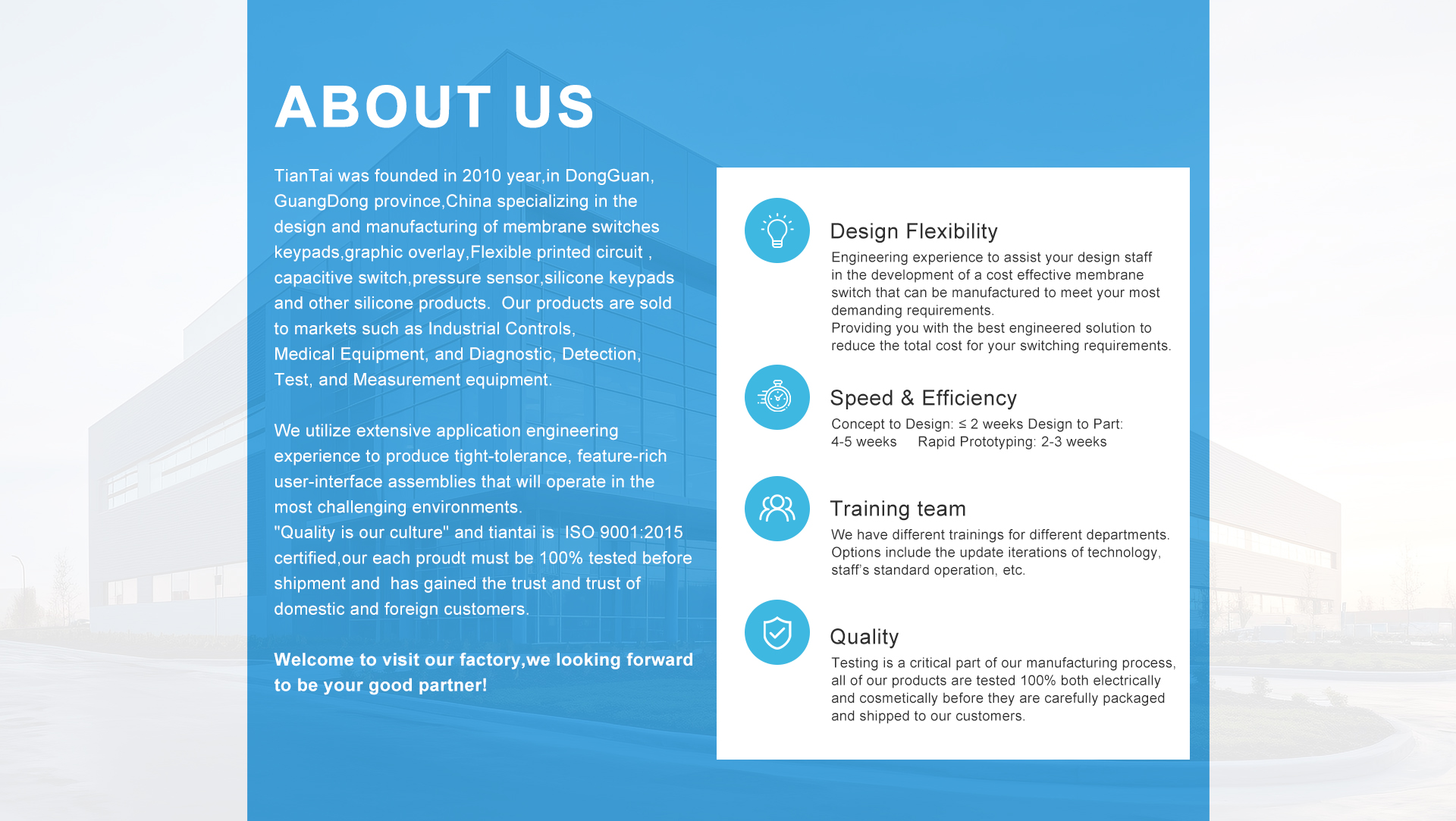
Founded in 2003 in Fenggang Town, Dongguan, Ravo Electronics operates 12,000m² of advanced cleanroom screen printing, laminating, and automated electrical inspection facilities.
Unlike export traders who broker production to disparate sub-contractors, Ravo executes all engineering, screen formulation, metal die-cutting, graphic reverse-printing, and dome placement under one roof. Our engineers review 2D drawings (DXF, DWG, AI) and produce a detailed DFM analysis in ≤2 hours.
With an on-site verified plant, RoHS & REACH chemical compliance, and ISO 9001 certified protocols, we produce functional prototypes starting from a single unit up to high-volume recurring container runs for EMS clients across North America, Germany, Japan, and the UK.
Our assemblies withstand harsh industrial cleaning, thermal stress, and over 1,000,000 continuous actuation cycles while maintaining consistent resistive thresholds and hermetic perimeter seals.
Clear, direct answers to common questions regarding tolerances, test methods, minimum orders, and customization for overseas procurement managers.
For custom engineering prototypes and proof-of-concept testing, we support initial sample orders starting from 1 to 10 pieces. Mass-production batches typically begin at 100 to 500 units depending on the stack complexity, graphic overlay printing passes, and integrated backlighting.
We combine high-stability cross-linked polymeric binders with precisely dispersed colloidal conductive particles. Additionally, our die-cut spacers include internal equalization channels that balance pressure swings during rapid compression cycles, keeping drift within ±3% over 1,000,000 actuations.
Yes. By utilizing continuous perimeter adhesive ring barriers (typically 3M 468MP or VHB acrylic systems), hermetically sealed flexible tails, and moisture-resistant vapor breathers, we build assemblies that meet IP65 through IP67 ratings for wet outdoor environments and clinical medical washdowns.
Please share vector drawings in DXF, DWG, STEP, or production-ready vector artwork in AI or PDF format. Specify your desired dynamic force range (e.g., 20g to 5kg), pinout/connector style (such as 2.54mm pitch female housing or ZIF insertion), operating temperature envelope, and target annual quantities.
Capacitive touch sensors detect changes in electrical capacitance caused by the proximity of a conductive object (such as a human finger) and cannot distinguish applied force or operate reliably through thick gloves or water droplets. Piezoresistive films directly measure mechanical normal force, ignore liquid contamination, and respond accurately to physical tools, prosthetic components, or gloved hands.
We provide silver-printed traces with crimped Nicomatic/FCI female contacts, bare zero-insertion-force (ZIF) tails supported by rigid polyimide or FR-4 stiffeners, standard solderable flexible printed circuits (FPC), and surface-mount board connectors on rigid PCB backer plates.
Consult with our South China engineering team today. Send us your mechanical constraints and functional requirements for a comprehensive DFM review within two business hours.
Contact Us