EN
 DE
 FR
 ES
 RU
 JA EN DE FR ES RU JA
Engineered in our 12,000 m² cleanroom plant in Dongguan. Designed for severe operating conditions with micro-controlled silver/carbon ink deposition, tactile snap response, and certified CE/RoHS material traceability.
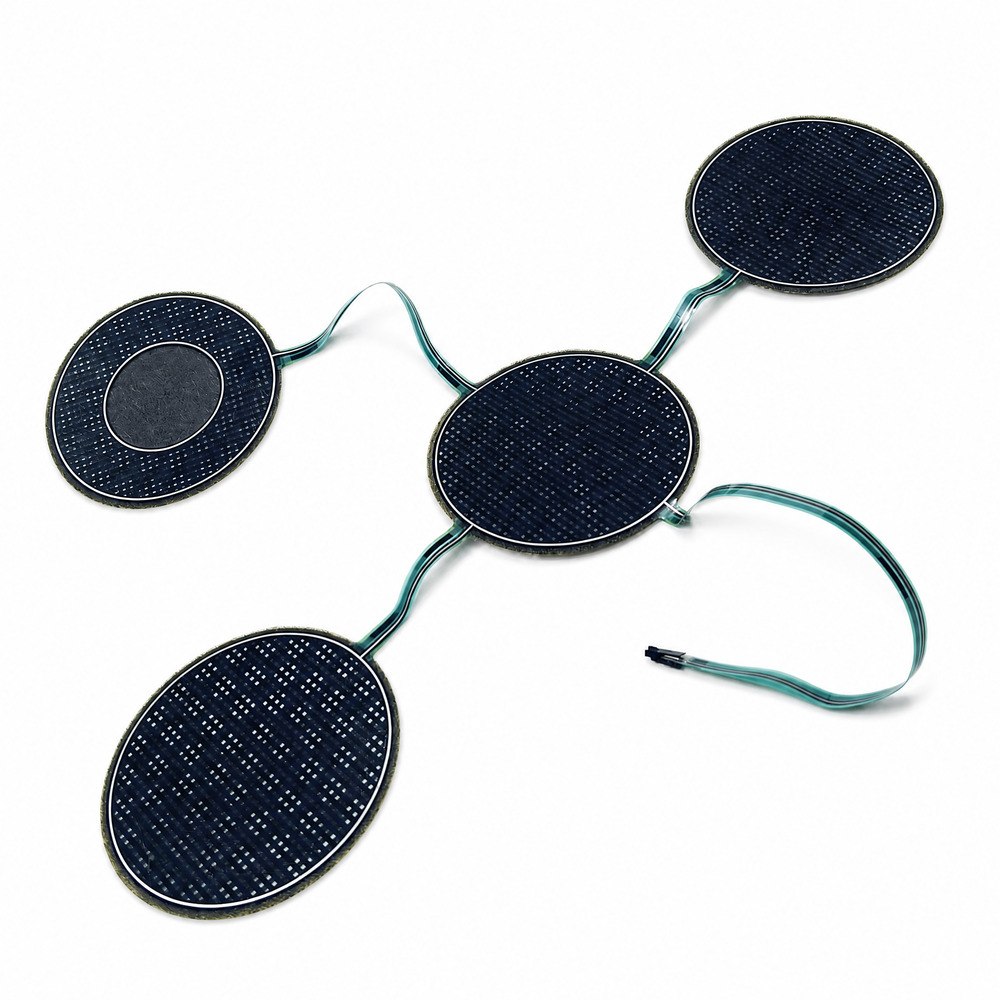
Thin-film force sensors, frequently classified as Force-Sensing Resistors (FSR), rely on the quantum tunneling and percolation threshold behavior of conductive and semi-conductive micro-particles dispersed within an elastomeric polymer matrix. In a rest state, without mechanical loading, the conductive carbon-black and modified graphite particles remain separated by an insulating polymer resin layer, resulting in near-infinite open-circuit impedance (> 10 MΩ). When an external mechanical payload is exerted perpendicularly to the active sensor membrane, microscopic surface asperities compress, bringing the conductive clusters within nanometer proximity. Electrons tunnel across the interstitial potential barriers, yielding a steep logarithmic decrease in electrical resistance relative to mechanical force.
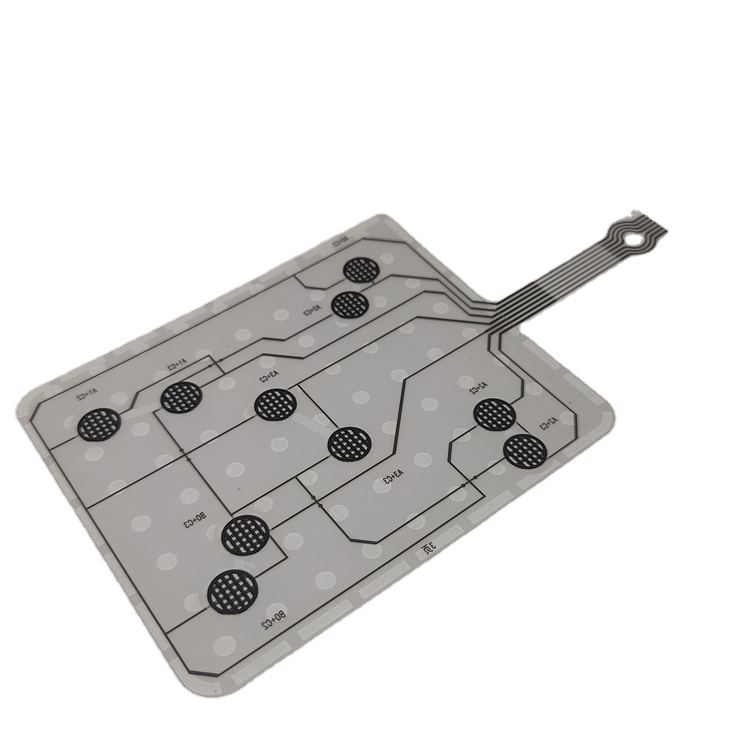
Achieving industrial reliability in flexible printed sensors demands precise control over the polymer thick film (PTF) formulation, screen mesh density, curing thermal curves, and dielectric spacer geometry. At Dongguan Ravo Electronics, our thin-film sensor assemblies incorporate dual-layer interdigitated electrode fingers screen-printed with nano-scale silver ink, counterbalanced by an opposing piezoresistive carbon formulation. The thickness of the micro-spacer layer (commonly 0.05 mm to 0.125 mm PET with precision acrylic transfer adhesive) dictates the pre-load sensitivity threshold (break force), enabling our engineering team to calibrate actuation trigger levels from as delicate as 0.1 N (10 grams) for clinical medical monitors to heavy dynamic loads exceeding 100 N (10 kg) for automotive seat occupancy detection and industrial footbed analysis.
| Sensor Architecture | Typical Thickness | Actuation Force Range | Operating Temperature | Hysteresis / Repeatability | Primary Industrial Sector |
|---|---|---|---|---|---|
| Shunt-Mode FSR (PET Substrate) | 0.15 mm – 0.25 mm | 0.2 N to 50 N | -25°C to +85°C | < 8% / ± 2.5% | Medical beds, patient lifters, robotic grippers |
| Thru-Mode Matrix Array | 0.20 mm – 0.35 mm | 0.5 N to 100 N | -30°C to +105°C | < 6% / ± 2.0% | Automotive seat occupancy, smart seating, gait analysis |
| Polyimide (Kapton) High-Temp FSR | 0.10 mm – 0.18 mm | 1.0 N to 200 N | -40°C to +150°C | < 5% / ± 1.5% | Aerospace, engine telemetry, downhole tool sensing |
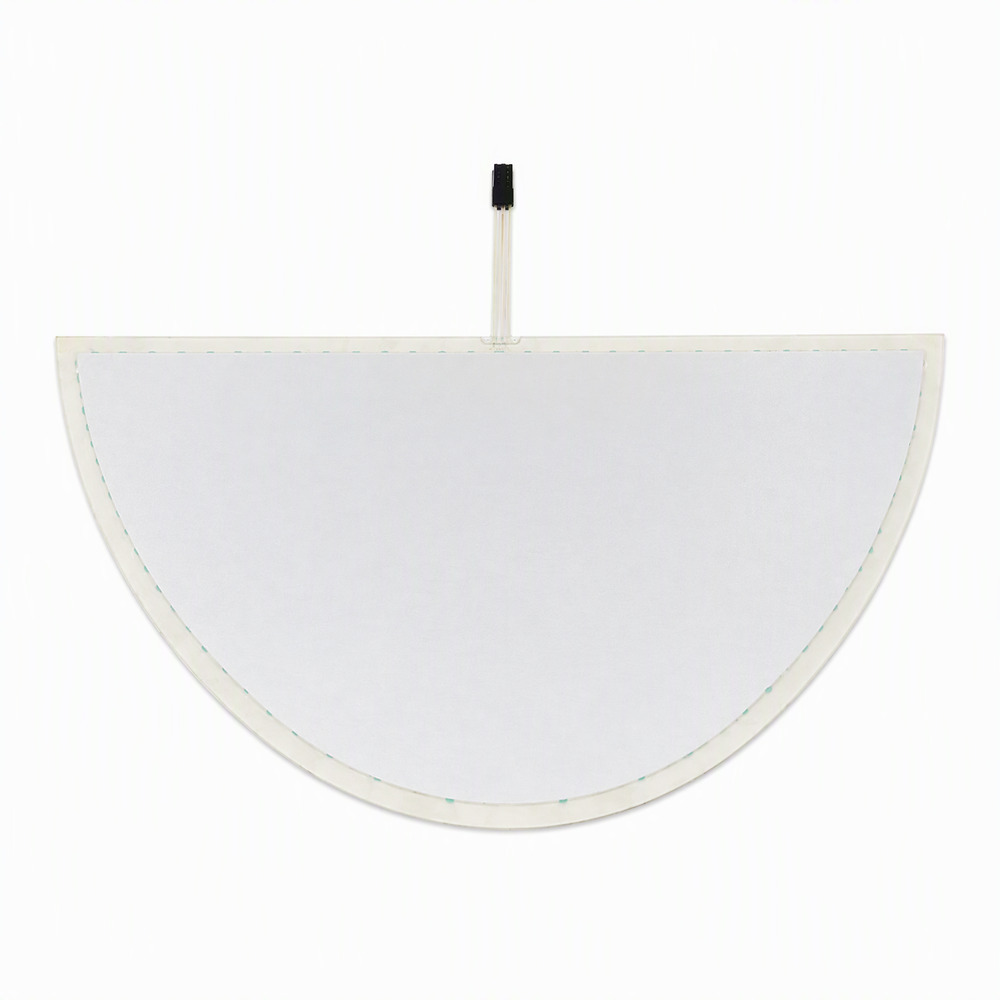
| Capacitive Flexible Film Sensor | 0.125 mm – 0.30 mm | Zero-force proximity touch | -20°C to +75°C | N/A (Electrostatic) | Commercial kitchen appliances, sanitizable control glass |
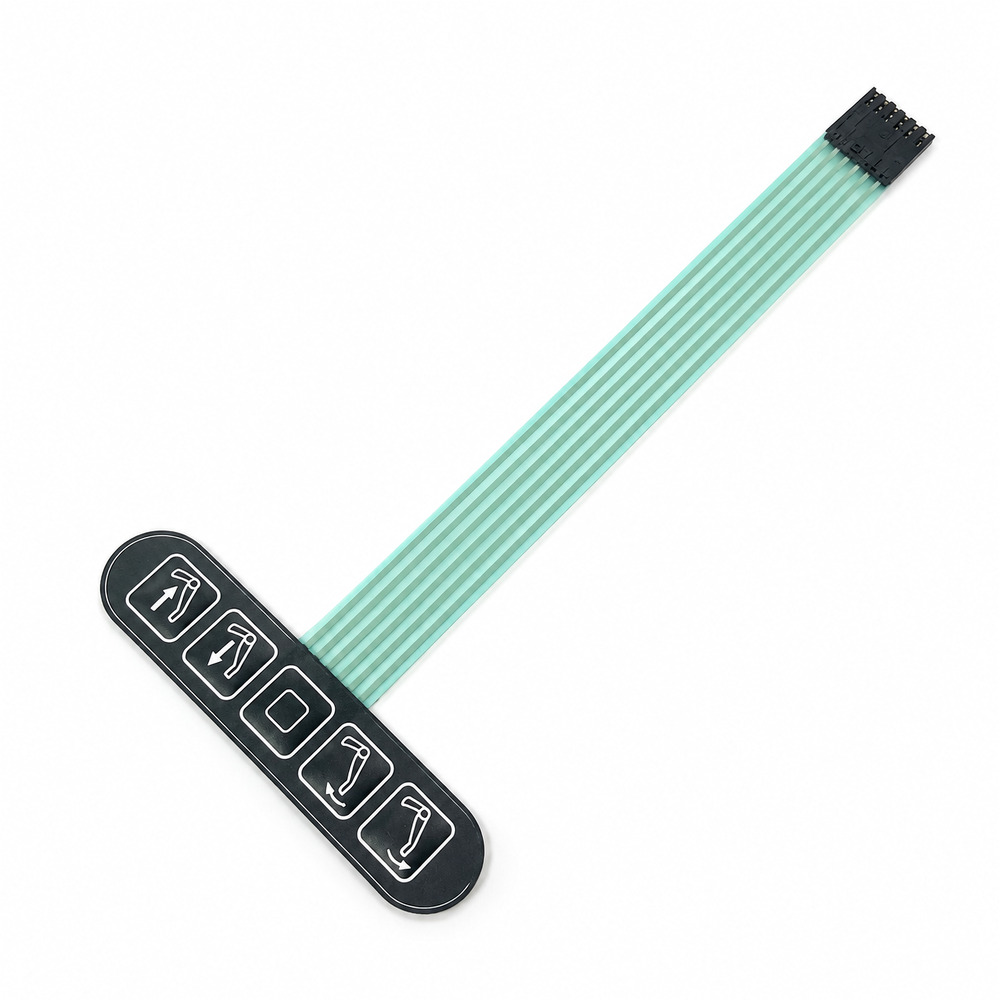
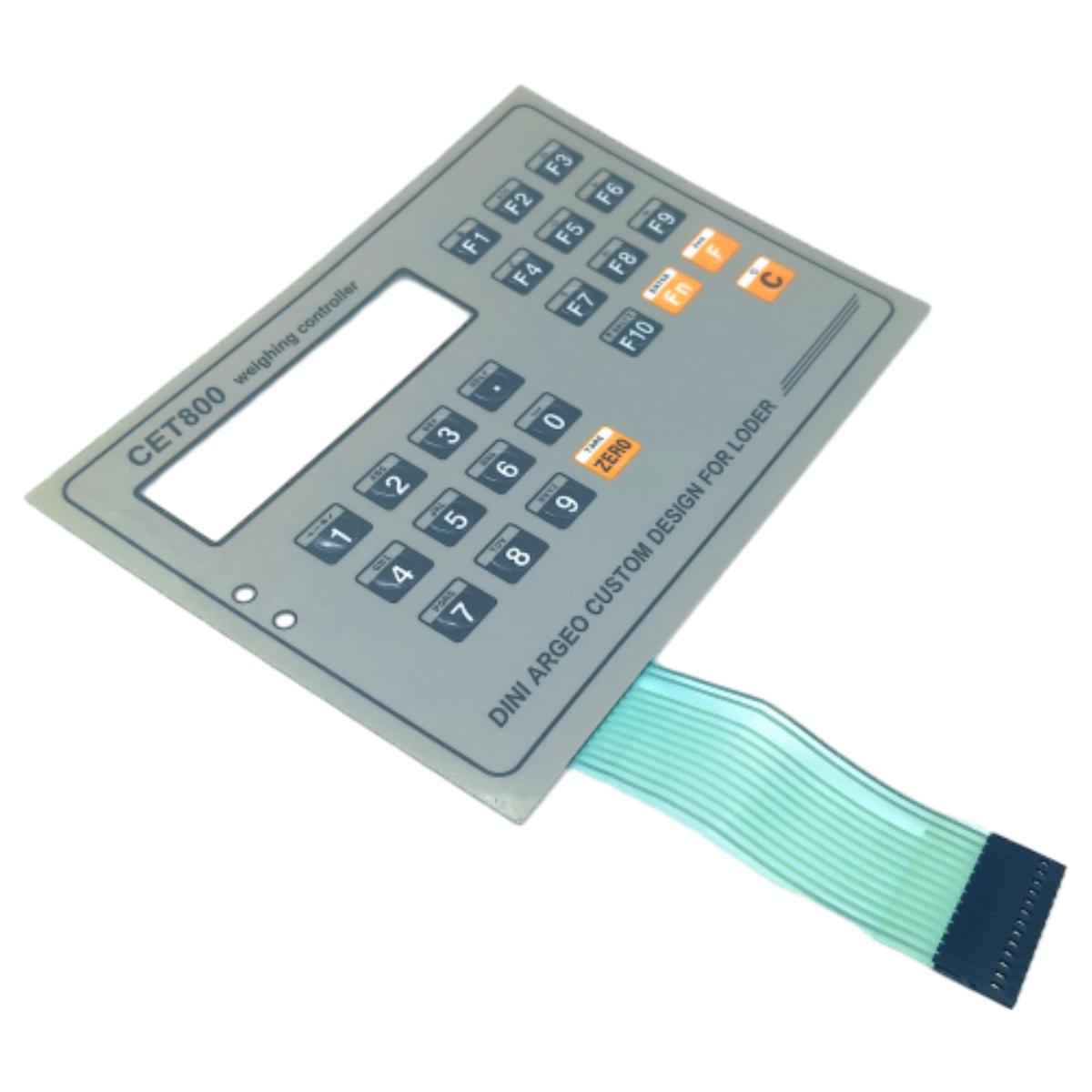
| Tactile Dome Membrane Switch | 0.50 mm – 1.20 mm | 160g – 450g snap peak | -30°C to +85°C | Crisp tactile snap | Industrial automation controllers, medical consoles |
Material longevity is fundamentally determined by substrate selection. While standard consumer applications leverage cost-effective biaxially oriented polyethylene terephthalate (BOPET), mission-critical medical and automotive builds mandate heat-stabilized, optical-grade polyester (such as DuPont Melinex or Toray Lumirror) to prevent anisotropic thermal shrinkage during high-temperature ink cross-linking ovens. For high-density flex tails, our manufacturing line integrates flexible printed circuits (FPC) with polyimide bases and copper traces, supporting 0.5 mm pitch ZIF (Zero Insertion Force) connectors and eliminating the lead micro-fracturing risks historically linked with repeated bending of standard conductive silver inks.
Global procurement dynamics for thin-film sensors and flexible interfaces are experiencing a seismic shift. Hardware procurement teams are moving away from fragmented sourcing models where circuit design, graphic overlay screening, and silicone molding were split among multiple subcontractors. The modern standard demands single-source accountability to reduce assembly stack-up tolerances, mitigate interfacial delamination, and expedite time-to-market. Three core trajectories dominate current B2B sourcing discussions:
Consolidating passive force-sensing elements with surface-mounted active silicon (SMD microcontrollers, low-noise analog front-end ADCs, and BLE communication ICs) directly on continuous polyimide or thin PET film webs.
Adopting graphene-enhanced conductive pastes to eliminate mechanical hysteresis and signal drift over tens of millions of repetitive duty cycles, widening dynamic sensitivity below 0.05 N for high-fidelity wearable biometrics.
Engineered micro-venting paired with hydrophobic fluoropolymer membranes and specialized structural adhesives (e.g., 3M 300LSE/467MP) to withstand aggressive clinical sterilization, hospital-grade glutaraldehyde washes, and autoclave chambers.
From a procurement perspective, supply chain directors are increasingly prioritizing Chinese OEM/ODM facilities with established direct raw material supply chains (such as partnerships with Autotype, 3M, Nitto, and Acheson Henkel) and dedicated in-house environmental qualification chambers. Sourcing directly from verified manufacturers like Dongguan Ravo Electronics mitigates Middleman markups by 25–40% while unlocking rapid iteration cycles, offering fully custom tooling and first-article validation samples within 7 to 15 working days.
Supplying thin-film sensors and human-machine interface assemblies into the European Economic Area (EEA) requires strict adherence to CE marking mandates and chemical safety regulations. While passive thin-film sensor elements do not typically emit electromagnetic interference on their own, their operational integration into larger electrical systems subjects them to rigorous evaluation under the Electromagnetic Compatibility (EMC) Directive 2014/30/EU and the Low Voltage Directive (LVD) 2014/35/EU.
At Dongguan Ravo Electronics, every flexible sensor stack, membrane keypad, and backer board is engineered from the ground up to support end-product compliance testing. Our engineering framework systematically integrates the following regulatory benchmarks:
Full chemical screening ensuring non-detection of lead (Pb), cadmium (Cd), mercury (Hg), hexavalent chromium (Cr VI), and restricted phthalates (DEHP, BBP, DBP, DIBP) across all printed inks, PET films, and adhesive sheets.
Stringent compliance covering Substances of Very High Concern (SVHC). Material safety declarations and independent SGS laboratory batch testing sheets accompany every export shipping manifest.
Integrated full-surface carbon ink grounding grids or selective aluminum/copper foil laminates engineered to dissipate electrostatic discharge voltages exceeding 15 kV without internal circuit arc-over.
Cleanroom processing and bio-compatible materials tailored for Class I and IIa medical apparatuses, including operating theater hospital beds, infusion pumps, and wearable patient-monitoring systems.
Founded in 2003 in Fenggang Town, Dongguan. Our 12,000 m² state-of-the-art facility integrates cleanroom screen printing, precision die-cutting, automated surface mounting, and exhaustive qualification labs.
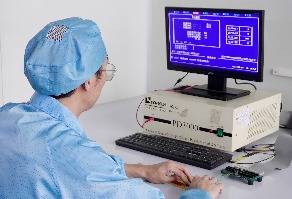
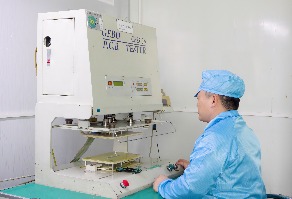
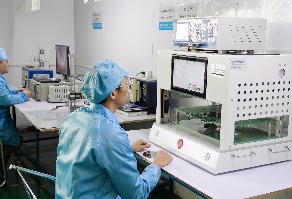
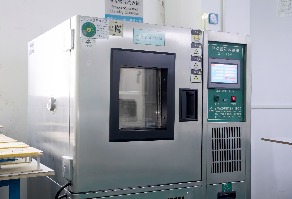
Over two decades of hands-on human-machine interface engineering has positioned Dongguan Ravo Electronics as a premier Tier-1 and Tier-2 supplier for international brand owners across Germany, the United States, Japan, and the United Kingdom. We do not act as an export trading intermediary; our clients deal directly with senior manufacturing and material engineers who oversee product transformation from raw PET rolls to final hermetically sealed, tested units.
Laser-assisted steel rule dies, CNC metal dome embossing fixtures, and silk screens are designed and fabricated in-house, cutting prototype tooling times down to under 5 business days.
Direct factory-level stockpiles of authentic 3M laminates (467MP, 468MP, 300LSE, 9448A), Autotype MacDermid textured PET, and Acheson Henkel silver/carbon inks ensure zero counterfeit risk and traceable supply chains.
In-house validation chambers conduct thermal cycling (-40°C to +125°C), 95% relative humidity soak tests, mechanical keystroke durability testers (exceeding 5 million snaps), and ASTM cross-hatch ink adhesion checks.
Whether you require a rapid first-article prototype run of 5 pieces for mechanical validation or continuous volume production reaching 500,000 units per month, our structured production system ensures absolute lot-to-lot repeatability, controlled track resistance, and rigorous packaging compliance including anti-static ESD bagging and shock-absorbing cartons.
Answers to critical questions asked by procurement directors, quality engineers, and hardware system designers before initiating volume orders.
For custom engineering evaluations and functional DFM validation, our prototyping MOQ starts from as low as 1 to 10 pieces. Standard prototypes are fabricated, fully tested, and dispatched via international air express within 7 to 10 working days following drawing and artwork sign-off. Production run MOQs typically start at 100 to 500 units depending on the stack complexity, graphic layer count, and integration of surface-mount components (SMD LEDs, resistors, or rigid backers).
Force sensitivity is precisely calibrated through three variables: the chemical ratio of semi-conductive carbon particles to insulating polymer resin, the geometric pitch of the interdigitated electrode pattern, and the thickness of the adhesive dielectric spacer. To minimize hysteresis (typically held under 6–8% in our sensors), we employ highly resilient elastomeric polymer binders and precision thermal post-curing profiles that eliminate residual internal stress in the dried film.
Yes. We regularly achieve true IP65 to IP67 protection ratings by designing a continuous perimeter adhesive ring that completely isolates the internal vented air channels from external liquids and contaminants. For high-humidity or submerged applications, we incorporate specialized hydro-permeable Gore-tex micro-vents along the tail conduit or rear enclosure interface to balance atmospheric pressure swings without permitting moisture ingress.
We provide four industry-standard connector and tail configurations: (1) Standard silver-ink flex tails crimped with 2.54 mm pitch female housing connectors (Nicomatic, Amphenol FCI Clincher, or Harwin); (2) Plain flex tails with stiffener ribs engineered for direct solderless Zero Insertion Force (ZIF) socket insertion (1.0 mm and 0.5 mm pitch); (3) Polyimide copper FPC tails designed for surface soldering or micro-connectors; and (4) Through-hole soldered pins integrated onto rigid FR-4 PCB backers.
To provide a detailed DFM review and formal unit-cost breakdown within 2 hours, our team requires: (1) 2D mechanical drawings in DXF, DWG, or PDF format with critical dimensions and tolerances; (2) Graphic overlay artwork in vector format (Adobe Illustrator .AI or vector .PDF) specifying Pantone PMS or RAL color codes; (3) Schematic circuit logic or pinout assignments; and (4) Environmental operating expectations (temperature envelope, UV exposure, chemical contact, expected actuation life).
Silver electrochemical migration occurs under the combination of DC voltage bias and condensed moisture. To permanently mitigate this risk, Ravo covers all internal silver conductive traces with a fully printed, Pin-hole free carbon graphite overcoat layer. Furthermore, we apply high-purity dielectric insulation masks over all non-contact traces, and ensure trace clearances strictly satisfy IPC-2221 electrical standards.
Stainless steel metal domes (nickel or gold-plated) provide a distinct, crisp tactile click with an actuation life exceeding 1,000,000 to 5,000,000 cycles, and maintain reliable performance across broad thermal extremes (-40°C to +85°C). Thermoformed polydomes (domes embossed directly into the polyester sheet) deliver a softer snap feel with an operational life of 500,000 to 1,000,000 cycles at a lower tooling and piece cost, ideal for high-volume consumer goods and toys.
Our quality assurance department operates under ISO 9001:2015 quality frameworks. Every batch undergoes 100% automated electrical testing for open circuits, shorts, loop resistance, and switch contact bounce. We sample units for mechanical force-displacement curve analysis on computer-controlled load cells, cross-cut ink adhesion tests (ASTM D3359), environmental chamber aging, and dimensional verification using optical CMM (Coordinate Measuring Machines) prior to vacuum export packaging.
Connect with our Dongguan engineering department today. Submit your 2D drawings, 3D enclosures, or electrical specifications, and receive comprehensive DFM feedback and competitive factory pricing within 2 business hours.