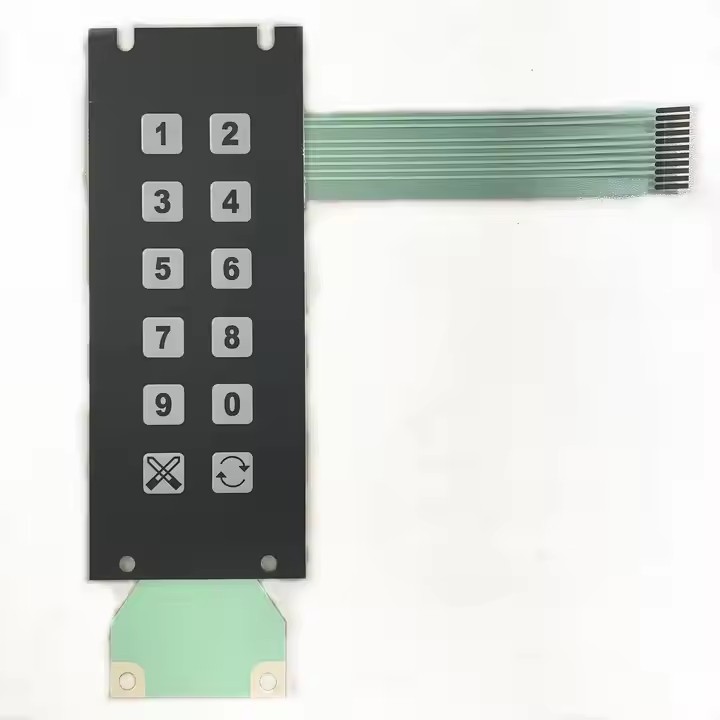
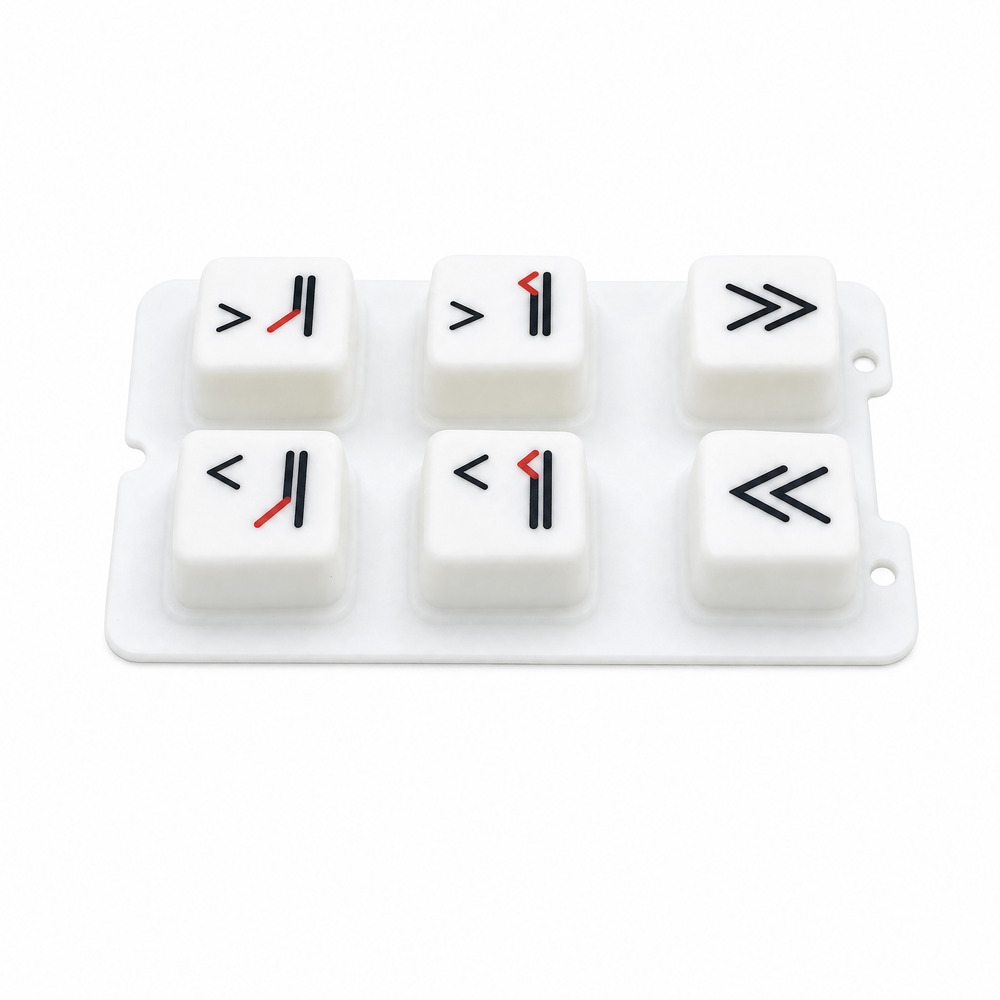
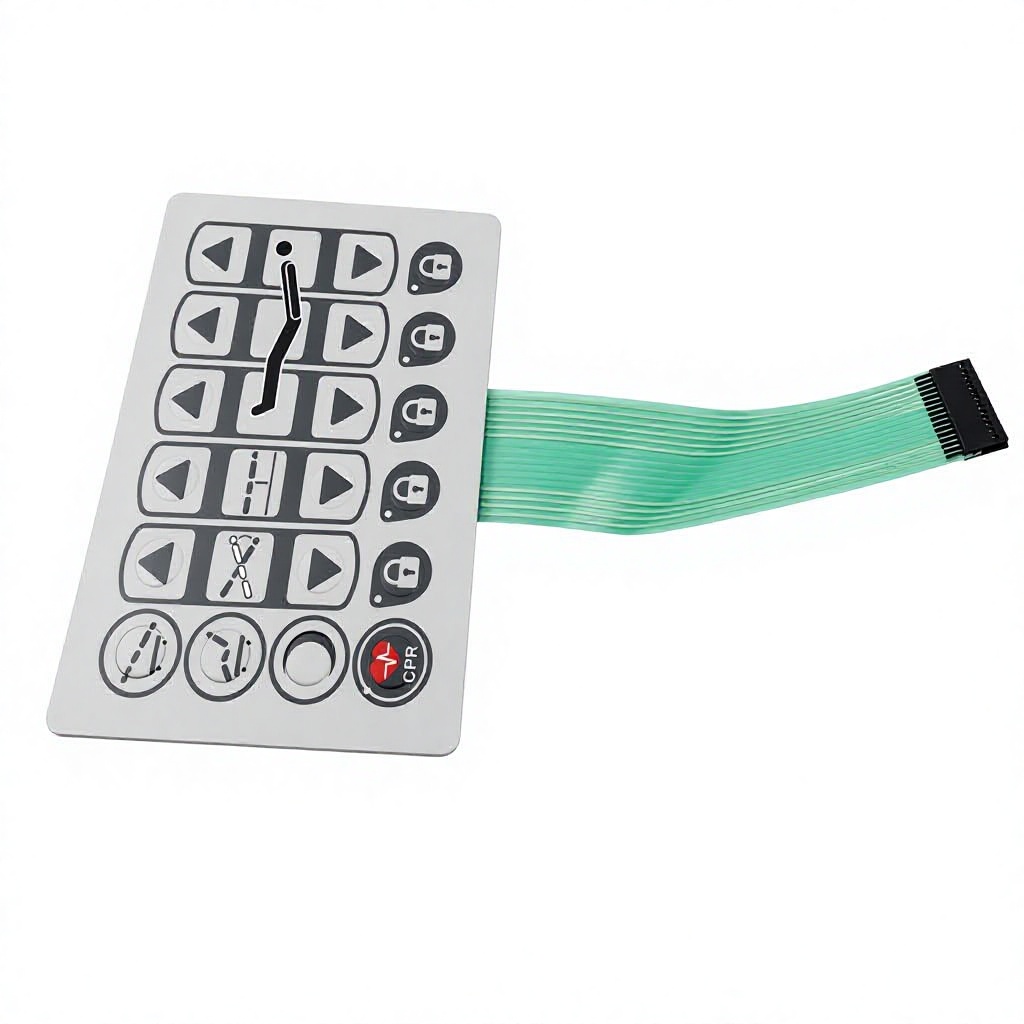
Custom Embossing Button Tactile Membrane Switch Keypad Waterproof PET Panel With FPC Tail for Remote Controller
- Substrate: Polyimide (PI) Flex Tail + PET Face
- Actuation: Stainless Steel Dome Tactile Click
- Rating: Sealed Waterproof IP65 Design
Factory-calibrated flexible printed circuit tails, tactile metal dome arrays, and graphic overlay stacks designed to endure millions of actuations under harsh chemical, thermal, and dynamic flexing environments.
Comprehensive Design for Manufacturability (DFM) manual for hardware engineers, electronics procurement managers, and OEM contract manufacturers.
In modern industrial human-machine interfaces (HMI) and flexible electronics, selecting between Polyimide (Kapton/PI) and Polyethylene Terephthalate (PET) is the foundational engineering choice determining thermal survivability, signal density, and mechanical flex life. Flexible Printed Circuits fabricated on polyimide films offer structural resistance to soldering temperatures exceeding 260°C, enabling reflow assembly of fine-pitch surface-mount devices (SMD), such as microcontrollers, discrete resistors, and sub-millimeter biometric sensors.
Conversely, traditional printed silver-paste circuitry on PET substrates is restricted to temperatures below 105°C, requiring low-temperature conductive epoxy bonding for electronic components. While PET membrane switches remain exceptionally cost-effective for high-volume consumer keyboards and flat utility panels, high-reliability aerospace, automotive powertrain, and diagnostic medical equipment mandate copper-clad polyimide laminates (FCCL) with rolled-annealed (RA) or electro-deposited (ED) copper conductors.
| Engineering Property | Polyimide (FPC Flex Copper) | Polyester (PET Screened Silver) | FR-4 Rigid-Flex Hybrid |
|---|---|---|---|
| Operating Temperature | -40°C to +135°C (Peak 260°C) | -20°C to +75°C (Peak 105°C) | -40°C to +130°C |
| Trace Conductor Material | Rolled-Annealed (RA) / ED Copper | Conductive Polymer Silver Paste | Electro-Deposited Copper |
| Minimum Line Width / Spacing | 0.05 mm / 0.05 mm (2 mil / 2 mil) | 0.25 mm / 0.25 mm (10 mil / 10 mil) | 0.075 mm / 0.075 mm |
| Surface Mount Soldering | Direct Reflow & Hand Soldering SMT | Conductive Epoxy Only (No Reflow) | Standard Reflow Compatible |
| Dynamic Bend Endurance | > 200,000 Cycles (R = 2.0mm) | < 20,000 Cycles (Prone to cracking) | Limited (Rigid zones static) |
| Trace Conductor Resistance | Ultra-low (< 0.05 Ω/sq) | Moderate (< 15 Ω/sq) | Extremely Low (< 0.01 Ω/sq) |
Direct export of Flexible Printed Circuits and membrane switch assemblies to the European Single Market requires strict adherence to CE Marking directives. Because flexible circuits interface directly with low-voltage control systems and high-density logic, manufacturers must demonstrate conformity with the Low Voltage Directive (LVD) 2014/35/EU and Electromagnetic Compatibility (EMC) Directive 2014/30/EU. For medical grade panels, integration of aluminum foil, copper tape, or printed carbon grids is imperative to prevent electrostatic discharge (ESD) exceeding 15 kV from disrupting delicate biological signal monitors.
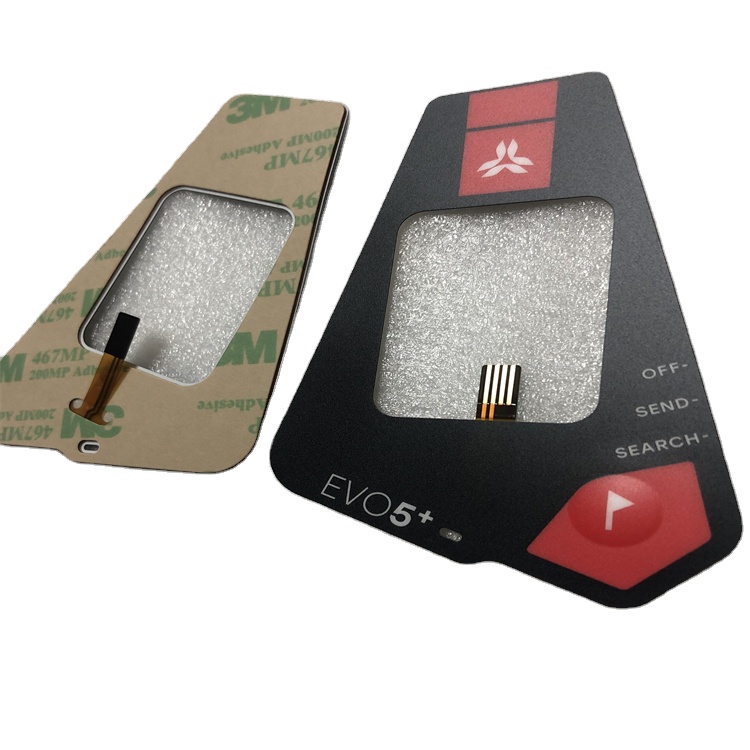
At Dongguan Ravo Electronics Co., Ltd., our manufacturing line strictly implements IPC-6013 Class 2 and Class 3 acceptance criteria for flexible printed boards. Every export consignment is vetted via automated optical inspection (AOI), micro-section analysis to verify copper plating thickness inside through-holes, and dielectric breakdown testing up to 1,500V DC. All raw polymeric films, pressure-sensitive acrylic adhesives (such as 3M 467MP, 468MP, and 9448A), and polyimide coverlays comply fully with RoHS Directive 2011/65/EU (and amendment 2015/863) and REACH Regulation (EC) No 1907/2006, guaranteeing zero restricted phthalates, heavy metals, or hazardous halogens.
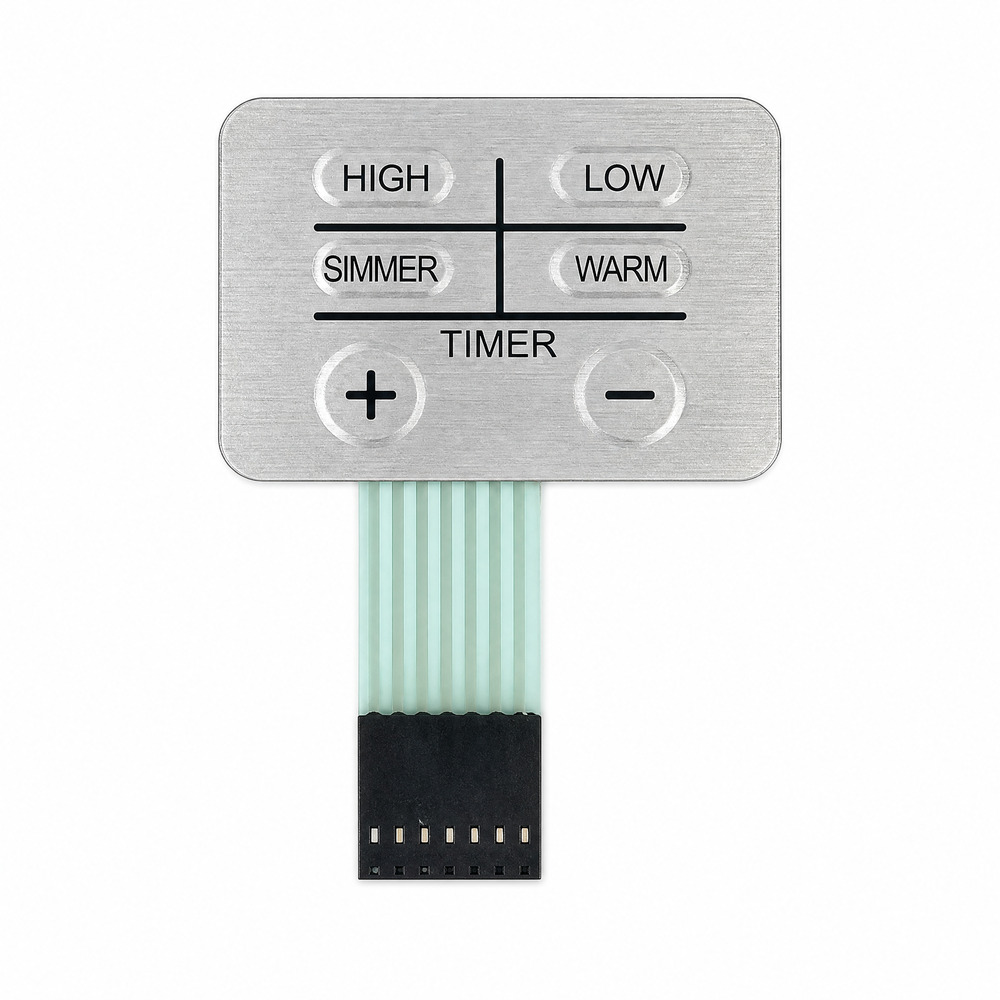
The transition zone where a flexible circuit exits the graphic overlay housing to connect with the main PCB motherboard represents the most common failure vector in field operations. Rigorous DFM (Design for Manufacturability) protocols mandate gradual radius cutouts at all internal corners to prevent tear propagation. Slits and internal corners must feature a minimum tear-stop radius of 1.5mm. Furthermore, applying polyimide or FR-4 backer stiffeners behind the zero-insertion-force (ZIF) contact fingers ensures consistent mating friction and electrical contact resistance below 20 mΩ across repeated insertions.
Over 20 years of hands-on electronics engineering, providing fully vertically integrated fabrication from CAD artwork tooling to micro-section continuity certification.
Operating a 12,000 m² cleanroom manufacturing facility in Fenggang Town, Dongguan, housing silkscreen printing, precision CNC laser cutting, Class 1,000 clean lamination, automated SMT component placement, and in-house steel tooling dies under one roof.
Our senior HMI engineering team evaluates Gerber, DXF, and CAD layout files within two hours, offering actionable stack-up optimization, trace routing advice, and bend radius calculations that decrease scrap rates and accelerate time-to-market.
ISO 9001:2015 certified production workflows. Each batch undergoes 100% electrical continuity testing, contact resistance logging, actuation tactile curve testing, and temperature-humidity cycling (-40°C to +85°C) with full traceability reports.
Support for rapid prototypes starting from just 1 piece to validate mechanical and electrical fit before committing to expensive tooling. Scalable automated high-speed roll-to-roll stamping handles orders up to 500,000 units per month.
We source authentic Autotype PET films, Lexan polycarbonate overlays, Dupont Pyralux polyimide FCCL, and authorized 3M pressure-sensitive adhesives, eliminating premature delamination, bubbling, or silver migration failures.
Dedicated English-speaking technical sales managers and 14 years of direct export documentation across Europe, North America, and Oceania. Custom anti-static ESD packaging ensures safe arrival of delicate flexible circuits worldwide.
Key technological shifts reshaping procurement strategies for electronic design engineers and strategic sourcing specialists over the next five years.
Global aerospace, automotive EV battery management systems (BMS), and industrial robotics are systematically replacing discrete wire bundles with multi-layer rigid-flex circuits. Procuring integrated rigid-flex modules eliminates manual assembly errors, reduces overall package weight by up to 70%, and provides unmatched vibration immunity in confined geometric spaces.
As microcontrollers shrink to 0.5mm pitch BGA and QFN packages, traditional screen-printed conductive silver paste on polyester hits its physical pitch limits. Sourcing departments are shifting toward subtractive and semi-additive copper polyimide FPCs that accommodate high trace densities without susceptibility to silver electromigration under humid bias conditions.
Sleek, crevice-free surfaces are dominating modern automotive dashboards and commercial appliances. Mechanical switch buttons are yielding to capacitive touch sensor films thermoformed directly into the cosmetic 3D housing. Procurement strategies must favor factories experienced in flexible printed capacitive arrays capable of enduring deep-draw forming without trace breakage.
Thin-film piezoresistive pressure sensors are experiencing exponential demand within smart patient bed occupancy monitoring, automotive seatbelt interlocks, and ergonomic sports wearables. Modern procurement teams prioritize suppliers with proven capabilities in multi-layer carbon paste calibration and flexible polyimide tail output.
European environmental directives are tightening import compliance criteria. Strategic supply chains now mandate halogen-free coverlays, lead-free surface finishes (such as ENIG - Electroless Nickel Immersion Gold and OSP), and adhesives with reduced volatile organic compound (VOC) emissions, aligning with global corporate ESG benchmarks.
To mitigate geopolitical risk and avoid trading house markups, international procurement executives are actively cutting out intermediaries to partner directly with verified OEM manufacturing facilities in China. Direct communication ensures engineering changes are executed in real time with complete batch documentation.
Clear, definitive answers to technical and commercial inquiries commonly posed by procurement directors and hardware design engineers.
We support early-stage hardware engineering and prototype validation with an MOQ starting from just 1 piece for standard PET membrane switches and 5 to 10 pieces for custom polyimide FPCs. For high-volume mass production, production batch economics typically range from 500 to 10,000 units depending on layer complexity and tooling amortization.
To deliver a precision DFM review and quotation within 2 hours, please provide: 1) Circuit artwork or Gerber RS-274X files for FPC layers; 2) 2D mechanical dimensions (DXF, DWG, or PDF); 3) Graphic overlay vector art with explicit Pantone (PMS) or RAL color codes; 4) Bill of materials detailing connector pitch, dome actuation force, and adhesive models.
Waterproof sealing is achieved by engineering a continuous, unbroken outer adhesive perimeter gasket (utilizing 3M 200MP acrylic adhesive or closed-cell foam tapes) around all switch cavities and LED cutouts. The flex tail exit is engineered with internal silicone potting or serpentine labyrinth paths to completely stop liquid capillary ingress under immersion testing.
We supply a complete suite of surface finishes suited to different assembly processes: Electroless Nickel Immersion Gold (ENIG) for planar surface mounting and long shelf-life oxidation protection; Immersion Tin for cost-effective reflow; Hard Gold (Gold Finger plating) up to 30 micro-inches for sliding or card-edge connectors; and Lead-Free OSP for standard automated soldering.
Yes. In our Dongguan facility, we operate automated high-speed SMT pick-and-place lines equipped to solder components down to 0402 chip sizes onto polyimide FPCs. For PET membrane switches, we utilize automated dispensing of anisotropic conductive adhesive (ACA) or silver conductive epoxies with UV cure and epoxy encapsulation for maximum pull-strength.
Following drawing confirmation and engineering sign-off, rapid prototype samples are manufactured and shipped via DHL/FedEx within 7 to 10 working days. Standard mass production runs generally ship within 15 to 20 working days. Expedited production cycles can be arranged upon request for urgent product launches.