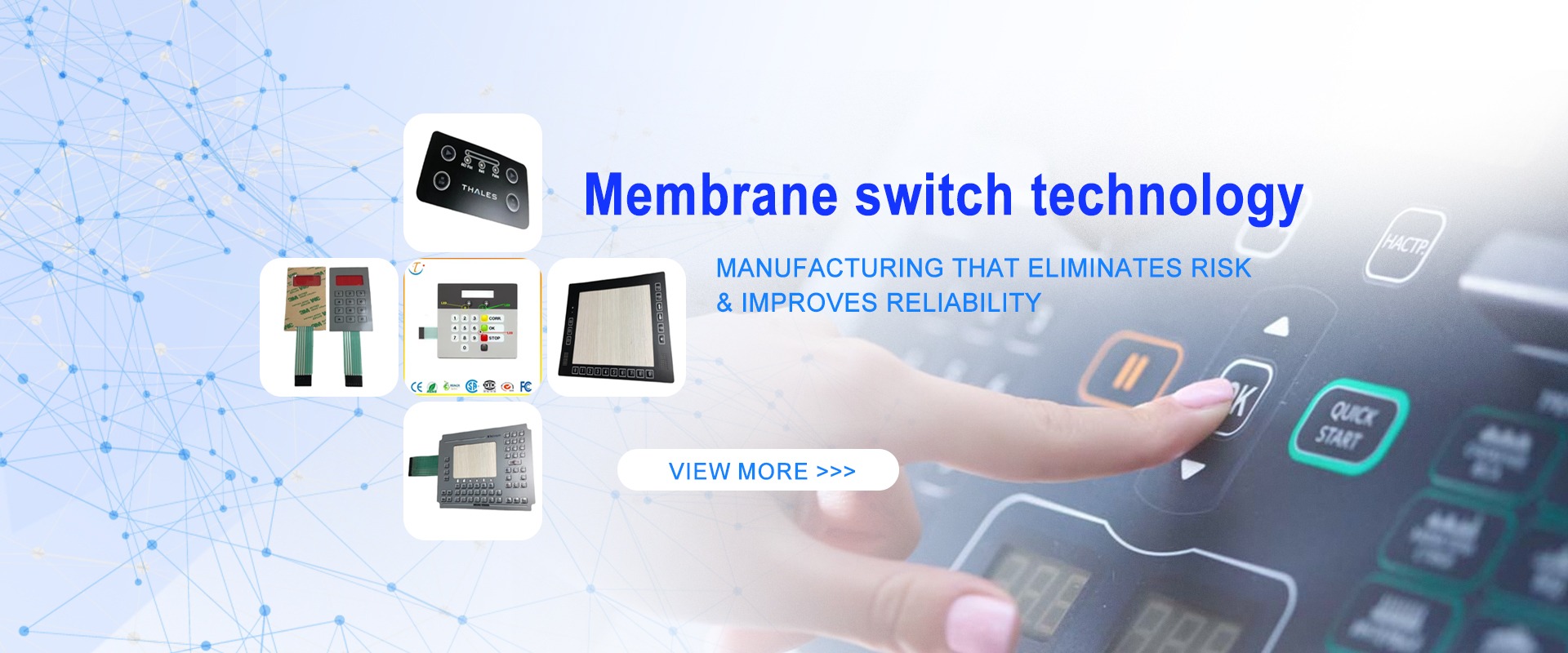
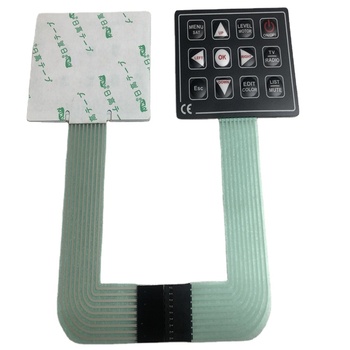
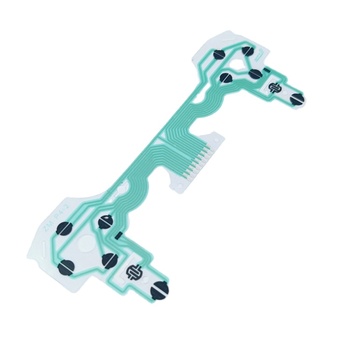
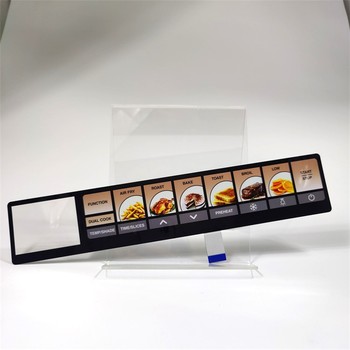
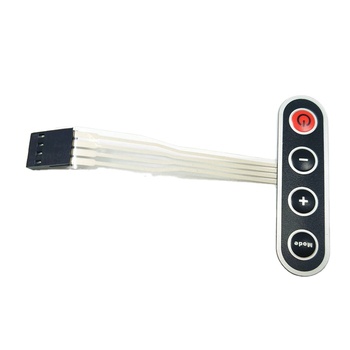
Custom electronic matrix keypad and membrane interface manufactured by Dongguan Ravo Electronics Co., Ltd.
Electronic matrix keypad production and automated testing line in Dongguan factory
Technical Sourcing & Engineering Whitepaper

Electronic Matrix Keypad: What Every Global Hardware Engineer and Sourcing Manager Must Know Before Specifying Custom HMI Modules

When hardware development teams specify human-machine interfaces (HMI) for harsh industrial controllers, clinical diagnostic instruments, smart metering equipment, or consumer appliances, the Electronic Matrix Keypad remains the global standard for pin-efficient, ultra-reliable input. Dongguan Ravo Electronics Co., Ltd. brings over two decades of precision manufacturing expertise to examine circuit topologies, mechanical layer stacks, ghost-key mitigation, environmental ingress sealing, and global procurement trends.

Established 2003 · 12,000 m² Facility 98.59% Response Rate · ≤2h Feedback Trusted by LINAK, FLEXTRONICS, LG, CASIO
2003
Year Founded in Dongguan
12,000m²
Production Plant Area
300+
Workforce at Peak Capacity
98.59%
Global Buyer Response Rate
≤2h
Average Technical Response Time · 14 Years Verified Export Trading
Architectural Fundamentals

How the Electronic Matrix Keypad Solves Microcontroller Pin Constraints

Understanding the fundamental physics, electrical contact resistance, and circuit layer anatomy of high-reliability matrix switching.

In electronic product design, input/output (I/O) pin management is a paramount design constraint. Direct-wire button architectures require one dedicated microcontroller GPIO pin per switch plus an additional common ground line. While manageable for small devices requiring only two or three buttons, deploying a 16-key or 24-key control interface using discrete switches would deplete microcontroller resources, necessitate expensive I/O expanders, and multiply routing complexity across printed circuit boards.

An Electronic Matrix Keypad solves this design challenge through an intersecting grid of horizontal row lines and vertical column lines separated by an engineered dielectric spacer layer. In an N × M matrix, N rows and M columns allow the microcontroller to monitor N × M total keys using merely N + M GPIO lines. For example, a 16-key alphanumeric pad configured as a 4 × 4 matrix operates with only 8 microcontroller pins instead of 17. The firmware scans the matrix sequentially by driving row pins low (or high) while reading input logic on the corresponding columns, polling intersections at multi-kilohertz frequencies with microsecond debounce routines.

At Dongguan Ravo Electronics Co., Ltd., our engineering team evaluates circuit substrate conductivity, loop resistance, contact debounce times, and environmental sealing for every layout. Whether screen-printing ultra-conductive silver ink on heat-stabilized polyethylene terephthalate (PET) films or etching high-density copper tracks on flexible polyimide (FPC) and FR-4 PCB substrates, we calibrate trace dimensions to maintain low loop resistance (<50 Ω), eliminate transient crosstalk, and protect sensitive host microcontrollers from static discharge.

X-Y Grid Pin Optimization

Reduces required microcontroller pin count by up to 60%, drastically cutting BOM costs, simplifying motherboard routing, and freeing I/O for sensor integration.

Ghosting & Masking Mitigation

We integrate surface-mount blocking Schottky diodes directly within FPC/PCB matrix traces to eliminate ghost-key artifacts during simultaneous multi-key presses.

Sub-Surface Screen Printing

Graphics, legends, and brand logos are reverse-printed on the underside of Autotex PET or Lexan PC films, ensuring symbols remain impervious to chemical solvents and abrasions.

Innovation Roadmap

Technological Evolution: Where Electronic Matrix Keypads Are Heading

From simple membrane closures to integrated optoelectronic smart surfaces.

The humble matrix keypad is experiencing a high-tech renaissance. Rather than being superseded by smartphone-style glass capacitive screens, matrix switches are merging with cutting-edge materials science to solve real-world problems where touchscreens consistently fail: operating in sub-zero outdoor conditions, operating safely with gloved hands, surviving direct electromagnetic interference (EMI), and ensuring fail-safe physical feedback.

The primary developmental vector is Hybrid HMI Architecture. Leading medical and automotive industrial equipment designers now demand unified assemblies that blend capacitive sensing sliders with physical tactile matrix keys, illuminated under dead-front polycarb surfaces. In this configuration, non-critical parameter sweeps occur via capacitive matrix sweeps, while mission-critical functions (Emergency Stop, Confirm, Fire) rely on sealed tactile metal dome matrix closures with positive mechanical feedback.

Simultaneously, Smart Surface Integration (In-Mold Electronics & Film Insert Molding) is replacing bulky multi-layer stacks. By screen-printing matrix circuit geometries directly onto thermoformable films and injection-molding high-impact engineering resins directly behind the film, manufacturers produce fully three-dimensional, curved, structurally rigid matrix consoles without mechanical seams, ingress risks, or separate bezel housings.

Finally, embedded Optoelectronic Backlighting and ESD Shielding have advanced dramatically. Modern electronic matrix keypads feature integrated light guide films (LGF) fed by miniature side-emitting 0603 SMD LEDs, distributing balanced, glare-free luminance across every key with zero hotspots while consuming less than 20% of legacy EL panel power. Complete grounded aluminum and carbon grid layers provide >15 kV ESD shielding to preserve system stability under heavy industrial electrostatic discharge.

Light Guide Film (LGF) Backlighting

Precision-molded 0.125 mm optical micro-dots direct LED light evenly behind embossed keypad legends, providing crystal-clear nighttime legibility with minimal power draw.

Integrated Static & EMI Protection

Continuous internal copper or conductive carbon ground planes channel electrostatic arcs away from logic traces, protecting microprocessors from 15 kV air discharges.

Integrated Force-Sensing Matrix

Combining matrix switches with piezoresistive Force-Sensitive Resistor (FSR) ink inks allows keypads to register both button location and precise press pressure for variable-speed control.

Specification Matrix

Engineering Comparison: Electronic Matrix Keypad Substrates & Actuators

Selecting the optimal material stack-up based on electrical requirements, life cycles, and operational environments.

Technical comparison of matrix keypad materials and construction
Keypad Variant Conductive Circuit Substrate Tactile Actuation Element Loop Contact Resistance Expected Actuation Life Primary Application Environments
Standard Silver-PET Tactile Screen-printed conductive silver ink on heat-stabilized PET Stainless steel dome (nickel or gold plated) < 100 Ω (trace length dependent) > 1,000,000 cycles Medical instruments, CNC machinery consoles, industrial HVAC controls
Thermoformed Polydome PET Screen-printed silver ink with carbon protective caps Heat-embossed PET dome formed into layer < 150 Ω > 500,000 cycles Cost-sensitive consumer appliances, remote transmitters, toys
Flexible Printed Circuit (FPC) Rolled-annealed copper laminated on Kapton polyimide Stainless steel dome or silicone rubber pill < 5 Ω (ultra-low impedance) > 3,000,000 cycles Aerospace transceivers, mission-critical military field gear, portable diagnostics
FR-4 Rigid Backer Matrix Glass-reinforced epoxy rigid copper PCB SMD metal domes or micro-travel mechanical tactiles < 1 Ω > 5,000,000 cycles Power inverters, self-supporting rack modules, heavy outdoor metering
Silicone Rubber Over Membrane Silver-PET or etched copper FPC Conductive carbon pill / gold-plated metal dome < 100 Ω > 2,000,000 cycles Rugged outdoor terminals, marine electronics, chemical processing equipment

Every module manufactured by Dongguan Ravo Electronics Co., Ltd. undergoes 100% automated electrical testing for open/short circuits and actuation force profiling before packaging.

Enterprise Strength & Verified Heritage

About Dongguan Ravo Electronics Co., Ltd.

Dongguan Ravo Electronics Co., Ltd. is a premier professional manufacturer of custom membrane switches, electronic matrix keypads, PC\PET graphic panels, flexible circuit boards (FPC), aluminum plates, copper panels, dimensional signs, silicone keypads, and precision silicone rubber components.

Located in Fenggang Town, Dongguan City, Guangdong Province — at the geographical epicenter of the world's most advanced electronics supply chain — our company was established in 2003. We operate as a core subsidiary of Tianjin Industry (HK) Co., Ltd. Our sister enterprise, Shenzhen Jingzhicheng Electronics Co., Ltd. (also a subsidiary of Tianjin Industry (HK) Co. Ltd.), specializes in the high-volume production of conductive buttons, Zebra connector stripes, mobile phone sets, and custom waterproof sealing rings. Together, our integrated components are widely deployed across the electrical, consumer electronics, automotive, and telecommunications industries worldwide.

Through more than two decades of focused development, Dongguan Ravo Electronics Co., Ltd. has expanded from a modest startup team of 8 people into a vertically integrated manufacturing powerhouse employing over 300 skilled specialists at peak operations, operating inside a modern facility exceeding 12,000 square meters.

Backed by sophisticated manufacturing equipment, advanced screen-printing and die-cutting technology, a comprehensive ISO quality management system, and an outstanding 98.59% customer response rate with average inquiry feedback within ≤2 hours, our products have gained immense acclaim throughout Europe and North America. Over 14 years of verified global export trading, we have earned the long-term trust of international tier-1 corporations, including LINAK, FLEXTRONICS, LG, CASIO, and EARLY LIGHT.

Our permanent mission is absolute customer satisfaction through engineering excellence. We welcome custom drawings and look forward to building enduring OEM/ODM partnerships.

12,000 m² Integrated Manufacturing Base

Class 10,000 cleanrooms, semi-automatic screen printers, laser cutting, CNC die-cutting, embossing, and automated pick-and-place lines under one roof.

≤2h Engineering Feedback & Rapid DFM

Our senior engineers review 2D/3D CAD drawings, Gerber files, and artwork, providing manufacturability feedback and quotations in under two hours.

Tier-1 Global Customer Trust

Proud contract manufacturing partner to world-renowned global brands including LINAK, FLEXTRONICS, LG, and CASIO for precision interface components.

Established 2003 · 14 Years Verified Export

Over two decades of technical problem solving, full customs clearance compliance, RoHS/REACH material traceability, and export-grade ESD packaging.

Audited Factory Facility & Operational Capabilities

Frequently Asked Sourcing Questions

Electronic Matrix Keypad Procurement & Engineering FAQ

Direct technical and commercial answers to the questions global procurement teams and embedded engineers ask most.

How does an electronic matrix keypad differ from a common bus or direct-wire keypad?

A direct-wire or common-bus keypad allocates a dedicated circuit trace to every individual button, meeting at a shared ground or supply line. For an 8-key pad, this demands 9 pins (8 signal + 1 ground). In contrast, an electronic matrix keypad arranges switches at the intersections of row and column traces. An 8-key pad arranged in a 2 × 4 matrix requires only 6 pins (2 rows + 4 columns); a 16-key pad arranged in a 4 × 4 matrix requires only 8 pins instead of 17. The matrix topology conserves precious microcontroller I/O and reduces flex tail width, making it vastly superior for complex interfaces.

What is "key ghosting" in an electronic matrix keypad, and how do you prevent it?

Key ghosting occurs in a matrix circuit when three or more keys are pressed simultaneously, forming an electrical sneak path that tricks the microcontroller firmware into registering a false, unpressed fourth key. Dongguan Ravo Electronics Co., Ltd. prevents ghosting by incorporating surface-mount switching diodes (such as 1N4148 or SOD-323 package Schottky diodes) in series with every key switch on FPC or PCB substrates. These diodes isolate each node, enabling true N-Key Rollover (NKRO) for mission-critical equipment.

What overlay material is best: Polycarbonate (PC) or Polyester (PET)?

Polyester (PET, such as Autotex XE or MacDermid Autotype) is overwhelmingly recommended for matrix keypads featuring embossed buttons or metal domes because its flexural fatigue life exceeds 5,000,000 actuations without cracking, and it offers excellent resistance to harsh chemicals, fuels, and sanitizers. Polycarbonate (Lexan PC) is optically clearer and slightly more economical, making it ideal for non-embossed flat overlays or large display windows, but it will suffer premature mechanical fatigue if deeply embossed over tactile domes.

Can custom electronic matrix keypads achieve full IP67 waterproof sealing?

Yes. By utilizing continuous perimeter adhesive gaskets (typically 3M 467MP or high-tack 3M 300LSE/9448A) that completely encapsulate the interior switch chambers, along with an engineered S-bend or sealed tail transit, Dongguan Ravo Electronics Co., Ltd. regularly certifies matrix keypads to IP65, IP66, and IP67 ingress protection standards. We also integrate micro-porous breathable membrane vents (like Gore vents) to equalize internal atmospheric pressure during rapid thermal cycling without allowing moisture intrusion.

What are the standard connector options for custom matrix keypad tails?

We supply three primary termination standards: 1) Female crimped contacts encased in 2.54 mm (.100") or 1.27 mm (.050") pitch housings compatible with industry-standard pin headers; 2) Bare conductive fingers reinforced with a polyimide or PET rear stiffener for direct insertion into Zero Insertion Force (ZIF) or Non-ZIF FFC/FPC connectors; and 3) Direct solder pins or surface-mount board-to-board headers on PCB-backed matrix keyboards.

What is the minimum order quantity (MOQ) and lead time for custom prototypes?

At Dongguan Ravo Electronics Co., Ltd., we support global engineering innovation by offering low-volume rapid prototyping from as few as 1 to 5 pieces. Utilizing precision digital laser-cutting and direct-to-substrate digital printing, prototype samples typically ship within 7 to 10 business days after CAD drawing approval. Mass production volumes usually start at 100 to 500 units, with production lead times of 2 to 3 weeks depending on tooling and component sourcing.

Ready to Engineer Your Custom Electronic Matrix Keypad?

Send your 2D/3D mechanical drawings, schematic pinouts, or graphic artwork. Our Dongguan engineering team will deliver a comprehensive DFM manufacturability analysis and factory-direct quotation within 2 hours.

[email protected]