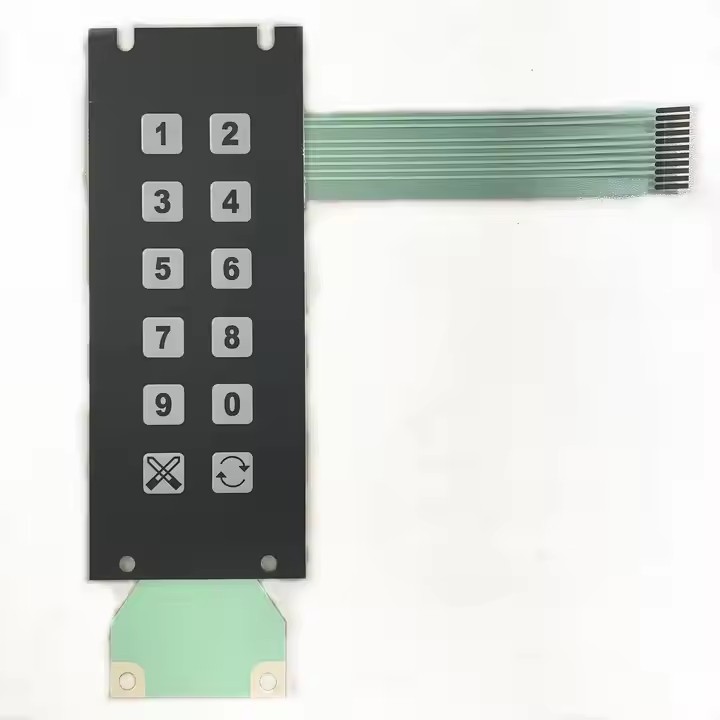
Factory Custom Silk Screen Membrane Switch for Fuel Dispenser Panel
UV Resistant
Non-Tactile
High Adhesion
 EN
 DE
 FR
 ES
 RU
 JA
Browse our core manufacturing references ranging from fuel dispenser panels and medical touch modules to IP67-rated waterproof industrial interfaces. Every configuration is manufactured directly to engineering schematics.
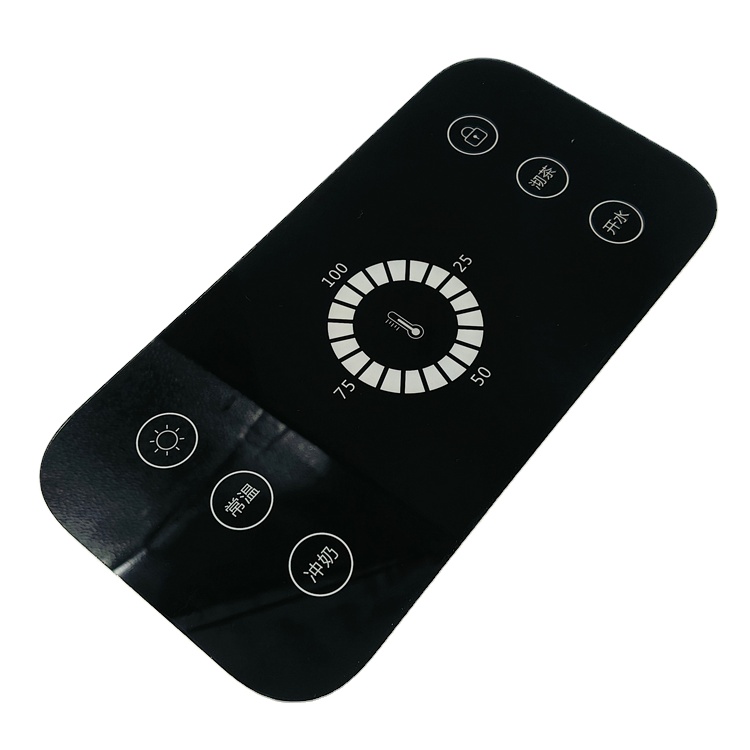
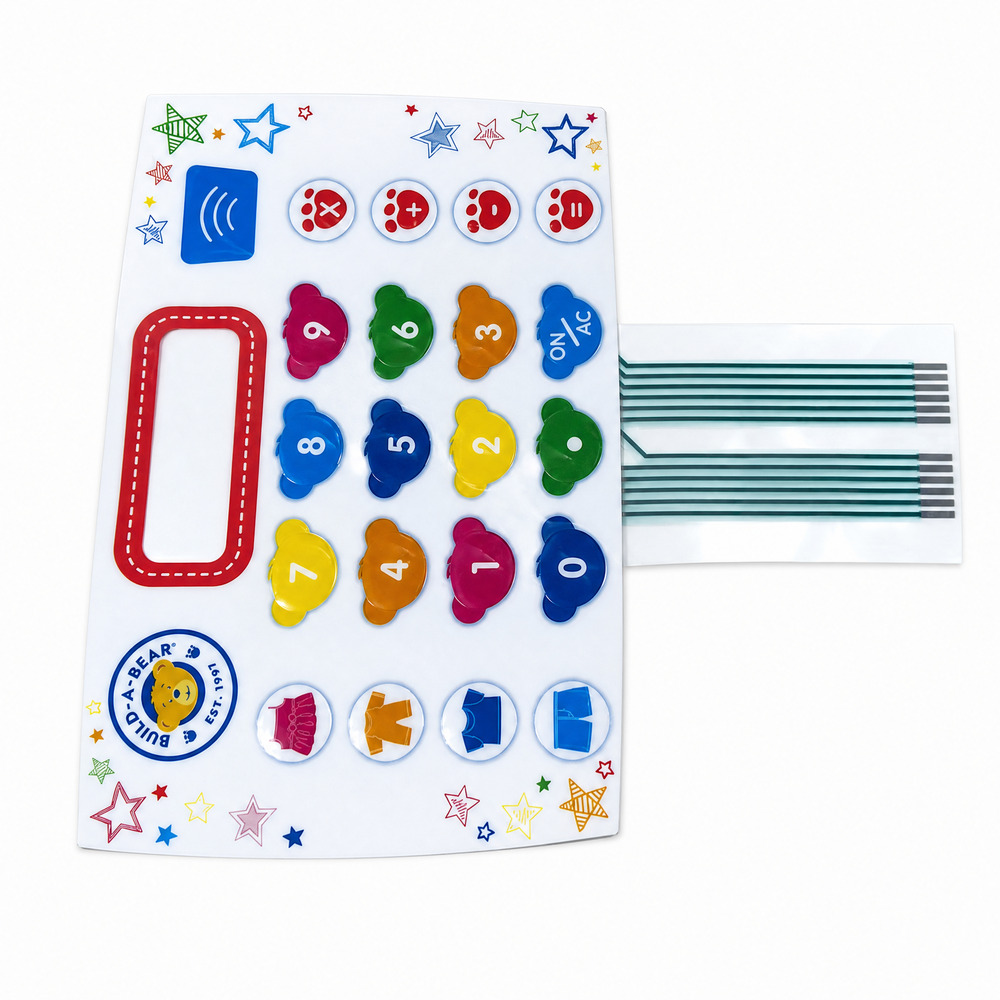
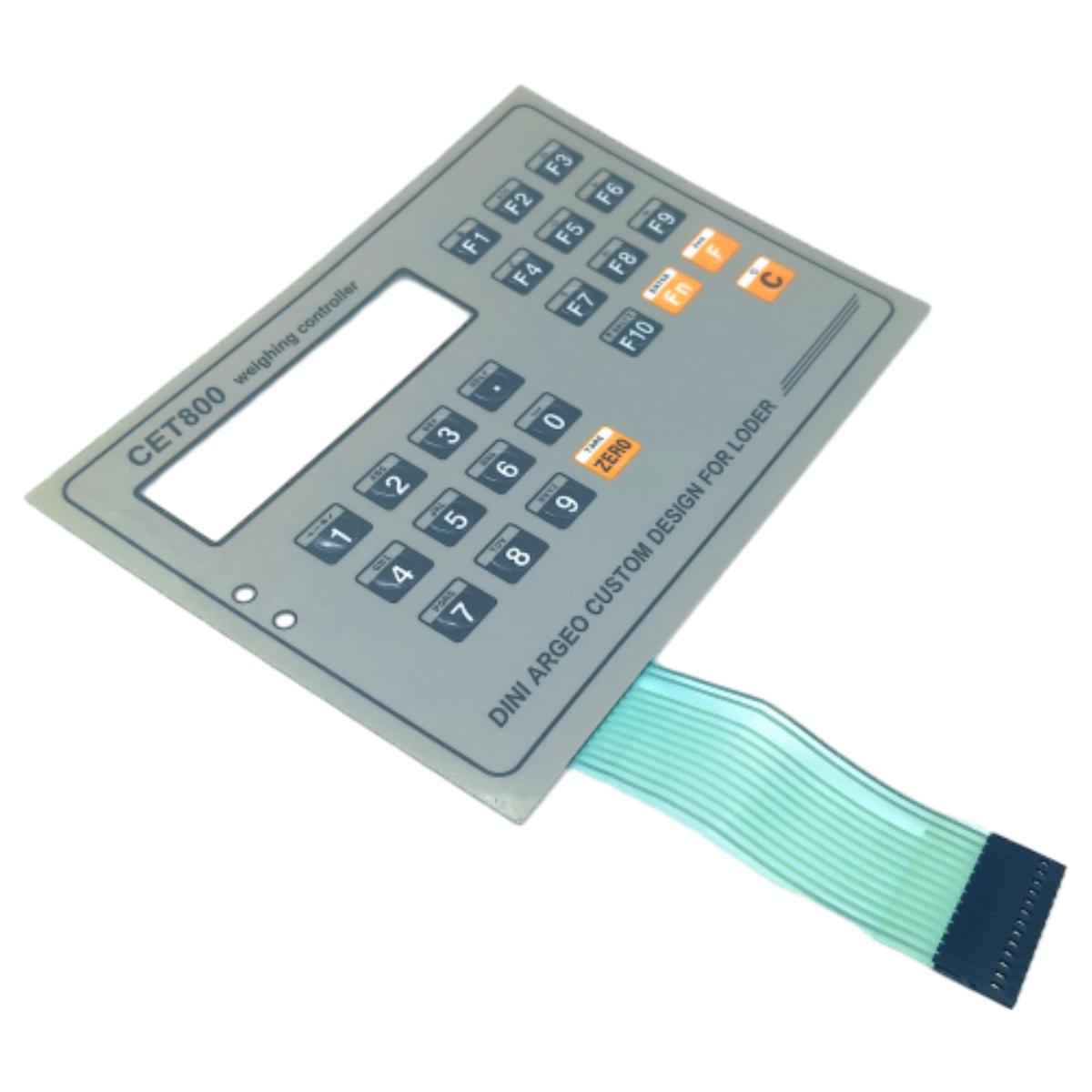
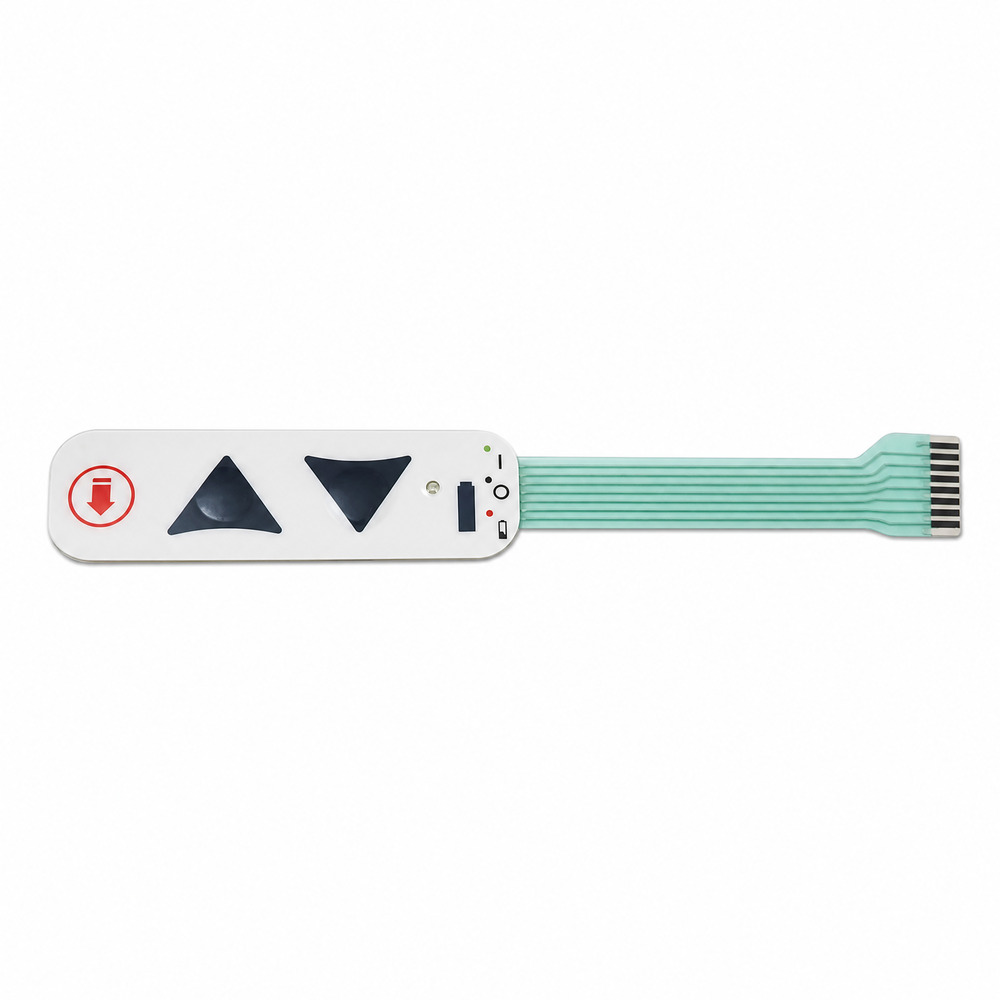
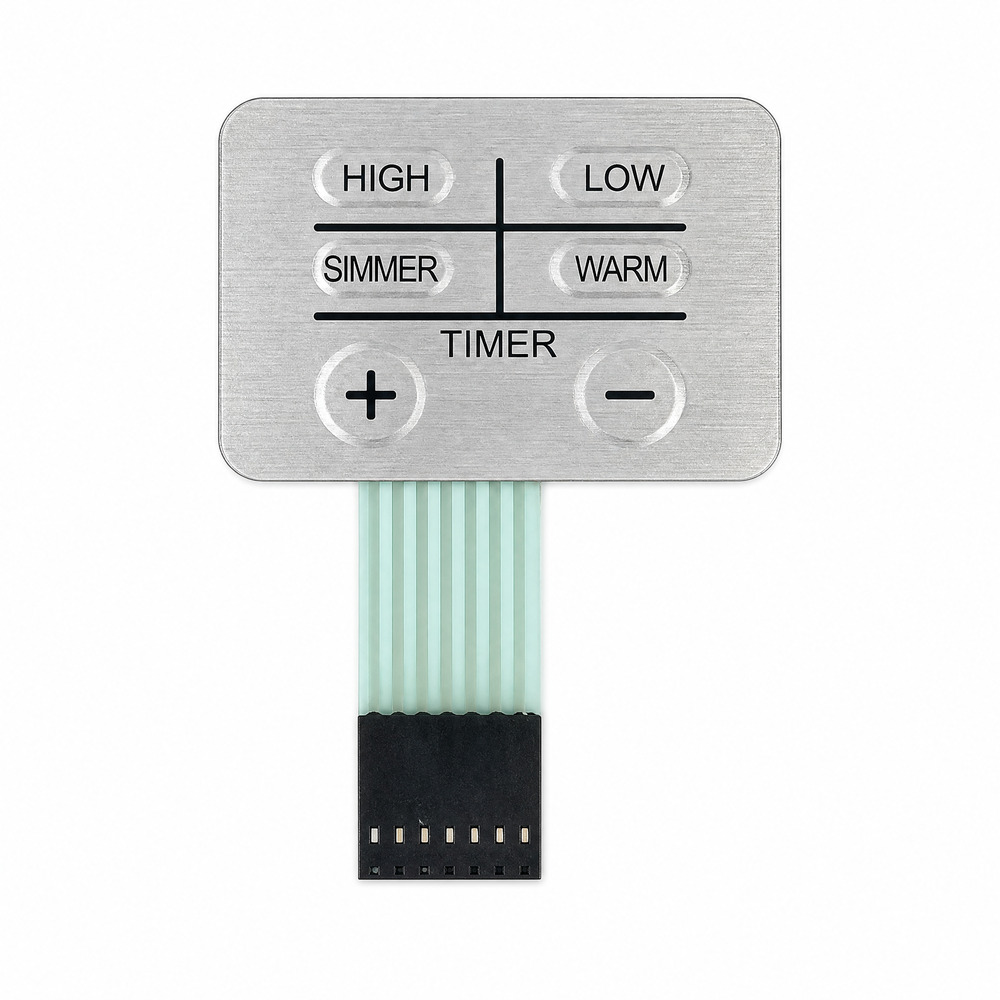
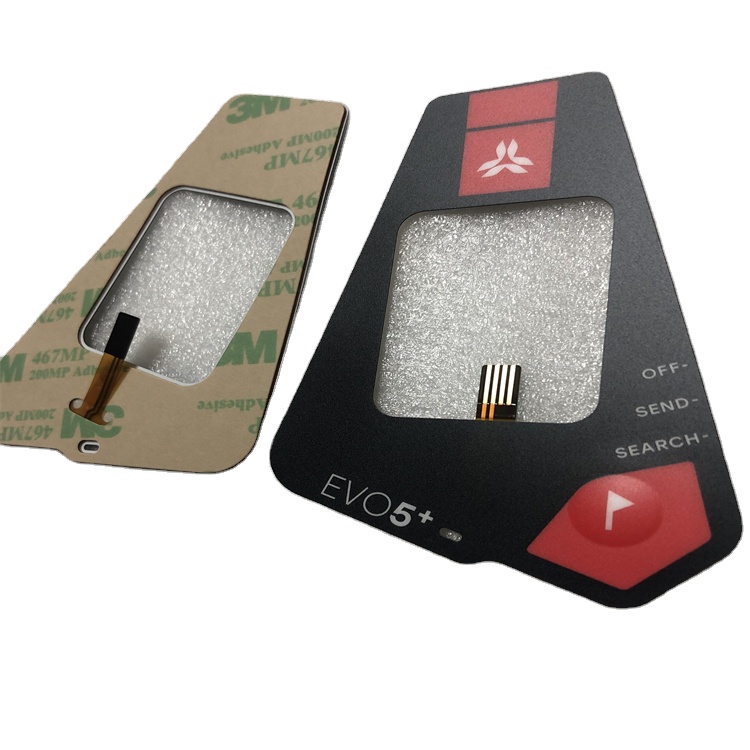
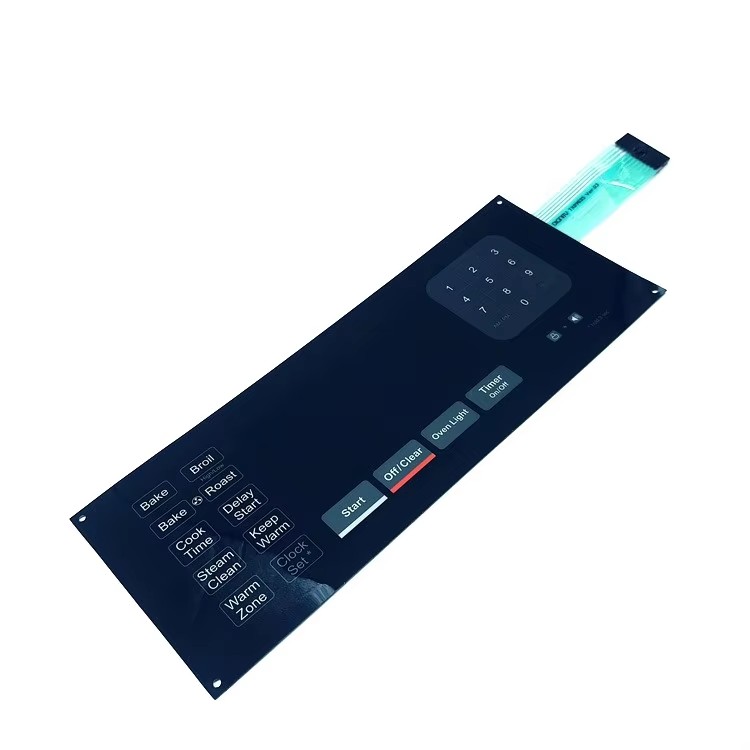
Procurement teams and mechanical design engineers frequently navigate trade-offs between Polycarbonate (PC), Polyester (PET), and Polymethyl Methacrylate (PMMA / Acrylic). While PET excels in flex fatigue life for tactile membrane switches, cast and extruded optical acrylic remains unrivaled for rigid front panels demanding crystal-clear display window readouts, scratch resilience, chamfered edge profiles, and capacitive touch sensitivity.
| Substrate Parameter | Cast / Extruded Acrylic (PMMA) | Polycarbonate (PC) | Polyester Film (PET) |
|---|---|---|---|
| Light Transmittance (%) | 92% – 93% (Optical Clear) | 86% – 89% (Slight tint) | 85% – 88% |
| Surface Hardness (Standard) | 2H – 3H (Expandable to 6H) | HB – 1H (Prone to marring) | 2H – 3H (With hardcoat) |
| UV Degradation Resistance | Exceptional (Zero yellowing outdoors) | Moderate (Demands UV stabilizers) | High (Outdoor formulations available) |
| Chemical / Solvent Resistance | Resilient to alcohols & weak acids | Poor against aromatic hydrocarbons | Superior against household cleaners |
| CNC Milling & Chamfering | Superb edge polish & bevel routing | Gummy edge, requires flame treating | Die-cut only (Thin gauge <0.25mm) |
| Typical Thickness Spectrum | 0.5mm, 1.0mm, 2.0mm, 3.0mm – 8.0mm | 0.125mm – 2.0mm | 0.075mm – 0.250mm |
At Dongguan Ravo Electronics Co., Ltd., our vertically integrated production floor in Fenggang Town, Dongguan, eliminates third-party outsourcing delays. Acrylic faceplate production is managed end-to-end within Class 1,000 to Class 10,000 cleanroom environments. High-speed multi-axis CNC routing spindles deliver tolerance bands within ±0.05 mm, executing stepped rebate borders, flush lens bevels, counterbore holes, and chamfered polished edges.
Sub-surface silk-screen and UV flatbed digital printing safeguard graphics, corporate brand iconography, and conductive paths from environmental abrasion, sanitizing agents, and continuous finger swipes. For devices integrating LCD, OLED, or seven-segment LED readouts, we implement selective optical tinting (smoke grey, ruby red, or anti-reflective diffusion) along with optical clear adhesives (OCA) or liquid optical clear resins (LOCA) to achieve parallax-free readability even under direct sunlight conditions.
With 20+ years of dedicated human-machine interface fabrication, our integrated Dongguan facility offers global exporters unmatched engineering accountability.
Any geometric profile, bespoke Pantone/RAL color matching, dead-front illuminated icons, metallic mirror finishes, or embedded capacitive touch electrodes built to exact CAD drawings.
Direct access to experienced mechanical and electrical engineers. Receive comprehensive Design-for-Manufacturability (DFM) feedback and quotes within 2 hours during active business cycles.
Validate concepts rapidly with initial prototype batches starting from 1 to 5 pieces before scaling up to hundreds of thousands in automated high-volume production lines.
Certified under ISO 9001:2015. Raw acrylic sheets, conductive inks, and 3M mounting laminates comply strictly with RoHS and REACH standards with 100% optical and dimensional verification.
Consolidate supply chains. We laminate acrylic faceplates directly to FPC flexible circuits, rigid PCB sub-assemblies, silicone rubber keypads, metal backplates, and capacitive touch sensors.
Double-sided static-free PE protective films, moisture barrier vacuum bagging, custom molded foam trays, and certified export cartons prevent any cosmetic transit imperfections.
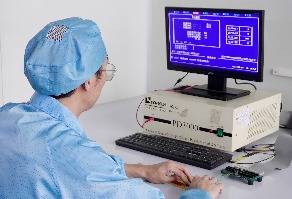
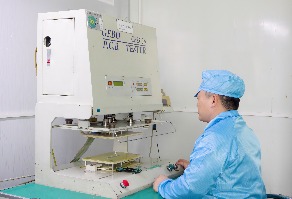
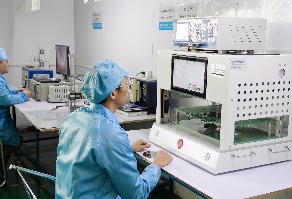
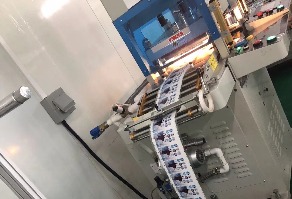
Inspect our high-speed printing bays, precision die-cutting machinery, and cleanroom assembly zones.
Key industry shifts shaping specifications, material technologies, and strategic sourcing decisions across 2025–2030.
Industrial design teams are increasingly eliminating visible mechanical clusters. By reverse-printing semi-translucent smoke layers with multi-hit blackout perimeter inks, graphic icons remain entirely invisible until activated by internal LED backlights or proximity capacitive sensors.
Medical diagnostic consoles and outdoor fuel distribution points demand relentless resistance against aggressive quaternary cleaners and intense solar radiation. The adoption of 6H dip-coated nano-ceramic acrylics prevents micro-scratching while reducing optical glare up to 85%.
Global procurement teams are shifting away from buying isolated bare faceplates. Instead, Tier-1 OEMs demand consolidated turnkey SKUs featuring pre-mounted acrylic fascias, bonded capacitive touch films, customized silicone gaskets, and integrated backer frames ready for direct chassis drop-in.
European and North American regulatory mandates (such as expanding WEEE and CSRD directives) are driving demand for optically transparent acrylic panels formulated with post-industrial depolymerized PMMA monomers without compromising clarity or tensile integrity.
With industrial IoT terminals deploying into exposed petrochemical, agricultural, and food processing environments, acrylic faceplates now integrate die-cut perimeter high-tack acrylic adhesives (such as 3M 467MP, 3M 468MP, or 3M 9448A) engineered specifically for low-surface-energy (LSE) housings.
As flush acrylic front panels replace bulky mechanical buttons, the integration of piezo-electric or ERM haptic feedback drivers beneath the rigid faceplate creates confirmable tactile sensations, ensuring operator safety and error-free execution in high-vibration control environments.
Clear answers to technical, commercial, and operational questions asked by overseas engineering buyers and purchasing agents.
