 EN
 DE
 FR
 ES
 RU
 JA EN DE FR ES RU JA
As microelectronics shift toward miniaturized, robust, and hermetically sealed operating control consoles, industrial membrane keypads have cemented their position as the premier Human-Machine Interface (HMI) for harsh environments. From medical-grade sterilizable touchscreens and outdoor petroleum dispensing units to heavy industrial CNC controllers and precision lab instrumentation, high-performance membrane assemblies safeguard underlying circuitry against liquid ingress, harsh chemical washdowns, electrostatic discharge (ESD), mechanical fatigue, and thermal extremes.
Dongguan Ravo Electronics Co., Ltd., based in Fenggang Town, Dongguan, combines more than 20 years of precision screen-printing, class-10,000 cleanroom lamination, surface-mount LED integration, and computerized actuation testing. This comprehensive guide outlines technical stack architectures, procurement risk mitigations, future interface paradigms, and factory-direct manufacturing capabilities designed specifically for B2B engineering and procurement managers.
Precision-engineered switch configurations available for rapid DFM prototyping and scalable batch production.
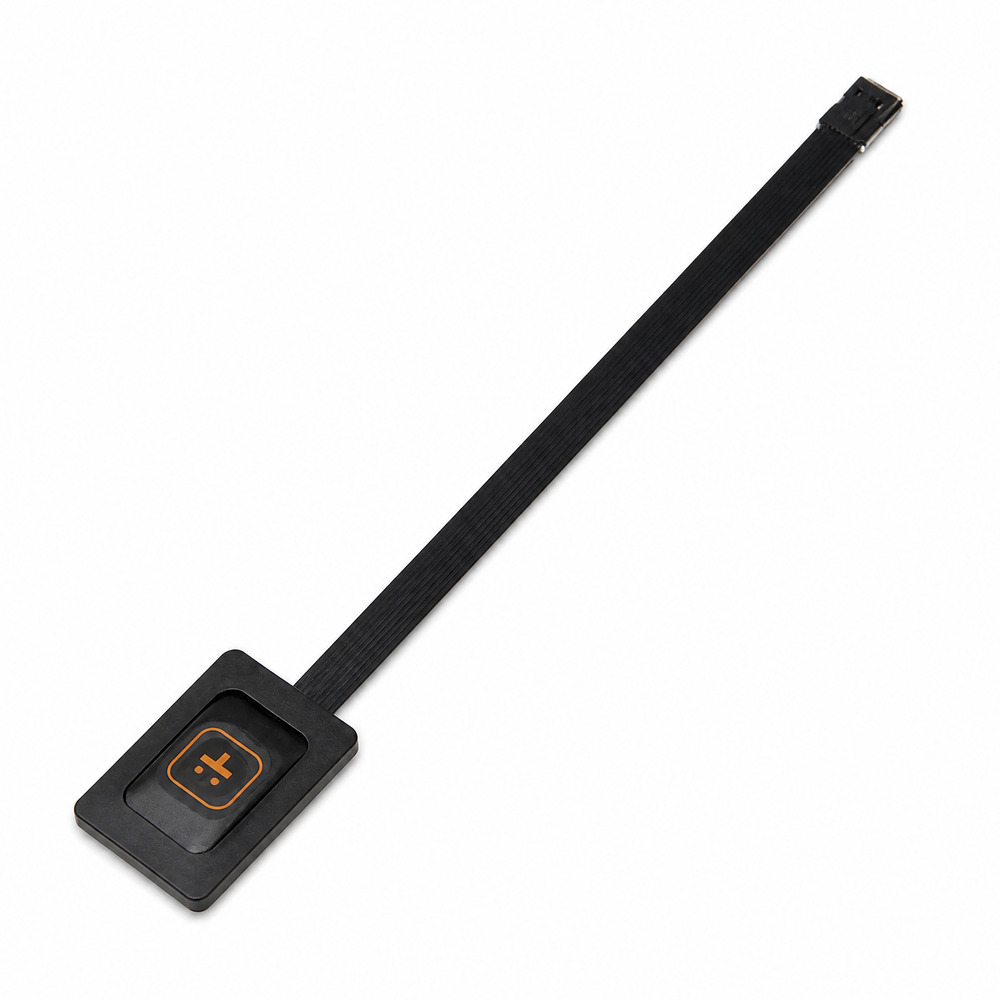
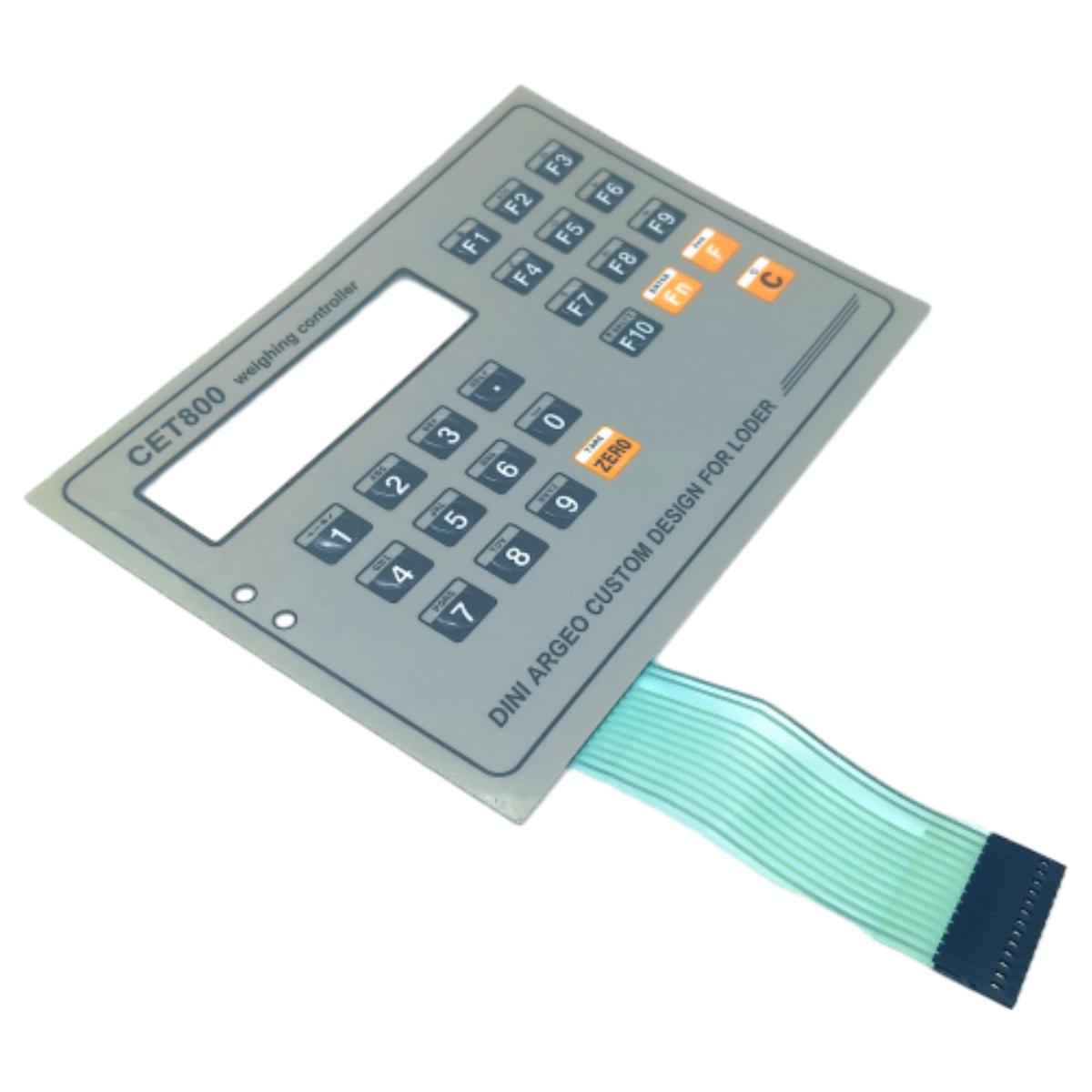
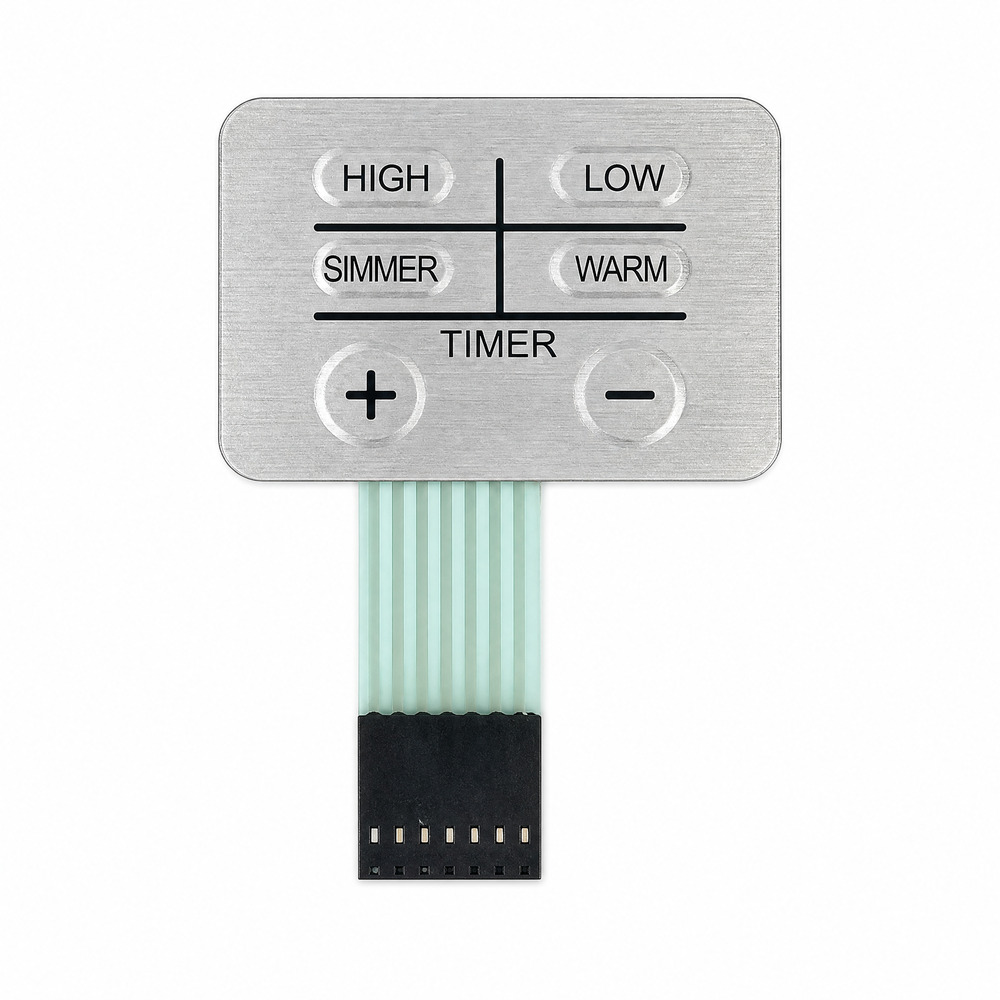
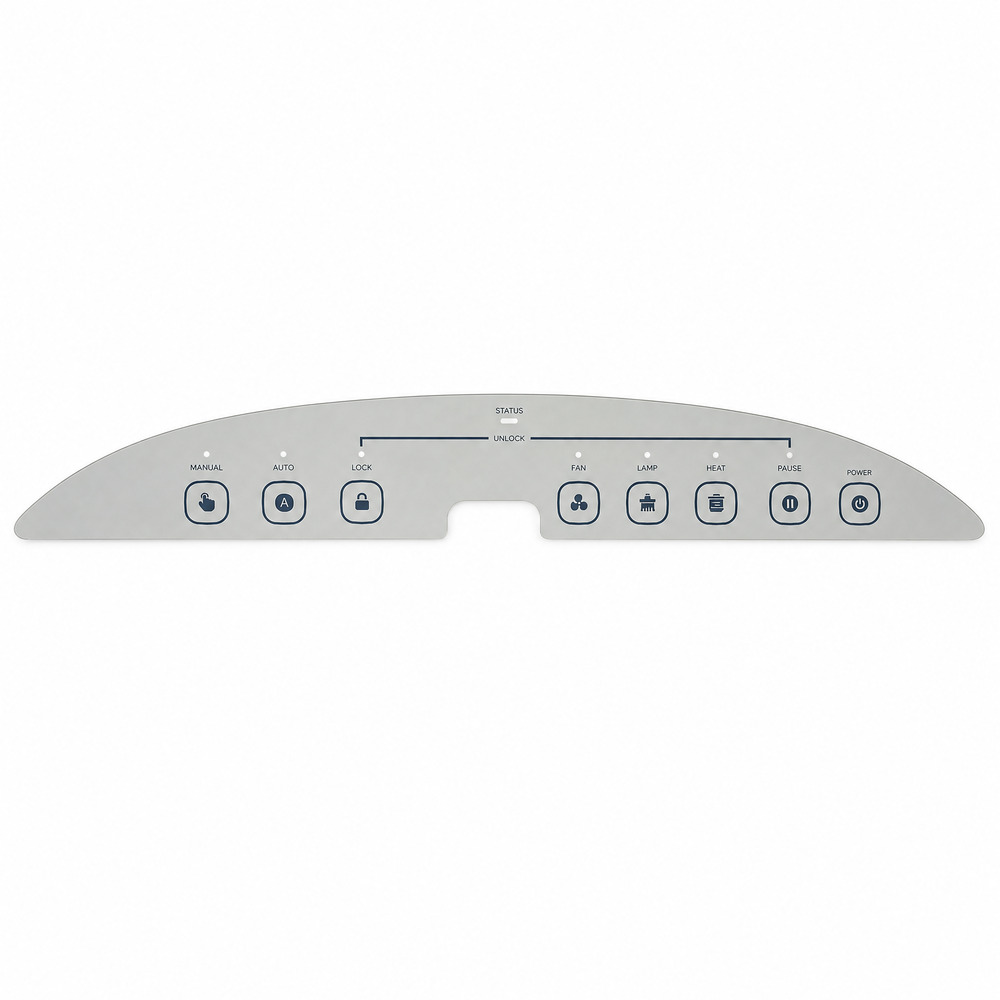
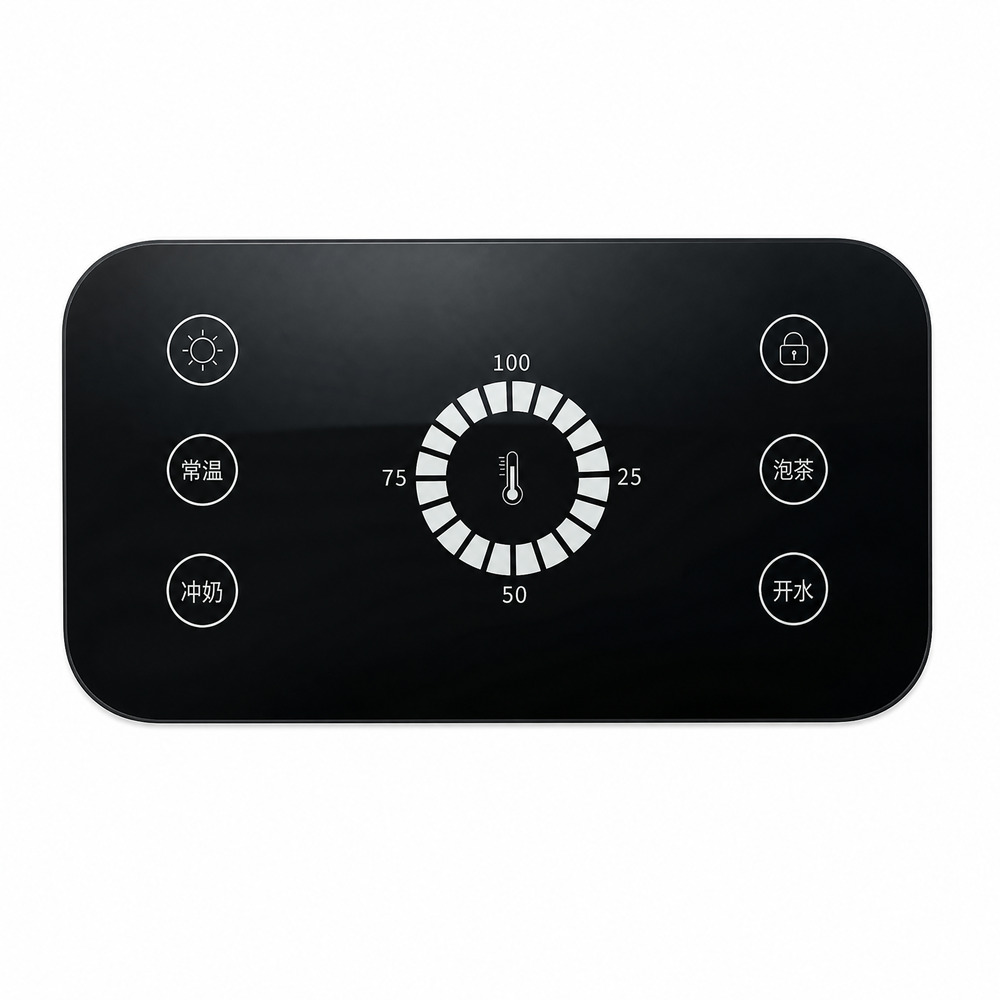
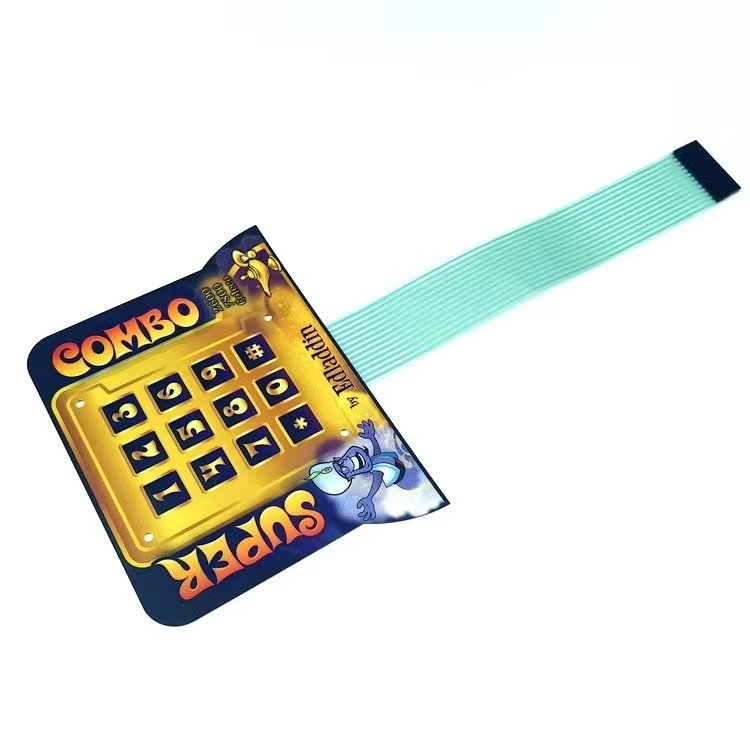
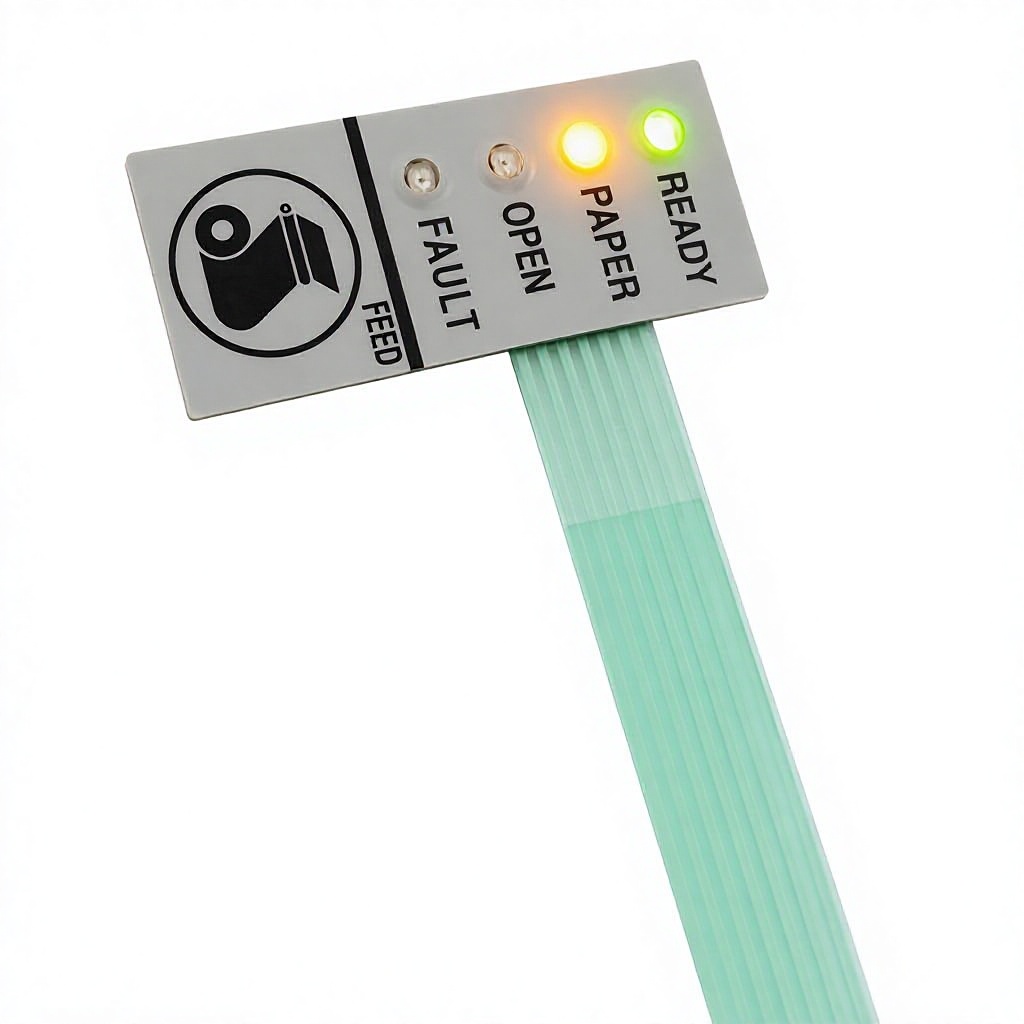
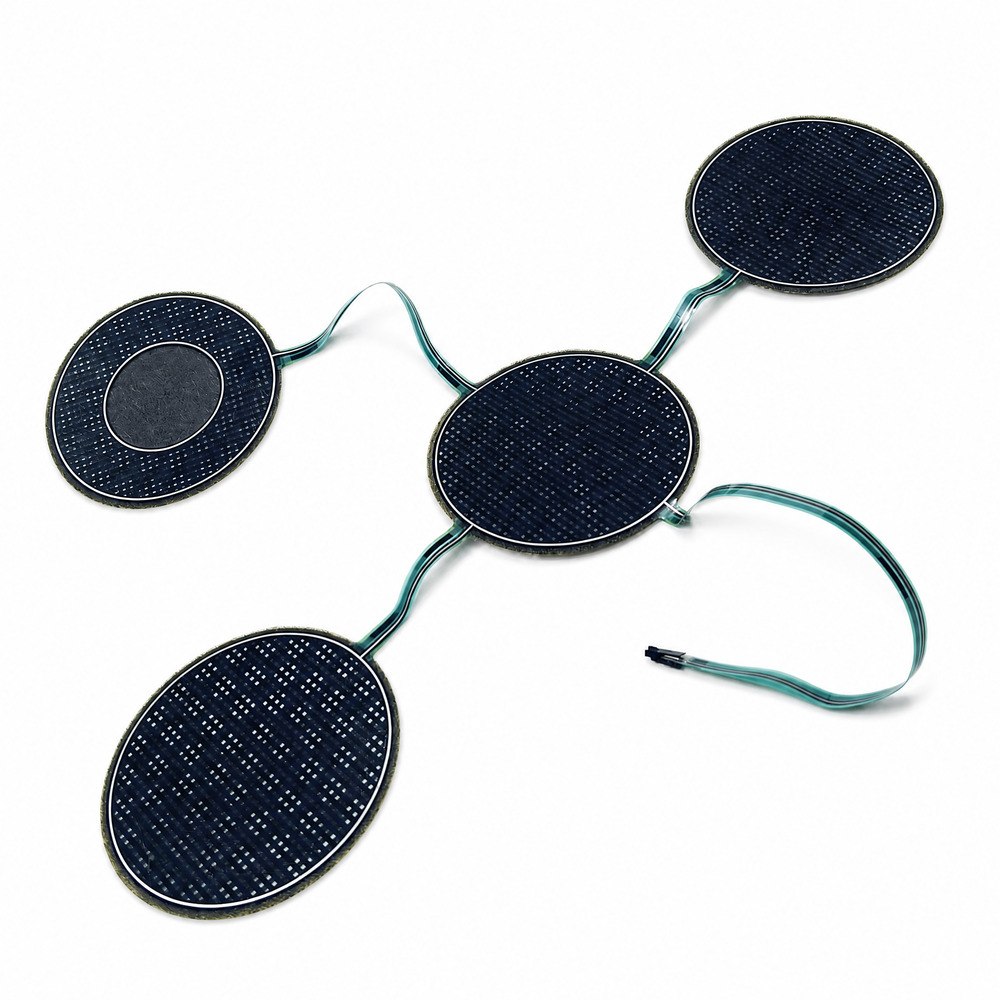
A mission-critical industrial membrane keypad is far more than a printed plastic sheet. It is a precision-calibrated electromechanical sandwich composed of up to eight individual functional strata laminated under controlled pressure and ambient conditions. Choosing the wrong adhesive grade or dielectric insulation layer can cause terminal switch failure—such as silver migration, delamination under thermal cycling, or erratic contact resistance.
The schematic below illustrates the industrial-grade stack-up utilized in Ravo Electronics' IP67 heavy-machinery and medical consoles:
Selecting the optimal conductor substrate is the most vital architectural decision during product development. The table below outlines empirical benchmarks established over twenty years of volume manufacturing at our Dongguan factory:
| Performance Parameter | Silver-Ink Screened PET | Polyimide Copper FPC | Rigid FR-4 PCB Backer |
|---|---|---|---|
| Loop Resistance per Key | 10 Ω to 100 Ω (Length dependent) | < 0.5 Ω (Ultra-low dissipation) | < 0.1 Ω (Negligible drop) |
| Pitch Density & Routing | 1.27mm to 2.54mm pitch standard | Down to 0.5mm pitch (High-density ZIF) | Multi-layer traces, micro-vias |
| Component Integration | Conductive epoxy bonding (LEDs/Sensors) | Reflow solderable (LEDs, resistors, ICs) | Standard SMT reflow & through-hole |
| Operating Temperature | -20°C to +70°C | -40°C to +105°C | -40°C to +125°C |
| Flexibility & Bend Radius | Moderate (R ≥ 5mm; avoid sharp creasing) | Superior (R ≤ 1mm; high flex cycles) | Rigid (Flat planar structural backer) |
| Tooling Cost & Lead Time | Low initial tooling; 7-10 days fast-turn | Moderate tooling; 10-14 days | Moderate tooling; 12-16 days |
| Best Application Arena | Cost-sensitive controllers, appliances, remotes | Compact handhelds, aerospace, medical | Heavy inverters, vibration environments |
The global HMI and membrane keypad market is evolving beyond simple button-press arrays into unified sensory platforms. Overseas procurement teams seeking competitive longevity must align their sourcing with the following macro trends:
Tier-1 procurement organizations are moving away from buying isolated membrane switches, separate plastic bezels, and discrete display lenses from fragmented suppliers. Sourcing a completely validated, pre-assembled module—consisting of the membrane keypad, integrated metal chassis, display lens, and wire harness—slashes factory assembly labor, eliminates inter-supplier blame, and guarantees IP67 seal integrity out of the box.
Modern microcontroller units (MCUs) run on ultra-low 3.3V or 1.8V logic rails. Traditional silver pastes prone to microscopic oxidation can induce signal threshold errors. Sourcing mandates now demand carbon-overprinted contact pads or gold-plated stainless steel metal domes with gold-flash switch pads to avoid high initial switch impedance in energy-efficient IoT field hardware.
Stricter European and North American environmental directives necessitate end-to-end supply chain transparency. Every batch of PET film, conductive ink, acrylic adhesive, and silicone rubber must accompany verifiable RoHS 3.0, REACH SVHC, and halogen-free declarations to prevent catastrophic port customs quarantines and legal liabilities.
As end-users demand interfaces mirroring consumer smartphone aesthetics without sacrificing industrial resilience, manufacturers are adopting game-changing materials and manufacturing techniques:
Merging capacitive sensor foils beneath ruggedized 4mm PMMA or tempered chemical glass panels creates a completely flush, crevice-free surface that eliminates dirt traps—vital for food processing and sterile hospital wards.
Eliminating traditional hot-spots and high component counts, ultra-thin (0.125mm) micro-etched Light Guide Films channel side-firing LEDs uniformly across specific keys and dead-front icons with negligible power consumption.
Integrating printed carbon nano-particle pressure sensors allows the keypad to register continuous variable force. Used widely in operator presence detection, industrial pedal controls, and ergonomic surgical tooling.
Combining the tactile luxury, 3D travel, and blind indexing of three-dimensional rubber keycaps with the thin, multi-circuit logic and environmental barrier of an underlying polyester membrane switch.
Headquartered in Fenggang Town, Dongguan, Guangdong, China—at the physical epicenter of global electronics hardware manufacturing—Dongguan Ravo Electronics Co., Ltd. has specialized exclusively in custom membrane switches, graphic overlays, silicone rubber keypads, and thin-film force sensors since 2003.
Unlike trading intermediaries who outsource individual processes to third parties, Ravo manages all critical production stages in-house across our 12,000 m² facility. Our vertically integrated operations include:
We bridge the communication gap between overseas design engineers and factory tooling specialists. Our bilingual engineering department provides:
Direct technical answers to common queries submitted by industrial design engineers, quality assurance auditors, and international procurement managers:
True IP67 waterproof sealing requires a completely continuous, uninterrupted perimeter adhesive ring (typically 3M 467MP or 3M 468MP) surrounding the switch cavity. Additionally, the tail exit must be engineered as an internal sealed egress with silicone potting or a rear-exiting layout, preventing capillary moisture suction through vent breathing paths.
Polycarbonate is cost-effective, easy to thermoform, and optically clear, but will crack under repeated key embossing (flex life: ~100,000 actuations) and degrades when exposed to solvents like MEK. Polyester (e.g., Autotype Autoflex) withstands over 5,000,000 flex cycles without cracking, offers superior chemical resistance, and is the mandatory standard for heavy industrial and medical environments.
We laminate an aluminum foil shield layer or screen-print a conductive silver/carbon grid layer directly beneath the graphic overlay. This ESD shield connects to a dedicated chassis ground pin on the tail, dissipating electrostatic potentials up to 15kV (air discharge) away from sensitive microcontrollers.
Typical consumer keypads utilize 180g to 250g tactile forces for effortless clicking. However, for industrial controllers operated with heavy leather or rubber gloves, we engineer actuation forces between 350g and 500g with 12mm to 16mm four-leg stainless steel domes to ensure unambiguous sensory feedback and eliminate inadvertent presses.
Silver electromigration happens when moisture penetrates the circuit under a continuous DC voltage gradient, causing silver dendritic crystalline trees to grow across traces and short-circuit. Ravo prevents this by printing a protective carbon paste layer over all silver contact pads and trace bottlenecks, maintaining trace spacing >0.7mm, and ensuring hermetic edge seals.
We support three standardized termination families: 1) Standard 2.54mm pitch female crimp housings (e.g., FCI Clincher, Nicomatic CrimpFlex); 2) Bare conductive finger tails with stiffeners designed for direct insertion into Zero Insertion Force (ZIF) sockets (1.0mm or 1.27mm pitch); and 3) Direct solder pins or headers on rigid FR-4 PCB-backed models.
To deliver an accurate quotation and DFM assessment within 2 hours, we require: 1) 2D mechanical drawings (DXF, DWG, or vector PDF) with dimensions and tail details; 2) Graphic artwork in Adobe Illustrator (.AI) or vector PDF specifying Pantone color codes; 3) Circuit schematic or netlist showing pinouts; and 4) Anticipated annual procurement quantities.
Standard prototypes (5 to 10 pcs) typically ship in 7 to 10 working days following final DFM drawing sign-off. High-volume production runs (500 to 50,000 pcs) usually deliver within 15 to 22 working days, supported by expedited courier dispatch to Europe, North America, and Southeast Asia.
Yes. We specialize in surface-mounted ultra-thin 0603/0805 SMD LEDs bonded with conductive adhesive, micro-perforated Light Guide Films (LGF) for uniform field illumination, and high-clarity water-clear or smoke-tinted display windows designed for underlying OLED, TFT, and 7-segment LED readouts.
Under our ISO 9001 certified quality management system, every single piece undergoes 100% automated electrical continuity testing (open/short circuits and loop resistance). In addition, our QA lab performs mechanical actuation life testing (>1M cycles), cross-hatch ink adhesion checks, humidity chamber exposure, and spectrophotometer color matching for every production batch.
Send us your DXF/CAD drawings, overlay artwork, or physical samples. Our engineering team at Dongguan Ravo Electronics will analyze your stack-up, suggest manufacturability enhancements, and submit a formal wholesale quotation within 2 business hours.
